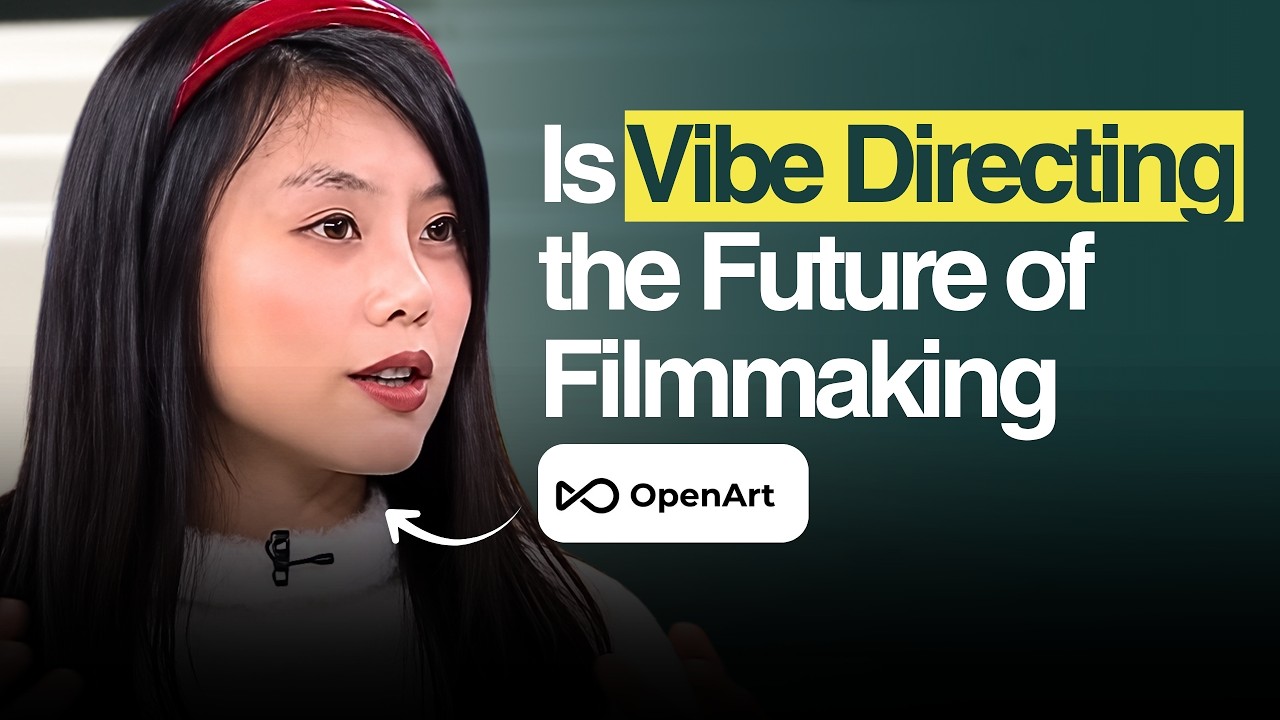
Coco Mao, co-founder and CEO of OpenArt, walks through the journey from leaving Google to building a $70M ARR AI visual storytelling platform with ~60 employees, sharing how weekly pivots, a Hacker News launch, and a shift from image generation to “vibe directing” video agents defined the company’s path.
From Google incubator to weekly pivots
Coco worked on Tangi, Google’s short-form lifestyle video platform (2018), where she saw everyday people — stay-at-home moms, DIY creators — become successful creators and monetize, reinforcing her belief in democratized creation.
She always wanted to start a company; while at Google she ran an Amazon fidget-toy business during the pandemic (successful until she overstocked hundreds of boxes), a dog TikTok, and a podcast — “I love creating, I love building.”
Visa/green-card constraints kept her at Google until ~2022; after getting her green card she left to start a company with Jon, whom she met through Google’s internal startup incubator (Area 120).
Jon had a track record of side hustles (an Animal Crossing app with 10K+ five-star reviews); Coco advises looking for co-founders who build side projects while at big companies.
She left Google because incubators lack true high-risk/high-reward dynamics — “even if I failed I still got paid” — and Google later shut the incubator down (2023), validating her view.
The pivot marathon and first traction
From leaving Google to finding OpenArt took ~6 months: one idea lasted a few months, then they switched to weekly pivots — changing the concept every week.
While playing with DALL·E 2, they wondered if AI artists needed a community; in under 3 days they built a “Pinterest for AI images” prototype (crawled Reddit/Discord for images + prompts) and posted it on Hacker News — it went viral immediately.
Conviction came not from the viral spike but from iterating toward creation tools: users wanted to make images, not just browse; even a raw Stable Diffusion wrapper with minimal UI got paying customers.
Early product-market-fit signals: Hacker News virality, then SEO dominance for “AI art” (name “OpenArt” ranked #1), and users paying for a very rough product.
Name “OpenArt” came on a walk with Jon; “open” felt legit (OpenAI, OpenSea, etc.), but caused constant confusion — many early users thought they were paying OpenAI.
Fundraising on speed, not metrics
They raised a pre-seed on a prior idea (OwnBrand, a brand-creator marketplace) — same problem (brands need content), different solution (human creators vs. AI).
Seed round: metrics were unimpressive; investors bet on the team’s iteration speed (3 people, shipping weekly) and the space’s potential.
Current iteration model: two tracks — core development (stable, millions of users) and discovery (small-audience A/B tests of new AI capabilities, promoted to core if they work).
Hiring for iteration culture: interview includes a “vibe-code OpenArt in an hour” exercise — tests ability to ship an MVP fast; “MVP” is a core internal term.
Hire reasonably fast, fire very fast; low firing rate because interview filter works, but when misfit appears they act quickly.
Surviving the image-gen shakeout
Many 2022–2024 image-gen competitors disappeared; OpenArt survived by re-focusing at the right time: 2024 = images, 2025 = video, now = agents.
Decision-making comes from constant user interviews (PMs run them monthly/bi-monthly; recently hired a firm to blind-interview churned users for unfiltered feedback).
Before any strategic leap they build an MVP: July 2024 “One-Click Story” (non-agentic full video generation) showed retention/traction, proving the problem; 2025 agentic rebuild solves same problem with better tech.
Vibe directing: the agentic creative category
Vibe directing = creative parallel to vibe coding: user chats conversationally with an “OpenArt Director” agent; it writes scripts, designs characters, generates assets, edits, outputs finished video — no prompting, storyboarding, or editing skills needed.
Analogy: “Imagine you have a Hollywood director friend. You’re just talking to them about your idea and then they can get the full crew to execute for you.”
Mission: democratize visual storytelling — from cave murals to paper to social media, the need is constant; format changes with tech.
What separates good AI output from slop: idea + taste. Internal hackathon winners were engineers, not creative directors — once craft is democratized, ideas win. Taste improves by feeding models better reference images.
Cultivating taste and creative space
Everyone is inherently creative; good ideas emerge when you create downtime — “if you’re busy working every day, you’re not giving your brain breaks to let ideas come out.”
Taste is input curation: surround yourself with tasteful people (designers, creative directors) and your taste improves osmotically.
Coco’s personal practices: 30-min daily run without audio (5–6 days/week), driving in silence, weekend hiking — all intentional boredom/dopamine detox to let ideas surface. Meditation doesn’t work for her; active meditation does.
As a data-driven CEO, she trusts intuition and protects boredom time; best ideas (including the name “OpenArt”) came during hikes/runs.
Content strategy and AI Personality Awards
Content is core to a generative AI creative company: teaches non-professionals how to use tools; YouTube hit 400K+ subs in ~1.5 years (earliest among competitors).
Success came from hiring platform-native creators: YouTube lead was an experienced YouTuber who taught them strategy; passion for teaching made it sustainable.
Best hires often come inbound because they like the product; hackathons (e.g., MIT) sourced head of partnerships and creative directors.
AI Personality Awards (with Fanvue): “Oscars for AI influencers” — monetizable, disclosed synthetic characters (like Disney characters); goal: show anyone can create an AI influencer to express ideas without being on camera.
On AI vs. human influencers: organic food analogy — AI content = genetically modified food (everywhere, cheap, variety); human content = organic (scarcer, more precious, sought by discerning audiences). Net positive for expression, but quality bar must rise to avoid “AI slop.”
Scaling the founder: reinvention and low ego
Hardest part: constantly reinventing yourself — skills/mindset for a 3-person startup don’t work at 60–70; if you don’t evolve, you become the bottleneck.
Requires brutal self-honesty, low ego, and awareness of when the company needs a different leader; now empathizes with investors who replace founders (growth demands sometimes outpace founder growth).
Current evolution: delegating more, resisting urge to dive into details (builder personality), trusting 60-person team.
Learning mechanisms: executive advisor (Dennis), radically transparent culture — team gives direct feedback (e.g., “Koko, you’re not executing anymore, give people freedom”); she listens, asks for examples, pushes back only when mutual accountability is needed.
Low ego permeates the team — “no one cares who’s right or wrong, people just want to get things done.”
The belief she now rejects
Founders don’t need a clear, full vision at the start. It’s okay to see only 10 meters ahead; the path reveals itself through action, and the environment keeps changing anyway. “Just start with something small.”