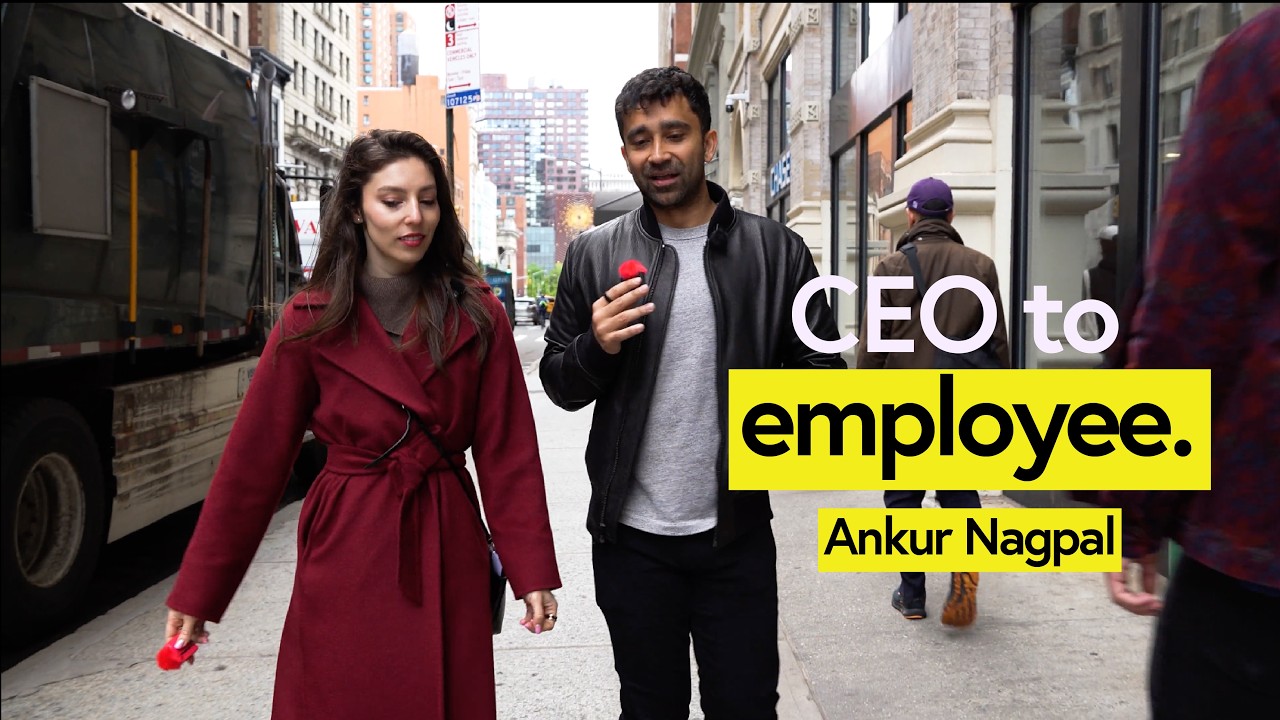
Ankur Nagpal is a serial entrepreneur who built and sold two companies—Teachable (a nine-figure exit) and Carry (acquired by AngelList)—and is now a General Partner at USVC, a public markets venture fund run by AngelList. He’s also an angel investor in over 100 startups. This conversation covers his mindset around exits, what makes a great founder, why most people shouldn’t raise venture capital, how USVC is opening venture investing to non-accredited investors, and his personal philosophy on money, reading, and building.
Twice Lucky, Still Humble
Ankur describes selling two companies as “a little bit of a relief” rather than a triumph, emphasizing how humbling the founder experience is—right up until an exit, you feel like “you’re getting your ass kicked.”
He doesn’t hype his exits because he believes honesty earns more credibility than false bravado, which he sees as a symptom of insecurity.
With Teachable, growth had slowed before the sale, and the work ahead seemed daunting—though ironically, revenue surged post-sale due to COVID.
With Carry, despite a large audience from day one, the product never crossed into mainstream adoption, reaching $4 million ARR after about 3 years—“good, but not fantastic.”
He attributes some of Carry’s limitations to the fact that early market signals were unreliable because people said nice things regardless, and to his own evolution as a founder—he was 24 at Teachable and 31–32 at Carry, and the company reflects who you are at that age.
Confidence Is Just Age
Ankur says confidence comes from seeing good results compound and from age—around 30, you stop pretending to like things and settle into who you are, which makes you more honest.
He never went through a formal “self-love” journey and is skeptical of American self-help culture, viewing it as over-pathologizing normal human suffering. His immigrant background shaped a more stoic, “get on with it” attitude.
Stress Beats Every Biohack
After selling Teachable, he was burnt out and tried every sleep hack—no alcohol, dark rooms, supplements—with little effect. The day he stopped being CEO, his sleep improved dramatically.
He spent nearly two years traveling and taking time off before missing the act of building something with others, which drew him back to Carry.
His takeaway: stress is the single most impactful factor in health, more than any biohack.
Venture Investing for Everyone
USVC (Union Square Ventures C) is a public markets fund that received SEC approval to offer venture investing to anyone with as little as $500, bypassing accredited investor laws that normally require $1 million net worth or $200,000+ annual income.
This was the vision of Naval Ravikant (AngelList founder) for over 10 years, with several years spent on legal structure and at least 6 months finding the right person to run it.
Ankur was courted for 4–6 weeks. AngelList had been interested in Carry’s strengths—growth, marketing, explaining complex financial products—and proposed acquiring the business so Ankur could still do financial education within AngelList.
As portfolio manager, Ankur decides what to invest in: direct stakes in startups, funds, SPVs, or buying out fund investors. For now, most positions are through funds, but his goal is to do more direct allocations over time.
The fund targets what he believes will be the most important technology companies of the next 100 years.
Why startups would want USVC on their cap table: Ankur’s hypothesis is that giving regular people ownership stakes shifts public perception of technology (which is increasingly seen as “evil” or inaccessible) and creates aligned incentives—when people make money from tech, they support it.
How liquidity works: Investors buy in at NAV (~$20/share currently). Each quarter, up to 5% of the total fund is made available for redemptions. So in a $100 million fund, $5 million in liquidity is available, allocated proportionally among those who want to sell.
Portfolio allocation advice: Ankur personally has ~50% in private markets (he acknowledges this is extreme and doesn’t recommend it), but suggests most people allocate 5–10%. He stresses venture is illiquid risk capital—“adventure capital”—and you should never invest money you need in the short term.
What Makes a Great Founder
Three things Ankur looks for:
Speed of execution: Fast movers try more things and are more likely to find what works. A negative signal is a founder who wants to chat in 4–5 days rather than immediately.
Horsepower: Raw ability—intelligence, work ethic, or both.
Ability to convince people: Controversial because this trait also describes fraudsters, but running a company requires constantly convincing investors, hires, and customers.
For fundraising, he recommends sending regular updates to both current and prospective investors to demonstrate speed, horsepower, and persuasiveness over time.
Emotional runway matters more than cash: In the 2021 hype cycle, many founders gave up the moment things got hard—not because they ran out of money, but because they ran out of emotional resilience. Some of the hottest deals from that era are dead; some founders who barely survived every round are thriving now.
He doesn’t have a formula for building emotional resilience—he himself ran out of it with Carry—but notes that environment shapes it. Founders who raised easily in 2021 had never experienced the gravity of how hard it is to get someone to give you money.
Don’t Raise Venture Capital
Ankur’s strong advice: almost everyone should not raise venture capital. The implicit bargain is giving up personal wealth and working irrationally hard for 5–20 years with highly uncertain reward, only justified if you believe your company can be worth tens of billions.
It makes sense only for extremely hard, capital-intensive problems (nuclear reactors, radical life extension) or if you genuinely want to be a billionaire.
The glamorization of fundraising is misleading—raising a big round is a vanity metric, and building a business that actually works is far harder.
For most people, building a solid business without venture capital is the better path.
Your Happy Number
Ankur’s “happy number” is around $10 million—the point where you’re not stressed about anything, can buy first class flights, and don’t worry about your kids’ future.
The range varies: some people are content at $3–5 million, others need $20–25 million. It depends on where you live, who your friends are, and what you value.
Money’s biggest value to him is freedom—the ability to say no to things he doesn’t want to do.
He’s open about his finances because he wishes more people talked about these things, though he’s intentional about not sharing specifics that create security risks.
The $20K That Becomes Millions
For someone earning $200K–$500K who still feels on a treadmill, the biggest lever is lifestyle: where you live and who you hang out with.
Tax optimization saves tens of thousands per year, but the real impact is compounding—$20K saved and invested at 6–8% annually becomes hundreds of thousands or millions over a lifetime.
For venture-backed founders, ultra-optimization is a distraction—99% of net worth is determined by company success, so focus energy there. For everyone else, financial optimization matters more.
Finding Your Zone of Genius
Ankur’s superpower is being able to do a little bit of everything—combining marketing, technology, and business. He has a computer science degree but was never the most technical person; he’s a marketer without a traditional brand background.
He suspects he has ADHD (undiagnosed, growing up outside the US), which aligns with being a generalist.
He evolved as a founder between Teachable (where he had no idea what he was doing) and Carry (where he knew more), but the market and product ultimately determine outcomes.
If he were starting a business today, he’d buy a sports team—he’s already bought a small stake in a cricket team—leaning into real-world experiences rather than AI.
Read for Joy, Not Optimization
Ankur uses AI minimally in personal life—mainly for business-adjacent tasks like running his LinkedIn andThreads, and for book recommendations based on a spreadsheet of every book he’s read since 2016 with ratings.
Three books that shaped him:
Losing My Virginity by Richard Branson (read at 13–14): The first time he thought building a company could be fun rather than just optimization. Branson became a role model because he seemed to be having a blast while building multiple companies and having a family.
A period of rediscovering reading for joy in his mid-20s after a 4–5 year drought (college through mid-20s). He started with Murakami, then explored other Japanese fiction authors. This reminded him to read for enjoyment, not because Twitter said a business book was required. He now reads almost every night, almost always fiction.
(Third book not specified in the conversation.)
He believes reading is the closest you can get to living multiple lives—it’s his way of switching off from work and experiencing different worlds and perspectives.
Maximize Your Surface Area
For someone still looking for their thing: try a lot of stuff. Maximize surface area by living in a big city, meeting many people, and having many collisions. The more you expose yourself to, the more likely you are to get lucky and find what resonates.