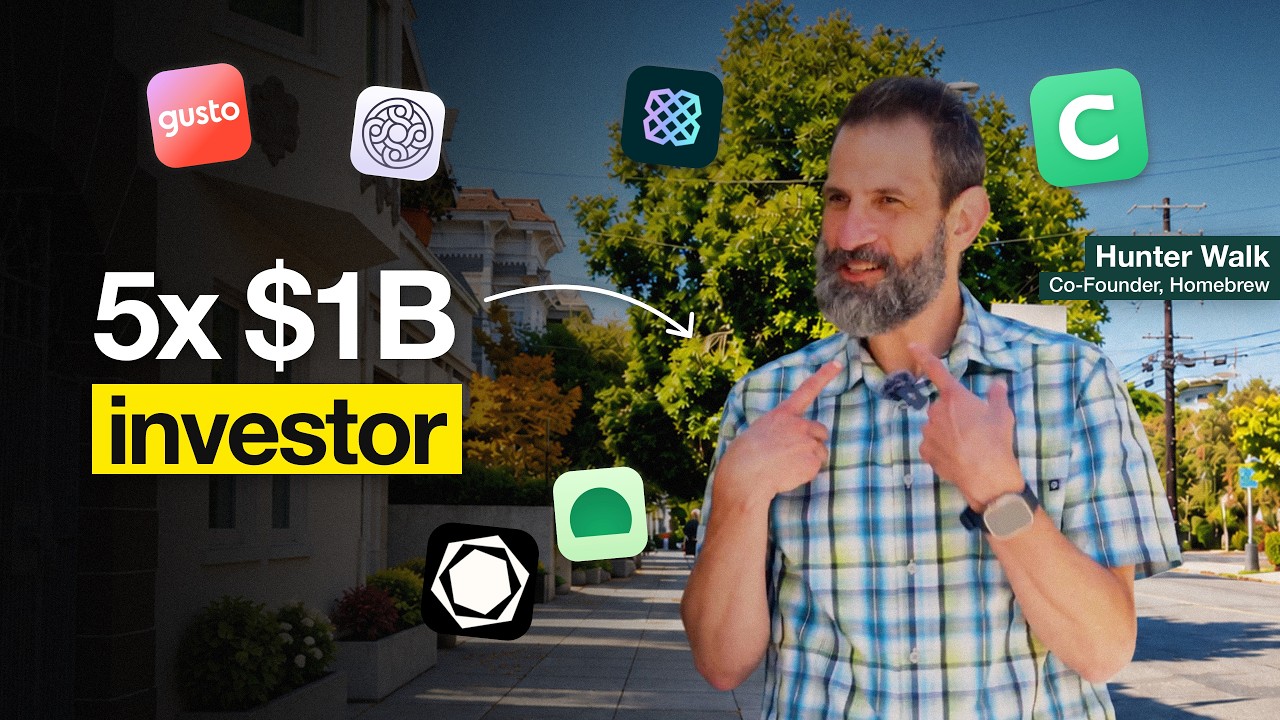
Hunter Walk, a 13-year Silicon Valley venture veteran who backed Chime early (public at $11.6B) and led Homebrew’s seed investment in Graphite (acquired by Cursor at $29B), argues that “skin in the game” is no longer enough — founders and investors need “heart in the game” to build durable companies.
The shift from skin in the game to heart in the game
The venture ecosystem has compressed time-to-proof: investors and founders face pressure to show traction in years, not decades, leading to short-term thinking and “looking over your shoulder” for the next hot thing.
Post-COVID financialization (crypto trading, prediction markets, secondary liquidity) accelerated a mercenary mindset where people optimize for quick bags rather than decade-long commitment.
Heart in the game means willingness to stick through near-death experiences (Chime almost died multiple times early on) because of mission alignment — e.g., building financial services for everyday Americans — not just NPV calculations.
Walk prefers founders he might eventually have to tell “you tried your best, let’s do a fresh start” over founders constantly calculating whether to join Anthropic instead.
Evaluating founders: the sandwich framework
Top slice — founder quality: high slope, high CPU, deep understanding of the problem they’re solving; assessed through vibes, back-channel references, what they’re proud of, and what they choose to share.
Middle slice — problem/market: large, urgent, valuable; Graphite’s bet on code quality (pre-GPT) and avoiding the IDE layer showed ambition and thesis clarity.
Bottom slice — intangibles/heart: connection to the problem beyond financial upside; “do they want it on their tombstone?”; will they build in a way that makes everyone proud of the journey, not just the outcome.
Walk stresses face-to-face conversations to test these intangibles — many investors avoid hard questions because deals are competitive, but the best relationships start with mutual trust and context.
Missionary vs mercenary talent
Mercenaries (18-month equity hops) have a place — put them in roles suited for sprint execution — but durable companies need missionaries for leadership, mentorship, and culture-building.
CEOs must consciously choose their mix; hiring mercenaries for missionary roles creates misalignment.
Walk’s heuristic for company health: show him the resumes of the first 20 hires. Talent attracts talent; a nexus of high-option people leaving good jobs, bringing friends, with constructive disagreement, signals something special — even if it doesn’t guarantee a Google/Stripe outcome.
Homebrew’s operating model: own capital, 50/50 partnership, no deal attribution
Shifted from LP capital to investing their own money to avoid business-model pressure (e.g., needing 15% ownership to justify fund size) that crowds out better cap tables.
Sacha (partner) and Hunter: 50/50 economics, consensus decisions, no deal attribution — prevents poisonous “who sourced it” dynamics.
Explicit “board-level involvement” without formal boards: quarterly “come up for air” conversations on the arc, plus 24-hour SLA for closing/retention help.
Talent partner (ex-Google, Salesforce) taught founders to fish — salary bands, hiring brand, exec recruiter relationships — rather than just sourcing resumes.
Walk values in-person office time: walking the floor, meeting the team, vibe checks that Zoom can’t replicate.
Screen Door: fund-of-funds for emerging managers as competitors, not charity
Launched 2021 to back top-tier emerging VCs (often founders starting firms) who need capital and LP access, not just advice.
Hired Lisa Colly (ex-family office emerging manager lead) as MD in 2023; gave her team the management company — structural alignment so they win proportionally.
Bidirectional learning: on the field, these managers “dunk on” Homebrew (find better founders); off the field, they share operational wisdom (fund setup, LP relations).
Walk frames it as LeBron/Wembanyama: compete fiercely, mentor generously.
Personal evolution: ego, parenting, and non-scalable community work
Early imposter syndrome (“I belong but barely”) resolved through recognizing his own spikiness (media/tech intersection) and parenthood (14 years ago) — “you get to exhale.”
Deliberately does non-scalable, non-professional work: food bank volunteering, door-knocking for local politicians, adopting a storm drain to clean during rains.
Sees this as antidote to polarization/sorting — “touching grass” with actual communities keeps him grounded beyond AGI/cloud discourse.