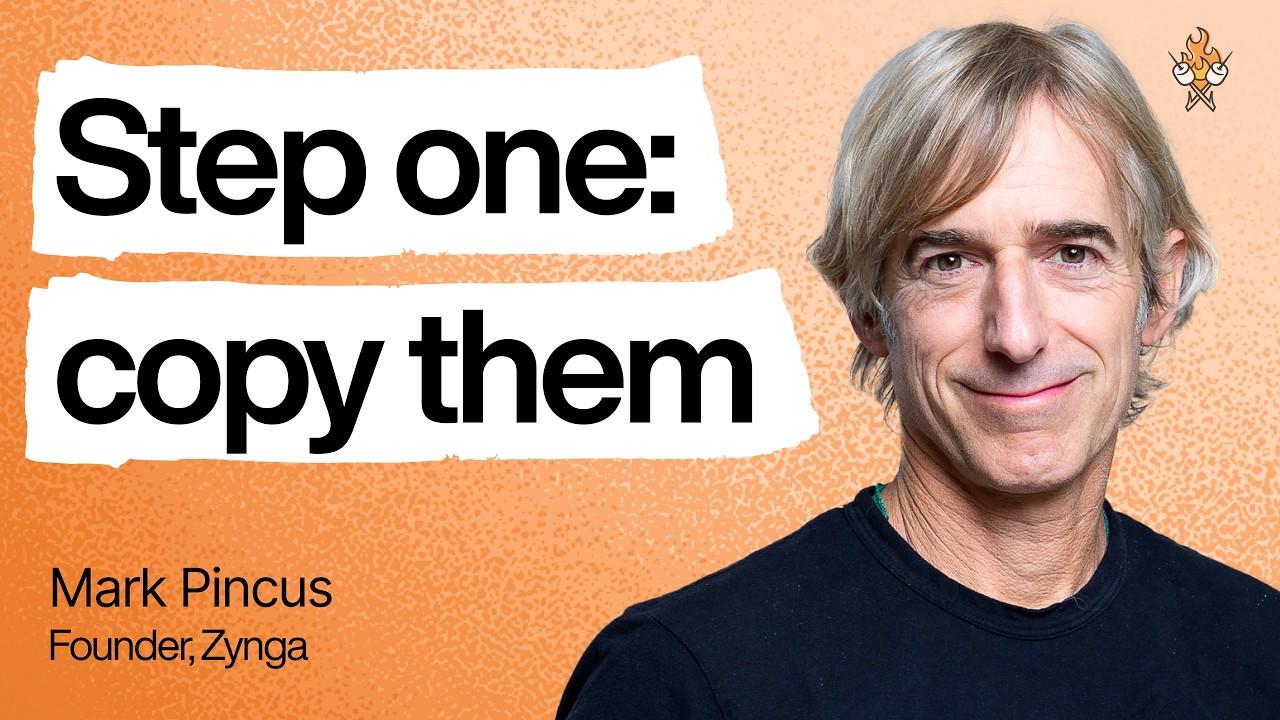
Mark Pincus, founder of Zynga (creator of FarmVille, Words with Friends, and more), has spent decades building consumer products and has distilled his approach into a framework called Proven Better New, which is the core of his book Life at the Speed of Play. The framework is designed to help founders dramatically increase their odds of building a successful product by being disciplined about where they innovate and where they don’t.
The Proven Better New Framework
The core insight: Your instincts about human needs are right ~95% of the time, but your specific ideas about how to serve those needs are wrong ~75% of the time. The framework exists to help you test many ideas around a strong instinct without failing for preventable reasons.
Proven: Identify every element of the experience that is already working on this platform for this audience, and copy it exactly—at the pixel level. You haven’t earned the right to innovate until you’ve mastered what’s already proven.
Example: Sid Meier launched a social Civilization game on Facebook with brilliant game design, but his onboarding was so clunky that nobody ever saw it. Even the world’s best game designer tripped over basics that junior PMs at Zynga understood.
Example: Slack may have been just “proven + better” with no “new” at all—it took a behavior people already loved (chat) and made it dramatically more accessible.
Better: Find improvements that 10 out of 10 existing users would say “yes” to—not what you think is better (that’s “new”). These tend to be small, polish-level improvements that power users notice most.
Example: Words with Friends was essentially Scrabble, but its mobile polish was the “better” that made it a hit with 14 million DAUs.
New: Add one back-of-the-box idea that gives people a reason to download and try. Accept that this will probably fail, and have multiple new ideas ready to test.
Example: The “new” in Words with Friends was that your Facebook friends were already there to play with you—a social graph integration nobody had done for board games at scale.
Why this works: If you get proven and better right, your product won’t fail for stupid reasons. If the new idea fails, you can swap it without rebuilding everything. It’s like a time machine—you’re iterating toward what works instead of betting everything on one vision.
The Moral Arbitrage of Copying
Most founders resist copying because they became entrepreneurs to innovate, and they were taught in school that copying is cheating. Pincus calls this a moral arbitrage—the ego resistance to copying actually makes the opportunity more available to people who can get past it.
“Burn your resume”: Define your ambition in the eyes of your consumer, not your peers. If you’re trying to win the hearts of nurses in Indiana (FarmVille’s core audience), you don’t need awards from Silicon Valley—you need to give them something they love more than what they have.
The best product makers copy so skillfully that consumers don’t realize the product is derivative. Craig Newmark spent two years adding photos to Craigslist listings—something that seems obvious in retrospect but required deep understanding of how people actually used the product.
Most hit products are better versions of things that existed before. Looking around at everyday objects—iPhones, water bottles, browsers—almost everything is a copy-and-evolve of a predecessor.
Be Less Ambitious to Build More Ambitious Things
The paradox: The more ambitious you are, the more humble your starting point should be. Massive products almost always started embarrassingly small.
Facebook started as a way to check out people at Harvard.
Zynga started as a Facebook poker app—Pincus was 41, a multi-time founder, and people thought he had no dignity making a Facebook game.
Slack started as an internal tool at a failed game company (Glitch). Stewart Butterfield had tried and failed to build a mass-market MMO twice before noticing that his engineers loved their internal chat tool.
Bolt.new toiled in obscurity on a web-based virtual machine, then realized combining it with an AI coding copilot created something better than anything else on the market.
Why multi-time founders are disadvantaged: After success, founders feel pressure to do something bigger. They can raise money and recruit teams against a grand vision before finding product-market-fit. First-time founders have less rope to hang themselves.
The Zuck trap: Big companies need billion-dollar opportunities because their revenue base is so high. Startups don’t—which is exactly how they discover the biggest ideas by pursuing small, flaky threads that incumbents ignore.
Kill Hope Before Hope Kills You
Hope vs. belief: Hope is confidence without basis. Belief is grounded in data, lived experience, and evidence. Founders who keep going because they hope the next release will be magical are on a dangerous path.
MVP vs. Maximum Launchable Product: Pincus rejects the concept of “minimum viable product” because “viable” is where hope lives. Instead, build the maximum launchable product—something you believe (not hope) will be a hit. If you’re not sure, you’re not ready to launch; you’re ready to test.
Use AI as a failure machine: AI makes it possible to build and test 100 ideas in a week instead of one idea in three months. But most people use AI to build one idea faster. The real power is using it to test many cheap, wrong versions quickly before building the right one.
Example: At Zynga, before launching a FarmVille expansion pack, instead of spending $10M on external ads, the team put different art variants directly on the game board where 25-30 million daily users would see them. They tested which variant got the most clicks, sold early-access keys, and generated $19M in pre-launch revenue—turning marketing into a product-testing and revenue-generating engine simultaneously.
How to know if your product is a B+: “If you’re asking whether or not your product is an A, it’s not an A.” When you have true signal—lightning in a bottle—you know. You’re addicted to it, your friends love it, your metrics work. When you’re with a B+, you’re asking “could this be the one?” Pincus pulled the plug on his metaverse project after four years and $25M, and says he’s been more inspired in the two weeks since than in the previous four years.
What Made Zynga’s Games Actually Succeed
Zynga is often misunderstood as a virality/spam company, but Pincus argues their real advantages were two things:
Mission: Connect the world through games. Every game was designed around “invest, express, connect”—let players feel creative, express themselves, and build relationships. Co-op play and gifting were the most successful features because they created real social bonds.
Retention over virality. Zynga tracked Day 365 retention—something Pincus claims no other consumer company did or does. They believed the most valuable companies in the world have the highest D365 retention, and they built early indicators to predict it.
They invented a metric called ASN (Active Social Network), measuring round-trip interactions between players. Going from 0 to 1 ASN meant an 80% chance of returning next month. Getting to 4 ASN meant an 80% chance of being active 22 out of the next 30 days.
The games that endured (Words with Friends, Poker) made the transition to mobile. The ones that didn’t (FarmVille, Cityville) were tied to the Facebook platform.
The Future of Consumer Social and Distribution
Latent demand for social: People are still social online (Instagram, Snapchat, TikTok), but the experience has lost its adrenaline. People are proud to quit Instagram—they compare it to quitting smoking. The NPS of people who quit Facebook went from +35 to -35.
The cocktail party metaphor: Great social products feel like a great cocktail party—you’re glad you’re there, you meet interesting people, you get great leads. Today, people are hanging out on Claude and GPT, but there’s no cocktail party. The challenge is: figure out how to make it rowdy.
Social productivity: Facebook and LinkedIn originally gave us massive social productivity—staying in loop with hundreds of people, better lead generation than Google or Craigslist. But these platforms moved away from productivity toward engagement and ads. The next wave of social will give us a new step function of productivity through agents.
The agent as social broker: Pincus is excited about AI agents brokering social relationships through an intelligent “social membrane” of trust—knowing when to connect people, managing asymmetric interest (you want to hang out more than I do this weekend), and handling logistics without hurting feelings.
Distribution is broken: We’re not in a discovery era anymore—average app installs per user per month is zero. 40,000 new games launched last year and zero became top-10 hits. AI is not yet a platform (it’s a technology in search of a platform). Consumer apps are almost not investable right now.
The prosumer path: The most successful companies today find power users (“whales”) who care enough to find the product and pay for it upfront, sustaining the business before reaching mass consumer.
Free tokens as innovation zone: If tokens become essentially free in 1-2 years, founders should reimagine consumer services based on free compute—offering services that don’t make economic sense today because token costs are too high. An agentic travel agent that’s available 24/7, knows your context, and manages your trip in real-time is a prime example of latent demand that’s unlocked by near-free tokens.
Management and Scaling Principles
Make everyone a CEO: Give people a hill to take, a budget, and full operating control. Hire people who are frustrated expert witnesses—know-it-alls with pent-up demand to prove they’re right. This eliminates the need for management because people come back with results, not questions.
Stay close to the metal: The best product CEOs are in the minutiae of details. Steve Jobs picked conference room carpeting. Discord’s founders realized they’d outsourced the most important UX decisions to their least experienced people and inverted the pyramid. Bezos and Zuckerberg spent two days a week embedded with teams on what mattered most.
“Micromanagement is beautiful”: Pincus ran standup calls with 50 employees for two hours, going name by name through a spreadsheet of what each person did yesterday and would do today. It worked. Micromanage as long as you can, assuming you’re the best player. Only delegate when you physically can’t be in every room.
Transfer your vampire blood: Put as many people in the room with you as possible during product meetings so your passion and approach spread. Then grab someone from the ranks and make them your tech assistant for 6-12 months—a mini-me who absorbs everything. At Amazon, almost every C-suite member had been Bezos’s tech assistant.
The number one job of a CEO is to be right: Borrowed from Bezos. Being in the right body of water matters more than having the right boat. A great boat in a dead lake goes nowhere. Pincus values intellectual honesty and being right over style, personality fit, or execution skill.
Parenting in the AI Era
Pincus has five kids and considers raising good humans his greatest role. Key principles:
Meet them where they are: Every kid is completely different (he has a special needs son, a daughter with ADHD and dyslexia, twins who diverge from each other). Engage at their altitude, human to human, and you can bring them to surprisingly sophisticated places.
Teach critical thinking, not knowledge: The 100-year cycle of factory-produced education (designed to produce knowledge workers) is ending. Pincus tells his kids he doesn’t care if they go to college—he cares that they develop critical thinking and find ways to be useful to people.
Teach them to ask better questions: When an adult tries to convince you of something, ask why—what’s their agenda, their lived experience? How has that shaped their view?
Generative over consumptive: Encourage kids to put things into the world rather than passively consuming content and experiences.
Life philosophies document: Pincus keeps a running Google Doc of life philosophies for his older daughters, with stories. Examples: “Nothing’s personal” (assume nothing’s personal and you’ll be right 19 out of 20 times), “Don’t be a victim” (the world doesn’t happen to you, it happens around you; you’re defined by how you react).
Mark’s “Why”
After 30 years, Pincus articulated his purpose: to build an “internet treasure”—a service we can’t remember life before or imagine life without. He believes the greatest ambition for product makers is to build digital skyscrapers that the next generation can’t believe anyone ever lived without. His book Life at the Speed of Play is his attempt to share this playbook so others can steal his ideas and take them further.