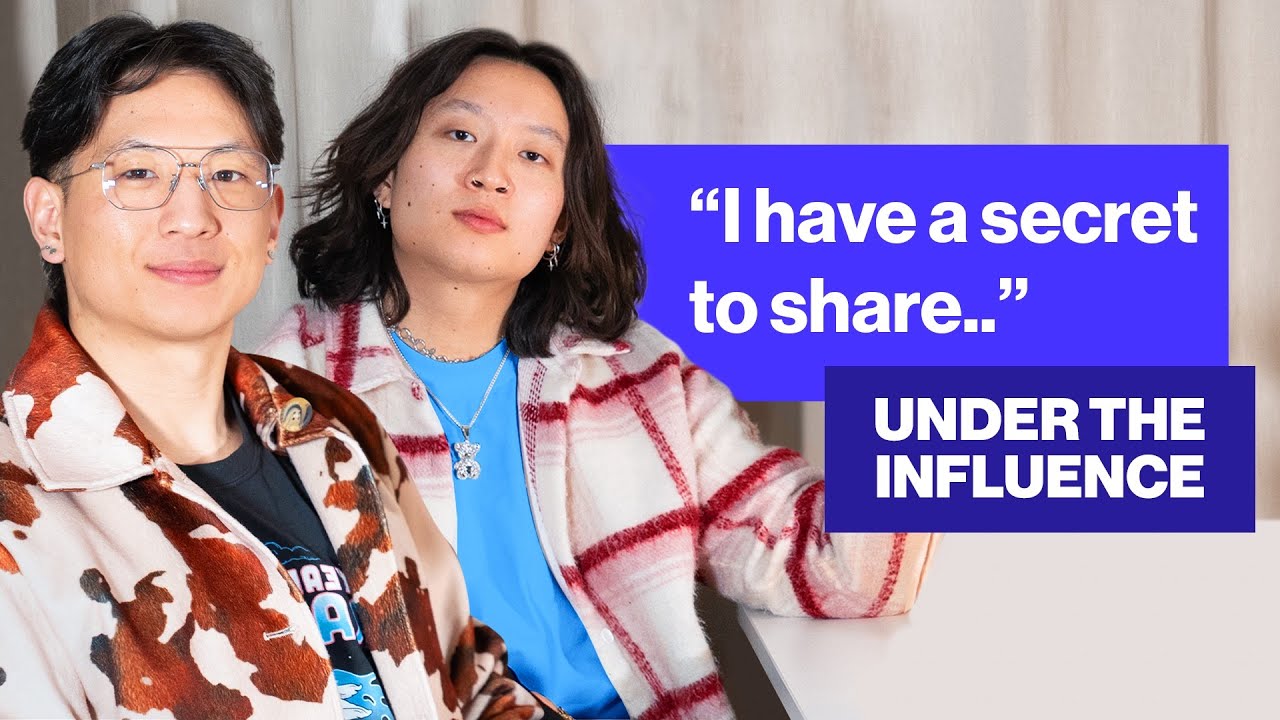
Three friends — Eric, Jeremy, and Wootak — play the “36 Questions to Fall in Love” game, a New York Times–famous vulnerability exercise designed to accelerate emotional intimacy between strangers. What unfolds is a wide-ranging, deeply personal conversation about Asian parenting, fear, love, business partnerships, and the tension between grinding hard and learning to surrender.
Asian Parent Wisdom and Eye Strain Myths
Wootak shares that his Korean mother believed wearing glasses weakens eye muscles, so she deliberately got him prescriptions that were slightly too weak — a common piece of “Asian mom wisdom” he only questioned as an adult.
Both Wootak and Jeremy grew up being told to look at distant objects and green things to exercise their eyes, practices they assumed were legitimate until realizing they might just be cultural myths.
Wootak is legitimately near-blind (around -8 prescription) and jokes about being a terrible driver even with glasses, especially with GPS directions — he once described driving like a cartoon character cutting across lanes to hit an exit.
First Impressions and Getting to Know Each Other
The group does a “Wild Card” exercise where they share first impressions of each other:
Jeremy first saw Wootak on a Zoom call in his bedroom, looking like a “big Asian nerd” — glasses, hair tied back, no jewelry — but came away impressed by his intelligence, risk-taking, and hustle after hearing his story of dropping out of college and building a business during the pandemic.
Wootak met Jeremy through a mutual friend who described him as a young, business-savvy podcast host; when Jeremy showed up to Thanksgiving with fashion and “drip,” Wootak was surprised and impressed, especially when Jeremy said his “fetish” was love and emotional support.
They discuss how some creators (like Everett Noble) are shyer in person than on camera, while others (like Melissa Ang) are exactly the same. Graham Stefan is highlighted as someone so financially disciplined he eats $20 all-you-can-eat sushi despite being worth double-digit millions.
The Cost of Distance from Family
The conversation turns to how often they see their parents, prompted by a well-known thought experiment: if your parents are 80 and you only see them at Christmas, you may only have a handful of visits left.
Jeremy talks about wanting to build generational wealth for his family but realizing, after a post-ayahuasca conversation with his mother, that she never regretted anything because everything she did came out of unconditional love — she even memorized which foods her sons preferred so she’d avoid them at dinner to leave more for them.
Wootak reflects on feeling resentment toward his parents for their strictness, especially his father, who couldn’t understand why his son was hurt by his choices. He draws a parallel to a Soft White Underbelly interview where an ex-gang member apologized to his abusive father — the father broke down crying and changed his life. Wootak resolves that leading with vulnerability, even when you’re in the right, can shatter hardened shells.
Eric notes that the best way to honor his parents’ sacrifices may not be to follow their literal advice (become an investment banker) but to follow the spirit of it — building a meaningful life on his own terms.
Parenting Philosophies: Tiger Mom vs. Chill Dad
The group discusses how they’ll parent their future kids:
Jeremy wants to be strict in the mold of LaVar Ball — competitive, demanding, but always present and explaining his reasoning. He respects that LaVar’s kids all made it to the NBA and still respect him.
Eric references a contrasting story: a golf prodigy whose father smashed his second-place trophies and is now completely estranged from his son, who quit golf entirely.
Wootak wants to be the chillest dad — supportive of whatever path his kids choose — but also wants them to do hard things and be independent (he was biking to school in first grade and making his own breakfast in second grade).
Fears and the Struggle to Surrender
In a Level 3 question, each person names what the others fear most:
Jeremy fears judgment and not being liked — rooted in a childhood where validation came from doing the right things and punishment was harsh. He’s built an “optimization machine” personality that’s always analyzing and anxious, and he’s still working on feeling psychologically safe enough to take risks.
Eric fears wasted effort — pouring everything into something only to find it was the wrong choice. Now that his company (Nectar/Carrot) has employees whose livelihoods depend on him, the stakes feel enormous. He’s inspired by Michael Singer’s The Surrender Experiment but struggles to reconcile “never taking your foot off the gas” with the idea of letting go and trusting flow.
Wootak feared never finding true love — a fear rooted in having replaced the need for love with lust and cheap validation for years. He describes being a sex addict and chasing the next girl rather than building something real. After an intense ayahuasca journey about a month before this recording, he’s experienced a 180-degree shift — more thoughtful, more present, and optimistic about healing.
Love: Conditional vs. Unconditional
The group has a rich debate about whether romantic love can ever be unconditional:
Wootak argues that romantic love starts with conditions (attraction, shared values) and only becomes unconditional over decades — at 65, you don’t care how your partner looks, you just love them.
Eric points out that even “unconditional” love has limits — he’d bail his brother out of jail if he committed murder, but he’d leave a wife who cheated repeatedly. You can love someone unconditionally while still taking the action that protects you.
Wootak shares the concept of Grace from a college sermon — a parent taking a child’s punishment out of pure love — as a model for how a partner might accept you even when rationally they shouldn’t.
The group concludes that maybe the goal isn’t unconditional love but clearly understanding your conditions — your dealbreakers — and finding someone who meets them.
Business Partnerships and Friendship Languages
Eric and his co-founder Will are co-CEOs with equal equity who started as friends — the harder path, since they had to build new boundaries.
Their key difference: Eric’s friendships are almost all work-adjacent (creators, founders, people he can strategize with), while Will’s friends are completely removed from business. Will once told Eric he missed just hanging out without talking about work — a revelation for Eric, who thought building together was the friendship.
They’ve learned to appreciate their different “work languages”: Eric is short-term, intense, and reactive (great for networking and seizing moments), while Will is long-term, balanced, and thoughtful (essential for strategy and hard decisions).
Jeremy and Wootak also have complementary styles as business partners — both willing to try new things quickly, both committed to self-development, and both honest with each other about their struggles.
Wootak’s work language has shifted post-ayahuasca: from “everything relies on me, do more, sleep less” to seeking partners who can balance him with long-term thinking. He’s learning to let capable people help rather than overloading himself.
Lessons from the Conversation
Jeremy takes away the importance of slowing down and making space for things that seem unimportant in the moment — he’s seen burnout habits creeping back in and knows he’ll regret it if he doesn’t surrender.
Eric takes away that the closest relationships should complement or contrast you — and that understanding someone’s “work language” or “friendship language” (like a love language) makes everything they do easier to understand.
Wootak takes away that love can be conditional in useful ways — the key is knowing which conditions are dealbreakers versus which are worth working through.