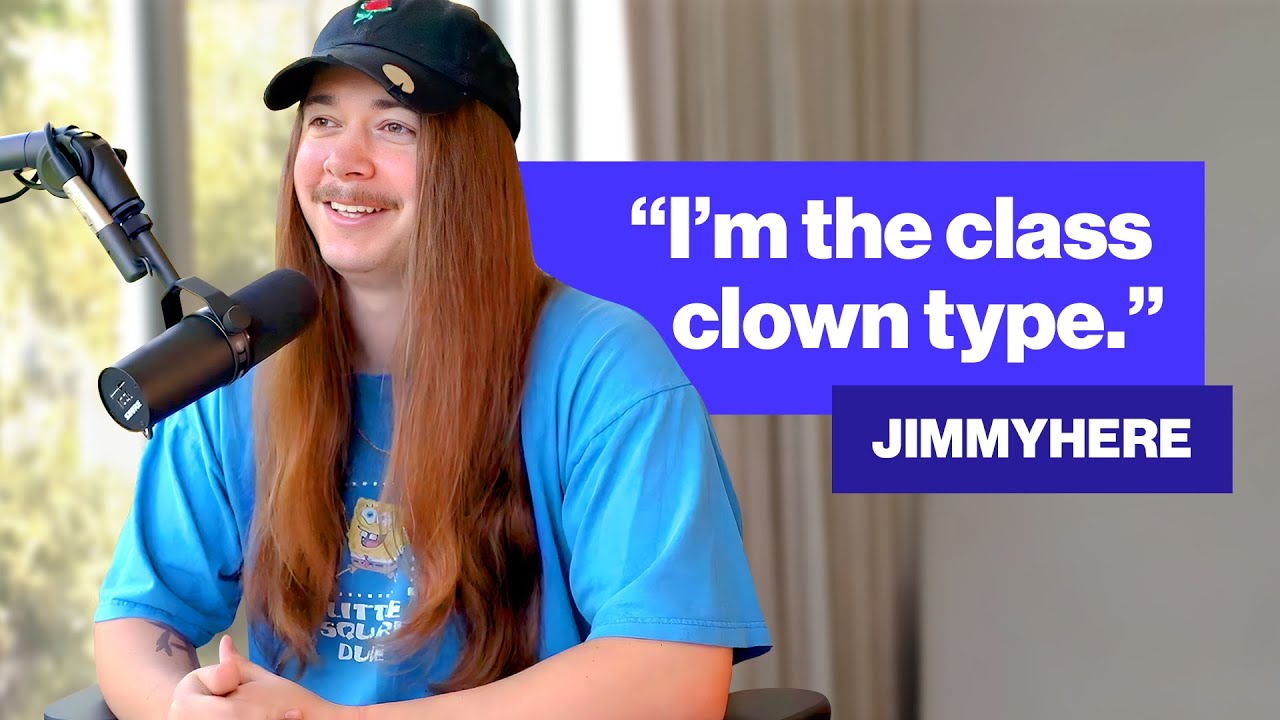
Jimmy Here is a full-time content creator whose career grew out of a lifelong drive to make people laugh, a trait that defined him as a kid but was never nurtured by the school system. This episode uses the “36 Questions to Fall in Love” framework as a vehicle for a deeper conversation about Jimmy’s path from class clown to professional creator, the dreams he let go of, the ones he held onto, and the earnest, reflective side of him that rarely shows up in his public persona.
Growing up as the class clown
Jimmy was a hyperactive, goofy kid who loved cartoons like Ed, Edd n Eddy, Code Name: Kids Next Door, Foster’s Home for Imaginary Friends, and SpongeBob SquarePants — shows that fueled his natural inclination toward humor and performance.
He struggled academically and never felt supported by teachers for his creative strengths. English and art were his favorite subjects; science and math were not.
In eighth grade, he wore an oversized Pikachu hat to a church summer camp and was so memorably goofy that someone made a Facebook page about him — “the kid who wore the Pikachu hat” — without even knowing who he was. He calls this his first experience of being a meme.
He pulled pranks at school (like hiding his phone in ceiling panels) and made short skits with friends in high school, which classmates loved, but no teacher or advisor ever pointed him toward film school or a creative career path.
The dream he let go of
Jimmy originally wanted to work in animation or video games. He attended multiple colleges for art but struggled to keep up academically and eventually dropped out.
He realized that high-end game development (3D modeling, etc.) required years of technical patience he didn’t have at the time, and without a clear fallback plan, leaving school was terrifying.
He briefly worked at an anti-aging skin care startup with his brother — a job that made him deeply unhappy — before social media gave him a way back to the creative life he wanted.
The long road into content creation
Jimmy’s first foray into social media was on iFunny, a now-defunct meme app, where he posted League of Legends content and organized in-character rap battles with other niche accounts. He built a following and started streaming League on Twitch around 2012, once pulling over 100 viewers by hosting tournaments with small gift-card prizes.
He had to pull back from streaming when he got married and took on full-time work, but the creative itch never went away.
When Vine launched, he started making six-second comedy clips “just to goof around” — no expectations, no strategy. This was his second wave of content creation and the one that first brought him wider visibility.
He eventually quit his startup job when his social media income matched his salary, a leap he describes as terrifying but necessary. Vine’s abrupt shutdown sent him into a decline before he found his footing again with meme reaction content and his current YouTube/TikTok work.
He emphasizes that the Vine era felt like acting — fun but not fully authentic. His current content, where he’s just himself, is where he feels he truly belongs.
What he wants next
Jimmy doesn’t assume he’ll stay relevant forever. He can name fewer than 10 creators who’ve remained highly visible for 5–10 years (Markiplier, PewDiePie).
His evolving plan: keep creating as long as it makes sense, then step back and use his experience to mentor and manage other creators — the kind of guidance he never had growing up.
He’s developing new projects with his team that align with what he feels he needs to do, not just what performs well.
The deeper side that doesn’t always show
The host pushes Jimmy on a weakness: that the earnest, thoughtful, deeply reflective side of him — the part that talks about holding onto childlike wonder, navigating failure, and wanting to help others — rarely comes through in how people see him publicly.
Jimmy agrees. In casual settings, people know him as “the meme guy.” He’s comfortable sharing the deeper story but acknowledges it doesn’t naturally lead the conversation.
He sees a unified narrative arc in his life: a kid whose creativity was suppressed by the school system, who found his way anyway, and who now wants to be there for the next generation of creators the way no one was for him.
He still feels childlike wonder about his career — regularly having moments of “holy crap, I’m in this room with these people as a peer, not a fan” — and considers protecting that sense of wonder one of the most important things a person can do while growing up.
Shared generational experience
Both Jimmy and the host grew up being told by parents that gaming and screens weren’t a “real” path. Both ended up building careers in the creator economy anyway.
They reflect on how platforms like YouTube, Twitch, and TikTok have made it easier than ever for anyone to find an audience for what they’re genuinely good at — a purer meritocracy than the old gatekept paths (like Hollywood).
The host shares his own parallel story: Harvard, investment banking, Facebook — all the “right” boxes — before quitting to build Carrot, a financial services company for creators, as a way to be part of the world he actually cared about.