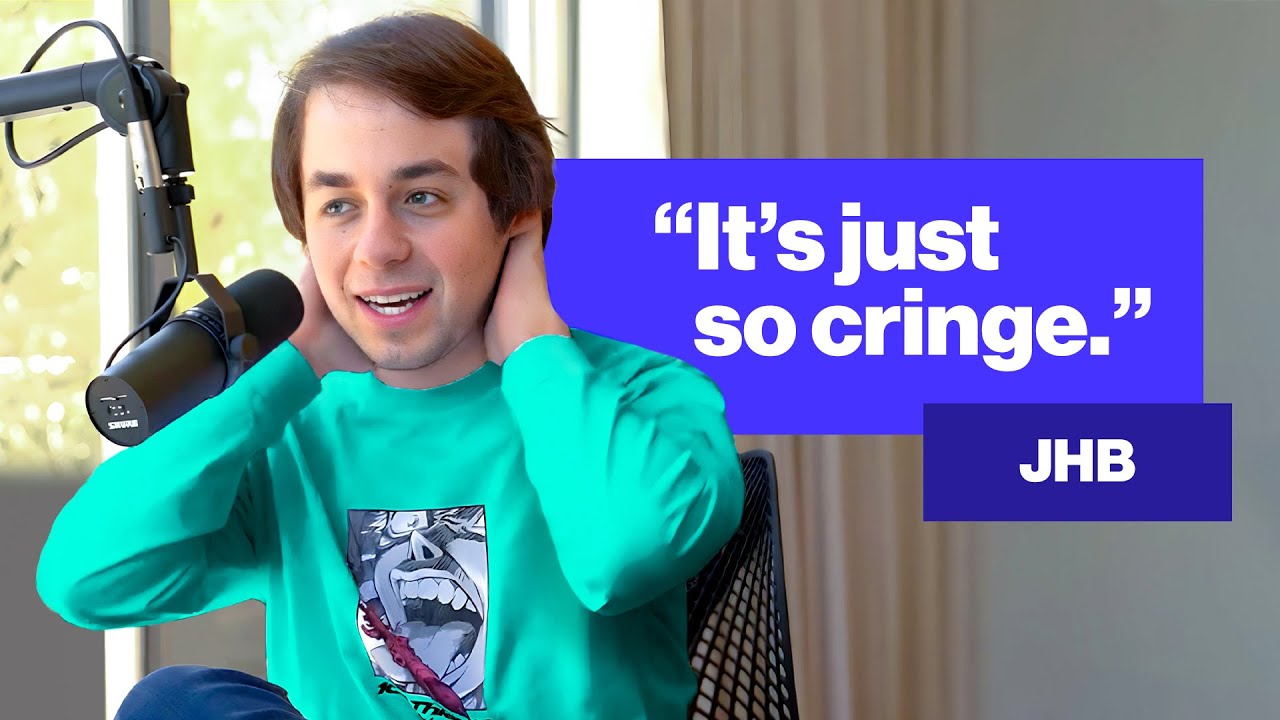
JHP (JHB) is a 20-year-old content creator who works at 100 Thieves, the gaming and lifestyle brand, where he started at age 17 as an editor and eventually became an on-camera personality with his own show, TBH. He grew up as a self-described awkward, quiet kid who spent most of his time on computers and playing video games, never imagining he’d end up in front of a camera. This episode is a wide-ranging conversation between JHP and the host about growing up in public, navigating social awkwardness, building a career in content creation, and figuring out adulthood without a traditional college path.
Early Life and Getting Started
JHP created his YouTube channel on Christmas Day 2011 at age 9, after getting a Dazzle game capture device for playing Modern Warfare 3 on PlayStation
His first video was just a gameplay clip; he wasn’t particularly good at the game but wanted to make videos anyway
He has middle school videos on the channel that he later made private because they were too cringe, though he values being able to look back on them privately
He learned editing through YouTube Video Editor, which he acknowledges was basic but got the job done
His older brother Chuck, who is five years older, got him into technology and video games at a very young age
JHP was playing games like chess and Marble Blast Gold by age two, and Call of Duty by age six or seven
Chuck is more hands-on and outdoorsy (builds computers, works on cars), while JHP is very much an “inside” kid
They now work together on production for creator shows like Cutie Cinderella’s Master Baker
The 100 Thieves Journey
JHP was hired at 100 Thieves at age 17, just three weeks before COVID lockdowns began, so he went from being a high school senior getting out of class at 3 PM to working until 8 or 9 PM
He initially worked behind the scenes as an editor for the team (a group of creators)
He built a following on Twitter by posting memes and jokes, which caught the attention of 100 Thieves employees
The company eventually wanted to put him on camera, leading to his show TBH, where he interviews creators while being openly awkward
His first on-camera shoot was an interview with Nico Loven, which he was extremely stressed about — he got only two to three hours of sleep and had a stomachache from nerves
Over time, he grew more comfortable on camera through repetition and the support of editors who helped smooth over his awkward moments
He’s since interviewed creators he grew up watching, including Anthony Padilla from Smosh and Ghanem, and has been followed back by Smosh’s Ian
Early in his tenure, he got a DMCA strike on the 100 Thieves Twitter account for using the Pink Panther theme song in a meme, and genuinely thought he was going to be fired
The company was understanding and just told him not to use copyrighted music, but the experience was terrifying for him
Awkwardness as Identity and Superpower
JHP describes himself as deeply awkward and introverted, preferring one-on-one conversations to group settings
In high school, he was the quiet kid who rarely went out and spent most of his time on Twitter and in front of a computer
He and the host bonded at creator parties precisely because they’d both gravitate toward the quieter corners and end up talking one-on-one
His show TBH was built entirely around the concept of him being awkward while talking to creators who are now his friends
He initially couldn’t do a simple intro without stuttering, but has grown significantly in confidence
He finds it hard to watch himself back on camera — he physically cringes and hunches over — but recognizes the progression is valuable
He relates to the Big Five personality model: very high openness, low conscientiousness (he once Googled how to boil water and was insulted by wikiHow telling him to find his sink), more introverted but becoming more extroverted over time, and increasingly agreeable as he’s learned to laugh at himself
He still hasn’t watched two or three episodes of TBH because they were too chaotic and cringe to relive
Content Creation Philosophy
JHP has moved away from obsessing over view counts, which he describes as “a drug” — external validation that you always want more of
He used to find it soul-crushing when a video he worked hard on didn’t get the views he hoped for
Now he focuses on making content he enjoys and is proud of, which he sees as a sign of maturity
He stresses the importance of making what you want to make rather than chasing numbers, especially for aspiring creators
He’s learned that being authentic on camera is more sustainable than trying to force a persona, citing an experience where a creator told him to “be natural” on camera, which paradoxically made him less natural
He believes his superpower is having both the creative/creator perspective and the corporate/brand experience from working at 100 Thieves, which most creators lack
Growing Up Without College
JHP never attended college, and he describes his time at 100 Thieves as his equivalent of a university experience
He was surrounded by adults in their 20s while he was 17, which gave him a head start on understanding professional life
He sometimes wondered whether he should go back to school, particularly for the social aspect of being around people his own age, but ultimately chose to continue working
He’s moving out of his family home soon (in about two months from the time of recording), which he sees as the next chapter of his “college experience”
He has virtually no cooking skills — he was eliminated in the first episode of Cutie Cinderella’s Master Baker for making terrible cupcakes (he put raw eggs and flour in the frosting with no recipe), and during COVID he microwaved eggs in a mug
His dad helped him cook a fish after the Master Baker embarrassment to “protect the family name”
Personal Life and Mental Health
JHP is a private person — his Instagram was completely private until about two months before this recording, when he made it public to start doing more podcasts
He recently appeared on a podcast called Under the Influence, which involves drinking games and relationship questions; he did it stone-cold sober and was uncomfortable with some of the personal relationship questions but overall found it a valuable learning experience
He’s still figuring out what helps him mentally — he doesn’t mention therapy but acknowledges the transition period of choosing between college and working at 100 Thieves was mentally difficult
He overthinks everything he posts online and how he interacts with others, though he’s gotten better about this over time
He’s recognized that becoming publicly known during the transition from teenager to adult added a unique layer of pressure to an already confusing life stage
The 36 Questions Game
The episode includes a game based on the “36 Questions to Fall in Love” study, with three levels of increasingly vulnerable questions
It begins with sustained eye contact, which both participants found surprisingly difficult and funny
JHP shared that people would never guess he’s an extremely fast typist — he achieved 140-150 APM (actions per minute) in a 100 Thieves typing video, beating out Fortnite pro players, from a lifetime of being on computers since age two
He was surprised when he got his driver’s license, having never imagined himself capable of driving, and now commutes 50-60 minutes to work daily
He recently changed his mind about wanting to live alone versus with roommates, deciding that having people around would be better for him socially
When asked when he felt most connected to the host during the conversation, he pointed to the discussion about shared awkwardness and the experience of being put on camera despite never seeking the spotlight