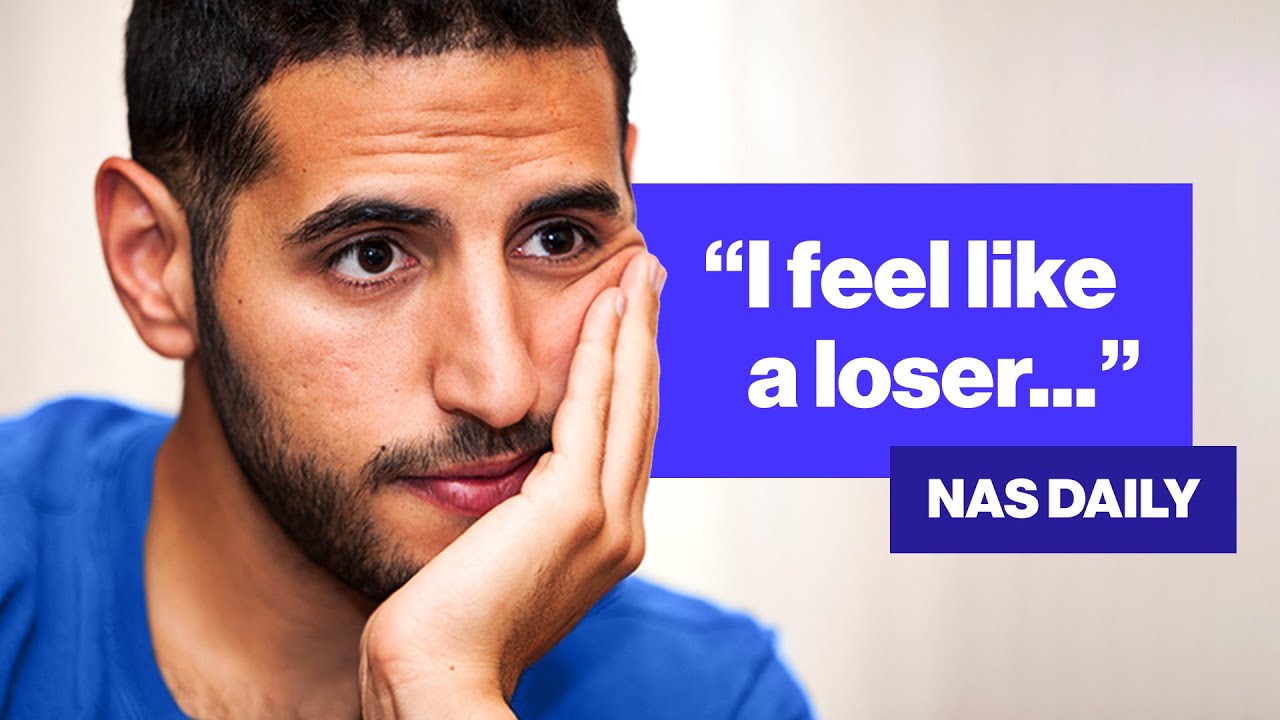
Eric (host of the Carat podcast) and Nas (Nas Daily, real name Messiah) are friends who met as freshmen at Harvard over 12 years ago. They play a version of the “36 Questions to Fall in Love” game, but the conversation quickly becomes a raw, honest exchange about insecurity, ambition, loneliness, and the emotional cost of building a career as a creator and entrepreneur. Despite Nas’s massive global success, he reveals he feels like his empire is “built on sand” and that he could lose everything at any moment.
Nas’s Background and Career Arc
Nas is the creator behind Nas Daily, a brand built around making one Facebook video every single day for years, amassing tens of millions of followers globally.
He started with almost no resources: when Eric first visited him in New York after he left Meta (Facebook/Instagram), Nas was sleeping on two mattresses stacked on the floor with no bed frame.
Before Nas Daily, he tried multiple startups (Kindify, a link aggregator; a dry cleaning venture; even sending a burger to space) — none of them worked out.
He worked at Instagram as a product manager, then briefly at Coinbase (2–3 months, a fact he didn’t put on LinkedIn) before being asked to leave because he was already mentally committed to starting his own company.
He is now building Karat, a fintech company creating financial products for creators, which he runs with a co-founder (Will). Karat recently reached profitability.
He splits his time between Dubai and Singapore and has decided to hire only in Asia, believing Asia is the future market, though he acknowledges this global spread makes it harder to achieve the kind of focused network effects someone like MrBeast has in the US.
The Psychology of Insecurity and Never Feeling “Enough”
Both Eric and Nas describe feeling deeply insecure throughout their lives, starting in college, where neither felt they had a real friend group.
Nas didn’t get placed in a blocking group (Harvard’s housing system) because nobody wanted him; Eric had a similar experience.
Nas once pranked his freshman entryway by claiming he was getting deported — and was struck by how many people were upset, which made him realize he had more friends than he thought. Eric, hearing about this at the time, felt the opposite: “It must be nice to have people who give a damn whether you’re there.”
Nas describes competing in two races simultaneously — the creator race (followers, views, revenue) and the entrepreneur/founder race (valuation, company building) — and feeling like he’s losing in both.
He stopped making daily videos at 10 million followers, feeling that milestone “completed” that race.
He’s now aiming for a unicorn valuation ($1 billion) with Karat as the finish line for the second race, but admits he doesn’t know what comes after.
Both discuss the idea that “the price of getting what you want is having what you wanted” — once you reach the goal, the race is over, and you don’t get the satisfaction you expected. Life is like a pie-eating contest where the reward is more pie.
Nas references reading Elon Musk’s texts during the Twitter acquisition and realizing that even the most powerful people in the world have the same insecurities and interpersonal conflicts he does. Eric references Obama’s observation that every level of government — local, state, federal — has the same dysfunction, just with smarter-sounding people.
Loneliness, Friendship, and Attachment Styles
Despite being surrounded by people at events like VidSummit (where he met ~50 people in a few days), Nas says he often feels lonely, especially at 2 a.m. when he wants someone to call who isn’t a co-founder or business contact.
He has never had a consistent group of close friends. His closest relationship is with his girlfriend of six years.
Eric introduces the concept of attachment styles from psychology:
Avoidant: convinces themselves they don’t need closeness, values independence, draws boundaries.
Secure: comfortable with intimacy and independence.
Anxious and avoidant people tend to end up together because their dynamics reinforce each other’s narratives. Secure people tend to pair off quickly, leaving anxious and avoidant people in the dating pool together.
Nas identifies strongly as avoidant: he doesn’t drink alcohol, do drugs, or consume caffeine because he wants to control everything in his life. He doesn’t want his happiness to depend on anyone else’s presence.
He even thinks about the possibility of his girlfriend dying as a way to practice emotional independence.
Eric identifies as more anxious — he wants closeness even though he knows he’s dependent on it.
Both are in therapy: Nas does personal therapy and co-founder therapy with Will; Eric recently started couples therapy with his girlfriend.
Nas’s key takeaway from the conversation: “I’m not as special as I think I am” — his feelings are shared by others, and there’s actual science (attachment theory) that explains his patterns.
The “Chip on the Shoulder” and Work-Life Balance as Privilege
Nas believes that work-life balance is a privilege, not a universal