-
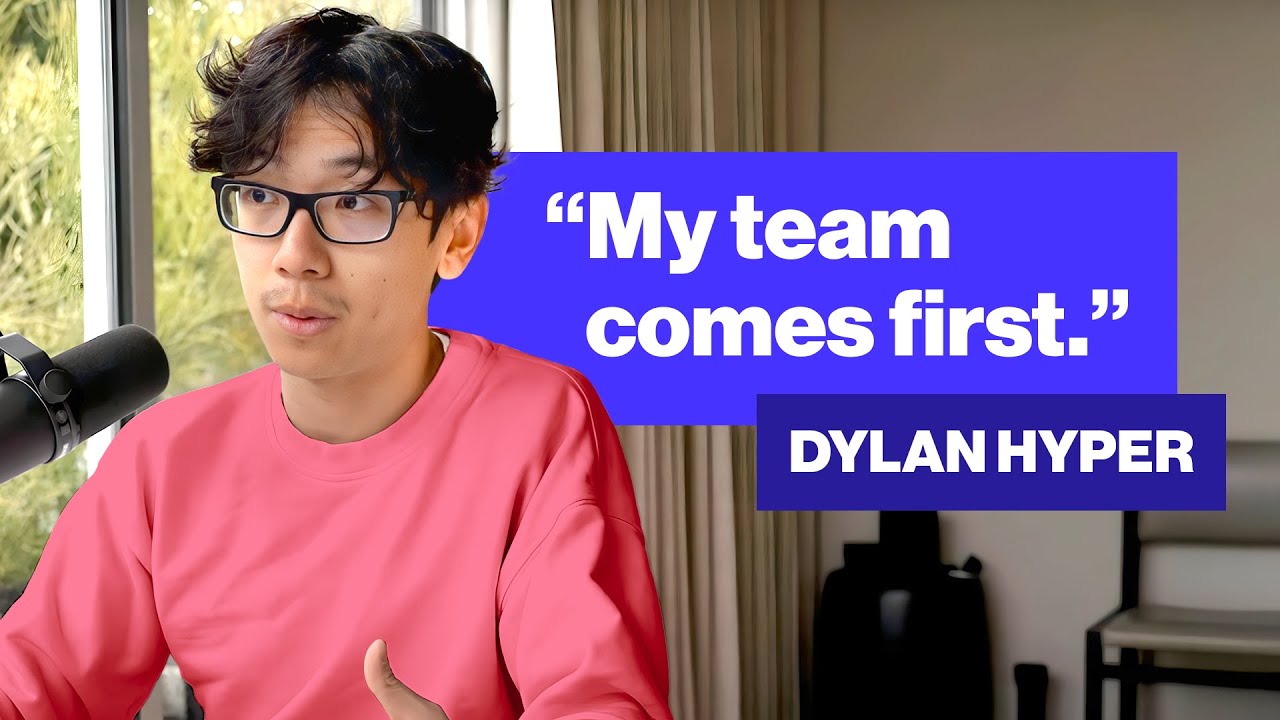
Dylan (Hyper) is a long-time YouTuber who started in 2012–2013, built a team of 13, and is now rediscovering his identity as a creator after years of operating more like a CEO. He and Eric (the host) play a game of “36 Questions to Fall in Love” as a framework for a wide-ranging conversation about ambition, team-building, family, burnout, and what actually makes a life feel meaningful.
-
Dylan’s origin story on YouTube
- Started in middle school after a friend suggested making Minecraft videos.
- Within two weeks, he spent his parents’ credit card on a Minecraft server rank, got called on a Twitch stream by a larger YouTuber, and gained ~5,000 subscribers overnight.
- That same YouTuber explained how money works online, which gave Dylan early clarity that this could be a career.
- He never had a traditional job; YouTube was his only path.
-
The shift from creator to CEO and back
- Around 2021, Dylan was focused almost entirely on the business side: hiring, management, company culture.
- He attended VidCon/VidSummit and realized he was the only one in “CEO mode” while everyone else was talking content ideas.
- Now he’s trying to return to being a creator again, but with the structure and strategy of someone who understands business.
- His goal is to find the intersection of what he wants to make and what supports the business, without losing the integrity of his ideas.
-
How Dylan builds and manages his team
- He hires people from the ground up rather than bringing in experienced execs, because he wants people who grow with him and understand his communication style.
- His team of 13 has essentially zero turnover.
- He pitches every idea openly and invites his team to roast it—he has “almost no shame” about this.
- He believes the best ideas often come from the team, not just from him.
- His favorite conversations with his head of operations are about improving the team’s quality of life, not about chasing views.
- He trusts that if he builds the right culture and hires great people, the results (views, revenue) will follow.
-
Eric’s parallel journey out of tech
- Eric worked in investment banking, consulting, and then Instagram/Facebook.
- At Instagram, he built a side project around booking services (haircuts, nails, restaurant reservations) natively through Instagram, got leadership buy-in, and formed a real team.
- During a reorganization, his team was shut down. His manager had known for weeks but didn’t tell him—his designer had even skipped Chinese New Year with her parents to work on it.
- That experience was the breaking point: he decided he never wanted to work that hard on something only to have it killed by forces outside his control.
- He left to build something of his own where he could control his destiny and work with people he trusts.
-
Ego vs. confidence
- Dylan believes you need some ego to put content out into the world, but distinguishes that from confidence.
- Confidence means being okay asking for help, being open to feedback, and not needing to seem like you’re at the top of your game all the time.
- He used to think he knew the best path for everyone; now he listens first and finds that he both gives and receives more value that way.
- He has a “no shame” mentality: he’ll text six friends a business question, follow up if they don’t respond, and is always willing to help them in return.
-
Family, cultural context, and reframing the hustle
- Dylan’s mom was a single mom. He grew up making decisions for the household early on, which created a friend-like relationship with her rather than a hierarchical one.
- His mom took him to a fortune teller as a baby who said he’d either do great things or become a major criminal—she’s been fine with whatever he does as long as he stays out of jail.
- Eric’s parents, like many Asian immigrant parents, wanted him to be a lawyer, banker, or doctor—something safe and stable.
- Both Dylan and Eric recognize that their parents’ drive to sacrifice and build a better life is the same energy they’re applying to their own unconventional paths.
- Dylan reframed this: honoring his parents doesn’t mean doing what they told him, it means channeling their hustle into his own context.
- He sees his cousins going through the same pressure he did (needing to make more than their parents, stacking internships) and has shifted from telling them they’re wrong to just being there when they’re ready to talk.
-
Burnout, sustainability, and the journey
- Dylan hit a point in 2020 where he had all the material things his family valued—a nice apartment, a Mercedes, going out to dinner constantly—and realized he was miserable, meaner, and had a bigger ego.
- He decided to build a team not to make more money but to have something meaningful. He now makes roughly one-sixth of what he made solo but does six times the work and finds it more fulfilling because he’s doing it with people he cares about.
- He describes himself as “realistically optimistic”—he accepts that there will be days he’s tired or burnt out, acknowledges them, and keeps moving forward.
- He told Eric he was burnt out just two days before recording, and appreciated that Eric reciprocated by sharing his own burnout. That honesty itself was a form of stress relief.
- Eric shared a principle from a mentor: ask yourself if what you’re doing is sustainable for 100 years. If not, why are you doing it?
- Both agree that the journey matters more than the milestone. Dylan says hitting 100K subscribers (with friends around, on vacation) felt bigger than hitting 1M (alone in his room).
-
The value of relationships and connection
- Dylan’s life changed at age 13 when he went to PAX Prime alone and met people who became his closest friends and collaborators.
- Eric’s life changed in San Francisco when he met people his age doing startups, making the abstract feel achievable.
- Both operate on a principle of giving without expecting anything back—asking for help, offering help, and building an ecosystem of mutual support.
- Dylan believes that milestones are only meaningful when shared with people. He doesn’t remember hitting 1M alone, but he remembers 100K with friends.
- The most valuable part of this conversation for both of them is simply getting to know each other better as humans, independent of any business outcome.
-
How they describe each other
- Dylan describes Eric as emotionally thoughtful and aware, open, personable, someone who naturally looks out for people and keeps doors open for others.
- Eric describes Dylan as open, genuine, someone who looks out for people naturally, and someone everyone he knows speaks highly of.
I gave up millions to hire friends: Dylan Hyper’s story
Karat • • 1h8 → 5 min • #6