- Jeff Kripal, a Rice University professor of religion, argues that across many religious traditions, what is actually orthodox and encouraged is sublimated homoeroticism—same-sex desire among men that is not acted on sexually—while active heterosexuality is socially marginalized and funneled into reproduction and labor. His claim extends to the idea that Jesus himself was queer, that Christian monasticism is best understood as sublimated homosexuality, and that there is a deep, largely unacknowledged connection between erotic energy and divine experience.
The Personal Origin of the Thesis
-
Kripal entered a Catholic seminary as a deeply pious teenager who practiced extreme fasting and asceticism, which he now understands as a way of suppressing his emerging heterosexual desires during puberty.
- He was essentially anorectic, though the term was not yet in common use, and interpreted all of his bodily renunciation as holiness.
- The monks, concerned he was dying, sent him to a psychoanalyst monk who introduced him to Freud and the idea that religious behaviors can encode hidden drives.
- Through this lens, Kripal began to see his own fasting and that of his colleagues as sublimated sexuality.
-
Inside the seminary, he observed a striking tension:
- The official Church condemned homosexuality in harsh terms.
- Yet internally, the community was playfully, flamboyantly homoerotic—cross-dressing at parties, coded jokes, and an atmosphere the dean once rebuked by saying, “This is a Catholic seminary, not a gay bar.”
- High school girls who visited were visibly attracted to the seminarians, but the men showed no interest in women whatsoever, undermining the official narrative of “giving up sex for God.”
-
Kripal eventually left the seminary, concluding bluntly that he “wasn’t gay enough to be a Catholic monk”—that the tradition’s structure selects for men whose desires are oriented toward other men, even if unexpressed.
Why Mysticism Selects for Same-Sex Desire
-
Kripal proposes four overlapping explanations for why same-sex desire and spiritual orientation are linked:
- Ontological difference: Homosexual desire is fundamentally different in kind from heterosexual desire and is more naturally religious or spiritual.
- God is male: For a male mystic, any erotic relationship with a male God is by definition same-sex, making the mystical marriage inherently homoerotic.
- Sociological pressure: In societies that condemn homosexuality, same-sex-oriented men have nowhere acceptable to go except religious communities that valorize celibacy.
- Puberty in single-sex environments: Being immersed in an all-male community during puberty encourages fluid sexual orientation.
-
He emphasizes that sexual orientation is more fluid than commonly assumed and that religious communities actively encourage a kind of gender fluidity.
- He personally believes that had he stayed in the seminary long enough, he would have come to desire other men.
-
Historically, celibacy offered enormous social advantages, especially for women (freedom from childbirth, access to learning and community) but also for men who loved men, since same-sex relations function as perfect birth control.
- The modern contraceptive pill has fundamentally undermined the celibate argument, since straight people can now have sex without reproduction.
-
Kripal predicts that as societies stop persecuting homosexuals, fewer same-sex-oriented men will enter monasteries, draining the monastic tradition—a pattern he believes is already observable.
A Queer Reading of Jesus
-
Kripal does not frame his project as historical Jesus scholarship but rather as a “historical koan”—a deliberately provocative, heretical reading meant to shock new thought and self-reflection.
-
Key New Testament evidence he cites:
- Neither Jesus nor Paul was married, which was highly unusual for Jewish men of their time and signals something non-heterosexual about their orientation.
- Paul’s language: He urges all men to be virgins, to be “married to Christ”—a same-sex mystical marriage that Paul treats as unproblematic.
- Jesus’s eunuch teaching: “Become eunuchs for the kingdom of heaven” aligns Jesus with a figure who gains proximity to power precisely by being non-sexual, which Kripal reads as non-heterosexual.
- Anti-family teaching: “Hate your mother, hate your father; these are not my parents; abandon your family, sell everything, follow me” is, for Kripal, profoundly non-heterosexual in its rejection of the reproductive family unit.
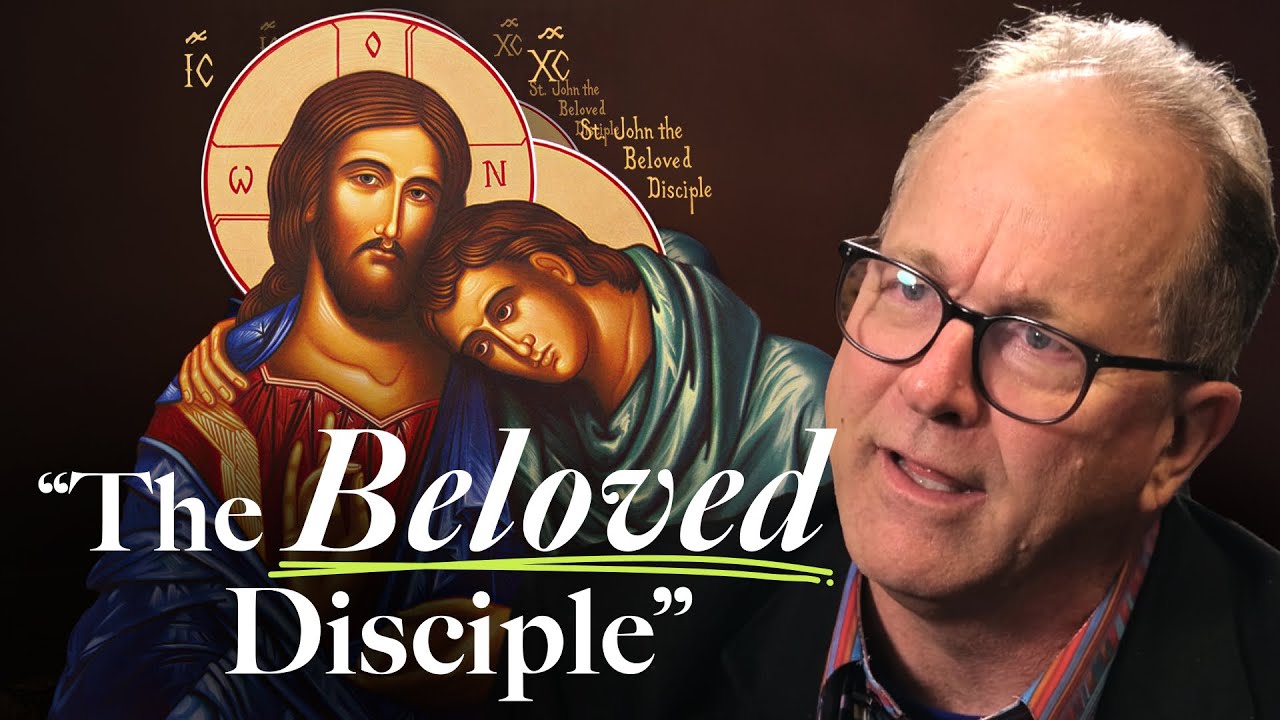
- The beloved disciple: In John 13:23, the Greek reads en toi kolpoi tou Iesou—“in the bosom of Jesus,” “in the fold of Jesus”—not merely “reclining next to him.” English translations have systematically bowdlerized this language. Kripal sees this as a clear instance of hiding something.
- The young man in Gethsemane (Mark 14:51-52): A nearly naked young man alone with Jesus on the night before the crucifixion, a passage Morton Smith famously read as encoding a homoerotic mystery rite.
- The Eucharist: Eating flesh and drinking blood, with the body and blood of a male savior placed in the mouth, carries an unmistakable homoerotic charge for male practitioners.
-
Kripal is careful to say his thesis is about orientation and sublimated energy, not about sexual acts. He is arguing that the erotic energy of these communities and figures was homoerotic, not that they had homosexual sex.
-
On Paul’s apparent condemnations of homosexuality in the New Testament, Kripal reads these as self-loathing or as targeted at homosexual acts that fail to produce legitimate heirs and inheritance under Torah law.
-
In the Old Testament, he points to David and Jonathan as a clearly homoerotic relationship that is celebrated rather than condemned, alongside a male God with whom any erotic relationship is by definition same-sex.
-
He acknowledges that the Gospel writers were likely embarrassed by these elements and tried to cover them up, but the passages survived because they were too deeply embedded in the tradition to remove entirely.
How the Sexless Jesus Won Out
-
Early Christianity was not one thing but many competing traditions, only consolidated at the Council of Nicaea in 325 CE.
- Among the competing images of Jesus were a heterosexual Jesus (with Mary Magdalene as lover), a homoerotic Jesus, and eventually a sexless Jesus.
- The sexless Jesus won out, along with the doctrine of Mary’s virginity—which Kripal notes is not explicit in the New Testament and may have been a spin to cover Jesus’s possible illegitimacy.
-
The homoerotic Jesus became orthodox through the monastic tradition, particularly the bridal mystical tradition in which male mystics literally marry Christ over the course of a thousand years of development.
- Kripal also sees the Eucharist as carrying homoerotic meaning for male practitioners.
-
For female mystics like Teresa of Ávila, the erotic symbolism works in a heterosexual register—her famous vision of an angel penetrating her with a flaming spear is, in Kripal’s reading, simultaneously a sexual and religious experience, though she would never have named it as such.
-
Kripal left the faith because as a heterosexual man he could not find an erotic way to engage the tradition—the mystical path was structured for same-sex desire toward a male Christ.
Jeff’s Encounter with a Hindu Deity
-
In 1989, while a graduate student in Calcutta studying Bengali during Kali Puja, Kripal had a powerful experience he now interprets as an encounter with the goddess Kali.
- After a night of temple visits, he awoke (or believed he awoke) to an overwhelming energy entering his body, so intense he thought he was being electrocuted.
- The energy was explicitly sexual in nature, engaging him erotically without any visible feminine form.
- He felt that if he reached orgasm the experience would end, and the energy instead moved into his chest and he left his body, experiencing something like a magnetic attraction into the sky before returning.
- He describes it as a “download”—all his future books and ideas were transmitted into him that night, and every work he has written since is an articulation of that single event.
-
He interpreted the experience through the lens of the Kali-on-Shiva iconography he had been immersed in: a powerful female force on top of a passive or entranced male god.
The Mechanism of Sublimation
-
Kripal distinguishes his view from simple sublimation (e.g., a man who cannot get a girlfriend channels energy into work). He is arguing that human sexuality naturally lends itself to or sublimates into transcendent experience.
- He coined the term “supersexuality” to describe transcendent experiences that occur during sexual arousal or intercourse—experiences that academic sexuality studies refuses to engage with.
- He sees sexuality as expressing a bigger cosmic life force, not merely a biological instinct.
-
He is a dual aspect monist: mind and matter emanate from a single source, and erotic drive and divinity are not separate substances but expressions of the same underlying reality.
- He invokes Mircea Eliade’s observation that the two universal tracers across all religions are sexuality and light, and that some deep link between them remains unexplained.
-
On the question of whether retention (e.g., orgasm without ejaculation) is necessary for mystical experience, Kripal thinks there is something to the idea but acknowledges it is not the full story—people have divine experiences through many different sexual practices.
Mysticism as Hedonism: The Case of Agehananda Bharati
-
Kripal discusses Agehananda Bharati, a Viennese Hindu monk and scholar who openly described himself as a hedonist who measured life’s value by pleasure.
- Bharati became a monk not to deny pleasure but to increase it, arguing that ultimate reality (ananda) is blissful and that accessing it means accessing ultimate pleasure.
- He rejected the mind-body dualism Kripal sees in Christian mysticism, adopting a monistic ontology where there is no secular pleasure because the universe is a spiritual unit.
- Bharati was heterodox—he could not be ordained in any Indian tradition and was pushed to the margins, which Kripal sees as supporting his thesis that orthodox traditions do not accommodate active heterosexuality in spiritual practice.
-
Kripal’s own position is closer to Bharati’s monism than to conservative asceticism, but he frames it differently: rather than bringing the divine down to the erotic, he wants to bring the erotic up to the divine.
- He is wary of moralizing in either direction—neither condemning pleasure nor treating all sexual expression as equally divine—because he believes both the conservative ascetic response and the permissive hedonist response cause damage.
- His general stance is to affirm human beings and condemn almost nothing that does not harm another person.
Plato on Love, Sex, and Divinity
-
Kripal sees Plato’s Phaedrus as the most powerful Western articulation of the link between same-sex desire and the divine.
- Plato treats homosexual desire as the “wings” that carry the soul toward the Good and the Beautiful—a contemplative, religious impulse.
- Kripal contrasts this with Christianity’s frequent rejection of any connection between sexual desire and ultimate reality, and sees Plato as essentially correct based on the cross-cultural evidence.
-
He notes that Plato is in some ways more prudish than modern Catholicism (opposing non-procreative sex as a leaden weight on the soul), showing that even within the same tradition there are radically different responses to the sexual body.
-
On the question of why pederasty is so closely tied to elite culture (Greek and Roman aristocracy, British boarding schools, Hollywood, Silicon Valley), Kripal offers a sociological and biological answer: these are primarily male institutions where mentorship and the sexual attractiveness of young men to older men combine naturally.
What the Historical Study of Mysticism Offers Contemporary Debates
-
Kripal argues that studying the history of mysticism and eroticism reveals patterns in modern experiences that we otherwise miss.
- Reading the Phaedrus helps illuminate UFO abduction accounts, which are filled with sexual content, hybrid children, and reproductive focus—but researchers miss these connections because they haven’t read the ancient texts.
- Many abduction experiences, while initially terrifying, become transformative and ecstatic, carrying messages about nuclear anxiety and ecological collapse that have been consistent for 70 years.
-
On contemporary sexual debates (pornography, masturbation, one-night stands, prostitution), Kripal resists quick moralization in either direction.
- He acknowledges the logical implication of his view: if sexuality is truly divine, one could argue it deserves even more respect and careful stewardship, not less.
- But his own response is the more permissive one, grounded in the belief that the conservative ascetic response has caused enormous harm and that human sexuality is too diverse and fluid to be locked into one normative expression.
-
He notes that in many male mystical accounts, when the male mystic seeks to erotically engage a male divine entity, he imagines himself as a woman—a pattern that may have interesting parallels with contemporary phenomena like men erotically identifying with female protagonists in pornography, though he has not studied this directly.