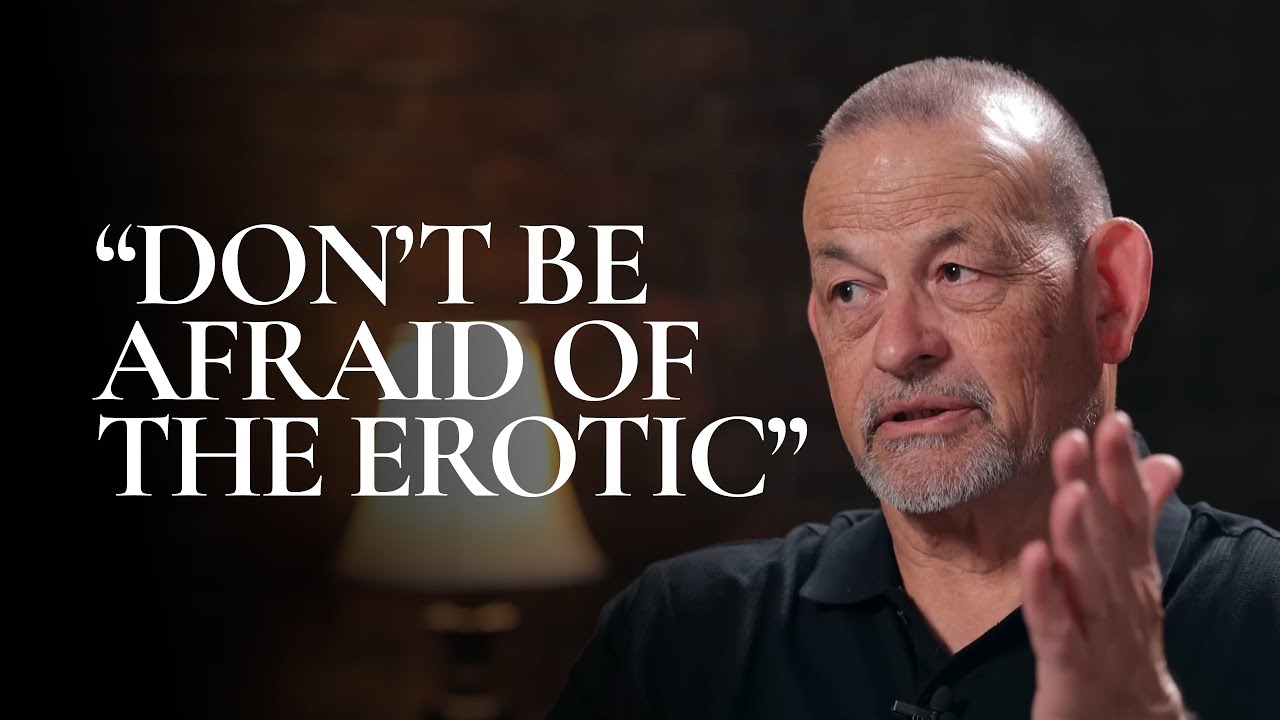
David O’Connor, a philosophy professor at Notre Dame, argues that modern dating is in crisis because young men and women have lost confidence in their erotic agency—the willingness to see themselves as potential spouses and to act on attraction openly and without shame. This loss of confidence has produced two extreme symptoms: the incel movement, where young men proudly identify as involuntarily celibate and adopt a conspiratorial worldview about dating, and the rise of OnlyFans, where 5–10% of young American women commodify their erotic visibility for recognition and income. Both phenomena, O’Connor argues, are two sides of the same coin: a culture that has de-eroticized normal courtship while hyper-eroticizing everything else.
The Loss of Erotic Agency
Young men today are often fearful of letting women know they are attracted to them, as though expressing desire is inherently disrespectful or undignified.
O’Connor rejects the idea that men and women should be “friends first” before any erotic dimension is acknowledged. He sees friendship and erotic attraction as distinct goods, both valuable but not continuous with one another.
He tells students: have confidence in your own erotic agency. Attraction to someone as a potential life partner is not a failure of sophistication—it is a deep human power.
This anxiety intensified after the 2008 financial crisis, which embedded a generalized fear about the future in students even at wealthy institutions like Notre Dame.
The anxiety is not primarily financial but existential: students absorbed their parents’ fears and became more risk-averse in every domain, including romance.
O’Connor emphasizes that people in their early twenties are not too young to think of themselves as potential spouses. The erotic energy of that age is real and should not be wasted.
He pushes back on the notion that one must be fully formed as an individual before entering a couple. For most people, marriage itself is the context of moral growth, not something that happens after growth is complete.
Incel Culture as a Symptom
The incel (involuntary celibate) movement is historically unusual in three ways: the shame of sexual failure has been replaced by pride; individual frustration has been reframed as a political conspiracy involving “Chads,” “Stacies,” and dating apps; and it has become a mass movement rather than a private struggle.
O’Connor sees the incel worldview as hardening young men into believing the war between the sexes is real, which is a terrible place to live.
The movement attracts highly intelligent young men because it offers what O’Connor calls “showoffiness”—the thrill of having a secret key to reality, of being part of an intellectual avant-garde.
He compares it to the appeal of Ayn Rand or Nietzsche in earlier generations: extremist intellectual views that give young men a sense of power and belonging.
The incel discourse is “really at home in analytic philosophy” because it appeals to the combative instinct in a young man’s intellect and makes him feel like he’s on a side.
Incels share surprising structural similarities with the progressive left they claim to hate: both offer systematic analyses that downplay individual agency, and both take pride in victimhood.
O’Connor notes that Dostoevsky’s Underground Man is a proto-incel who takes pride in his self-inflicted suffering—a Nietzschean aesthetic ideal.
Despite the intellectual veneer, the core issue is erotic: marriage culture has greatly diminished in elite culture, and young men are responding to a real phenomenon.
But the incels define themselves by the problem as much as the problem defines them. Many have never actually asked a woman on a date that was recognizable as one.
Young women often report confusion: a man seems interested but frames every interaction as “just coffee” or “not really a date,” making it impossible to respond clearly.
The Corporatization of Women’s Lives
O’Connor identifies the corporatization of elite careers as a major structural cause of delayed marriage, and this pressure falls more directly on women.
The late twenties through mid-thirties are the crucial window for breaking through career plateaus in law, academia, and other high-end professions. This is also the window of peak fertility.
Young women are right to perceive a fork in the road: either become a mom or become a career woman. The two are very difficult to combine in contemporary corporate structures.
The proposed technological solution—freezing eggs and using IVF later—is, in O’Connor’s view, a false promise.
When mainstream articles first suggested elite women freeze their eggs in college, O’Connor thought it was completely unreal: who are they going to go back with? There is not a surplus of forty-year-old men looking to marry and have children.
The deeper question that feminism in the 1970s was asking—can corporate life be restructured to accommodate marriage and family?—was never answered. Instead, society opted for technological fixes and delayed childbearing.
OnlyFans and the Desire for Visibility
The fact that 5–10% of American women aged 18–24 are on OnlyFans is, for O’Connor, a terrible phenomenon, but he reads it primarily as a desire for recognition rather than a purely economic calculation.
Plenty of women put erotic content online before it was monetizable. The driving force is the felt visibility—the powerful human desire to be seen as attractive.
This is the counterpart to the incel crisis: men’s inability to express attraction in real life creates a starvation of recognition that women then seek through commodified channels.
O’Connor draws on Jane Austen to illustrate what has been lost. In Austen’s novels, balls and dances are constructed spaces where men and women can safely express sexual interest without loss of face.
Dancing is sexual, Austen knew, but it is elevated and points forward toward something. It is a structured way of expressing interest that doesn’t carry the full weight of immediate sexual expectation.
Today, students wish for more “chaperoned events” (they don’t use that word)—spaces where expressing interest isn’t immediately sexualized.
If asking a woman for coffee is heard as expecting sex, no wonder men hesitate. Adults have abdicated the moral responsibility of creating intermediate spaces for courtship.
O’Connor is not sure how to get the toothpaste back in the tube, but reading older literature with students helps them name the problem and recognize that alternatives exist.
The Diminished Language of Love
O’Connor begins his book by noting that the very language of love has impoverished. In ancient Greek, the word for the conjugal act is simply a plural form of “the things of Aphrodite” (aphrodisia)—a beautiful, divine word.
The English word “sex” to mean sexual activity did not exist until the second half of the 19th century. It comes from the language of public health and population control (Malthus’s Essay on Population).
“Sexual intercourse” was originally a euphemism for social mixing between men and women. It was quickly medicalized and now sounds like something you would not want to do.
The divine connotations of eros, Aphrodite, and Venus have been corrupted: today “erotic” means pornography, “aphrodisiac” means a drug, and “venereal” means a disease.
O’Connor pushes back on the claim that love’s centrality to marriage is a modern invention. People in arranged marriages always fell in love; the social mediation was simply thicker.
What is distinctively modern is the emphasis on sustaining and deepening the personal relationship between spouses over time. But the expectation of profound personal affection in marriage is not new.
Over-Masculinity in Philosophy and in Love
In Plato’s Symposium, the first speakers defend an overly masculine picture of eros—trying to tame it, make it controllable, subordinate it to reason or military virtue.
They are anxious about pederasty (the social form of older men with teenage boys) and try to justify it as education, but the justification is transparently inadequate.
Plato is working comicly with these anxieties, showing how the speakers want to have their desires while describing a completely different life.
Aristophanes breaks the party open by making procreative erotic relations between men and women central for the first time. From that point on, the question is whether human life can integrate the masculine and the feminine through eros.
The high point of the Symposium is the idea that erotic life is “reproduction in the beautiful”—procreation as the meaning of eros. Socrates suggests spiritual children (virtues, ideas) are higher than physical children, but real children are also spiritual children.
O’Connor argues that philosophy itself has been overly masculine—identifying rationality with argumentative combat, counterexamples, and the suppression of non-rational elements.
He distinguishes between narrow rationality (argument-forming) and richer thoughtfulness (sensitivity to stories, to life’s demands). Plato is a master of both, but the tradition has often emphasized only the rational, agonistic side.
Nietzsche is a wonderful critic of hyper-rationalism but lapses into his own anxious masculinity—the tough-guy rhetoric that Bronze Age Pervert and incel types mistake for the whole of Nietzsche. Plato, by contrast, is so confident in what he achieves that he does not need that rhetoric.
Platonic and Catholic Critiques of Marriage
O’Connor’s proposal to elevate marriage as the central context for human flourishing faces three internal critiques from the Platonic and Catholic traditions:
Plato ranks physical reproduction as the lowest form. In the Symposium, Diotima gives examples like statesmanship and poetry as higher forms of spiritual reproduction. O’Connor concedes that Plato does not fully complete the project of elevating marriage, but he sees Plato as getting as far as natural reason can get. The Catholic understanding—that unity and procreativity are mutually interpreting goals of marriage—completes what Plato began.
Catholicism has traditionally held chastity (priestly celibacy) as a higher state than marriage. O’Connor takes this seriously: there is something sacrificial about vowed celibacy from a natural point of view, and that sacrifice only makes sense if a higher spiritual good is being pursued. The priest becomes an exemplar for married couples, showing an even greater willingness to sacrifice for a supernatural end. Catholic marriage itself, as vowed marriage, also has a supernatural dimension that requires sacrifices a merely natural marriage would not.
Plato does not seem to value marital union or intimacy as such. In the Republic, marriage is eliminated as a personal relationship and made civic; in the Laws, it is monogamous but not deeply personal; Socrates has a wife but chases young beauties. O’Connor reads the Republic’s elimination of the family as a critique rather than a proposal—a demonstration of where pure rationalism leads. He sees the Symposium as Plato’s more mature and positive account, and he believes the dialogue leaves the tension between unity and the good as an exercise for the reader.
Is Marriage Limiting?
A personal critique: being single offers freedom to explore, pivot, and develop without the constraints of commitment. If one is still working out religious convictions, political views, or where to live, marriage can foreclose options.
O’Connor’s response is sharp: “There’s nothing to be said for that.” What you are as an individual is essentially described by your power to couple. Development within the right union will be faster and deeper than development alone.
He challenges the word “best” as a blocking word—an avoidance behavior. There are many right people, and you grow into being married. Young women often describe an ideal man as someone who has already been married for twenty years and raised three children, but no one starts out that way.
On what to look for in a spouse: the most important thing is confidence that this person thinks marriage is for life.
If your spouse sees marriage as lifelong, they will have the moral agency to mean the vows “for better or for worse.” O’Connor does not say only Catholics can mean those vows, but he says that if you find yourself wanting to mean them, you will find many aspects of Catholicism attractive as the fulfillment of that identity.
He resists the idea that metaphysical belief should be instrumental (believing in the resurrection to get married). Instead, he follows John Henry Newman: certain religious truths start to make sense when you see the lived system they fit into, and a particular person is part of what creates that system.
Faith as Eros
O’Connor proposes that faith is less like a rational system and more like the process of falling in love—thoughtful, personal, motivated, but not grounded on argument alone.
He sees metaphysics as a capstone, not a foundation. Your beliefs are held in place by the pressures of all the other parts of your life, not by a single foundational argument.
Pope Benedict (Joseph Ratzinger) said the heart of a Christian is not a set of beliefs but a person: Christ. Reorienting intellectual aspiration from system to a completed ascent of love changes how faith looks.
The interviewer raises the problem of equipollence (from ancient skepticism): the great theologians of Islam, Judaism, Hinduism, and Buddhism all report the same earnest love for their tradition. How do you choose?
O’Connor does not think an argument for the superiority of one system is available or necessary. All these traditions have been developed by geniuses and are powerfully coherent. None of us activates all parts of a system at once.
He invokes Newman’s account of conscience: what makes Christianity distinctive is not a set of intellectual tastes but the experience of living under judgment—confessing oneself as a fallen man, not just cultivating oneself as a polished gentleman.
The ancient skeptics sought ataraxia (spiritual peace) by balancing arguments against each other. O’Connor thinks this is a false ideal because it is non-committal and utterly de-eroticized.
He concedes that choosing a religion is structurally different from choosing a lover because the stakes (eternal salvation) and the success conditions differ. But he maintains that the same basic pattern applies: before you choose, it’s a type; after you commit, it’s a person. The “lots of fish in the sea” strategy is superficially about equipoise but actually a provocation to go out and commit.
His final counsel, following Newman: give up the aspiration to overcome all your doubts. You cannot live a life disabled by doubt. Doubts are part of living. Investigate, compare, experience—but do not maintain the illusion that you will break the equipoise in a way that ancient skeptics would recognize.
Does Marriage Hinder Greatness?
A challenge: the greatest figures—Buddha, Jesus, Socrates, Nietzsche, Elon Musk, Steve Jobs—either abandoned family or had terrible private lives. Is marriage incompatible with greatness?
O’Connor concedes the point. Jesus himself said, “Some make themselves eunuchs for the kingdom of heaven,” and immediately afterward said, “Bring the children—if you don’t become like children, you’ll never get to heaven.” Both things are true: some are called to sacrifice family life, but children are not distractions from the kingdom of God.
Certain forms of greatness—the entrepreneurial life, the life of action—are genuinely difficult to combine with being a good spouse or parent. The academic life, with its flexible schedule, is more open to marriage than most.
But O’Connor warns against abstract theories of greatness as excuse-making. Many bad husbands and fathers hide behind their work. The question is always: are you accomplishing a greater good, and can you make sense of the sacrifice?
He thinks the secular resources for making sense of this are real but limited. Supernatural resources (the Christian understanding of sacrifice for the kingdom) make fuller sense of it.
On why marriage makes people morally better: Plato’s Phaedrus describes how a lover sees himself reflected in the beloved’s eyes as in an idealizing mirror. You think, “I’m not really as good as she thinks I am,” and you try to live up to it.
A man with daughters learns that everything he says to his wife is teaching his daughters how a man who loves them should talk to them. A man with sons is teaching them how to talk to women. Living before witnesses all the time is a powerful force for moral growth.
The Role of Sex in Love
O’Connor sees enjoyable sexual relations between spouses as a mutual celebration of love and a form of visibility—being seen by your lover as an attractive sexual partner is deeply fulfilling.
He insists that sex is never “just sex”—it is always body and soul together. Sexual intercourse is meaningful in the same way that words are meaningful, and with the same depth as the marriage vows themselves.
In the Catholic tradition, the marriage sacrament is not complete with the public vows alone; it is completed with the act of sexual consummation, which is the private part of the vow.
On contraception: the Catholic Church teaches that every act of marital intercourse must remain open to procreation. To close the act to procreation is to withhold something that was pledged.
This does not mean couples must maximize the number of children. But it does mean that each act of intercourse must bear the full weight of the commitment—a constant re-celebration of the vows.
Natural family planning (avoiding intercourse during fertile periods) is different in kind from contraception because it does not alter the act itself. Most couples who practice it still want children together; their acts of intercourse outside the fertile period still express that orientation.
The teaching is very old—more or less co-equal with the Christian community. It became a fraught public issue in 1930 when the Anglicans approved limited contraceptive use, and again in the late 1950s when the pill was coming.
On Plato’s ambivalence about sexual pleasure: Plato sometimes speaks of sex as animalistic, as nailing us to the body. O’Connor thinks this is more therapeutic (trying to shock you in the right direction) than analytic. Plato is usually thinking about pederasty, not marriage, and it is tricky to generalize. In the Laws, Plato does mention the unitive effect of sexual pleasure between spouses, but only briefly.
Why Monogamy and No Divorce?
The Old Testament patriarchs had multiple wives. Why did Jesus reconceive marriage as lifelong monogamy?
Polygamy actually shares one feature with the Catholic ideal: it values procreativity highly. But it depends on the subordination of women’s moral agency, and that is where the hardness of heart was.
Jesus’s prohibition of divorce and his insistence on monogamy both point to the same thing: overcoming the hardness of heart that allows mutual withholding. The disciples were astonished—they said, “If that’s the case, it’s better not to marry at all,” and Jesus agreed that for some, it is.
O’Connor takes Jesus’s teaching on divorce as authoritative and definitive. It has made him scrutinize his own hardness of heart, which he has not overcome but tries to remain aware of.
Practical Advice on Whom to Love
The most important thing to look for in a spouse: confidence that this person thinks marriage is for life. Everything follows from that.
If you believe your spouse is someone with whom your entire sexual being—body and soul—is pledged, you will treat them in a way that makes them always want to make love with you. This is powerfully formative, not instrumental.
The traditional vows: love, honor, obey. O’Connor thinks “honor” is the one that focuses the mind. What does it mean to live with another person in the intimacy of everyday life and always honor them? Learning to bite your tongue is an absolute virtue for a spouse. Gradually, you will bite the tongue of your mind too.
On intellectual compatibility: it is not essential. Your spouse might not read your books. What matters is a habitual thoughtfulness of conversation—the ability to talk about values, not theoretical ideas.
People who would not be interesting to you as intellectual interlocutors may still be deeply thoughtful about human life and wonderful to talk to.
On the sustainability of desire: the special energy of being found sexually attractive by your spouse does not have to fall into abandonment. There is an old tradition of conjugal duty—the obligation to continue being a sexual partner insofar as you are able.
For every couple, if they live long enough, there may come a time when their bodies do not allow it. But the memory of the particular form of honor someone has done you by being your sexual partner remains a deep part of love.