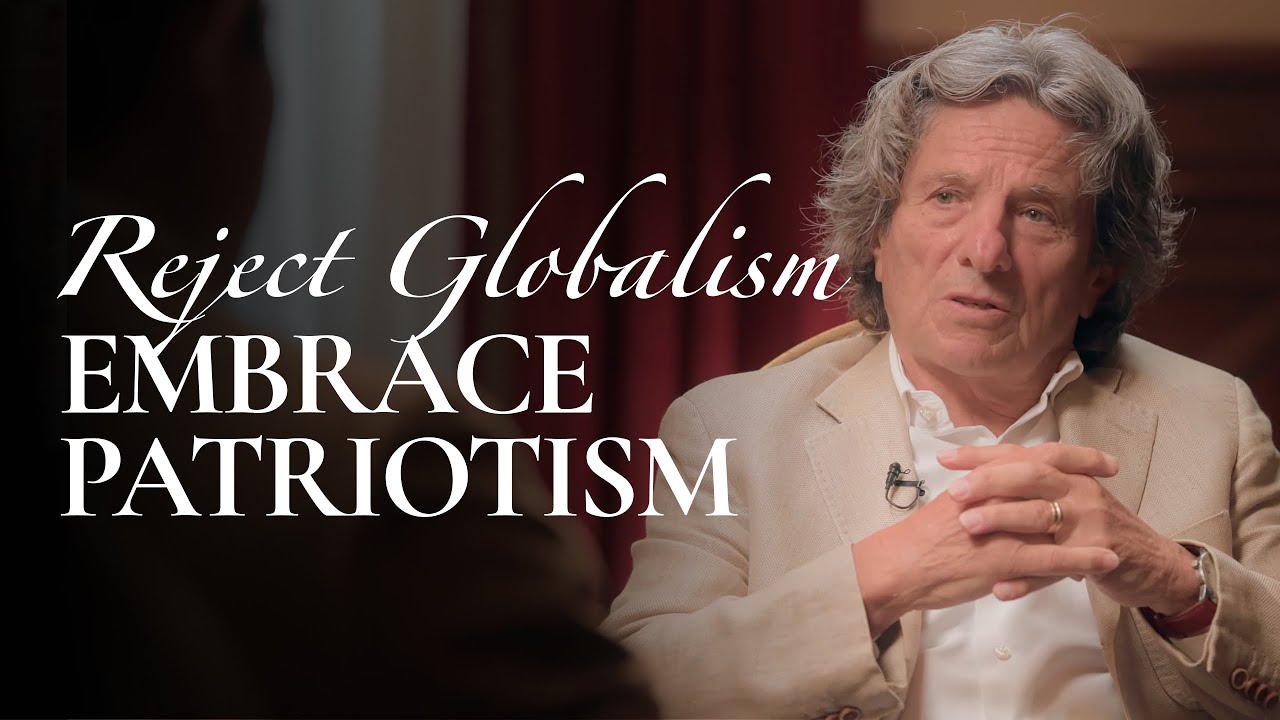
Maurizio Viroli, a Princeton political theorist and former consultant to the president of Italy, argues that patriotism—love of one’s country grounded in liberty, justice, and democratic institutions—is the only viable alternative to both elitist cosmopolitanism and dangerous nationalism. He distinguishes patriotism (focused on the republic and freedom) from nationalism (focused on ethnic, cultural, and linguistic homogeneity), and shows how patriotism can be politically powerful, morally defensible, and inclusive.
Patriotism vs. Nationalism
Patriotism centers on the republic: its institutions, laws, and ideals of liberty and justice. It is compatible with pluralism and demands respect for other nations’ freedom.
Nationalism, rooted in 18th-century thought (e.g., Herder), prioritizes cultural, ethnic, religious, and linguistic unity—even at the cost of liberty. It thrives on homogeneity, obedience, and often imperial ambition.
Viroli rejects nationalism’s emphasis on ethnic purity, calling cultural homogeneity a “vice” that makes republics “asphyxiatingly dull” and citizens “narrow-minded bigots.”
He insists that preserving national traditions does not require sacrificing liberty; in fact, liberty enhances culture by preventing it from becoming authoritarian or stagnant.
The Limits of Cosmopolitanism
Cosmopolitanism—the idea of being a “citizen of the world”—is intellectually noble but politically weak.
It appeals only to global elites (professors, frequent travelers, polyglots) and alienates ordinary people who are rooted in local languages, places, and customs.
When elites dismiss national attachments, they fuel resentment, which nationalists exploit by claiming to defend “the people” against rootless cosmopolitans.
Even elites should be patriots: figures like Lincoln and Roosevelt used patriotic language to unite and inspire, without rejecting global engagement.
Patriotism in Practice: The U.S. and Italy
The U.S. exemplifies a “nation of nations,” where cultural pluralism coexists with shared republican values. Patriotism here means commitment to the Constitution and democratic ideals—not to a monolithic culture.
In Italy, Viroli advised President Carlo Azeglio Ciampi (1999–2006) to revive patriotic rhetoric based on the anti-fascist resistance and the 1946 birth of the republic.
He helped restore the June 2nd national holiday parade, placing Holocaust survivors and anti-fascist groups—not soldiers—at the front.
This reframing was a massive political success, showing that patriotism rooted in liberty resonates more deeply than nationalist nostalgia.
Viroli contrasts nationalist slogans like “Make America Great Again” (focused on power and superiority) with patriotic ones like “Make America Free Again” (focused on liberty and justice).
Motivating Power of Patriotism
Abstract principles alone don’t move people; they need emotional resonance through shared stories, music, and history.
Viroli uses examples like Verdi’s operas or Italy’s Risorgimento heroes (Mazzini, Garibaldi) to show students a “dignified and noble” form of patriotism—one that inspires sacrifice without demanding ethnic purity.
Unlike nationalism, which demands unconditional loyalty (“my country, right or wrong”), patriotic love is conditional: you love the ideal of your country, so you work to correct its injustices rather than abandon it.
Dual Patriotism and International Solidarity
One can be a patriot of more than one country (e.g., Viroli is both Italian and American), as long as the core commitment is to liberty—not ethnic identity.
Patriotism naturally extends to supporting other nations’ freedom: Italian patriots fought for Greek independence or Polish liberation—not to build an international order (as communists did), but because they believed all peoples deserve liberty.
This distinguishes patriotic internationalism from both nationalist isolation and communist universalism.
Immigration and Emigration
To immigrants: You are welcome to keep your cultural traditions, but you must also embrace the duties of republican citizenship—respecting rights, obeying the constitution, and contributing to the common good.
To emigrants: Leaving a corrupt or unjust country is understandable, but Viroli urges people to stay and fight for reform if possible. If they leave, they should absorb the best of their new home and eventually give back to their country of origin.
Patriotism does not require blind loyalty; it requires active engagement to make the country worthy of love.
Conception of Freedom
Viroli’s view is social democratic: true liberty requires not just civil and political rights (speech, vote), but also social rights—education, healthcare, labor rights.
Without these, formal freedoms are “impoverished” and fail to secure individual dignity.
Ancient vs. Modern Republicanism
Unlike ancient republics (e.g., Aristotle’s) or even Machiavelli—who loved Florence more than his soul but cared little for other nations—Viroli’s republicanism includes international solidarity.
His mentor is Giuseppe Mazzini, who championed a patriotism of compassion and global justice.
This modern patriotism is the only path to avoid the horrors of nationalist triumph—whether in the form of war, persecution, or cultural oppression.