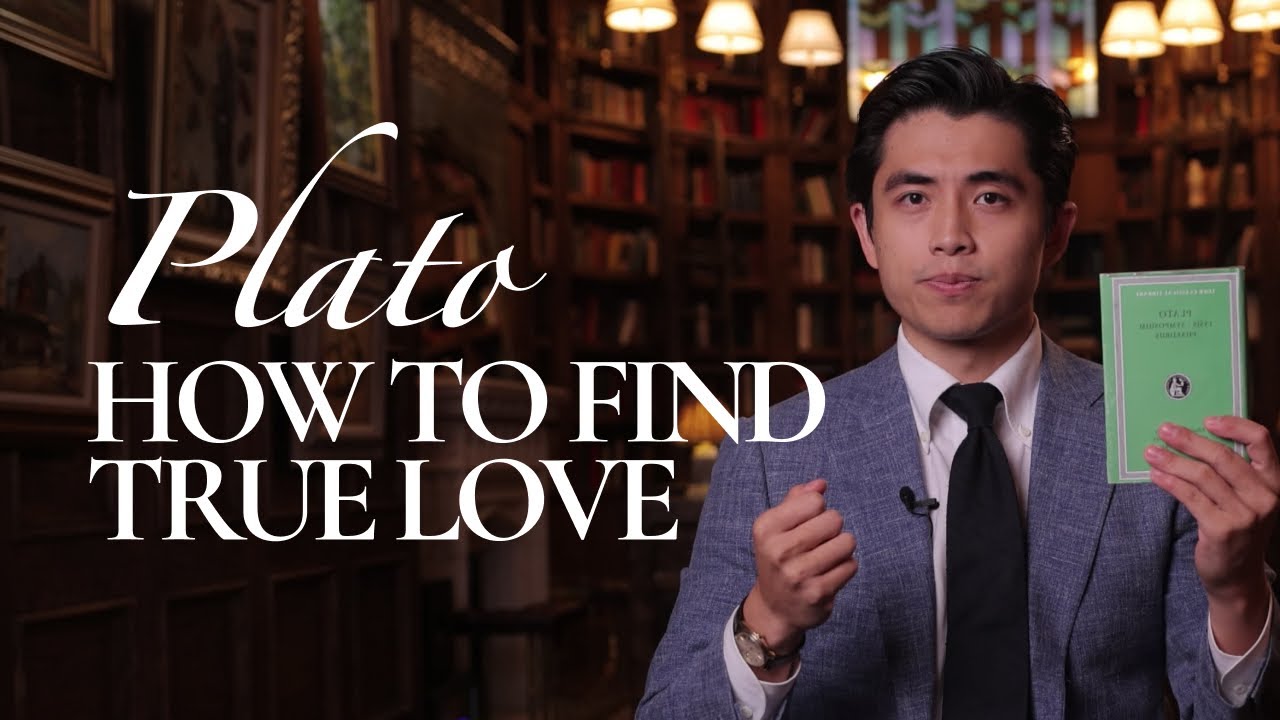
Plato’s Symposium is the greatest treatise on love in the Western canon, and it challenges nearly everything modern culture assumes about romance, beauty, and sex. The book takes the form of a drinking party where seven guests give speeches in praise of love. Three speeches are examined in depth: Aristophanes’ myth of the “spherical man,” which captures the modern ideal of love as finding your “other half”; Socrates’ speech, relayed through the prophetess Diotima, which radically redefines love as a ladder of ascent from physical attraction to philosophical contemplation; and Alcibiades’ drunken confession, which shows what happens when someone with enormous potential is destroyed by unchecked appetites. The central argument is that modern culture is not too obsessed with beauty — it is not obsessed enough, and that is precisely why it reduces beauty to lust.
Modern Culture Does Not Appreciate Beauty
The common diagnosis of modern dating is backwards. People assume we care too much about physical beauty and sex, and that this prevents deeper connections. Plato inverts this: our culture is so sex-crazed precisely because it does not value beauty enough. A true lover of beauty reacts not with lust but with awe — like a priest who has glimpsed the divine.
Beauty is the most striking manifestation of the good. Unlike justice or wisdom, beauty hits you physically — your jaw drops, the world zeros in, everything else fades. That is why it is called falling in love, not strolling into it.
Beauty is also the most universal manifestation of the good. Everything can be beautiful — a face, a body, a mathematical theorem, a lecture — because beauty approximates idealized ratios that reflect divine, objective perfection. The golden ratio is not a matter of taste; it reflects something in the nature of reality itself.
In the Phaedrus, Plato describes how a true lover initially feels lust upon seeing a beautiful person from afar, but upon approaching and seeing the “lightning beauty” of the face, a second impulse — awe — arises and contains the lust. The mechanism: seeing one instantiation of perfected beauty reminds the lover that all human faculties, including self-control, can also be perfected.
The provocative conclusion: Our culture truncates beauty from its elevating potential. It is only because we fail to see beauty as connected to divine perfection that it inspires lust rather than awe. The Symposium is a guide to recovering that elevating potential.
Context of the Symposium
A symposium was an after-dinner drinking party for aristocratic Greek men — a space for philosophy, poetry, dialectic, and entertainment by flute girls who also served as prostitutes. It had a dual potential: it could degenerate into hedonism, or it could serve as a testing ground for self-control.
This particular symposium begins sober because the guests are hung over from the night before. They dismiss the entertainer and decide to each give a speech in praise of love. The book consists of seven consecutive speeches; the lecture examines three.
Aristophanes: The Modern Philosophy of Love
Aristophanes, a comic playwright, tells a myth about the origin of love that underlies modern romance films like Moulin Rouge, Romeo and Juliet, and Titanic.
Spherical man: Humans were once perfectly spherical beings — four arms, four legs, two faces, two genitals — joined to a partner in front, able to cartwheel at high speed. They were self-sufficient, whole, and had no need for love. They even reproduced asexually, like cicadas.
The fall: Spherical humans grew ambitious and attacked Mount Olympus. The gods could not kill them (they needed human worship for nourishment), so Zeus cut each sphere in half, Apollo sewed the skin into what we now call the belly button, and turned our heads to face the wound as a reminder of our transgression. Our genitals were originally on the back, making sex impossible.
Love emerges from lack: In this halved state, each person desperately searched for their other half. When they found each other, they would embrace endlessly, unable to do anything else, and the human race began dying out. The gods took pity, moved the genitals to the front, and invented sexual reproduction — which gave humans release and ensured the gods continued to receive worship.
Love’s purpose is union: “Love’s role is to restore us to our ancient state by trying to make unity out of duality and to heal our human condition.” Each person is “a mere tally of a person, one half of an original whole.”
Why this is a modern philosophy of love:
Love is primarily unitive, not procreative. The goal is to find your other half and become one. Children are an unintended consequence, not the purpose. This contrasts with the Catholic view that marriage is both unitive and procreative, and it aligns with the modern fear that children will make parental love “fizzle out.”
Love is the singular purpose of life. Finding your soulmate is the end-all be-all. Modern romance never asks practical questions (how will Jack and Rose sustain themselves?) because union is assumed to grant everything.
Love is primarily physical. The Aristophanic lover seeks to be welded together with the other half. Sex and bodily union are constitutive of what love is.
The couple is more real than the individual. Aristophanes depicts the true human as a pair, not a solitary being. This is why romantic breakups hurt more than friendships ending — the “we” that you identified with literally dies. (In Chinese, breakup is “parting of hands,” implying two separate things; in English, “breakup” implies one thing being split.)
Aristophanic love is stable but closed off. Even kids exist outside the bubble. The lover is your salvation, a literal god who can grant full existential fulfillment.
Socrates: Love as Lack and the Ladder of Ascent
Socrates relays a dialogue with Diotima, a temple prophetess, which attacks all three assumptions of Aristophanic love.
Love is not a god — it is a middling state
Love is a yearning, and you only yearn for what you lack. Perfect spherical man had no lack and therefore no love. If love is a lack, it cannot be the telos (purpose) of life, and it cannot be a god — what kind of god lacks things?
Love exists in an intermediate state between good/beautiful and ugly/bad, just as a philosopher exists between wisdom and ignorance. A philosopher is not yet wise (otherwise they wouldn’t love wisdom) but is not ignorant either (because they are aware of their ignorance).
“Love must be a philosopher.” Wisdom is beautiful; love is the love of the beautiful; therefore love is the love of wisdom. Lovers are philosophers. This is why Socrates said love is the only subject he knows about — he is a philosopher, and the only thing he knows is this intermediate state of pursuit.
Love is not a god to be worshipped but a great spirit — a mediator between humans and the divine. The practical message: do not idolize love. Do not confuse the finger pointing at the moon with the moon itself. Follow where love is leading.
Love is not about union — it is about the good
Diotima asks: “Love is not directed towards a half or a whole either, unless that half or whole is actually something good.” People would gladly amputate a diseased limb. If forced to choose between wholeness and goodness, you choose goodness.
Practical advice: Some people (women especially, the lecture notes) feel pressure to marry by a certain age and grab whoever is closest. Diotima would say this fundamentally misunderstands what love is calling you to do. Love aims not at union but at the beautiful and the good.
Love seeks happiness through procreation
Why do we want the beautiful and the good? Because we believe possessing them will make us happy. But we need to possess them forever — otherwise we will yearn again.
The problem: we are mortals who constantly change. Atoms flow in and out, cells die, memories fade. How do we approximate immortal possession?
The answer is procreation — not just physical babies, but any act of creation or renewal. Every day you renew your habits, commitments, and body, you are procreating. This is how mortals approximate immortality.
Massive inversion of Aristophanes: For Aristophanes, finding your lover is where love ends. For Plato, finding your lover is where love begins. What you create together is what matters.
There are higher and lower forms of procreation. Some people are “pregnant in body only” — they have sex and make babies, like animals. Others are “pregnant in their soul” — they procreate in virtue (making each other more virtuous), in art (inspiring great poems), and in statecraft (founding institutions and running states).
Couples who procreate in the soul not only have better offspring (more beautiful, more immortal) but also have a closer union. Better procreation creates better union — the opposite of Aristophanes, where union is primary and procreation is incidental.
The philosopher is the best lover because the philosopher communes with the most beautiful and most immortal things in Plato’s metaphysics: the Forms (eternal ideas, like idealized mathematical ratios). If you procreate with a philosopher, you create the best offspring and therefore the best version of yourself.
Diotima’s Ladder: The Path from Body to Philosophy
The most famous image in the Symposium is a series of developmental rungs that take you from loving one body to contemplating the Form of Beauty itself. Each higher rung is more beautiful (more pure, less blemished), more immortal (lasts longer), and explains why the lower rung is beautiful.
Rung 1: Love one body. Fall in love with one person’s body and “procreate beautiful discourse” — philosophy, poetry, dialectic. No sex.
Rung 2: Love all bodies. Realize that the beauty of one body is closely akin to the beauty of any other body. If you pursue beauty in form, you must regard the beauty in all bodies as one and the same. Slacken your intense passion for one body and become a lover of all beautiful bodies. This does not mean you should break up and chase everyone attractive — it means recognizing that the Aristophanic belief in “the one” is delusional. No single person holds the key to your happiness.
Rung 3: Love souls over bodies. Realize that the beauty in souls is more to be prized than that in the body. If someone’s soul is good, even if their physical attraction is slight, that will be enough. Soul beauty lasts longer than bodily beauty and explains bodily beauty (a good character makes a body seem more beautiful; an annoying person becomes physically unattractive regardless of looks). Socrates had a famously ugly body but a famously beautiful soul; Alcibiades had a famously beautiful body but a famously ugly soul.
Rung 4: Love practices and laws. Move from individual souls to the social structures — rituals, language, dances, laws — that cultivate beautiful souls. These outlast any individual soul and are more beautiful because they are more abstract and encompass more diverse forms of beauty.
Rung 5: Love knowledge. Move to the objects of science — the systematic study of beauty across domains.
Rung 6: The Form of Beauty itself. Contemplate the eternal idea of beauty — the precise mathematical ratio that makes all beautiful things beautiful. This is the object of philosophy. Think of a physicist calling E=MC² beautiful: its beauty lies in its elegance, its lack of blemish, and how much it encapsulates.
This is not a bait and switch. You came loving beauty, and every step simply asked: what is more beautiful? What lasts longer? What explains this beauty? You followed the trail of beauty upward and arrived at philosophy. The lecturer uses this structure himself — titling lectures with clickbait to meet people where they are, then gradually revealing deeper truths.
Critiques of the Platonic Vision
”This isn’t romantic”
The objection: How is this still love if you are doing philosophy instead of having sex? “Platonic relationship” has come to mean non-romantic.
Platonic love is actually intensely romantic, governed by three species of recognition:
Impressing the lover: We want to impress our beloved. If the beloved has the right values, this drive motivates you to do the right thing. Plato imagines an army of lovers who would be invincible — a man in love would rather die a thousand deaths than be seen deserting his post by his beloved.
Self-recognition: True beauty is a memory aid. Seeing beauty in another reminds you of what you yourself can become. Socrates says to Phaedrus: “If I didn’t know you, I must have forgotten myself too.” The lover’s own internal standards are elevated.
The beloved’s reflection: “Just as a gust of wind rebounds from smooth objects and returns to where it came from, so the flow of beauty returns into the beloved through his eyes.” The beloved sees himself in the lover’s eyes as in a mirror and contracts counter-love. When a lover sees the best in you and helps you become it, that transforms how you see yourself — like a child who gains confidence because a parent or teacher lends them their belief.
The danger: These motivations can go wrong. Impressing an ugly-soul lover leads to vice. Being deified by a lover can be narcissistic. The only guard is doing this with someone who has a beautiful soul — the right values. The choice of a lover is not just who you spend time with; it is picking a new self, a mirror through which you will see yourself every day.
”The individual is never fully loved”
The objection: We want every part of ourselves loved — quirks, shortcomings, and all. In Platonic love, only the good qualities are loved. The individual as a whole is never the object of love.
The response is to bite the bullet. This is an accurate description of Platonic love. If you want “I love you just the way you are,” you want Aristophanes. Plato says: “I love you for your good qualities, and I will do my best to help you and me improve.”
Aristophanic love is unconditional, the end of the journey, a stabilizing force. Platonic love is conditional, the beginning of a journey, a deeply destabilizing force. It creates aspirations you may not be ready for.
Practical example: A model made a video titled “Watch this before you date a high value man,” complaining about the expectations of a high-value man as unwelcome pressure. Whether you experience the expectations of a Platonic lover as welcomed motivation or unwelcome pressure tells you whether you are ready for this path.
Union is not the point; goodness is. Finding a Platonic lover is a cherry on top but not necessary. You do not need a girlfriend to be a philosopher. Diotima’s ladder is best scaled with a lover but can be scaled alone.
The story of Socrates and Xanthippe: Socrates allegedly found the most annoying woman he could find to marry, to test his resolve. Her name has literally come to mean “nagging woman.” This shows Socrates’ priorities: not finding a soulmate, but procreation — making children and testing his own virtue. Because union is not the point, Platonic love is compatible with a range of sexual arrangements: monogamy (in the Laws), shared spouses among guardians (in the Republic), or Socrates chasing beautiful youths while married.
”Where is the sex?”
The objection: Why is there no sex, even on the first rung of the ladder?
The best lovers only lust after each other’s souls — no non-procreative sex. The worst lovers only lust after each other’s bodies — lots of non-procreative sex. Middling lovers lust after both — occasional non-procreative sex when they fail to control themselves.
Why is soul-and-body love worse than soul-only love? Non-procreative sex is unnecessary (you can train yourself out of it), offers little benefit beyond pleasure, and is untameable — it is too pleasurable and will distract from the joint ascent. You cannot be a moderate sex enthusiast the way you can be a moderate drinker.
Procreative sex is permitted because it has immense benefit (children) and is necessary. But even procreative sex should not be enjoyed too much — it is like an undercover cop taking a hit of heroin to maintain cover: you are exposing yourself to an exorbitant amount of pleasure for your duty as a citizen.
Appetites are like lead weights that drag your ascent upward. The more you feed them (sex, gluttony), the more they grow and become tyrannical. This is why classical sculpture depicts the small flaccid penis as desirable — it represents a man with his appetites under control, a moderate and virtuous man.
What about intimacy? The response: love is not about intimacy; it is about procreation. But even if it were about intimacy, better intimacy comes from better procreation. Whatever marginal intimacy you gain from sex, you lose by not ascending higher on the ladder together.
There is still physicality in Platonic love — kissing, touching, lying together, rolling on the ground. But you “keep the tension in the bow” by not having sex and direct that energy upward. The lack of sex keeps the mystery alive and keeps asking: what is the true source of this beauty? Once you have sex, the question is answered and you are stuck on the lowest rung. In Aristophanes, post-coital clarity made people sober. Plato wants to keep the divine madness alive — that is the fuel for climbing.
The cultural context the lecturer withheld: In the Symposium and Phaedrus, the object of love is not women or grown men — it is young boys. Pederasty was an aristocratic institution. The highest ideals in both dialogues are framed in pederastic terms. Diotima describes ascending “through loving boys in the right way.” The Phaedrus asks how to convince an unwilling young boy to have sex with you. The reason: women were not educated (except courtesans), so they were not proper recipients of soul love; grown men were not proper recipients of bodily love (being penetrated was seen as emasculating). By process of elimination: young boys. The lecturer brings this up not to endorse it but to show how radically sexual mores can change across cultures — and to suggest that our own mores may one day seem as strange to future generations as pederasty seems to us now.
Alcibiades: What Happens When Love Goes Wrong
Alcibiades crashes the symposium drunk, crowned with ivy, accompanied by revelers and a flute girl — Plato paints him as Dionysus, god of wine and ecstasy. He is desire incarnate, and he represents what you risk becoming if you do not follow Plato’s prescriptions.
Who Alcibiades was
Athens’ golden child: incredibly beautiful (in a society that idolized young male beauty), from a noble aristocratic line (Pericles was his guardian), charismatic, a great orator and general in the Peloponnesian War, and seemingly drawn to philosophy. He had the perfect nature.
But Plato writes in the Republic that the most excellent natures tend to self-destruct when environment and nurture are bad. Quickness in learning, memory, courage, and magnificence — when flattered and tempted — become the cause of undoing. Such natures do the greatest harm or the greatest good depending on the tide.
Alcibiades’ downfall: his unhinged appetites and lust for the crowd’s approval. Before his greatest military campaign (the Sicilian expedition), he was exiled after holy statues were mutilated and he was blamed due to his notoriety as a wild partier. He defected to Sparta (Athens’ chief enemy) and helped them kill Athenians. He seduced the Spartan king’s wife, fled to Persia (the historical enemy of all Greeks), and advised the Persian ruler how to play Greek city-states against each other.
Athens called him back and reinstalled him as a military leader, showing both their desperation and his brilliance. He won decisive victories, was blamed for one defeat, exiled a second time, and assassinated in exile.
He was both the Athenian hero and the Athenian villain. He was also one of the key reasons the Athenians killed Socrates — one of the charges was “corruption of the youth,” and Alcibiades was thought to be Socrates’ lover and student. Plato’s depiction of their interaction is an attempt to acquit Socrates and philosophy from the charge of producing a traitor.
Alcibiades’ speech
Unlike every other speech (abstract treatises, myths, dialogues), Alcibiades talks about his love for a specific person: Socrates. Against the backdrop of Diotima’s ladder, he is stuck on the lowest rung — the one-body realm — because of his appetites.
“My heart pounds and tears flow merely because of Socrates’ words… My soul wasn’t in turmoil listening to Pericles, but after listening to this man, I thought my kind of life was not worth living. What I have felt in the presence of this one man is what no one would think I had it in me to feel. That is shame.”
This is the downside of Platonic love: Socrates grabs you by the collar and tries to make you better, but if you are not ready, those expectations manifest as shame. Opening yourself to beauty also opens you to seeing your own ugliness and how far you have to climb. This path is not for most people.
But shame is actually a great achievement — it means Alcibiades understood and agreed with Socrates, a mark of his philosophical potential. That potential is why he fell in love with Socrates.
Alcibiades confesses he manufactured one-on-one situations — dinners, naked wrestling — trying to get Socrates to make a move. One night Socrates stayed over, and Alcibiades made his offer: “You alone are a worthy lover for me… Nothing is more important than to become as good a person as possible, and no one would be better fitted to assist me than you. I would be more ashamed at what intelligent men would say if I did not gratify you than at what the unintelligent public would say if I did.”
The most beautiful, famous, rich, celebrity general begging this old, ugly, unkempt man — not just for sex but offering his entire wallet and network — shows Alcibiades’ philosophical potential. Despite being stuck on the first rung, he is attracted to Socrates’ soul.
Socrates’ response: “You must see in me an irresistible beauty vastly superior to your physical attractions. But if you are trying to trade your beauty for mine, you intend to get gold in exchange for bronze.” Socrates is toying with him — you do not need to trade anything for Socrates’ help. He is not a sophist; his lectures are free. And he is not chasing beautiful youths for their bodies or wallets but to help their souls.
The deeper issue: Alcibiades fails to realize that Socrates cannot make him whole. “But look more carefully, dear boy, in case I am actually worthless and you have not noticed.” You have to climb the ladder yourself. Your lover can inspire you, but you are responsible for your happiness, character, and actions. Philosophy is acquitted — it was not responsible for corrupting Alcibiades; it was merely impotent in helping someone already too corrupt.
Alcibiades’ failure
His failure is one of excess, not deficiency. He lacked nothing. It was his inability to contain his desires and his lust for recognition that caused his demise. When Socrates was around, he could act as a moderating influence, but as soon as Socrates left, Alcibiades’ appetites took over.
He was also trying to climb the ladder too fast — skipping stages. He wanted to do philosophy (the highest rung) without being able to properly love a single body (the lowest rung), which includes managing one’s appetites. Plato repeatedly says respect life stages: no philosophy in the Republic until age 30. If you do not know how to manage your desires for one body, you will not have the consistency to do philosophy.
In the First Alcibiades, a young Alcibiades eagerly wants to enter politics and build a just state (the fourth rung) without mastering the third rung — he does not know what a just soul consists of. He is like a college activist who cannot hold a part-time job but thinks he can solve the Middle East.
Diotima’s ladder is not just a way to meet people where they are; it is a necessary curriculum. If you find yourself skipping stages in life, you are probably missing something massive.
Conclusion
The lecturer has tried to defend every aspect of Plato’s conception of love, even while privately wrestling with it — notably the lack of union and the admonition against non-procreative sex.
On one hand, surely there is a way to integrate non-procreative sex into the good life, more like wine drinking than heroin. On the other hand, the religious traditions (Buddhism, Christianity) suggest that the best state of existence requires taming, if not calling, all appetites.
Like Alcibiades, the lecturer is left with two responses: awe at the beauty of the Symposium itself (every line, like the Sagrada Familia, directing his gaze upward) and shame at how far he has yet to climb.
Unlike Alcibiades, his shame has one source of consolation: he returned to the Symposium after an intense romantic experience earlier in the year where beauty of body and soul led him aloft. His first response was: “I have to read Plato again.” He is taking his first steps on Diotima’s ladder, traversing from the particular to the universal. He is not yet happy or wise, but he has shown himself to be a philosopher — and therefore, in Plato’s terms, the greatest of all lovers.