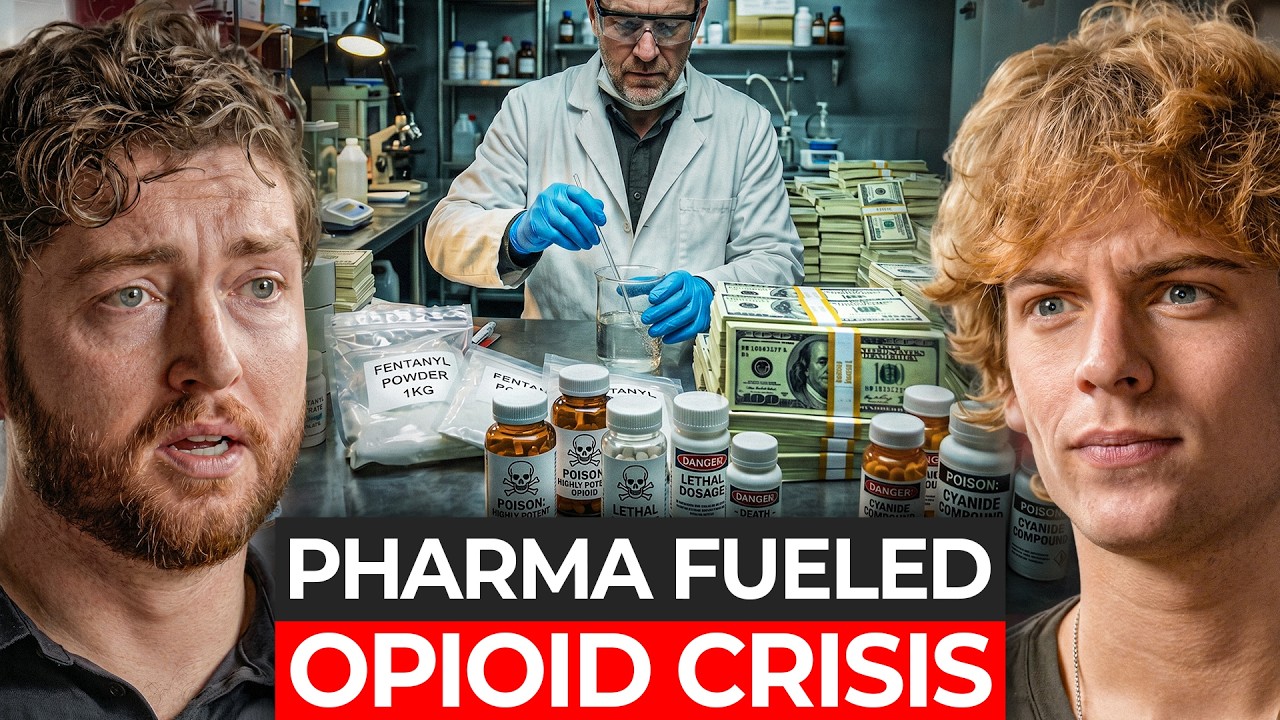
Gareth Sheridan is an Irish entrepreneur and CEO of NeutraPharma, a NASDAQ-listed biotech company developing abuse-deterrent transdermal patches to combat the fentanyl crisis. After nearly losing everything when a company he sold his startup to executed a pump-and-dump scheme that diluted his equity from 5% to nearly zero, he rebuilt from scratch, bootstrapping his way to a public listing while driving Uber and living in a studio apartment with $40 in the bank. His company’s flagship technology, Avera, adds a layer of denatonium benzoate (the world’s most bitter substance) and capsaicin (red pepper spray) to fentanyl patches, making them unbearable to chew, smoke, or dissolve in alcohol, while leaving them fully effective for legitimate pain patients. The technology aims to solve a crisis that kills one American every five minutes.
The Fentanyl Crisis: How It Works and Why It’s So Deadly
Fentanyl is a synthetic opioid 50 to 100 times stronger than heroin, originally created for managing chronic pain in cancer patients and end-of-life care. It is highly effective medically but extremely easy to abuse accidentally or become addicted to.
The most common addiction pathway: a patient suffers a severe injury (car crash, spinal damage), is prescribed a fentanyl patch for pain, then loses access when prescription rates dropped roughly 75% between 2016 and now due to anti-opioid stigma and CDC guidelines. Unable to function on over-the-counter alternatives, they turn to the street, misjudge the dose, and become addicted.
Fentanyl hits dopamine receptors, creating intense euphoria. When users try to stop, the brain craves that dopamine rush, creating a cycle of dependency. It is 50 times stronger than heroin, so the compulsion to use is proportionally more powerful.
Fentanyl does not affect balance (controlled by the inner ear and lower brain), so users appear conscious and upright even while severely impaired. The real danger is respiratory suppression: the brain, in a state of euphoria, stops sending signals to breathe. Users die from respiratory failure without ever falling over.
The crisis has two distinct sources: illegal fentanyl crossing the border and prescription fentanyl that gets diverted. Prescription rates have plummeted, but this has pushed chronic pain patients toward illegal markets, fueling the very epidemic restrictions were meant to stop.
How Fentanyl Patches Are Abused
A used fentanyl patch can sell for $100 on the street, roughly twice the price of a new prescription patch, because up to 70% of the fentanyl remains in the patch after use.
Common abuse methods include chewing the patch like tobacco, soaking it in alcohol and drinking the solution, scraping out the contents and smoking it, or otherwise extracting the residual drug through oral or nasal routes. All methods are simple and require no special equipment.
Children are at serious risk from accidental exposure: a child under five finding a discarded patch in the garbage, chewing on it, or touching it and putting fingers in their mouth can receive a lethal dose. Dozens of pediatric hospitalizations have been linked to improperly discarded patches.
The broader opioid crisis was fueled by overprescribing in the 2010s, when companies pushed opioids for minor procedures (like dental work) through pill mills and aggressive sales incentives. This created a backlash that became indiscriminately anti-opioid, harming legitimate pain patients and driving suicide rates among chronic pain sufferers higher.
The Avera Technology: Chili Peppers as a Solution
NeutraPharma partnered with Candeva Drug Delivery (formerly 3M Drug Delivery), which already had a generic fentanyl patch on the market. NeutraPharma added an additional layer to the back of the patch containing denatonium benzoate and capsaicin in high doses, with both immediate and slow-release formulations so users cannot wait out the effect.
If someone tries to chew the patch, they must chew pepper spray and the most bitter substance on earth. If they try to smoke it or dissolve it in alcohol, the result is equally unbearable. The ingredients are food-grade and non-toxic, but the body’s reflex is to spit it out immediately.
The technology targets all major abuse routes (oral, nasal, inhalation) and would also eliminate accidental pediatric exposure, as a child who puts the patch in their mouth would spit it out instinctively.
Nothing is 100% abuse-proof, but the patch is designed to be roughly 90% safer than existing patches while maintaining identical therapeutic effectiveness and being priced at only a small premium over generics.
Market Strategy: Why Big Pharma Didn’t Build This
NeutraPharma is launching Avera at virtually the same price as existing generic patches, with the goal of achieving near-100% insurance coverage. This is a deliberate break from the pharmaceutical industry norm, where new products often carry 1,000% price markups and only partial insurance coverage.
The company’s reasoning: if they charged $200–$300 per patch instead of roughly $40, they would lose approximately 30% insurance coverage, meaning 30% of patients who need the drug could not access it. By pricing competitively, they aim to capture the entire market and set a new safety standard.
They are advocating for a regulatory mandate requiring abuse-deterrence technology on all opioid patches, arguing that if a safer version exists at the same price and effectiveness, there is no justification for keeping unsafe versions on the market. They point to precedent in abuse-deterrence regulation.
The product will be branded, not generic, making it non-transferable to generic competitors. Doctors choosing between two similarly priced patches, one 90% safer, will have a clear incentive to prescribe Avera.
Beyond fentanyl, the technology applies to buprenorphine patches (for opioid addiction treatment, potentially replacing methadone clinics) and other addictive medications like methylphenidate, creating a platform for reforming the safety standard across multiple drug categories.
Gareth’s Journey: From Painting Houses to NASDAQ
Gareth started NeutraPharma at 22 as a college thesis project inspired by his father’s nitroglycerin heart patch. He initially sold vitamin patches, formulating products himself and manufacturing in China, but the product was premature and did not sell well.
He sold the company to a Utah-based firm that listed on the OTC (over-the-counter/penny stock) market, receiving 5% equity worth approximately $1.5 million on paper. Within days, the company issued billions of new shares to themselves and consultants, diluting his stake to nearly zero and his shares to roughly $15,000.
After being contacted by the SEC over a filing error (the company had claimed a product would not need FDA approval based on three expert opinions, but was wrong), Gareth was flown to Miami by the SEC for interrogation because he could not afford the flight himself. The company was valued at roughly $20 million on paper while he had $40 in his bank account.
The SEC investigation ended in a no-admit, no-deny cease-and-desist settlement with a fine of $15,000–$25,000 each for Gareth and his partner Sergey, paid with help from a shareholder.
Gareth and Sergey rebuilt through a multi-year acquisition strategy, buying smaller patch companies using stock instead of cash, including 4P Therapeutics in Atlanta, which held the initial patent for what became the Avera technology. They eventually listed on NASDAQ, raising $8 million.
Throughout this period, Gareth drove for Uber, lived in a studio apartment with a mattress on the floor and a $100 Amazon couch, and relied on his wife Heidi (who worked as a nanny for a wealthy family) and his parents for rent money. He describes bootstrapping to a degree that places the company in the bottom 1% of executive compensation and outside funding.
Building a Movement, Not Just a Company
Gareth argues that the most successful entrepreneurs are driven by impact and competition rather than money. He cites Warren Buffett as someone motivated by being the best, not by wealth, and applies the same logic to NeutraPharma’s mission of saving lives.
He believes building a movement around a mission attracts better talent and like-minded partners. People who want to create impact tend to find each other and push through negative feedback that would stop others.
He distinguishes between a fixed mindset (born an entrepreneur, takes failure as final) and a growth mindset (learns to become one, treats failure as feedback). Every major setback in building NeutraPharma was ultimately used as information to improve.
The worst advice he ever received was to abandon NeutraPharma and start something else. Had he listened, the company’s potential solution to the opioid crisis would not exist, affecting not just him but the thousands of lives the technology could save.
Personal Motivation and Broader Vision
Gareth’s father, a painting contractor, taught him the value of money by making him work miserable jobs to earn his first phone at age 12 or 13. That lesson shaped his approach to building a company that never prices patients out of care.
His father’s nitroglycerin heart patch was the original inspiration for the company. NeutraPharma is now exploring pediatric applications, such as insulin patches disguised as fun stickers for diabetic children.
Gareth ran for president of Ireland as the youngest ever nominee, blocked by a system that favors outgoing politicians for what is essentially a ceremonial retirement role. He sought to bring attention to housing costs, emigration, and issues facing younger generations. Though he did not win, he views it as consistent with his entrepreneurial mentality of pursuing impact others think is impossible.
During the podcast recording, approximately 24 people in the United States died from fentanyl overdoses (one every 5 minutes). Gareth believes the crisis will not be fully solved by any single technology, but Avera can meaningfully reduce overdose rates, improve pain patient care, and set a new safety standard that other companies follow.