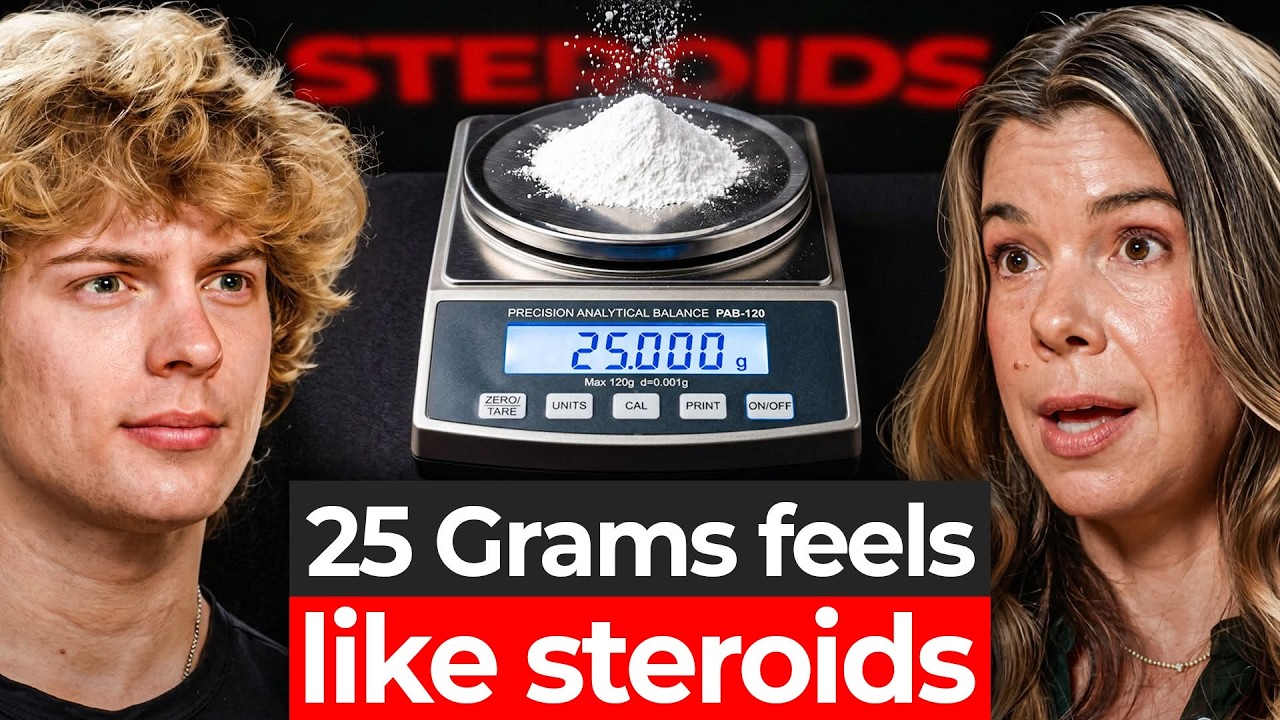
- Dr. Rhonda Patrick, a nutrition and longevity scientist, joins the podcast to explain why young men today are experiencing collapsing testosterone levels, sperm counts, and grip strength — and what can be done about it.
- Men today have roughly 50% lower sperm counts and up to 30% lower testosterone than men 40–50 years ago, driven by a convergence of environmental chemicals, obesity, poor sleep, sedentary lifestyles, and dietary changes.
- The conversation spans the mechanisms behind these declines, the everyday items quietly contributing to them, and evidence-based strategies for reversing the damage — with a recurring theme that the human body is remarkably resilient when given the right tools.
Microplastics and Endocrine-Disrupting Chemicals Are Driving the Decline
-
Microplastics have been found in 100% of human semen and testicle samples tested, as well as in nearly every organ including the brain, liver, kidneys, heart, ovaries, and placenta.
- They damage sperm morphology, motility, and production directly through physical disruption.
- More concerning are the chemicals embedded in microplastics — particularly bisphenols (BPA, BPS) and phthalates — which are endocrine-disrupting chemicals (EDCs) that mimic hormones, block hormone receptors, and disrupt hormone production.
- Men with the highest phthalate levels have 20% lower testosterone than those with the lowest levels.
- BPA-free products often substitute BPS, which is equally or more harmful.
- These chemicals are ingested through water, food packaging, air, personal care products, receipts, and even clothing.
-
Pesticides and herbicides, particularly glyphosate (Roundup), are also disrupting hormone production and sperm quality.
-
During pregnancy, phthalates cross the placenta and disrupt fetal testosterone production, causing developmental abnormalities like hypospadias and undescended testicles — both of which impair future fertility.
Obesity, Diet, and Lifestyle Are Major Contributing Factors
-
Obesity rates in children and adolescents have risen roughly 40–50% since 1990, and obesity is now associated with 40% of all new cancer diagnoses in the US.
- Obesity increases inflammation, oxidative stress, estrogen production, and DNA damage — all of which impair sperm and testosterone.
- Excess visceral fat suppresses immune function and increases growth factors like insulin and IGF-1 that allow cancer cells to survive.
-
Refined sugar and ultra-processed foods directly lower testosterone — a single 75-gram dose of added sugar can tank testosterone by 20% within hours, and habitual consumption resets the baseline lower.
-
Sleep deprivation is a significant and underappreciated factor: young men who slept only 5 hours per night for one week saw testosterone drop by 15%.
-
Exogenous anabolic steroid and TRT use among young men (driven by “looksmaxxing” culture) can permanently impair natural testosterone and sperm production — it is not always reversible.
Grip Strength and Muscle Mass Are Powerful Predictors of Longevity
- Grip strength is a proxy for overall muscle strength, functional independence in aging, and even all-cause mortality — men with the lowest grip strength have a 70% higher mortality risk.
- Young men today have significantly weaker grip strength than previous generations because physical labor has dropped from over 50% of jobs in the 1950s to less than 20% in 2026.
- Muscle mass and strength are independently associated with up to 70–80% lower all-cause mortality, largely by protecting against frailty and falls.
- Peak muscle-building years are roughly 16–30, but meaningful strength gains are possible even into old age — a study in 90-year-olds showed a 90% strength increase after just weeks of resistance training.
Cancer Is Rising in Young People Due to Obesity, Diet, and Environmental Toxins
-
Cancer rates in people under 50 are rising 3% per year, driven by the same obesity-inflammation-DNA damage cascade that accelerates aging.
- Obesity-associated cancers include at least 13 types, and the damage begins in childhood when obesity is now prevalent.
- Ultra-processed foods, processed meats (containing nitrites that form carcinogenic nitrosamines), and low fiber intake all contribute to colon cancer risk.
- Alcohol significantly increases breast cancer risk — a woman’s lifetime risk goes from 1 in 8 to 1 in 6 with obesity, and higher still with alcohol.
-
Fiber is one of the most well-studied protective factors against colon cancer.
- Insoluble fiber moves carcinogens through the gut faster, reducing contact time with colon cells.
- Fermentable fiber feeds beneficial gut bacteria that produce short-chain fatty acids (like butyrate), which strengthen the gut barrier, reduce inflammation, and stimulate immune cells that kill cancer cells.
- Fiber also reduces absorption of microplastics and nanoplastics in the gut.
- Recommended intake is about 14 grams per 1,000 calories consumed, or roughly 25–30 grams daily — 95% of Americans don’t meet this.
- Best sources include berries (especially blueberries), mushrooms, onions, artichokes, oats, quinoa, and resistant starch from cooked-and-cooled potatoes or green bananas.
Everyday Items Quietly Poisoning Young Men
- Water: Contains microplastics, nanoplastics, pharmaceuticals, and forever chemicals (PFAS). Reverse osmosis filtration is the gold standard. Plastic water bottles leach more microplastics than tap water, especially when heated during transport. Aluminum cans are lined with plastic that leaches into beverages. Glass bottles are better but not perfect — microplastics from paint on lids have been detected, though in larger, less absorbable particles.
- Food: Ultra-processed and packaged foods are major sources of plastic chemicals. Heating food in plastic (to-go containers, rotisserie chicken trays, coffee cups) increases chemical leaching up to 50-fold. Acidic or spicy foods in plastic containers (salad dressings, hot sauce, ketchup) also leach chemicals. Black plastic is especially dangerous because it often contains brominated flame retardants from recycled electronics — these are carcinogenic and leach into food when heated.
- Air: Microplastics are in particulate matter from tires, synthetic clothing, carpet, upholstery, and dryer vents. Urban environments have higher concentrations. Inhaled microplastics bypass the blood-brain barrier via the nasal passage, which is why the brain contains 10–20 times more plastic than any other organ.
- People with Alzheimer’s disease have been found to have roughly 10 times more microplastics in their brains than those without.
- Air purifiers (HEPA filters) can reduce indoor exposure.
- Personal care products: Shampoos, lotions, shaving creams, and other grooming products contain phthalates and other EDCs. Over 70% of men’s grooming products contain hormone-disrupting chemicals.
- Receipts: Thermal paper receipts are coated with BPA, which is absorbed through the skin — especially if hands have lotion on. Cashiers and frequent handlers should wear nitrile gloves (latex does not block BPA).
- Phones and EMF: The strongest evidence linking mobile phones to lower sperm counts comes from the 2G era. Newer 3G/4G/5G transmissions are more efficient and expose tissue less. Sleeping next to your phone is not conclusively harmful but is not recommended as a precaution. AirPods worn for extended periods near the brain are a theoretical concern but lack sufficient data.
The Body Can Be Made More Resilient
- Microplastics bioaccumulate and are not excreted once in circulation, but the chemicals attached to them (BPA, phthalates) are excreted through urine and feces.
- Fiber reduces absorption of microplastics in the gut.
- Cruciferous vegetables (broccoli, broccoli sprouts, kale, cabbage, cauliflower) contain glucoraphanin, which converts to sulforaphane — the strongest dietary activator of the NRF2 pathway, which upregulates phase 2 detoxification enzymes that help excrete benzene, acrylamide, BPA, and heterocyclic amines.
- Sulforaphane also deactivates phase 1 biotransformation enzymes that convert procarcinogens into carcinogens.
- Exercise activates hundreds of anti-inflammatory and antioxidant genes, including glutathione production — far exceeding what any supplement can do. These protective adaptations remain active for about 48 hours after a workout.
- The overarching strategy is not to eliminate all exposure (impossible) but to build resilience through diet, exercise, sleep, and stress management.
Key Supplements and Foods for Hormonal Health
- Zinc: Required for testosterone production. Men with low zinc who supplement with 30–40 mg/day can double testosterone. Found in oysters, shellfish, and red meat. Do not exceed 40 mg/day long-term, as it can deplete copper.
- Vitamin D: Gets converted into a steroid hormone and regulates over a thousand genes, including those involved in testosterone production. 70% of the US population is deficient. Supplementing can raise testosterone in deficient men.
- Magnesium: Required for enzymes that convert vitamin D into its active hormonal form. Half the US population doesn’t get enough. Found in dark leafy greens (magnesium is at the center of the chlorophyll molecule), almonds, and oats.
- Saturated fat: A precursor to cholesterol, which is needed to make steroid hormones including testosterone. Whole-fat yogurt and cheese are good sources — cheese’s food matrix prevents the LDL-raising effect seen with butter.
- Omega-3 fatty acids: 90% of the US population is deficient. Important for slowing neurodegenerative disease progression (Dr. Patrick’s father with Parkinson’s has remained stable for nine years on high-dose omega-3). Supplements should be refrigerated to prevent oxidation and third-party tested for purity and potency (e.g., ConsumerLab).
- Creatine: Five grams per day saturates muscles, but 10 grams is needed for brain benefits. Under stress (sleep deprivation, cognitive demands, jet lag), the brain needs more creatine than it can produce (1–2 grams/day). Doses of 20–25 grams during acute stress have been shown to improve cognitive performance even beyond baseline in sleep-deprived individuals.
- Multivitamins: The COSMO trials showed that a standard multivitamin taken for three years reduced global brain aging by 2.1 years and episodic memory aging by 4.9 years compared to placebo. A two-year arm showed 5.7 months of slowed epigenetic aging — effects that compound over time.
Exercise Is the Single Most Powerful Intervention
-
Exercise is described as “king” for cognition, longevity, and disease prevention — more impactful than any supplement.
- It can forgive other sins, including poor sleep: people who sleep fewer than seven hours but exercise have the same mortality risk as normal sleepers.
- A single workout changes the expression of roughly 500 genes.
- Vigorous intensity exercise (not just walking) produces the strongest adaptations — 10 minutes of high-intensity work improves cognition by about 14%.
-
The protocol shown to reverse cardiac aging by 20 years in two years (Ben Levine, UT Southwestern):
- ~30 minutes of jogging or aerobic exercise 5 times per week (heart rate at 70–80% max)
- Norwegian 4x4 HIIT protocol 1–2 times per week (4 minutes at high intensity, 3-minute rest, repeated 4 times)
- Resistance training ~2 times per week (30 minutes)
- Total: about 5 hours per week, progressively built up over 6 months
-
Even minimal exercise has outsized benefits: three minutes of vigorous movement three times daily (e.g., sprinting up stairs) is associated with 40% lower all-cause mortality and 40% lower cancer mortality.
-
Fasted exercise is nuanced: it improves mitochondrial adaptations and fat burning during aerobic exercise but can impair performance during resistance training.
Sauna Use Has Robust Longevity Benefits
- Deliberate heat exposure (sauna) is Dr. Patrick’s top non-exercise recommendation for extending lifespan.
- Using the sauna 4–7 times per week is associated with 63% lower sudden cardiac death, 50% lower cardiovascular mortality, 40% lower all-cause mortality, and 66% lower dementia risk compared to once-weekly use.
- It mimics moderate-intensity exercise and is additive with it — adding 15 minutes of sauna after exercise further improves VO2 max, blood pressure, and lipid profiles.
- It increases growth hormone (especially with repeated bouts) and may enhance muscle anabolic signaling.
- The main trade-off is temporary reduction in sperm count, which is fully reversible within 2–3 months of cessation.
Fertility Protocols for Men and Women
- Ideally begin 1–2 years before conception:
- Both partners: lose weight if obese, exercise regularly, take a multivitamin, supplement with fish oil and magnesium, eliminate alcohol for at least 4–6 months, reduce caffeine when trying to conceive.
- Women: take a prenatal multivitamin with methylfolate for at least a year before conception.
- Men: add zinc, vitamin C, ubiquinol (for sperm mitochondrial health), and NAD precursors (nicotinamide riboside).
- Both: minimize plastic chemical exposure (reverse osmosis water filter, avoid plastic food containers, don’t handle receipts, choose glass over plastic, avoid black plastic and heated plastics).
- Eat whole foods, prioritize fruits and vegetables (despite pesticide concerns — the benefits overwhelmingly outweigh the risks), and avoid ultra-processed foods.
Screens, Social Media, and the Erosion of Empathy
- Dr. Patrick identifies screens and social media as “the new smoking” for young people — hyper-stimulating, addictive, and damaging to mental health.
- Adolescent girls are particularly vulnerable to social comparison and depression.
- Delaying smartphone ownership in children is associated with better cognitive performance, emotional stability, and lower depression later in life.
- Screen interaction erodes empathy — people are meaner when they can’t see the other person’s face, and algorithms amplify polarizing, negative content.
- Dating apps encourage filtering by superficial traits and political views rather than building chemistry through in-person interaction, potentially contributing to declining birth rates.
- The “digital life” is increasingly polarized and disconnected from the real-life social connections that are strongly associated with longevity (as seen in Blue Zones research).
Transgenerational Effects and the Fear for Future Generations
- Animal studies show that phthalate exposure during pregnancy can cause infertility not only in the exposed offspring but in the next generation as well — through epigenetic changes (DNA methylation) that are transmitted across generations.
- In humans, obese men have altered sperm DNA affecting metabolic health and brain function — but these changes reverse with weight loss.
- Women are born with all the eggs they will ever have, so chemical exposures during fetal development can affect a woman’s future fertility before she is even born.
- Dr. Patrick expresses genuine concern that her grandchildren’s generation could face widespread infertility, noting that IVF is already common among her peers.
The Placebo and Nocebo Effects Are Biologically Real
- The placebo effect can change immune function, dopamine production, and measurable health outcomes — and there are genes associated with being more susceptible to it.
- The nocebo effect is equally real: believing something is harmful can produce real symptoms (e.g., people who believe they have gluten sensitivity can experience pain and bloating from gluten-free food they were told contained gluten).
- Dr. Patrick consciously pairs negative information with positive, actionable takeaways to avoid triggering nocebo responses.
- She views spirituality and the complexity of biology as interconnected — the more she has learned about mitochondrial complexity and genetic pathways, the more she sees evidence of design.
Worst Health Advice and Final Takeaway
- Worst advice Dr. Patrick ever received: being prescribed an SSRI or anticonvulsant for stress-induced gut problems during graduate school. She refused, identified the root cause as stress, adjusted her diet, and the symptoms resolved.
- Her one piece of advice for a young man worried about his health: eat a diverse diet with vegetables, fruits, and healthy meats; exercise; get enough sleep. “If you’re doing those things, you’re doing it right.”
- Exercise should be treated as personal hygiene — as non-negotiable as brushing your teeth — because the alternative is cardiovascular disease, cancer, Alzheimer’s, and frailty.