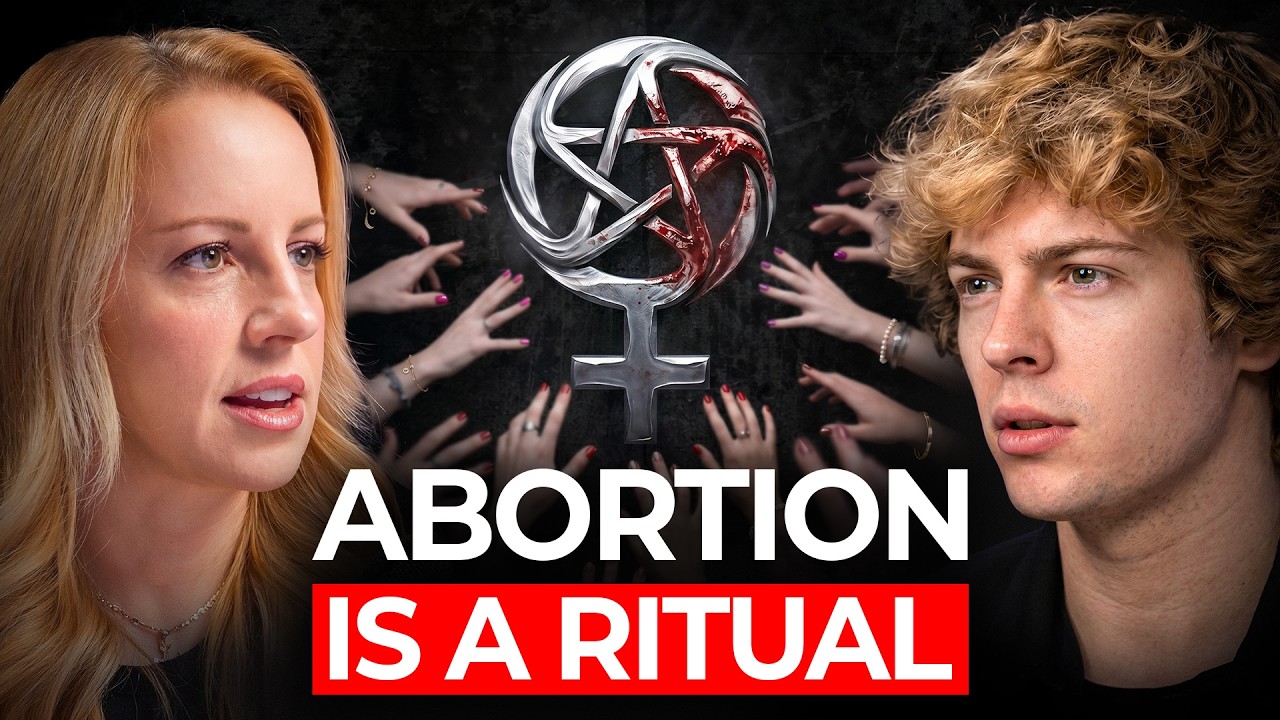
Rachel Wilson, a Christian mother of five and author of Occult Feminism, argues that modern feminism is not a grassroots liberation movement but a spiritually and politically engineered system with roots in ancient goddess worship, occult practices, and elite social engineering—designed to sever women from family, faith, and fulfillment, leaving them lonelier, more depressed, and less likely to have children than at any point in history.
Why Women Are Unhappier Than Ever in 2026
Despite being the most educated, financially independent, and legally free women in human history, American women report record levels of loneliness, depression, and dissatisfaction.
Since the 1970s—the tipping point when feminism became dominant—women’s self-reported happiness has sharply declined.
26% of American women are on at least one psychiatric drug; rates of alcoholism and fetal alcohol syndrome among women are at all-time highs.
Women are three times more likely than men to suffer from common mental health issues, a gap that has widened over time.
A core paradox: feminism promised women independence so they could choose partners based on love, not need—but now that women out-earn or match men educationally and financially, they struggle to find “suitable” husbands who meet their elevated expectations.
Many women in their 30s and 40s express regret online: “I did everything right—career, education—and now I’m alone.”
Rachel’s personal experience reflects this: as a young woman, she wanted to marry early and raise children, but faced intense social pressure to pursue college and career instead.
She questioned the logic of outsourcing childcare to strangers while pursuing corporate work, calling it “musical chairs with children.”
Rachel’s Childhood: Two Competing Worldviews
Her parents’ divorce at age nine exposed her to opposing ideologies:
Mother: A Marxist feminist who believed men (especially white men) were inherently oppressive; truth belonged to the oppressed; resources should be redistributed.
Father: A conservative business owner who emphasized merit, hard work, and personal responsibility.
This duality forced Rachel to critically evaluate both worldviews from a young age.
Her father’s advice—“Self-esteem comes from making good decisions, not external validation”—resonated deeply and aligned with her lived experience.
She concluded that her mother’s worldview, while emotionally compelling, didn’t match reality—whereas her father’s merit-based framework did.
Feminism Was Not a Grassroots Movement
Contrary to popular belief, feminism was not a bottom-up uprising of oppressed women demanding rights.
Early suffragists like Susan B. Anthony and Elizabeth Cady Stanton wrote extensively about how most women didn’t want the vote or feminist reforms.
In state referendums, women voted down suffrage by wide margins—so suffragists eventually banned women from voting on whether they wanted voting rights.
Only 4% of eligible women in Massachusetts supported suffrage in one referendum.
Instead, feminism was funded and driven from the top down by wealthy industrialists (Rockefellers, Carnegies, Vanderbilts) who wanted:
A larger labor force (women entering workplaces).
Expanded government programs (welfare, public education, income tax).
Political power: women voters were expected to support safety-net policies, enabling the progressive agenda.
These elites used foundations (Ford, Rockefeller, Carnegie) to fund NGOs, universities, and media that institutionalized feminist ideology.
The Occult and Spiritual Roots of Feminism
Rachel traces feminism’s origins not to the 1800s but to ancient pagan goddess cults centered on fertility, vengeance, and female power through sexuality.
Key goddesses: Inanna (Sumerian), Lilith (Jewish folklore), Kali (Hindu)—all depicted as powerful, vengeful, and often destructive toward men or children.
Temple prostitution was a form of worship—sex as a sacred act to access divine power.
Wicca and witchcraft emerged as modern revivals of these traditions:
Witches historically were women outside the marriage market—often older, less conventionally attractive, or socially marginalized—who sought power through magic, abortion, and poison.
The witch archetype (ugly, child-eating, broom-riding) reflects real practices: hallucinogenic sex rituals (broomsticks as applicators), herbal abortions, and poisonings.
The pointy hat derives from Kabbalistic symbolism; the broomstick ritual involved psychedelic lubricants for “flying” experiences.
Witch trials weren’t just about persecuting “opinionated women”—many accused witches provided abortions or poisons, which communities saw as threats to social order.
At least 20% of those executed as witches were men.
Feminism, the CIA, and Cultural Engineering
In the 20th century, feminism was weaponized as Cold War propaganda.
Ms. magazine, founded by Gloria Steinem and Clay Felker, was backed by the CIA through the Congress for Cultural Freedom—a project to contrast Western “freedom” with Soviet oppression.
Its first cover featured Kali, the Hindu goddess who accepts male sacrifice—symbolizing feminism’s shift from domestic servitude to vengeful empowerment.
Gloria Steinem was scouted from Smith College, funded by the Ford Foundation, trained in India, and deployed globally to spread feminist messaging.
She went undercover as a Playboy Bunny to write exposés—blending activism with intelligence-style operations.
Abortion as Ritual Sacrifice
Rachel argues abortion is not merely a medical procedure but a spiritual sacrament in feminist and occult worldviews.
The Satanic Temple and Wiccan groups have legally challenged abortion restrictions, claiming abortion is protected religious practice.
On TikTok (#WitchTok), creators teach rituals using fetal tissue to create altars and cast spells for power or revenge.
Psychological evidence: when presented with artificial womb technology that could save a fetus without burdening the mother, most pro-choice women still prefer abortion—suggesting the desire is for power over life and death, not convenience.
This mirrors ancient concepts of female deities controlling reproduction and sacrificing offspring.
The Weaponization of Maternal Instinct
Marxists and socialists understood that women’s maternal nature makes them highly susceptible to emotional propaganda.
August Bebel and Lenin wrote openly about radicalizing women in universities because they would defend ideological “causes” like children.
Once indoctrinated, women become fierce advocates for welfare, open borders, and state intervention—seeing vulnerable groups as their “children” to protect.
This explains why women overwhelmingly vote Democrat: campaigns use fear-based messaging (“They’ll take your grandma’s Medicare!”) that triggers protective instincts.
How Feminism Harms Women and Children
Despite claims of liberation, feminism has increased women’s vulnerability:
Domestic violence is highest among cohabiting couples and lesbian relationships—not married households.
The safest place for a woman is with her husband; the safest place for a child is with both biological parents.
No-fault divorce and delayed marriage have not reduced abuse—they’ve increased it.
Children raised without fathers face higher risks of abuse, poverty, and poor outcomes.
Women who marry young and identify with traditional values report the highest life satisfaction and lowest domestic violence rates.
The Sisterhood: From Enforcing Chastity to Promoting Promiscuity
Historically, women policed each other’s sexuality to maintain collective bargaining power in marriage (“Don’t give away the milk for free”).
Today, the “sisterhood” pressures women to delay marriage, explore sexuality freely, and view motherhood as oppressive.
Pop stars (Madonna, Beyoncé, Taylor Swift, Sabrina Carpenter) glorify promiscuity and man-hating as empowerment.
Virgins and young mothers are mocked as “baby factories” or “boring.”
This shift has eroded community: with all women in the workforce, no one is home to care for elders, neighbors, or sick relatives—contributing to the loneliness epidemic.
Gnosticism: The Hidden Religion of Modern Feminism
Rachel identifies Gnosticism—an ancient heresy—as the spiritual core of feminism.
Core beliefs: the physical world is a prison; the body is evil; gender is an illusion; salvation comes through self-knowledge and rebellion against divine authority.
Modern expressions: “You do your own thing,” “Trust your intuition,” “I am my own god.”
Feminists like Elizabeth Cady Stanton openly rejected Christianity, calling the Bible a tool of patriarchal oppression.
She and 14 other feminists (including lesbian pastors) wrote The Woman’s Bible to subvert scripture.
Lucifer is revered as the original liberator—the one who told Eve to disobey God and “be like a god.”
19th-century feminists explicitly called Lucifer their liberator.
The Demographic Collapse
The strongest predictor of falling birth rates worldwide is women’s access to higher education and careers.
South Korea: 0.7 children per woman—population halving every generation.
Every developed nation is below replacement level.
Consequences:
Labor shortages → mass immigration.
Infrastructure decay → no one to fix roads, build homes, or care for the elderly.
Rise of euthanasia programs (e.g., Canada, Japan) as states incentivize the old and sick to die.
Rachel calls this a Luciferian death cult: anti-human, anti-natalist, and ultimately self-destructive.
Raising Daughters in 2026
Rachel’s biggest challenge as a mother of four daughters is the internet.
Social media, Discord, and platforms like Roblox expose girls to radical ideologies, witchcraft, and sexualization.
She regrets not restricting internet access more strictly; her older daughters now help police the younger ones’ screen time.
She advocates for delaying marriage and family is a mistake:
Have children young—biologically easier, emotionally fulfilling.
Build a family first, then pursue other goals later in life.
“There’s a lot of life after kids if you do that first.”
Marriage, Submission, and True Freedom
Rachel defends marital submission—not as oppression, but as a sacred, reciprocal covenant.
She submits to her husband Andrew; he puts her first in all decisions.
This mutual sacrifice mirrors Christ’s relationship with the Church.
A strong husband sets boundaries, protects his wife, and earns her trust—not by being domineering, but by being virtuous and accountable.
Example: When Rachel threw a remote at him early in their relationship, he calmly left and said, “Call me when you’re ready to apologize.” She did—and changed her behavior.
Birth control distorts mate selection: it mimics pregnancy, making women prefer docile “nice guys” over strong, masculine partners.
Many women report shifting attraction after going off hormonal contraceptives.
The Biggest Psyop Against Women Today
Abortion fearmongering: Politicians and activists claim women are dying due to abortion restrictions—but evidence shows otherwise.
Ectopic pregnancies and miscarriages are still treated as emergencies.
The real goal is to frame any limit on abortion as a death sentence for women.
Statistical manipulation: Feminists inflate sexual assault numbers by counting regret, catcalling, or unwanted shoulder rubs as “assault.”
Real reporting rates are under 2%, not “1 in 3.”
These narratives rely on emotional framing, not facts—and are designed to prevent women from questioning feminist orthodoxy.
Final Message to Young Women
Read Proverbs 31: the biblical model of a capable, wise, entrepreneurial woman who manages her household with authority and dignity.
You are not your job or your degree—you are a person with inherent worth.
Prioritize family first: find a virtuous man, build a home, have children young.
Career and education can come later—but fertility and youthful energy cannot be reclaimed.
True freedom is not corporate employment—it is building a family, serving your community, and aligning your life with eternal values.
Feminism told women to seek happiness through autonomy and achievement—but real meaning comes from sacrifice, love, and legacy.