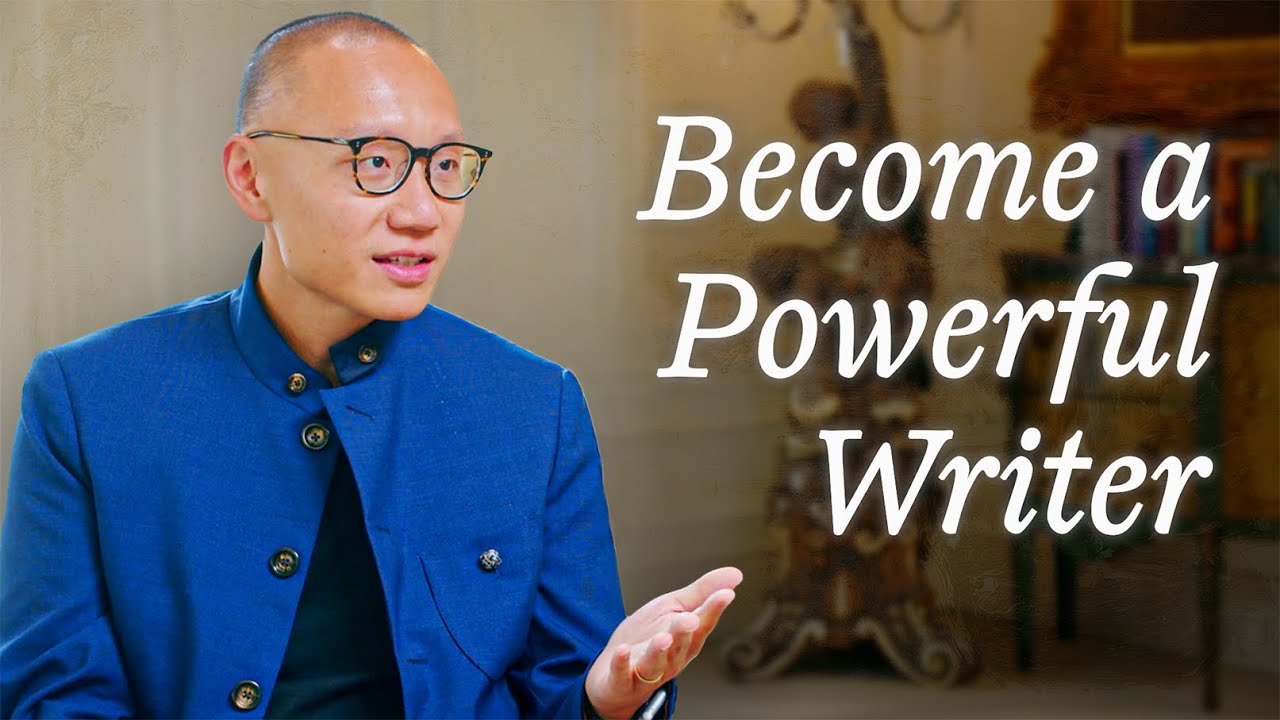
Dan Wang is a China analyst and writer known for his annual letters on China, which blend personal observation, cultural commentary, and political analysis in a style that is both intellectually serious and playful. He has just published a book called Breakneck, and this conversation explores how he writes, how he travels, and how he thinks about China, the US, and the craft of non-fiction.
Why Dan writes annual letters
Dan’s annual letters attempt to capture two contrasting dimensions of China: the formal, official China of party speeches and state media, and the informal, messy, humorous reality of everyday life.
He wants to show the friction between the immaculate, leader-centered world presented by state media and the mundane, stressful, aspirational lives ordinary Chinese people actually live.
His writing is notable for its texture: he uses specific, concrete details, like a bowl of soup in Kunming, to open into larger arguments, rather than staying at the level of abstract “tectonic plate” themes like US-China rivalry.
He sees China as a country of many regions, comparable to the US: Shanghai’s mercantile cosmopolitanism, the northeast’s rust-belt industrial decline, the southwest’s mountainous tea culture, the northwest’s Mediterranean-like climate and Muslim lamb cuisine, and the dramatic landscapes of Tibet.
Dan’s writing style and influences
Dan is highly deliberate about his style. His two greatest influences are Stendal (the 19th-century French novelist, especially The Red and the Black) and Italian comic opera (Mozart’s Don Giovanni, Così fan tutte, The Marriage of Figaro, through Rossini and Donizetti).
From Stendal he draws humor, irony, and the ability to skewer society while telling a love story. From Italian opera he draws a sense of pacing, ornament, cadence, and repetition for its own sake.
He values what he calls “ornament” in writing: flourishes and cadences that create variation in sentence structure and length, propelling the reader forward.
His writing rewards close reading. Like looking at a flower up close, new levels of beauty reveal themselves the more you zoom in. He does not want his work summarized; he wants it experienced.
Dan’s method for writing
Dan writes to a January 1 deadline each year. Throughout the year he dumps notes into the Apple Notes app on his iPhone: observations, thoughts on big events, and occasionally a sentence that comes to him while eating dumplings or listening to Mozart.
He sometimes constructs an entire essay around a single beautiful sentence.
The actual writing happens in a hasty sprint over the last 10 days of December, when he distills a highly disorganized pile of notes into a structure and writes the letter.
He accepts the imperfections that come from this process. He estimates he is about 85% satisfied with his work, which he considers a good outcome, citing New Yorker essayists who say no writer ever gets above 85%.
For the book, he was more disciplined, repeating the mantra “be a calm, collected Canadian” and shifting from his natural nighttime-writing tendency to working more in the afternoons.
Why most travel writing stinks, and what Dan does differently
Most travel writing is not insightful and is often self-indulgent. Writers have ecstatic personal experiences but fail to convey them on the page.
Dan’s approach is to marry observation with analytical insight. He combines what he sees and hears on the ground with conceptual thinking about what it means for Beijing’s ambitions and for the world.
He zooms in and out: from a bowl of noodles in Chongqing to the question of what Xi Jinping makes of China’s trajectory.
He criticizes reporterly books that rely on a single expert interview without engaging with data, literature, or multiple perspectives.
His method of traveling in China is to go everywhere by bus, plane, or train, book a hotel, walk around with little agenda, and organize his days around three or four meals he wants to try. He walks as much as he can between eateries, and insights come naturally from being bombarded by the environment.
Trade books vs. academic books
Trade books (published by presses like Norton and Penguin) are written for a general audience. The derogatory term is “airport book”—celebrity-driven, ghostwritten, unserious. But many trade books are excellent.
Academic books (published by university presses) are often written to meet tenure requirements. Many are boring, obsessed with defending disciplinary positions, and read by almost no one.
The structural incentives differ: trade authors want a wide audience and royalties; academic authors need a book for tenure regardless of quality.
The best books transcend their genres. Dan cites Steven Cotkin, a Princeton professor writing a multi-volume biography of Stalin for Penguin Press rather than producing a niche scholarly study.
How writing a book made Dan a better reader
Writing a serious book gives you X-ray vision as a reader. You learn to spot the difference between what a writer is genuinely passionate about and what they include out of obligation or convention (the “potted history” that every book on modern China must gesture toward).
You learn to identify what is actually animating the writer on each page, which is the skill that allows someone like Tyler Cowen to read so fast.
The problem with history books
Many history books tell “just-so stories”: they make outcomes seem inevitable by narrating a perfect chain of mistakes that led to them.
The best historians imagine counterfactuals and emphasize contingency. The assassination of Archduke Franz Ferdinand, for example, depended on a driver taking a wrong turn.
Dan values historians who synthesize archival documents, imagine alternative outcomes, and resist the trap of making the past seem obvious after the fact.
On writing frequency and Substack
Dan built his reputation by writing one carefully crafted piece per year, not by publishing frequently. He spent the whole year preparing and then wrote intensively for 10 days.
He is a fan of Substack but has a gripe with it: like all modern technology, it encourages higher frequency and shorter posts. The apotheosis is Twitter.
He wants to slow things down. He would rather read a writer’s most considered thoughts once a month or once a quarter than see a post every other day.
He encourages young writers to write annual letters: one well-crafted, personal, reflective piece per year, separate from the quick-take writing they may do for work.
Dan’s relationship with AI
Dan did not use AI for his book. He started using it seriously only after the book was done, when tools like ChatGPT became good enough to be useful.
He sees AI primarily as a tool for enhancing consumption: finding restaurant recommendations, thinking through a novel or piece of music, or having a “Tyler-like” conversation on demand.
He treats ChatGPT as an approximation of his friend and mentor Tyler Cowen: someone to bounce questions off, like why the Spanish Catholic Church developed a virulent Inquisition while the Austrian Catholics did not.
He does not want AI in his writing. He wants his sentences to come from within himself.
He worries about Stanford undergrads who use ChatGPT for everything and then watch TikTok videos, which he does not consider the best form of learning. He believes it is important to learn basic skills first, then let AI turbocharge your life.
China’s influencer culture
Dan’s least favorite part of contemporary China is how much phones have taken over people’s lives, far more than in the US.
In Shanghai cafes, people barely drink coffee or talk to each other; they mostly take photos of each other. Cities have been transformed into photo spots.
China has its own version of Instagram called Xiaohongshu (Little Red Book or Red Note), and a phenomenon called “Wanghong” (internet-famous) architecture, where buildings are designed or rebuilt specifically to be photogenic backdrops.
The corrosive part is not the photos themselves but the way devices mediate all relationships: people are on their phones during business meetings and meals, texting other friends on WeChat.
When everything becomes a photo opportunity, Dan finds it annoying and sad.
Dan’s outsider perspective and critique of elites
Dan sees himself as an outsider in multiple ways: from Qujing, a small city in China’s southwest, rather than from Beijing or Shanghai; from Ottawa, a provincial Canadian city, rather than from the US imperial centers.
He is disappointed that the great cities he moved to—San Francisco, New York, DC, Beijing, Shanghai—are so dysfunctional despite their wealth and prestige. New York is amazing for its culture and people but not for its hardware. San Francisco is so rich and yet so poorly functioning that people keep their car keys in a drawer at night to prevent car break-ins.
He indicts American elites for coasting after elite education, for being smart and ambitious but also insular, protective of their in-group, and ultimately underperforming. He points to the Biden administration, full of Yale Law graduates, as an example.
He contrasts this with his own experience graduating from the University of Rochester, a second-tier school, where he had to fight for recognition and build his network from scratch.
Writing, propaganda, and censorship in China vs. America
The Chinese Communist Party’s most important instrument is the propaganda department, not the military or the security apparatus. Writing and media are central to Leninist rule.
The nightly newscast at 7 PM reaches 300–400 million people. It is sophisticated enough to report bad news (natural disasters, trade wars) before pivoting to what the party is doing to fix things, establishing a thin but real credibility.
Dan read Qiushi (Seeking Truth), the party’s theory magazine, which comes out twice a month, always in red and white, leading with an essay or speech under Xi Jinping’s name. These are written by a giant apparatus, not by Xi himself, but they carry his imprint and serve to organize the party state.
Censorship in China is extensive and getting worse. There is no independent media. Every newspaper is state-owned or heavily censored. Social media posts are monitored by human censors at companies like Tencent and ByteDance.
Dan’s personal website was blocked in China in 2022, possibly due to an algorithmic keyword trigger. There is no way to appeal or even find out why.
A single joke by a comedian in 2023 that played off an army slogan led to the comedian’s detention and the shutdown of comedy clubs across Shanghai, illustrating the regime’s inability to tolerate humor or mockery.
Dan has written honestly about the party’s biggest mistakes, including the one-child policy and the excesses of zero COVID. He does not have a visa to China and is prepared for the possibility that the Chinese government may not welcome him back.
Despite all this, Dan resists the simple narrative that America is free and China is repressive. He notes that China is freer in some practical senses: functional cities, working infrastructure, public safety. San Francisco’s dysfunction gives Chinese propaganda officials an easy target.
The three hard parts of writing a book
The beginning: You need a clear structure or throughline to pin your thoughts on. Without one, you are just moving facts around. You must convince a literary agent with a 40–50 page book proposal, and ideally generate an auction among multiple publishers.
The middle: The actual writing process. Dan’s method was to repeat “be a calm, collected Canadian,” work with his wife Sylvia as a writing buddy, and punctuate writing at home with retreats in Austin, Da Nang, and Barcelona.
The end: Post-production involves more work than expected: finding the right title (they settled on Breakneck, a word with positive connotations of speed but a literal connotation of violence), designing the cover (a woman standing below a giant structure resembling the Tower of Sauron), and the long process of book promotion, including podcasts and live TV.
Why write a book?
Dan does not think more people should write books, but he thinks the right people—those with deep domain expertise—absolutely should, and should be strongly encouraged or even shamed into doing so.
He wrote Breakneck because after six years in China, witnessing the first trade war, growing repression, and zero COVID, he had a story to tell.
In the age of AI, having a book out may become more valuable as a signal of having cleared a filter, especially if AI eventually writes most books.
The kinds of books worth writing now are those grounded in personal experience, challenging the consensus, and resistant to formulaic styles. Dan is tired of the Malcolm Gladwell model (story, insight, repeat) and thinks AI makes it even more important to find distinctive, unconventional approaches.
How to improve your writing: the New Yorker exercise
Dan’s method for understanding great writing is to copy it by hand (or by typing). He learned this from music: as a teenager, he copied out scores of Beethoven string quartets and Mahler symphonies to understand how harmonies fit together and what the composer was thinking.
He applied the same method to New Yorker articles he admired, retyping them sentence by sentence. Even doing a few paragraphs of this exercise gets you into the mind of the writer: you start to see their choices, their trade-offs, their intentionality.
This makes writing feel less like a random process and more like a series of deliberate decisions.
Learning as compounding
Dan rejects the economic model where knowledge depreciates over time like a machine tool. He prefers the Silicon Valley model of network effects: the more you know, the faster you can learn, and growth can accelerate.
He credits Tyler Cowen with teaching him this early: the more you read, the faster you read; the more you know, the better you are at learning.
He admires people like Tyler Cowen and Ezra Klein who have continually evolved—new projects, new formats, new identities—rather than plateauing after early success.
He sees this compounding model of learning as something to pursue deliberately throughout life.