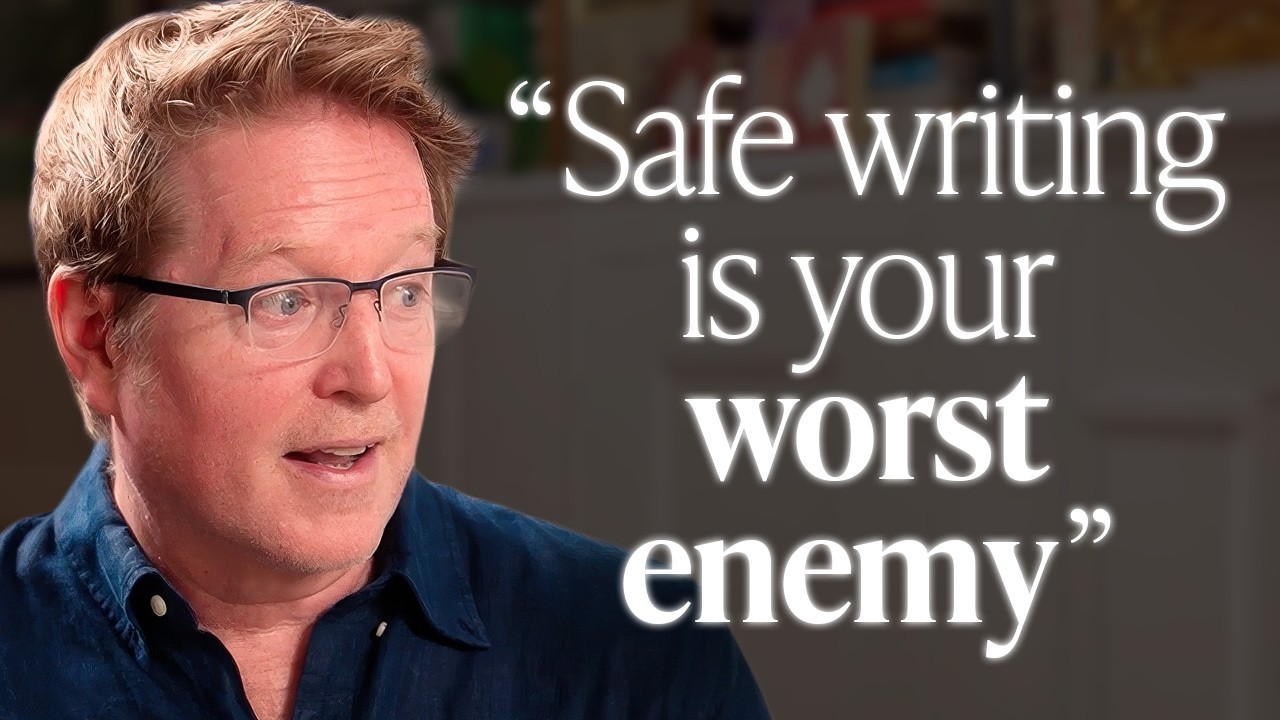
- Andrew Stanton on 30 years of Pixar storytelling — Stanton, Pixar’s second-ever animator and director of Finding Nemo and WALL-E, shares the writing principles, creative habits, and cultural dynamics behind Pixar’s sustained success. The core philosophy: write for yourself, never for kids, treat story as something you uncover rather than invent, and build environments where failure and honesty are safe.
Writing philosophy and process
-
Write for yourself, not for kids — Pixar films work for all ages because the writers never aim at children. They write what they themselves want to find entertaining and meaningful, drawing from a broad palette that includes Sesame Street, Monty Python, Bugs Bunny, Lawrence of Arabia, and Pulp Fiction all at once. Kids, Stanton argues, are excellent readers of tone, gesture, and body language and will figure out what adults are talking about if the work is truthful.
-
Story as archaeological dig — Stanton believes great stories already exist and the writer’s job is to uncover them, like Michelangelo finding the statue in the marble. You pick the right area to dig, but you don’t control what comes up first. The key moment of courage comes when you realize the bones you’ve uncovered are a Stegosaurus, not the Tyrannosaurus you promised — and you have to shift the whole story to fit what you actually found.
-
The one-sentence premise — Inspired by Lars Eigri’s The Art of Dramatic Writing, Stanton constantly writes and rewrites a single sentence that captures character + conflict + conclusion. For Finding Nemo, it took roughly three years to land on: “Fear denies a good father from being one.” That sentence then becomes a litmus test for every scene and decision going forward.
-
Character spines — Borrowed from acting coach Judith Weston, Stanton gives each character a “spine” — a core wiring that drives everything they do. WALL-E’s spine is to find beauty. Woody’s voice emerged from combining Tom Hanks’s nature with Stanton’s own cynicism and softness as a new father.
-
Writing is rewriting — Stanton emphasizes that the first draft is just the beginning. He tells people: “Just write the bad sentence.” You don’t get to the good sentence without writing the bad ones first. Staying in a half-built sentence is “whistling on the steps of Carnegie Hall” — talking about the symphony instead of writing it.
-
Analysis vs. jamming — His process alternates between two modes: analyzing what he’s looking for structure, meaning, and patterns — and freely jamming without thinking, because overthinking restricts creativity. He jumps back and forth between these two sides constantly.
Specific craft techniques
-
WALL-E’s screenplay as visual pacing tool — Because WALL-E would be mostly dialogue-free, Stanton broke standard screenplay formatting. Inspired by Walter Hill’s draft of Alien (1979), he used short, left-justified lines — almost like haikus — so the page visually mimicked the rhythm of the film. This prevented readers from skimming description and forced them to slow down at the pace the movie would ultimately move.
-
Drama as anticipation mingled with uncertainty — Stanton quotes William Archer: the goal is to create a situation in every beat where the audience wants to know what happens next. His cable-car analogy: a story should keep the audience “clamped” to an underlying chain of engagement the entire time. When the clamp disengages, the audience floats away — like a beach ball dropping at a concert.
-
Endings: surprising yet inevitable — A good ending, per Aristotle via Stanton, is one that surprises in the moment but feels like the only possible answer in retrospect. He notes that the most powerful endings can be quiet — even a pause or a sigh — if the emotional groundwork has been laid.
-
Change as the engine of story — Citing Eigri again, Stanton says even a rock changes. Without change in a story — a shift in gaze, a pause, a reversal — the audience disengages. A friend described stories as being about a “five-second moment of change,” and Stanton thinks constantly about what that fundamental change will be.
The Finding Nemo prologue lesson
- The barracuda attack that kills Nemo’s mother was originally doled out as scattered, softened flashbacks. Test audiences found Marlin too neurotic and annoying. Co-director Lee Unkrich suggested putting all of it in the prologue — “killing Bambi’s mom right at the top.” Stanton resisted because it seemed too dark, but when they tried it, the audience suddenly had deep empathy for Marlin and every subsequent scene worked better. The lesson: smart people giving you notes may identify the right problem but propose the wrong solution — and you have to try the scary version to find out.
Pixar culture and the Brain Trust
-
Failure must be safe — Pixar was kept deliberately small and comfortable, promoting an atmosphere where failure is expected. Stanton’s analogy: if you’re not falling off your bike regularly, you’re playing too safe. The trick is to mentally return to “playing in the backyard” — for the love of the game — even when the outside world expects you to win the World Series every time.
-
The Brain Trust — Originally the five directors who made Toy Story (Lasseter, Ranft, Stanton, Docter, Unkrich), the Brain Trust functioned like doctors consulting on each other’s patients. The key rule: fewer than six people. With five, everyone is involved; with ten or more, people perform, hide, and feel judged. Over time the formal group became unwieldy, and the practice evolved into a methodology — each production finding its own small, safe group that can honestly say “this isn’t working” and inspire the filmmaker to try again.
-
Meritocracy of the crew — Stanton rejects the myth of the director as sole visionary. Every name on the crew matters; swapping people would change the outcome just as swapping players changes a game. His job is to be the constant reference point for what the story is, but also to foster and support rather than dictate.
Lessons from key figures
-
Steve Jobs — The farthest thinker Stanton ever met, always thinking “another mountain range over.” He had tremendous patience in meetings, often sitting in silence until he had the right response. He didn’t think he could do what the Pixar artists did, which made him a great boss. His decade at Pixar (roughly 1990–2000) was his “years in the desert,” and he loved that Pixar was making things that could last longer than any computer product.
-
John Lasseter — A natural entertainer with an instinct for what audiences would love. Stanton compares the early Pixar group to the Beatles: they weren’t writing what they thought would sell, they were writing what they wanted to hear — and audiences responded in kind. This “entertainment green thumb” was the group’s superpower.
Silent film and the power of wonder
-
Researching WALL-E, Stanton watched Chaplin and Keaton films regularly and was struck by how sophisticated the subject matter was with minimal title cards. It made the team brave about conveying story visually.
-
Wonder, for Stanton, is what the best stories produce — a sense of humility and appreciation for existence. He traces this back to Bambi, the first film he ever saw, and forward to the Chevron talking-car commercials. The goal is to make characters that pull on people the way babies and puppies do — where you can’t help but project emotion onto them.
AI and the future
- Stanton sees AI as a tool that, like fire, will take time to figure out how to use without burning yourself. But in animation, the goal has always been to free the artist, not replace them. The real question is never the technology — it’s whether the artistic choices are good. “You can’t blame the technology anymore.”
Recommended reading
- The Art of Dramatic Writing by Lars Eigri — the book that shaped his understanding of premise and structure.
- How Not to Write a Screenplay — a practical guide to formatting and the craft of making someone want to turn the page.
- His core teaching message: once you have the mechanics, what matters is what you have worth telling — but the telling is just as important as the content. A bad joke told well beats a good joke told poorly.