Jodi Picoult, author of 30 novels with over 50 million copies sold, describes her writing process as a blend of rigorous upfront research, disciplined daily habits, and a “woo-woo” creative phase where characters speak to her and she watches the story unfold like a movie; she treats writing as a job (Monday–Friday, school-day hours), believes fiction’s superpower is building empathy by forcing readers to inhabit perspectives they’d never choose, and insists the most essential skill a writer can develop is the ability to edit their own work ruthlessly.
Core Writing Philosophy & Advice
Three pillars: read voraciously, write every day, and never stop in the middle of a book.
The “don’t stop” rule exists because the middle is where every writer thinks their work is the worst ever written; finishing proves you can finish, and only then can you decide to fix or scrap.
Picoult does 80–85% of research upfront, so by the time she writes the first line she knows the book will work; she outlines, knows her characters, and knows whether the research fits.
If research doesn’t jive with the concept, she knows early that the project will be a struggle.
Creative Process: From “What If” to Finished Novel
Every book starts with a “what if” question rooted in something Picoult is worrying about — as a woman, American, mother — which becomes a sandbox for the story.
The “percolating” phase: an idea (e.g., a PostSecret postcard reading “Everyone who knew me before 9/11 thinks I’m dead”) obsesses her; she calls dibs and lets it simmer until characters emerge.
Characters arrive fully formed and speak to her; she describes it as “successful schizophrenia” — she hears their voices, they direct the story, and sometimes wake her up to correct a scene.
When writing, she feels like she’s watching a movie no one else can see; her job is to transcribe what she sees and hears.
Her daughter, also a writer, independently described the same “watching a movie” sensation, suggesting a possible genetic component.
Picoult doesn’t think the gift is divine; she believes people are born storytellers (the person inventing backstories for strangers at the airport) but may never write — technical craft can be taught, the storytelling instinct cannot.
Research as Foundation
Research is immersive and personal: she carried her office “between her ears” and never used research assistants because only she knows what will be useful.
Alaska/Yup’ik Eskimo research for The Tenth Circle: flew to Anchorage, took a cargo plane with sled dogs, snow-machined 60 miles up a frozen river to Akiak in -43°F, stayed in a house without plumbing/electricity (honey bucket toilet), brought oranges as a gift, left with dried salmon; recorded interviews (tape recorder tucked in layers) and transcribed later.
Ghost hunting for Second Glance: joined Atlantic Paranormal Society, investigated an abandoned mental institution (saw “fireflies” in January that photographed as orbs, captured a wraith on camera), then a family home where 25 pennies dated 1969–1973 appeared around two children’s cribs and under a camera tripod — historical research confirmed two deaths in those years.
Hollow Bones research: protagonist Molly loses mother on 9/11 at two months old, becomes head of emergency preparedness for Rhode Island; Picoult networked into that world. Postpartum psychosis thread arrived via a letter from a woman in jail who killed her toddler after developing psychosis with a newborn; Picoult spent a year researching with her.
Research often arrives serendipitously once the “what if” is live.
Writing Habits & Schedule
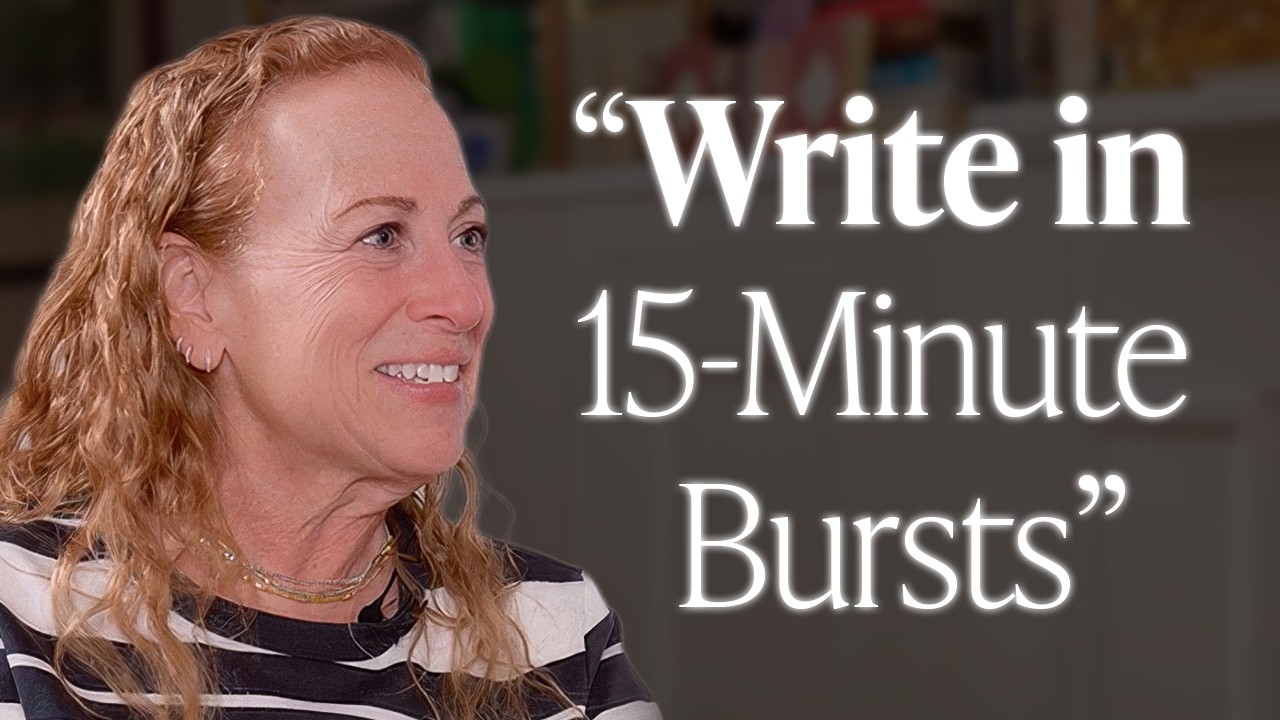
First novel published 1992, right after first son born 1991; wrote in 15-minute bursts between colic screams.
As kids grew: wrote at nursery-school pickup (laptop on steering wheel), at swim/dive practice — any non-kid time was writing time.
Kindergarten (eight hours/day) was a game-changer; suddenly had a full workday.
Now: works Monday–Friday, roughly school hours (until 4:30/5:00), then “turns into an ordinary person”; weekends only at book’s end when “a monkey’s on your back.”
Writes quickly — first draft in ~nine months — but emotional scenes (e.g., a mother saying goodbye to her son in Perfect Match) can take days because she’s crying and words fail; courtroom scenes flow fast because they’re regimented.
Character & Voice
Distinct voice for each narrator is non-negotiable: “You should be able to read a sentence and instantly know who it is.”
Metaphor: putting on different wellies (Wellington boots) and stepping into the same stream (the narrative); each pair pinches differently — that’s the character’s language pattern (fluid vs. subject-verb-object).
Learned from Isak Dinesen (Out of Africa) that the most emotional moments demand the sparsest language — almost Hemingwayesque — because words break down; she looks for those ellipses in her own work.
Unreliable narrators are fun (Nick Carraway in Gatsby was a touchstone); she used one in Keeping Faith (mother vs. stigmata) and a white supremacist narrator in Small Great Things.
Dialogue: she hears it; advises reading aloud to catch repetitions, pacing flaws — especially for indie authors.
Editing & Craft Development
Princeton professor Mary Morris taught her everything: brutal workshop where Morris had class cut and paste Picoult’s story, threw first two pages over her shoulder (“story starts on page three”), said “you needed it and you can take it.”
That tough love + Picoult’s competitiveness drove her to edit relentlessly; Morris sent her to Seventeen magazine, which bought two stories before graduation.
Lesson: you must be willing to dismantle your own writing.
Now works with editor Jennifer Hershey (many years); Hershey writes a 15-page editorial letter after praising the manuscript; Picoult steps back, tests each note objectively — if she can’t defend a choice, it goes.
Refuses to rest on laurels: challenges readers to call her out if she ever rewrites the same book; wants every book to involve a structural or thematic challenge (e.g., A Spark of Light told in reverse with eight voices).
Reading & Influences
Gone with the Wind at 13: first time she thought “I could do that” — Mitchell built a world from words; rereading later revealed race/privilege flaws she’d missed as a kid — a great book rewards rereading at different life stages.
Gatsby: unreliable narrator as a “screen” to catch the reader.
Alice Hoffman: “witchcraft” with love — writes it like a vine growing over an arch (helotrope), blending nature and emotion; books feel like fever dreams.
Jealousy as compass: Life of Pi and The Invisible Life of Addie LaRue are “should have been me” books — loves that feeling.
Reads widely but avoids her own genre/voice while drafting to avoid unconscious parroting.
Fiction’s Purpose: Empathy & Perspective
Fiction’s superpower: people won’t read FBI reports on school shooters but will read Nineteen Minutes (school shooting novel); they come for entertainment, leave having learned something and questioning their own opinions.
Most opinions are inherited (parents, pastor, friends) and never examined; the novelist’s job is to make the reader hear the other side, not tell them what to think, but ask them to sit with why they believe what they believe.
Sing You Home (gay rights): researched with Focus on the Family while her oldest son had just come out; interviewer didn’t know who Matthew Shepard was — Picoult had to leave the room, splash water on her face, swap “mom hat” for “interviewer hat” to finish the interview and represent that perspective fairly.
Rejects literary vs. commercial distinction as marketing labels; Shakespeare, Dickens, Austen, the Beatles were commercial hacks writing for the populace; readers just want a good story.
Personal Life as Material
“Terrible friend” — steals conversations for characters; friends recognize lines in books.
Book trajectory mirrors life stages: Songs of the Humpback Whale (mother-daughter, written at 21), Harvesting the Heart (marriage 50/50, fantasy of fleeing to Mexico), then “scary things that could happen to kids” series (illness, kidnapping, gun violence), now global issues (good/evil in The Storyteller, abortion in A Spark of Light, racism in Small Great Things, gender discrimination in By Any Other Name).
By Any Other Name: Amelia Bassano (real historical figure) as candidate for Shakespeare’s plays — educated (classical + legal), Jewish hiding in England, musical family, fits textual evidence (musical references, legal knowledge, egalitarian women) better than Shakespeare (no books at death, never left England, didn’t teach daughters to read).
Publishing Business & Publicity
Landscape reinvents every two years: podcasts/BookTok now primary discovery (tickets for 30-city tour with 1,200-person venues sold fast despite economy — people need joy and trust her to deliver).
Book bans: Nineteen Minutes most banned in 2024; Picoult is 4th most banned author; bans up 1100% since 2020 (23,000 titles targeted per PEN America); started with LGBTQ/BIPOC, moved to “mature content” (her category). She speaks out because her adult readership insulates her livelihood — duty to use platform.
Publicity: 100% essential — “American Idolization of publishing”; nobody sits in an ivory tower anymore. She loves events, meeting readers, hearing life-change stories (teens abandoning school-shooting plans, suicidal readers reaching out, coming out via her books).
Some authors should never leave the house; extroverted storytellers belong in front of fans.
Advice for Writers
Learn to be your own best editor — the most reached-for tool in the toolbox.
Grab every brass ring (agent, publisher, self-publish — pick the format that works).
Kill your darlings to make the story better; objectivity on your own work is the skill that matters most.