Michael Pollan is a celebrated non-fiction writer known for immersive, first-person journalism on food, nature, and consciousness. In this conversation, he shares his philosophy and craft—from how he uses caffeine and psychedelics to shape his thinking, to his method of turning personal experiments into narrative non-fiction, to his belief that writing is not just expression but a form of discovery.
Writing begins with a question and a quest
Pollan’s process starts with genuine curiosity: he finds something that puzzles or interests him, then embarks on an adventure—experiencing, interviewing, learning—and returns to write about it.
Almost all his work is structured as a quest to answer one or more compelling questions. These questions create suspense and give the reader a reason to keep going.
Example: The Omnivore’s Dilemma asks, “How did we get so confused about eating?”
Framing a strong question early acts as a principle of exclusion—it helps him decide what to include and what to cut.
The power of first-person immersion
Pollan writes in the first person not just as a stylistic choice but as a way to break the fourth wall and build trust with the reader.
He was influenced by Lewis Lapham (his editor at Harper’s), who insisted that every piece answer: “Who is this person, and why do they care?”
Immersion journalism—putting himself inside the story—gives him both a fresh perspective and a built-in narrative.
Example: In The Omnivore’s Dilemma, he bought a steer (number 534) and followed it from birth to slaughter to understand the industrial meat system.
Owning the animal changed his relationship with ranchers and feedlot operators—they treated him more like a client than a journalist, giving him better access.
This technique was inspired by George Plimpton’s Paper Lion, where Plimpton joined the Detroit Lions training camp as a quarterback.
Narrative as a “laundry line”
Pollan uses the metaphor of a “laundry line” to describe narrative structure: the horizontal line is the story (what happens next), and the vertical elements are the facts, arguments, and exposition (the “laundry”).
You must space out exposition so it doesn’t sag; readers are naturally drawn to narrative and will get impatient if you stray too long.
The narrative provides suspense—readers want to know what happens next, especially when the outcome is known (e.g., the steer will be slaughtered).
He compares it to walking a path in the woods: you can step off briefly to explore something interesting, but you must always return to the path or risk losing the reader.
Metaphors as a persuasive tool
Pollan sees metaphors as a “cheat code” in non-fiction—they can persuade readers at a subliminal level without explicit argument.
Example: In the meat industry piece, he contrasted a “food chain founded on sunlight” (grass-fed) with one “founded on oil” (corn-fed). The metaphor did most of the persuasive work for him.
A good metaphor is vivid, easy to grasp, and fair—it should illuminate, not mislead.
He warns that metaphors can be dangerous if they imply false equivalences (e.g., “the brain is a computer” has misled AI researchers into thinking consciousness is just software).
Research: two phases
Pollan divides non-fiction research into two phases:
Global research: Understand the system as a whole—how it works, what’s typical, what the key issues are.
Case study research: Find the specific person, animal, or story that will serve as the narrative anchor.
The second phase is about finding vivid characters—people who are well-situated, authoritative, and express themselves in a memorable way.
He often looks for people “playing against type” (e.g., a rancher who is more accountant than cowboy).
He also looks for conflict within a field—asking experts, “What do you fight about?”—because narrative depends on tension.
Example: In beekeeping, the divide between “localists” and “globalists” revealed deeper tensions about nature, scale, and control.
Writing routine and process
Pollan writes in the morning and does research, reading, and interviews in the afternoon.
When drafting, he starts each day by re-reading and editing from the beginning of the piece—a method he calls the “printer method” (refining as you go), as opposed to the “pixel method” (writing a rough draft first, then sharpening).
He prints out his work and edits by hand, then enters changes digitally. The beginning of his pieces gets the most polish because he revisits it every day.
He keeps a detailed journal for each project—a single, searchable document containing quotes, interview highlights, notes, and observations. It’s messy but indispensable, especially since he has a poor memory.
Forgetting as a creative tool
Pollan sees forgetting as essential to writing—it’s how the mind naturally edits. When overwhelmed by material, he steps away, lets some of it fade, and focuses on what sticks.
He compares this to cannabis, which impairs short-term memory. A scientist told him that forgetting is adaptive: we receive so much information daily that remembering everything would be maladaptive.
Psychedelics and creativity
Pollan has used psychedelics as part of his research, most notably in How to Change Your Mind.
He cautions that most psychedelic insights are banal (“love is important”) and not automatically useful. But occasionally, they open doors.
Example: On psilocybin, he had a vivid experience of plants in his garden “returning his gaze.” This led him to explore plant intelligence and consciousness, which became a major thread in the book.
He treats such experiences as hypotheses to be tested through further research, not as revealed truth.
Psychedelics may nurture “spontaneous thought” (daydreaming, mind-wandering), which is linked to creativity—but he stresses this needs more rigorous study.
Caffeine, nicotine, and focus
Pollan sees caffeine as indispensable to his writing process—it sharpens focus, reduces brain fog, and makes him feel more present and capable.
He distinguishes between “spotlight consciousness” (focused, narrow attention) and “lantern consciousness” (broad, open awareness). Caffeine and nicotine both enhance spotlight consciousness, which is necessary for writing but closes out other stimuli.
He doesn’t advocate giving up caffeine unless someone is overly jittery—coffee and tea have documented health benefits (lower Parkinson’s risk, cardiovascular health).
Alcohol and writing
Pollan says most writers drink to unwind after work, not to write. The romantic image of the drunk writer (e.g., Hemingway) has been largely discredited.
Introductions set expectations
Pollan believes introductions are one of the most powerful tools in non-fiction—they set the reader’s expectations and frame the central questions.
A good introduction includes:
An origin story (how the writer became interested)
A tease of the key questions
A preview of what’s to come
A principle of suspense (something the reader will learn by the end)
He usually writes introductions last, after he knows where the book has gone, so he can promise only what he delivers.
He learned this the hard way: A Place of My Own was criticized for not being a how-to book, so he later added an introduction to clarify its purpose.
Voice and reading fiction
Pollan’s voice is friendly, self-deprecating, and often humorous. He starts from a position of ignorance (“I’m an idiot on page one”) to recreate the reader’s curiosity, even though he already knows the answers.
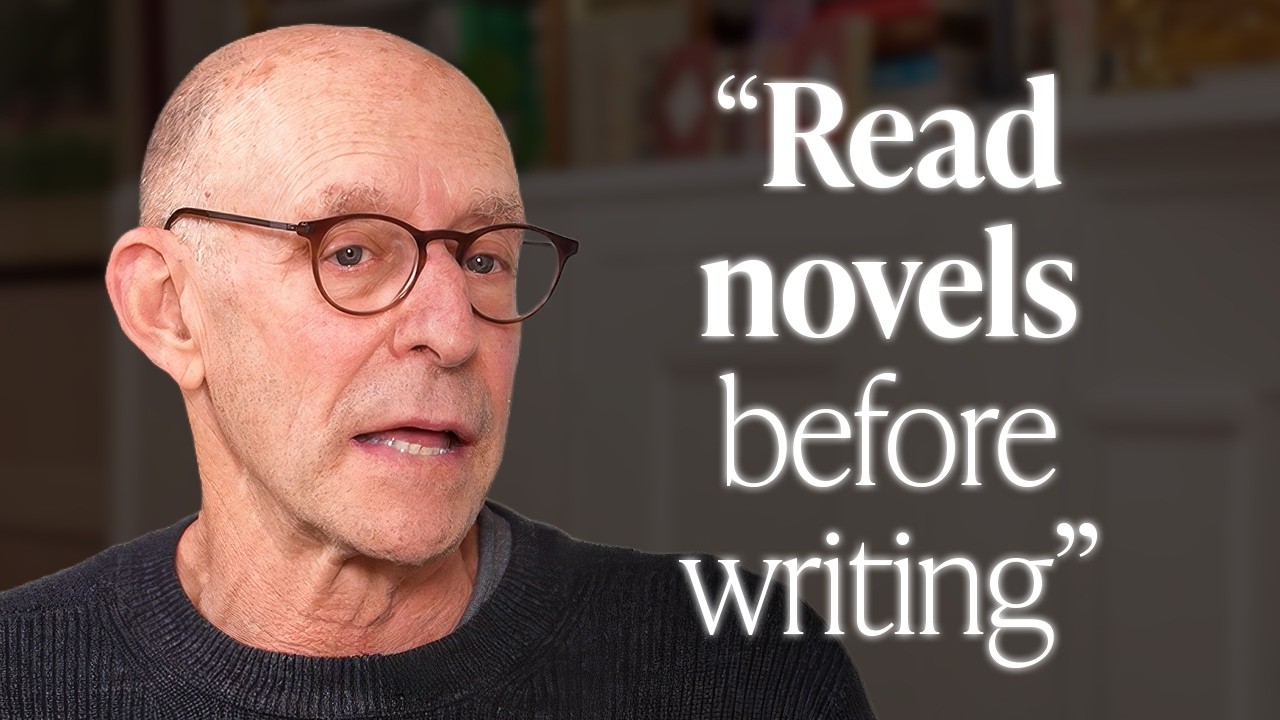
While drafting, he stops reading non-fiction and instead reads novels to internalize rhythm, cadence, and metaphor. He believes what you read before bed influences your writing the next day.
He admires the prose of nature writers like Ted Hoagland and Wendell Berry.
Writing as thinking
Pollan insists that writing is not just a way of expressing ideas—it’s a way of discovering them. He often doesn’t know what he thinks until he writes it.
This is why he’s wary of outsourcing writing to AI: the process itself is generative, and handing it over means losing the insights that emerge through the act of writing.
He compares this to his wife’s painting process—she doesn’t plan everything in advance; the work unfolds through the act of making it.
Art expands consciousness
Pollan sees art—whether literature, painting, or music—as a way to access other minds and expand our own consciousness.
Novelists, in particular, give us intimate access to fictional consciousness, which can be deeper than what we have with real people.
This is why his book on consciousness ends up spending so much time in the humanities: poets and novelists are experts on subjective experience.
Final advice to writers
The most important lesson Pollan teaches: writing is hard for everyone, even after decades of practice. If it feels difficult, that doesn’t mean you’re not meant to do it.
Every writer faces the white screen with doubt. The key is to keep going, play games with yourself, and trust the process—even when it’s painful.