Gillian Flynn, author of Gone Girl, Sharp Objects, and Dark Places, discusses her approach to writing character-driven thrillers, the craft of mystery, adapting her work for film with David Fincher, and building a voice that prioritizes interest over likability.
Writing philosophy: character drives plot, not the reverse
Flynn rejects the idea that she consciously engineers suspense; instead, she layers crisis, tension, and character flaws so the story “unravels toward awfulness” like being pulled by a rope toward a dark closet.
The tension comes from characters getting in their own way — Nick flubbing a police interview, Camille self-sabotaging while investigating — because “there’s a reason the phrase is ‘he’s his own worst enemy.’”
She insists her thrillers are character-based: the twist in Gone Girl was not the seed; the seed was building Amy and Nick and letting their natures collide.
Setting functions as an extension of character: she moved Gone Girl from Chicago to Missouri because Amy needed to be trapped in a place with no room to reinvent herself, and the Midwest lets her “play gothic” without readers’ preconceived images.
Female evil and the anti-heroine
Flynn writes “feminine evil” because she felt women were excluded from the anti-hero tradition — only men got to be complicated, violent, or morally dark; women were relegated to helpmates or “lovably stupid” chick-lit protagonists.
Sharp Objects was written to examine what violence looks like when women enact it: generational, cyclical, internalized, not performative.
She rejects the publishing dogma that “women only want to read aspirational characters”; Gone Girl proved readers want interesting, not likable.
A character earns attention by having a secret, making strange choices, or not adding up — motivation matters more than morality.
Process: stubbornness, writing exercises, and method acting
Writing is largely stubbornness: she wrote roughly three full versions of Gone Girl before finding the right one; the job is showing up even when it’s miserable.
She uses “writing exercises” — scenes outside the book (e.g., Nick’s first-grade parent-teacher conference from the teacher’s POV, Amy’s boarding-school roommate) — to understand characters without the pressure of “writing for the book.”
The “Cool Girl” monologue began as a one-afternoon rage exercise; she almost cut it, then kept it because it felt true.
She compares her immersion to method acting: she knows she has a character when they accompany her in daily life (e.g., hearing Amy’s voice in a supermarket line).
Mystery structure: discovering the ending, then earning it
Flynn does not plot the solution in advance; she discovers the killer while writing (Sharp Objects’ murderer didn’t exist in the first draft).
Not knowing the ending prevents premature clue-planting; the reader chases leads alongside her.
After the draft, she goes back obsessively to “earn” every twist: every clue must be traceable, every logistical detail nailed down (e.g., checking if Zima existed in 1997, whether ink dating could catch Amy’s diary).
She dislikes “cheap” surprises that aren’t earned — a legacy of reading Agatha Christie and feeling cheated when a mystery couldn’t be solved fairly.
Adapting Gone Girl with David Fincher
The book was deemed “unadaptable” by studios despite weeks at #1; Fincher was the first to see its cinematic potential.
Fincher pushed to put more of the book back into the script (resulting in a 2.5-hour film), acted as a rigorous editor, and forced Flynn to articulate why each scene existed — if she couldn’t explain it, it went.
She learned screenwriting from him: discipline, collaboration, and the value of a director who loves the source material for its own sake, not as a commodity.
Voice, narration, and openings
She writes in strong first person because voice is what draws her to other writers (Martin Amis, Joyce Carol Oates); a big voice must emerge organically from deep character knowledge, not be performed.
Openings are written last: she dives in a few paragraphs down, then crafts the first line after the book is done (Gone Girl’s “When I think of my wife, I always think of her head…” sets the uneasy, marital-mystery tone).
The five questions Nick lists (“What are you thinking? How are you feeling? Who are you? What have we done to each other? What will we do?”) frame the novel’s dual mystery: what happened to Amy, and what happened to the marriage.
Naming as craft
She loves naming: uses the Social Security baby-name database for year/state-specific realism (e.g., Jennifer for Gen X, rare for a toddler today).
Carthage, Missouri nods to Who’s Afraid of Virginia Woolf? (toxic marital games); “North Carthage” avoids real-town complaints.
Nick was chosen after informal surveys — people had strong, polarized reactions to the name, which felt right for a character who reads ambiguously.
Pop culture, performance, and the mediated self
Flynn explores how media scripts our reactions: we perform grief, joy, surprise because we’ve seen the “correct” version on screen; the image becomes crisper than reality.
Gone Girl anticipates the social-media era: Nick observes that secondhand experience is always better — sound-corrected, framed, polished — risking a loss of imagination and authentic reaction.
Gillian Flynn Books imprint: “stories with teeth”
Her imprint seeks voice-driven, thrilling, conversation-starting books that leave readers reeling — not indifferent.
She wants conflicted responses: loving and hating a character, debating the ending — closer to reality than “I liked it, it was good.”
In a consolidating industry risk-averse to weird, quirky, outsider stories, she champions the books that might not get published today (asks if Sharp Objects would sell now).
Her most common note to authors: “Give me more voice” — trust the space where you’re most confident; watery voice signals uncertainty.
Teaching writing: write first, analyze later
She would structure a class around in-class exercises (e.g., “father and daughter, she’s 13, just got her period, no mom — write the scene”) to discover strengths/weaknesses fast.
Reading craft books (On Writing, Bird by Bird) helps, but you must write; there is no correct way.
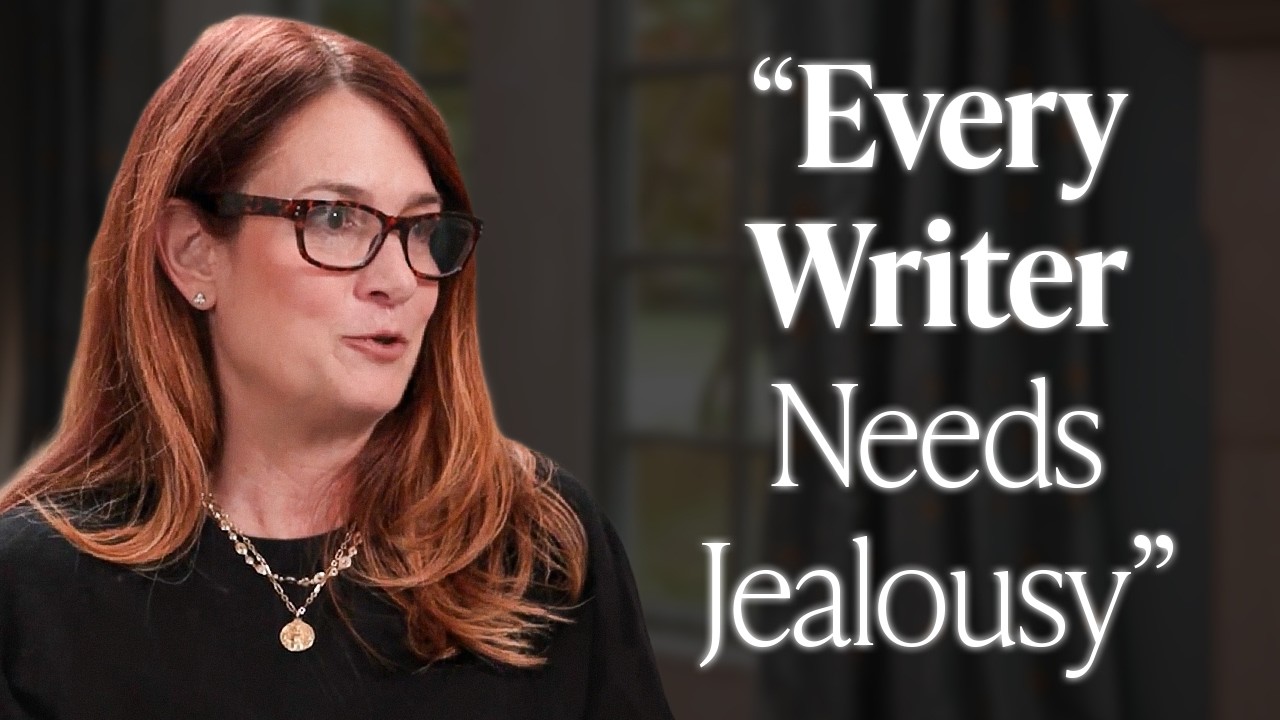
Jealousy of better writers (Kate Atkinson, Joyce Carol Oates) is fuel: “Curse your Atkinson” — reread to reverse-engineer the magic.
Her weak spot is plot; she writes mysteries to trick herself into building one.