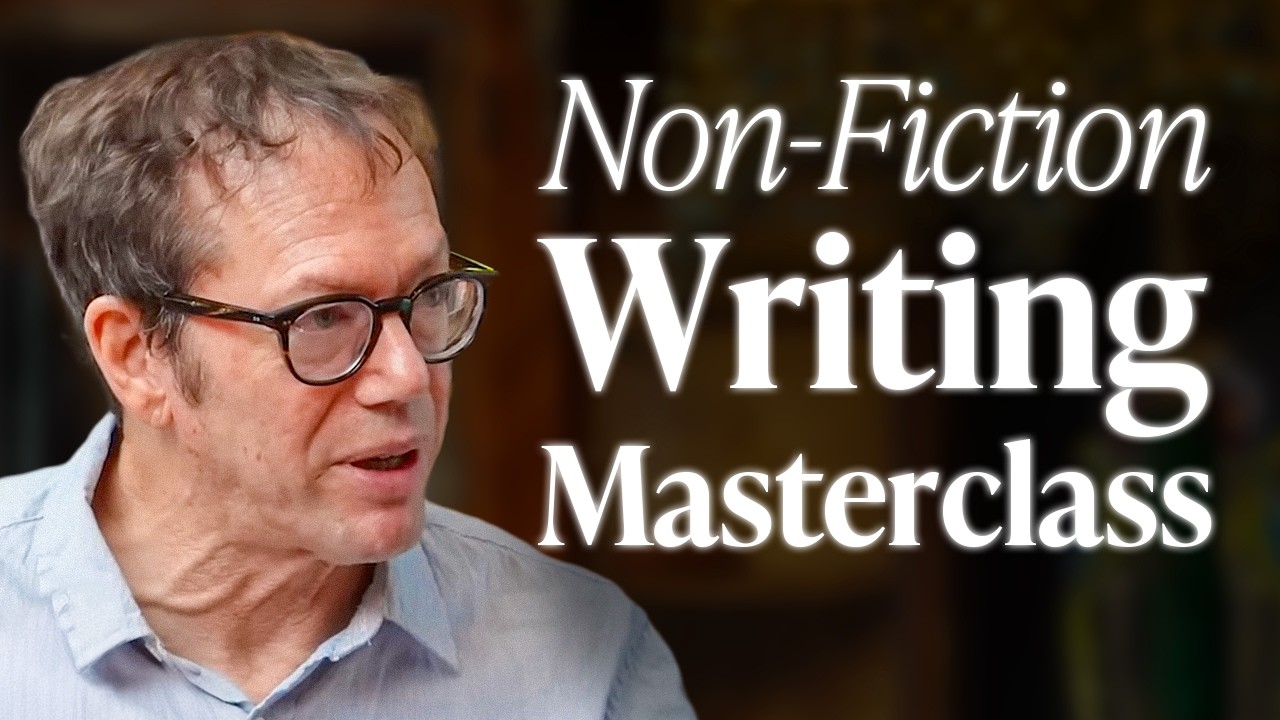
Robert Greene is a bestselling author known for books like The 48 Laws of Power, The Laws of Human Nature, and Mastery. In this episode, he discusses his philosophy and process for writing stories that feel alive, timeless, and emotionally resonant. He emphasizes the importance of drama, concreteness, and authenticity, and shares how his methods have evolved over eight books.
The Role of Storytelling
A story is a form of seduction: it takes the reader on a journey, creating a sense of aliveness and engagement.
Stories are primal; they mimic how the human brain operates by continually telling itself narratives.
The key to a good story is its ability to make the reader feel something—whether through vivid details, emotional resonance, or dramatic tension.
Timelessness in Writing
Greene aims for timelessness in both content and style. He avoids colloquialisms and trends so his work remains relevant decades later.
He draws inspiration from writers like Machiavelli, whose clarity and crispness still feel modern centuries later.
Timelessness is achieved by focusing on universal human emotions and experiences that transcend eras.
Research and Story Selection
Finding the right stories is central to Greene’s process. He looks for drama, high stakes, and relatable human emotions.
He relies heavily on a note card system to organize research. Each card captures specific details, themes, and page references from biographies and other sources.
Stories often emerge organically during research, sometimes fitting into chapters Greene hadn’t initially planned.
Challenges in Collaboration
Greene struggles to find researchers who share his vision. Many lack the patience, ego management, or dramatic instinct needed to identify compelling stories.
He prefers working alone, using his intuition and years of experience to sift through material and find what resonates.
Evolution of Style and Depth
Over time, Greene’s writing has become deeper and more reflective, though less spontaneous. He attributes this to aging, life experience, and even a stroke that altered his cognitive processes.
While his earlier works were faster-paced and more energetic, his later books prioritize depth and nuance.
He believes creativity emerges from a combination of disciplined effort and openness to intuition, which he calls “fingertip feel.”
Concreteness vs. Abstraction
Greene values concreteness over abstraction. He wants readers to feel sensations, see images, and connect ideas to their own lives.
Abstract concepts must be grounded in physical details, emotions, or relatable experiences to have impact.
He achieves this through extensive editing, cutting extraneous material and focusing tightly on the theme.
Empathy and Authenticity
Greene writes with empathy, avoiding judgment or moralizing. He presents ideas and lets readers draw their own conclusions.
His own experiences of failure and self-doubt inform his approach, making him relatable to readers facing similar struggles.
He sees writing as a way to instill new ways of thinking rather than dictating specific lessons.
Structure and Process
Greene organizes his books around themes, using note cards to map out chapters and select stories.
Writing is laborious: he spends months crafting and rewriting each chapter, striving for an organic flow and avoiding repetition.
He describes the process as agonizing but ultimately rewarding, especially when a chapter comes together.
Lessons from Hollywood
Greene’s background in Hollywood taught him the importance of showing rather than telling. Screenwriting forced him to convey emotion and meaning through action and dialogue.
This discipline influenced his book writing, where he focuses on external events and behaviors to reveal internal truths.
Creativity and Inspiration
Creativity, for Greene, is a mix of hard work and inspiration. Hours of research and thinking create the conditions for intuitive breakthroughs.
He compares this to mastery, where years of practice lead to a state of effortless creativity.
True creativity requires both discipline and the ability to let go and experiment.
Purpose and Mission
Greene believes every book must have a clear purpose. Writing for fame or money leads to shallow work.
His current book aims to evoke the sublime—a sense of awe and wonder—in everyday life, making it accessible to everyone.
He views writing as a way to expand consciousness and inspire readers to see the world differently.
Final Thoughts
Writing is painful and lonely, but the rewards—lasting impact, personal fulfillment, and the chance to connect with readers—are immense.
Greene’s secret ambition is to make reading and studying classics exciting for young people, sparking their imagination and curiosity.
He encourages writers to embrace the struggle, find their mission, and create something meaningful.