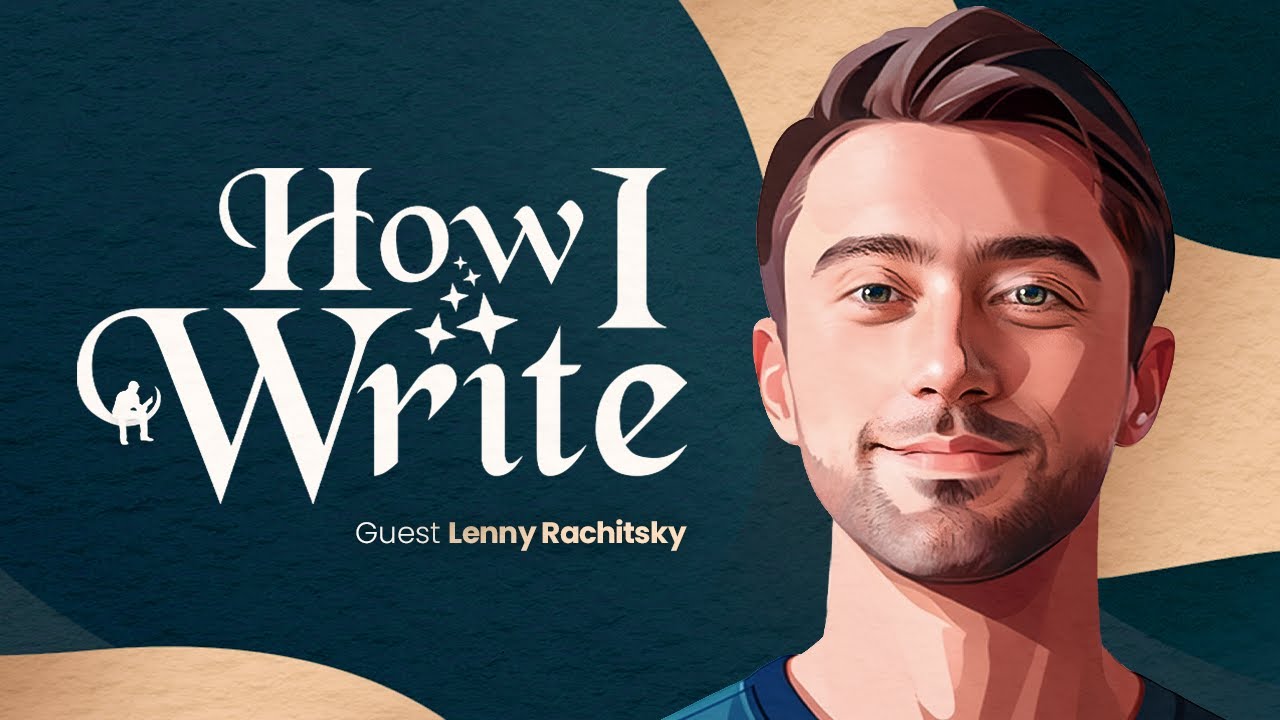
Lenny Rachitsky built one of Substack’s top five business newsletters—over 531,000 subscribers—writing about product management, growth, and startups, despite assuming the niche was too small to support that scale.
His success comes from a relentless focus on quality, consistency, and serving readers’ practical needs rather than chasing growth tactics or building a personal brand.
He treats his newsletter like a product: every post must solve a specific “job to be done” for his audience—helping founders, PMs, and product teams build better products, grow their businesses, and advance their careers.
How Lenny creates high-quality content
Time investment is his primary edge: he spends roughly 10 hours per post, with some deep-dive series taking 100+ hours.
He interviews 15–20 founders or early employees per series, asks them all the same set of structured questions, then synthesizes patterns into frameworks.
Example: his seven-part series on building a marketplace came from interviewing 17 marketplace founders and distilling a four-step process.
Research process in six steps:
Identify a question readers genuinely want answered.
List the best possible people to answer it.
Reach out via warm intros, LinkedIn, or cold DMs.
Conduct interviews and dump all transcripts into a Google Doc.
Stare at the data until patterns emerge.
Turn those patterns into a visual framework or actionable story.
He uses Coda as a content calendar and drafting hub, storing ~50 future post ideas and ~5 in active development, then moves finished drafts to Substack for final formatting.
Guest posts are a growing share of output—he edits them heavily in Google Docs, focusing on cutting long introductions, repositioning content, and removing tangents.
The “jobs to be done” mindset
Lenny applies Clayton Christensen’s framework directly: people read his newsletter because they have a job they want done—“help me get better at building product,” “help me grow my startup,” “help me accelerate my career.”
The best newsletters and courses solve one specific job extremely well; the worst pontificate on trends without serving a clear reader need.
He avoids writing about topics just because they might grow his following—he writes what he’s genuinely curious about, which sustains motivation over years.
Writing and editing philosophy
High signal-to-noise ratio is his north star: actionable, succinct, useful information delivered with minimal fluff.
He reads each post 10–30 times before publishing, cutting, simplifying, and rearranging until nothing else can be improved.
He describes good writing as a “smooth” smoothie—no friction, no chunks that catch the straw—where information flows effortlessly from his brain to the reader’s.
Introductions are his weakest skill and the thing he edits most aggressively—he aims to cut them by 50% and get straight to the answer.
He uses a self-made template for intros: what’s surprising? What’s a good story? What’s unexpected?
He does not identify as “a writer”—he says “I write a newsletter”—which he considers a strength because it keeps his ego out of the work and prevents him from over-polishing.
Copy editor is a game-changer: he pays ~$100/post for professional editing and she catches ~100 errors every time, even after he thinks the piece is done.
Distribution and growth
99% of growth comes from word of mouth, amplified by Substack’s recommendation engine.
When Substack launched its recommendation feature (where writers recommend other newsletters), his growth inflected sharply upward because 9,000+ newsletters now recommend his.
Paid ads (Twitter, Facebook, LinkedIn) and cross-promotions were negligible blips by comparison.
Early traction came from Medium and guest posts: a post featured on Medium’s homepage and retweets from Andrew Chen and VCs gave him initial visibility.
He wrote guest posts for First Round Review and Andrew Chen’s blog by simply asking—serendipity plus willingness to reach out.
LinkedIn drives more traffic than X/Twitter for his content, though he personally enjoys X more for its live, conversational feel.
Process, schedule, and sustainability
No meetings until 3 p.m.—he protects his mornings for deep writing and research, which he considers his most productive hours.
He actively avoids conferences, panels, networking events, and interviews because they pull him away from the work that made him successful.
He has “policies” (no talks, no events, no interviews) to make saying no easier and less personal.
He never pulls all-nighters: if a post isn’t ready by Tuesday, he takes the week off under his self-invented PTO policy (four weeks per year).
He keeps 3–4 posts in the pipeline at all times to avoid burnout and deadline panic.
He works from different spots in his house or cafes—all he needs is a laptop, headphones, Wi-Fi, and brain.fm (binaural beats for focus).
He’s highly distractible (checks Twitter/LinkedIn ~30 times/day) but has accepted it as part of his process rather than fighting it.
What he writes about and why
He didn’t set out to be “the product management guy”—he gave himself permission to write about growth, career advice, starting companies, and product management because limiting himself to just PM would bore him.
This breadth keeps him motivated while still serving a coherent audience: people building software products.
Writing prompts he recommends:
What do I want to learn about?
What do I want to remember from my current role?
What is interesting to me right now?
What have people asked me that I didn’t have a great answer to?
What have I shared on Twitter that resonated?
He uses GPT to generate pop culture metaphors and references when writing—something he’s naturally bad at—iterating until he finds the right framing.
Handling criticism and credibility
He hates criticism but tries to treat it as data: when someone points out an error, he corrects the post and tweets the correction.
Example: a product-market-fit timeline post had two companies dispute his dates; he updated the image and acknowledged the correction publicly.
He worries about losing credibility with 500K+ subscribers but has learned that transparency about mistakes is better than silence.
Background and influences
Engineering background gives him domain credibility—he knows what’s obvious, what’s superficial, and when to push interviewees for deeper answers.
It also trained him to enter flow states and prioritize ruthlessly, both of which transfer directly to writing.
Writers he admires: Rick Rubin (for taste and creative philosophy), Tyler Cowen and Noah Smith (for high signal-to-noise daily output), and Kevin Kelly (for succinctness).
He doesn’t read as many newsletters as he used to (parenthood reduced his reading time), so his production is driven more by curiosity and questions from his community than by consuming others’ work.
The bigger lesson
Lenny’s entire approach can be summarized as: be high quality and do it again and again and again, and good things will happen.
He stumbled into success without a master plan—no strategy doc, no empire-building vision, no growth hacking.
He focuses exclusively on delivering value to readers, trusts that word of mouth will handle distribution, and protects the time and energy needed to keep producing great work.
His story is proof that even a seemingly narrow niche (product management) can support a massive audience if the content is genuinely useful and consistently excellent.