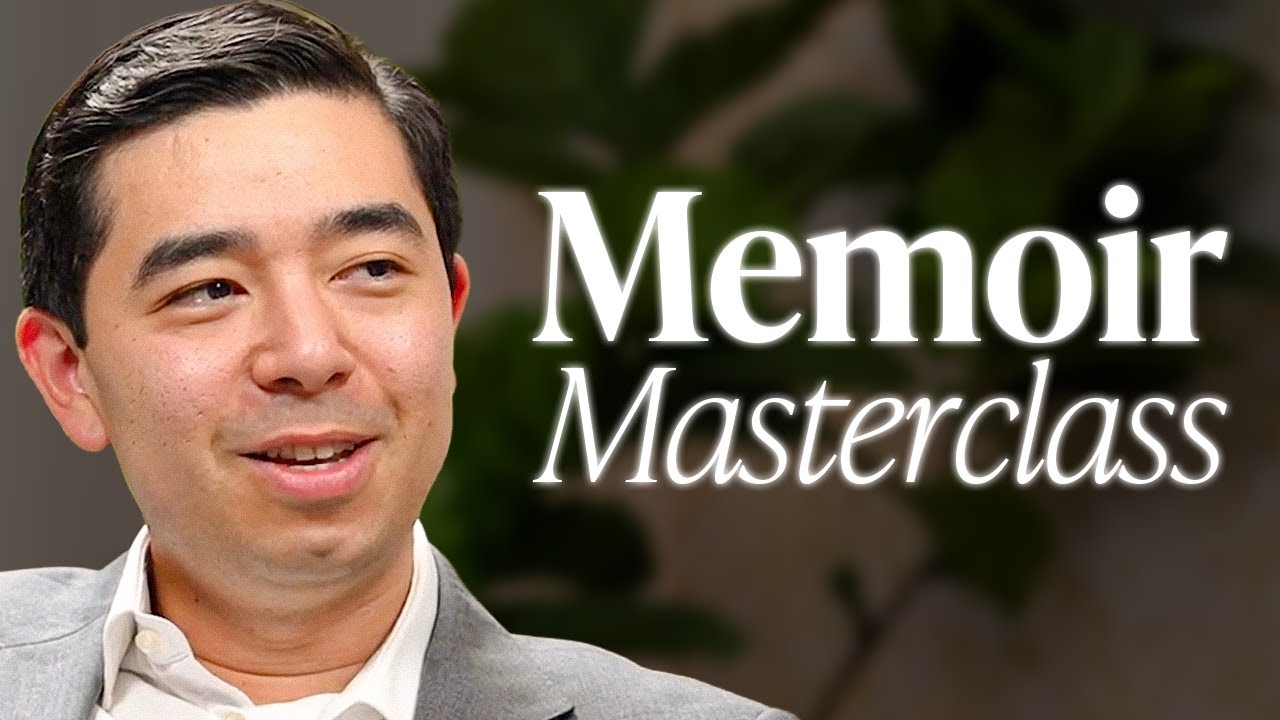
Rob Henderson is the author of Troubled, a memoir about growing up in the foster care system in California, and how he went from extreme childhood instability to Yale, a PhD at Cambridge, and a career as a public intellectual. The episode is a deep conversation about the craft of writing a memoir: how to excavate painful memories, structure a life story, decide what to include, and write with honesty and emotional precision.
Why Rob wrote the memoir
He started writing personal essays in college and noticed that people from elite backgrounds had no firsthand understanding of the world he came from.
He initially planned to wait until middle age, but decided to write it in his late 20s while memories were still vivid and friends and family were available to corroborate events.
Writing it young had a cost: the wounds were fresher than he expected, and the process was emotionally exhausting.
What he learned about memoir writing
A memoir is not a loose heap of anecdotes. It must center around one or two specific themes. Rob’s were family instability, foster care, and social class.
Every story must tie back to those themes. He cut roughly 20% of his original 100,000-word manuscript by asking: Does this serve the theme?
The editing question that guided him: “Who am I in this story?” not “Who am I?”
Voice of innocence vs. voice of experience
He initially planned to write from the adult perspective (voice of experience), mixing in research and hindsight analysis.
He switched to the voice of innocence: writing each chapter from the perspective of himself at that age, without adult context, to bring the reader inside the experience.
This meant the language starts simple and unsophisticated in early chapters and gradually matures across the book, mirroring his own development.
How he excavated difficult memories
He used sensory triggers: music from the 90s, specific foods and drinks from childhood (like Dr Thunder from Walmart), scented candles from periods of his life.
Smell in particular unlocked long-dormant memories.
He would wake up at 3 a.m. with resurfaced memories and immediately type them down before they faded.
He called old friends and his sister to corroborate details.
The process was so emotionally draining that he would fall asleep for hours after writing sessions, which he initially attributed to pandemic depression but later recognized as the toll of reliving trauma.
Deciding what to include
The more trepidation you feel about sharing something, the more likely it should be in the memoir. Stories that made him feel vulnerable, ashamed, or exposed were the ones that stayed.
He cut stories that made him look too good, including one where he rescued a drowning child at a party, because he realized he included it out of ego, not because it served the themes.
He used a Darwinian feedback process: sending drafts to writer friends and incorporating feedback only when two or more people independently raised the same point.
Emotional variance and pacing
He did not want a “misery memoir.” He opened the book by mentioning his Yale graduation so the reader knows the story has a happy ending.
Within and across chapters, he alternated emotional highs and lows: a painful story followed by something amusing or uplifting.
Time dilates and contracts: mundane stretches (like basic training) are compressed to a sentence or a page, while emotionally significant moments (like a long drive to a new home) are stretched out.
Honesty about himself vs. fairness to others
About himself, he tried to be as honest as possible, including stories of violence, drinking, rehab, and bad decisions.
About others, he refrained from judgmental commentary. He reported his memories and feelings but avoided rendering harsh verdicts on other people.
The hardest stories to include were the rehab chapter (never previously discussed publicly) and a scene in a movie theater parking lot with his mom and her partner Shelly, which was painful for his mom and sister to relive.
Dialogue
Good dialogue doesn’t sound exactly like real conversation (which is messy) but it also can’t be too clean or it feels artificial.
He had to reconstruct how a 10-year-old version of himself spoke versus how his therapist spoke, capturing the fits and starts of a child trying to sound mature.
Dialogue in memoir doesn’t have to be word-for-word accurate but must be truthful to the spirit of the interaction.
Lessons from other memoirists
JD Vance told him the book would evolve in ways he didn’t expect. Vance originally wanted Hillbilly Elegy to be mostly sociological with personal stories as illustrations; it became the reverse. Rob had the same experience.
Tara Westover gave him three pieces of advice:
Don’t break the spell: inserting data and statistics into a personal narrative pulls the reader out of the immersive experience.
Draw characters with recognizable patterns, but include moments where they surprise the reader by deviating from those patterns.
The things you think will upset people often won’t; the things you think are innocuous are what get under their skin. This proved true with his sister and mom.
Ending the memoir
Ending a memoir is strange because you’re still alive. He struggled with finding the right conclusion.
The final scene involves a friend asking whether to read to her six-year-old son to make him smarter. Rob replies: “Read to him because it will remind him that you love him.”
This line compresses the book’s core argument: elite culture overvalues credentials and optimization, but what actually matters is love, stability, and family.
The preface as compromise
His editors wanted context and research early on. He resisted putting statistics in chapter one, remembering Westover’s advice about not breaking the spell.
The compromise: a preface that introduces the adult Rob, his credentials, and the research on child instability, so the reader knows the book has an intellectual foundation, while chapter one drops straight into the story.
What academic writing taught him
How to find and evaluate research: using Google Scholar, checking citation counts, looking for review papers by senior scholars, following chains of references.
The habit of writing every day, which is essential for completing a book-length project.
He wrote the memoir and his PhD thesis concurrently, alternating between them. The thesis days felt like relief because academic writing came more naturally.
Guardedness and vulnerability
At a writing seminar at Columbia, he wrote a personal essay about his upbringing but refused to let anyone read it.
Over time, he noticed that his guardedness was self-defeating. Talking about his experiences in therapy, in rehab, and eventually in writing was what allowed him to heal and change.
Even at Yale, he still struggled with whether to share his story. Part of his motivation was a reaction to elite classmates performing vulnerability in ways that felt artificial to him—he wanted to show what real hardship looked like.
Creativity and persistence
He references research showing that creativity is more about persistence than inspiration. The romantic image of the struck-by-lightning writer is misleading.
Real creativity looks like showing up every day, producing many bad ideas, and occasionally launching a good one. He applied this through his newsletter, publishing weekly regardless of quality.
What makes a bad memoir
Telling instead of showing: talking about how tough your life was without illustrating it with specific scenes and interactions.
Lack of vulnerability: the reader approaches memoirs suspiciously, knowing people like to make themselves look good. If the author isn’t willing to look bad, the reader disengages.
Writing from wounds, not scars: using a memoir to settle grudges or blame others, rather than reflecting on healed (or healing) pain.
He cites George Orwell: “Autobiography is only to be trusted when it reveals something disgraceful.”
How he would teach a memoir class
Mine your own history: identify the most vivid memories, the ones that make you feel something, the ones you’re ashamed of, the ones you’re proud of.
Accept that you are an unreliable narrator. Memory is imperfect. There will be blanks.
Focus on narrative structure: a memoir is not an autobiography (a chronological record of everything). It is organized around themes and universal experiences that readers can relate to.
Even highly specific, unusual experiences (foster care, the military) become universal when written with enough vulnerability and detail—readers map them onto their own lives.