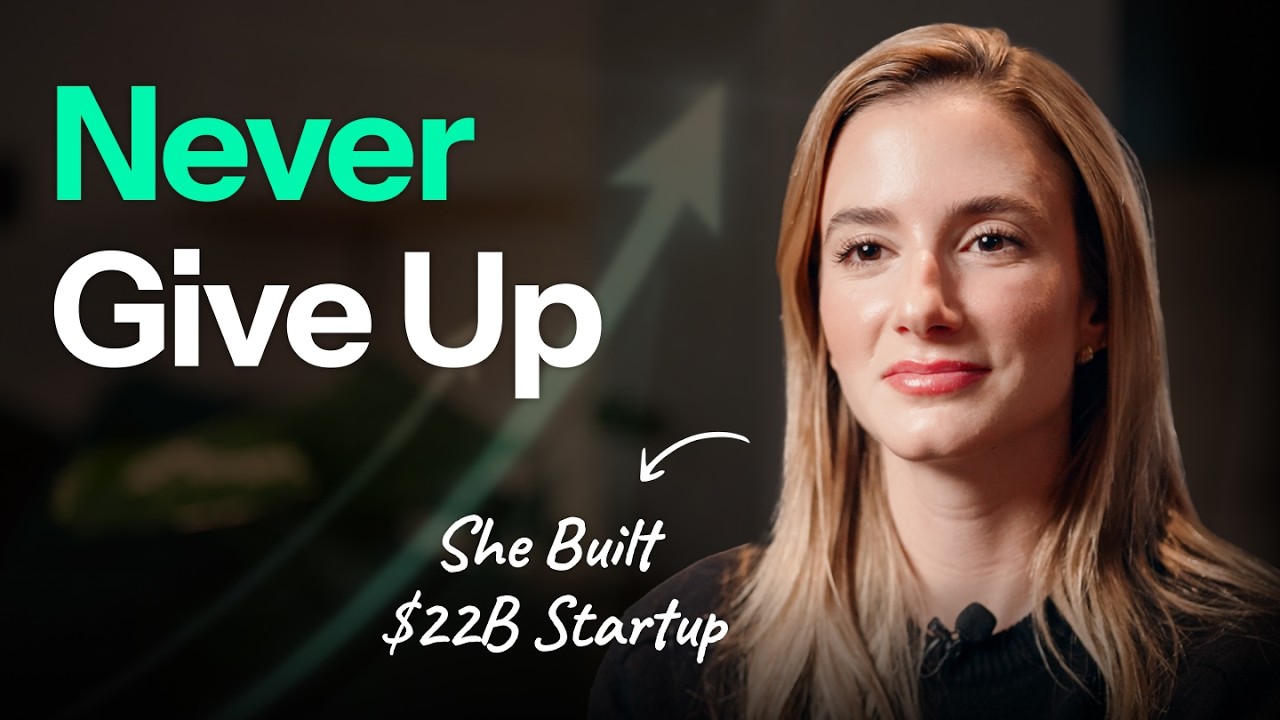
Kalshi, a regulated prediction market startup, raised a $1 billion Series F round at a $22 billion valuation — double its valuation from just five months earlier — after spending four years fighting legal battles to become the first fully regulated U.S. prediction market exchange. The company’s story is one of extreme conviction, regulatory-first strategy, and explosive growth once legal barriers fell.
From Ballet to Building a $22B Startup
Tarek Mansour, Kalshi’s co-founder, grew up in Lebanon and trained professionally as a ballet dancer in Brazil, often sleeping only four hours a night while balancing school and dance.
That background instilled in him a discipline and comfort with delayed gratification — rehearsing for a year for a single hour on stage — that directly shaped his approach to building Kalshi.
He chose MIT for undergrad specifically to be pushed out of his comfort zone, and made the difficult decision to quit ballet entirely rather than let his skills deteriorate.
Conviction: 65 Lawyers Said No
The idea for Kalshi emerged from Tarek’s 2016 internship at Goldman Sachs, where he noticed that institutional investors cared less about asset prices than about binary outcomes — would Brexit happen, would Trump win — but had no precise way to trade those views.
The “Trump trade” of shorting the S&P 500 was a blunt instrument: people who correctly predicted Trump’s win still lost money.
Tarek and co-founder Luana Lopes Lara connected the dots while working at proprietary trading firm Five Rings in the winter of 2017–2018, realizing there was no legal, liquid, large-scale prediction market in the U.S.
They called 60–65 lawyers in a single day; none said it was possible.
Through contacts, they reached Jeff, a regulatory expert who laid out the enormous difficulty of becoming a regulated exchange and clearinghouse under 23 core principles.
By the following Monday, Tarek and Luana had written a full analysis of how they would satisfy all 23 rules, which convinced Jeff to join them.
Legitimacy: Four Years to Earn the Right to Launch
Kalshi’s founding principle was “regulatory first” — they would not launch, market, or build a public product until they had full legal approval.
This decision was crystallized at a Y Combinator hackathon where their demo was immediately flagged as illegal by Michael Seibel, who nonetheless admitted the founders sounded motivated.
While other YC batch companies showed week-over-week growth metrics, Kalshi’s progress was measured in lawyer meetings, regulatory filings, and policy documents.
Competitors launched offshore without licenses, making Kalshi’s path look stagnant by comparison.
The founders stayed committed because they believed prediction markets could bring objective, truthful forecasting to society’s most important questions.
They viewed the price generated by these markets as a single, powerful data point — an unbiased forecast from millions of people putting real money behind their beliefs.
Payoff: Four Years of Fighting, Four Weeks to Scale 100x
After more than two years of trying to work with regulators through normal channels — including a public comment period with 200 submissions from prominent academics — Kalshi realized engagement wasn’t working.
They made the extraordinary decision to sue their own regulator, the CFTC, betting that they were legally right and that these markets should exist.
Every judge who reviewed the case ruled in Kalshi’s favor, first at the district court level and then at the appeals court.
Winning the lawsuit triggered the most intense month in the company’s history.
A third-party clearinghouse blocked Kalshi from listing the election market, forcing the team to migrate their entire clearinghouse infrastructure — a process that normally takes six months — over a single weekend.
The full team worked around the clock for four weeks, scaling 100x overnight.
Kalshi gained over 2 million customers in roughly 2 weeks and did over $2 billion in volume, with sign-up and deposit systems buckling under the demand.
The company was able to call the 2024 election results before mainstream media, with live probabilities visible throughout election night.
Signal: Not a Casino, a Market for Truth
Kalshi’s core argument is that prediction markets are financial markets, not gambling, for two structural reasons:
The underlying events are real-world, naturally occurring risks — not artificial constructs like dice rolls.
The market structure is neutral: Kalshi doesn’t profit when customers lose, unlike a casino where the house’s revenue equals customer losses.
Real money creates real incentives for accuracy.
Research shows people express confident political opinions when asked casually, but become far more uncertain when asked to put money behind their predictions.
This “put your money where your mouth is” mechanism reduces polarization and surfaces genuine information.
As a regulated exchange, Kalshi is subject to the same rules as stock exchanges:
Market integrity (fairness) and customer protection (transparency) are enforced.
Insider trading is treated identically to insider trading in equities markets.
All trades are publicly reported, winners cannot be blocked, and the exchange must remain neutral.
Edge: Where Knowledge Becomes a Market
Kalshi’s user base includes full-time traders who have found edges in niche markets:
Joel, a former accountant, makes over $200,000 a year trading mention markets — bets on what a specific person will say in a speech — by building databases of historical speeches and tracking administration talking points in real time.
Brandon, a 25-year-old public school teacher, made $150,000 on Kalshi, including $8,000 from a single trade where he found inventory data in the HTML source code of Travis Scott’s CD store.
Shannon, a Kalshi employee and meteorology graduate, trades weather markets as a form of insurance — buying “yes” on a hurricane hitting her area to offset her $10,000 homeowner’s insurance deductible.
Non-sports markets are growing 5x year-over-year and already represent $300–400 million in weekly volume ($15–20 billion annualized), covering economics, politics, culture, and weather.
Scale: From Niche Market to Global Infrastructure
Kalshi has gone mainstream, with a significant percentage of Americans now active on the product — many using it as a newsfeed for forecasts rather than actively trading.
The company is investing heavily in brand definition to clarify what it is and isn’t.
International expansion is a priority to diversify the customer base.
The long-term vision is for prediction markets to reach the scale of the stock market, with participation ranging from retail users to major institutions.
The founders see the journey as full circle: they first observed demand for binary event trading at Goldman Sachs, Bridgewater, and Citadel, and now aim to build the liquid, regulated markets those institutions can trade on.
The company believes it’s still in the early innings, with the potential to cover virtually any topic people care about — from politics and sports to culture and weather.