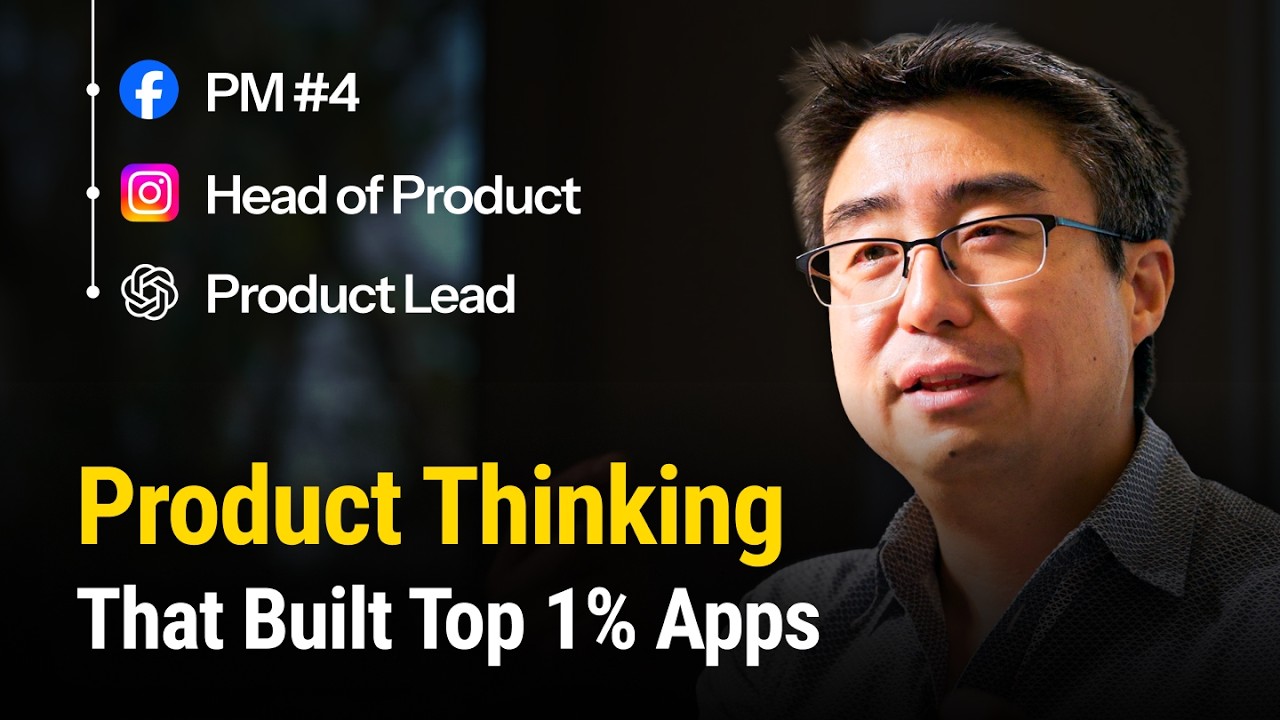
Peter Deng, general partner at Felicis Ventures and former product leader at Facebook, Instagram, Oculus, Uber, Airtable, and OpenAI, shares the core principles that have guided his career across building and investing: clarify the real customer problem, subtract to the essence, hire for talent density, use conflict to stretch the solution space, and optimize for learning and enjoyment over one-dimensional success.
Product thinking: subtract to the essence and solve the customer’s real problem
The most enduring products come from editing down to the essential abstraction, not adding features; Facebook’s News Feed taxonomy (face, name, content, attachment, interactions) has remained unchanged because the team measured twice and cut once.
Product is not the pixels on the screen — it is whatever solves the customer’s problem; at Uber the product was price and ETA, not the app itself.
Founders often articulate company problems (e.g., “Uber needs more revenue”) instead of customer problems, which erodes empathy and leads to the wrong priorities.
Uber Reserve became a ~$5B/year, high-margin business by solving the customer problem of “peace of mind” for early-morning airport rides; every design detail (driver photo, match notification) flowed from that definition.
When a leader has clarity on the true product, the team knows which details matter most and where to drive excellence.
Growth mindset: treat failure as a lesson, listen first, go slow to go fast
Adopting Carol Dweck’s growth mindset — “it’s not a loss, it’s a lesson” (Jay-Z) — means owning the forward fix instead of blaming others or circumstance; you cannot go back in time.
Deng’s playbook when joining a new company: listen deeply, ask “what do you think?” and “what are you struggling with?” before offering opinions; this Socratic approach builds context and avoids missteps.
Moving from consumer to enterprise (Airtable) required unlearning almost everything except the core product framework; the added complexity is that the buyer ≠ the user.
Beginner’s mindset compounds: each new domain reinforces the fundamentals and keeps the learning curve steep.
Build a team that doesn’t need you: hire A+ from day one, delegate in six months
Talent density is the founding DNA; A players hire A players, and compromises on early hires cascade into permanent cultural compromises.
In an AI-accelerated world, the right person leveraging tools can produce 100x vs. 5x returns, making initial hiring leverage even higher.
Deng’s management axiom: “If I’m still telling you what to do after 6 months, I’ve hired the wrong person.” This forces high hiring bars, sets autonomy expectations, and creates an objective progression framework.
A manager’s job is to work themselves out of a job; every conflict becomes a coaching moment toward the report’s independence, not an excuse to reclaim control.
Conflict makes great teams: stretch the gamut with diverse, convicted perspectives
At Instagram, Deng intentionally seated three product leads — growth, consumer, monetization — around the same table, each optimizing for a different metric; designers want simplicity, PMs want features, engineers want build time.
This tension stretches the “gamut” of exploration, surfacing richer decisions than groupthink allows; the team becomes a collection of Avengers with unique superpowers, not clones.
A builder who invests, an investor who builds: same three-pillar thesis
Deng’s investment framework mirrors his operating choices: (1) market timing — why now? (GPS phones for Uber, camera phones for Instagram), (2) a real, evident customer problem (Airtable: non-technical people building structured databases; OpenAI: deep AI workflows), (3) founder conviction — a strong, specific point of view on what the world needs.
Example: Parform founders John and Jeff demonstrated deep, personal obsession with matching people to roles, plus traction, humility, and growth mindset; Deng’s team delivered a term sheet the same night.
Investing amplifies Deng’s desire to build; he “interns” at founders’ companies during meetings, brainstorming product direction — energizing, not draining.
Building a more human future: AI returns time for creativity and passion
Across web, mobile, and AI waves, humans solve the same problems (e.g., finding a restaurant) in progressively more magical ways: search → location-aware → conversational.
AI’s promise is automating mundane work to give people time back; that time unlocks creative expression and fuller lives — making us more human, not less.
Deng’s career optimization metric has been learning; he enjoyed every chapter because he followed curiosity, not a single success dimension.
Advice: look inside, decide what you’re optimizing for (learning, family, impact, craft), and ensure your daily work aligns with the life you’ll look back on with pride.