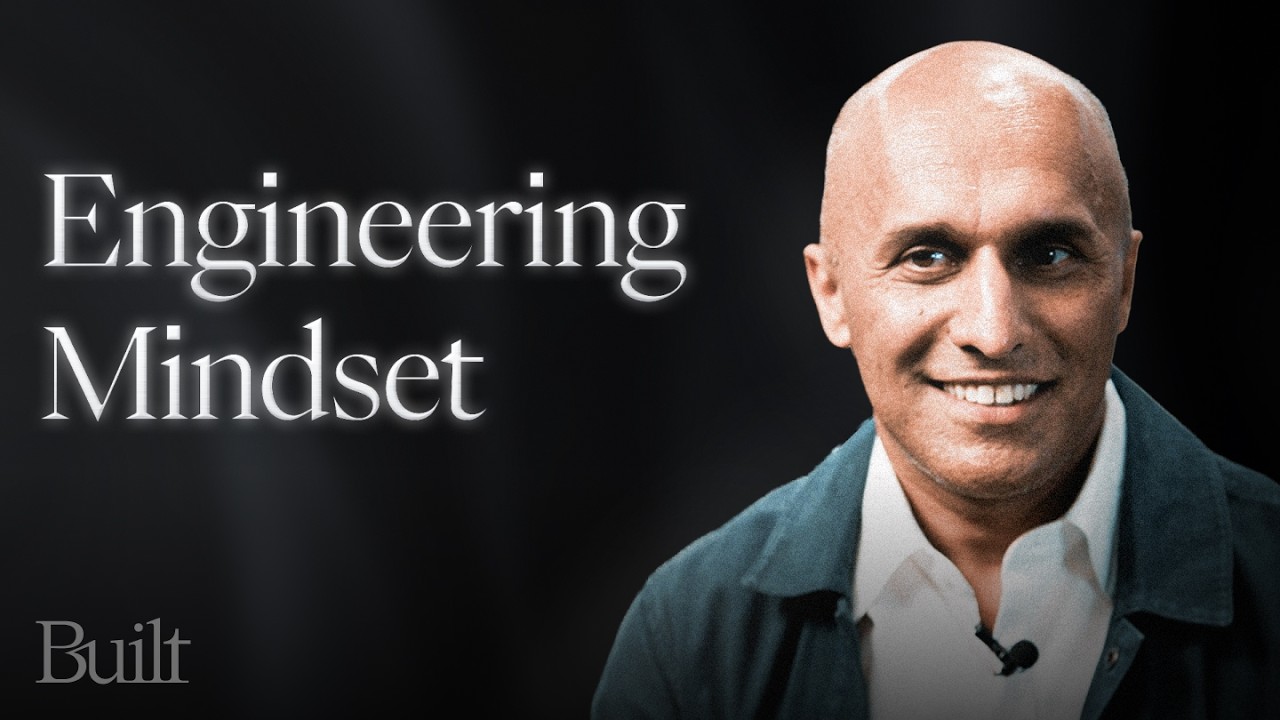
Qasar Younis, co-founder and CEO of Applied Intuition, explains how a horizontal platform strategy, an engineering mindset applied to business, and lessons from Y Combinator built a $15B physical AI company that puts intelligence on vehicles and industrial machines worldwide.
Applied Intuition’s horizontal platform strategy
Instead of building a vertical self-driving car or robotaxi service, Applied Intuition provides the simulation, data, and autonomy stack that lets OEMs and autonomy companies develop their own intelligent vehicles.
The bet in 2017: it was unclear which vertical would win, and vertical integration required massive capital with both technology and market risk; a horizontal tools layer let the whole industry experiment while Applied captured value across verticals.
OEMs (automotive manufacturers) were always going to build autonomy themselves, so selling them the platform aligned with their incentives and purchasing power.
The platform runs on everything from passenger cars to the Giga Truck operating autonomously on Japanese roads today, and on mining, agriculture, and defense equipment.
Reducing vehicle architecture from dozens of discrete ECUs to centralized compute cuts cost, weight, and complexity — making the platform itself a lever for cheaper, more intelligent machines.
“Radical pragmatism” guides product decisions: only build what customers demonstrably need and will pay for; every feature, hire, investor, and office opening is intentional and written down so logic can be audited later.
Engineering mindset applied to company building
Factory experience taught Younis that a company is a measurable system: inputs (processes, people, capital) produce outputs (quality, throughput, revenue) that can be objectively evaluated, unlike subjective domains such as art.
Physics and material science are binary — a door hinge works or it doesn’t — so business questions (strategy, hiring, fundraising) are treated the same way: define the hypothesis, measure the result, iterate.
Writing decisions down forces clarity; even wrong decisions become debuggable when the reasoning is explicit.
Commercialization is designed into the technology from day one, not bolted on later; “you can’t add plumbing after the house is built.”
Y Combinator patterns: co-founders, markets, and product-market fit
YC acted like “couples therapy for startups,” revealing patterns across thousands of companies.
Ideal founding team: two to three people with complementary skills, emotional compatibility (feedback style, work intensity), and aligned ambitions (e.g., both want a generational company, not just a quick exit).
Four or more founders creates decision paralysis; solo founders lack skill coverage and support.
Market selection matters as much as team: “sell ice in hot weather” — a great team in a shrinking or indifferent market will struggle.
Product-market fit is not a destination but a daily state that can erode; proxies are customers giving time and money, but founders must stay cynical and keep re-earning it.
Example: Coca-Cola still spends heavily on marketing because consumer preference is temporary; Applied Intuition stays in the “PMF zone” by constantly asking customers whether products are used, impactful, and moving to production.
Vanity metrics (downloads, pilot counts) are not PMF; repeated usage and revenue are.
Personal philosophy: reading, ambition, and fear vs. frustration
Deep reading (hundreds of pages, sustained focus) is a prerequisite for clear thinking; Younis cites Sam Walton’s Made in America, Gandhi’s My Experiments with Truth, and Mandela’s Long Walk to Freedom as formative.
Root ambition is controlling his own destiny, shaped by immigrating from Pakistan as a child and growing up in a working-class family where financial fear was constant — building a high fear tolerance.
Career choice framework: if frustration (boss not recognizing work, lack of autonomy) bothers you more than fear (unknown outcomes, no safety net), become a founder; if fear paralyzes you, stay at a large company where salaries are guaranteed.
Founders pay with fear, not frustration; the trade-off is explicit and must match one’s psychology.