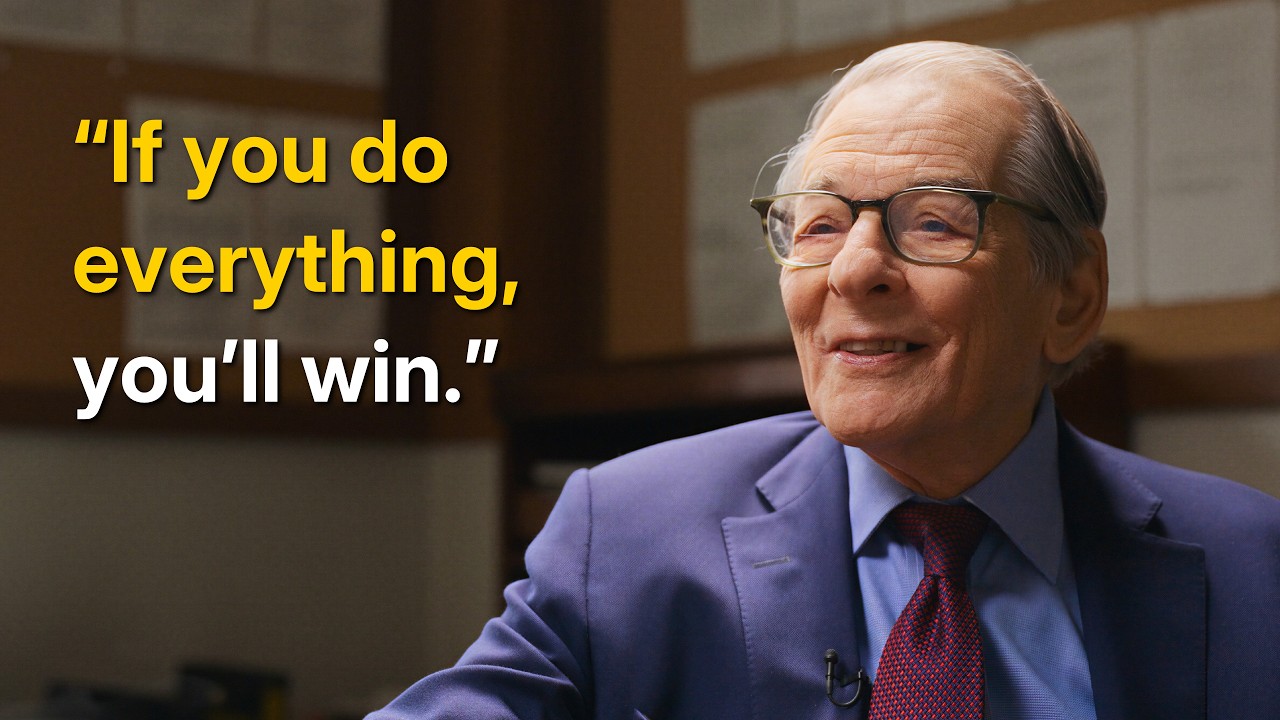
This episode is an in-depth interview with Robert Caro, the Pulitzer Prize-winning biographer of Robert Moses and Lyndon Johnson, conducted after 50 years of studying power through these two figures. Caro discusses his interviewing methods, the nature of political genius in getting things built, the transformation of idealism into ruthlessness, the tragedy of Johnson’s presidency, his own writing process, and the loneliness that shapes both his subjects and his work.
Relentlessness as a shared trait with his subjects
Caro acknowledges a “relentlessness” he shares with Moses and Johnson: refusing to take no for an answer when pursuing interviews or documents.
He describes tracking down Johnson’s first secretary, who rode with him on campaigns, insisting no one else knew what Johnson did during those hours.
With John Connally (Johnson’s bagman), Caro pressed past initial resistance by showing he already knew the documentary evidence — Connally then revealed how Johnson coded money requests (“Okay, 1,500,” “500,” “No,” or “No, never”).
Robert Moses and the problem of building at scale
Caro challenges the view that today’s regulatory thicket (environmental review, community boards, litigation) uniquely prevents building; in the 1920s, similar obstacles existed — property owners blocked roads, “government can’t build anything” was the refrain.
Moses overcame this not by removing safeguards but by political genius and will: he found a way around each obstacle to build Jones Beach, parkways, bridges.
Caro argues that periodically someone with “political genius” appears who can get big things built despite opposition; decades may pass without such a figure, then one emerges and things get built.
He does not want a Moses today — Moses became ruthless, evicting tens of thousands for the Cross Bronx Expressway against expert advice, destroying opponents like Bronx politician Henry Epstein by exposing his affair.
But Caro also warns against the current paralysis: California spent $15 billion on rail with zero new miles; China builds like 1950s New York but with similar displacement.
The core democratic dilemma: how to land between Moses’s ruthlessness and today’s inability to build anything large.
The arc of Moses: idealist to hardened power broker
Young Moses was a civil-service reformer who wanted merit over patronage; he built Jones Beach to give city people ocean access — an act of genius and will.
Over time, he stopped listening to opposition; the only thing that mattered was getting the project built, regardless of human cost or expert warnings.
Caro witnessed Moses losing power while writing The Power Broker: in his final interview, the usual stream of calls from supplicants had stopped — the secretary had nothing to tell him. Caro felt the poignance despite Moses’s record.
Moses never truly realized his power was gone; insulated by loyal aides, deaf, in his 80s, he believed he would push through again.
Earlier governors/mayors could have fired him (he was unelected), but he was too popular and had woven an interlocking web of posts with staggered terms making removal nearly impossible — until Rockefeller did it when cracks appeared.
Lyndon Johnson: leverage behind persuasion
Johnson’s persuasiveness was inseparable from the power he wielded: senators knew he could grant or deny committee assignments, pass or kill legislation.
The “Johnson treatment” (arm around you, leaning in) worked because the target knew the consequences of refusal.
Caro wished Coke Stevenson (the “Mr. Texas” Johnson stole the 1948 Senate race from) had won — Stevenson was an idealist who knew how to govern, and would have been a great senator.
If Kennedy had lived and Johnson remained Majority Leader, the Great Society legislation would not have passed earlier: Kennedy lacked Johnson’s “overriding desire to change America” rooted in his year teaching poor Mexican-American children in Cotulla.
Johnson’s domestic genius was unique; his presidency ended in tragedy because Vietnam consumed the attention and political capital needed to finish the domestic revolution.
Vietnam: the unsolved mystery
Caro is still working through why Johnson kept escalating in Vietnam even as it destroyed his presidency; he declines to answer until the final volume is complete.
Energy as will, not constitution
Both men worked 16+ hour days, made calls at 2–3 AM. Caro attributes this to will, not unusual physical constitution: “being tired doesn’t even seem to figure into the equation.”
Anecdote: Johnson called a senator at 5 AM for a vote; the senator replied, “Oh, Lyndon, I was just lying here waiting for your call.”
Writing process: the one-sentence anchor
Before writing, Caro spends months at his desk asking “What is this book about?” until he can state it in one sentence (or a short paragraph).
He learned this the hard way with The Power Broker: without a guiding thesis, he wrote 1,050,000 words and had to cut 350,000 — “the best stuff I ever read,” per his editor Bob Gottlieb.
The sentence becomes the structural spine; everything must hang from it.
Digital archives: speed but not transformation
Digital tools help locate documents faster (e.g., finding oral histories for the Battle of Ia Drang Valley), but reading and synthesizing remains the bottleneck.
Caro doubts earlier volumes would have been significantly faster: “finding them is a small thing compared to reading them.”
The 40-year Johnson project: the younger Caro’s reaction
If told in 1975 that the Johnson biography would take 40+ more years, Caro says he would have been daunted but the realization came gradually.
The Power Broker cuts haunted him: 350,000 words removed, including vast material on the Senate, Sam Rayburn (no good biography exists), and frontier life in the Texas Hill Country.
He cannot not write material he thinks matters, even knowing much will be cut.
Archives as a resource for future scholars
Caro donated his archive (hundreds of typed interview notes, cut chapters, unused research) to the New-York Historical Society, taking far less money to keep it accessible in New York.
He hopes scholars will use it to understand Rayburn, the Senate’s inner workings, New York’s evolution, and the Hill Country frontier — material that never made the books.
The Hill Country: loneliness as character formation
Johnson’s ancestors settled in Indian country, facing massacre risk and profound isolation: women walked hills seeing no other houses for miles.
Caro was shocked interviewing elderly Hill Country residents: one directed him 22 miles down a dirt road past zero houses to her lifelong home.
This loneliness shaped Johnson; he was acutely aware of the gulf between his upbringing and the 1960s America he led.
Caro believes America still underappreciates the heroism of ordinary frontier endurance, apart from conflict with Native Americans.
Caro’s own loneliness in the work
He works alone, phone off, no calls returned until day’s end — a discipline that protects concentration but strains friendships.
Some friends understand; many don’t. The isolation has “impacted my entire life.”
Ina Caro (his wife and research partner) is the exception; they have worked together in this solitude for decades.