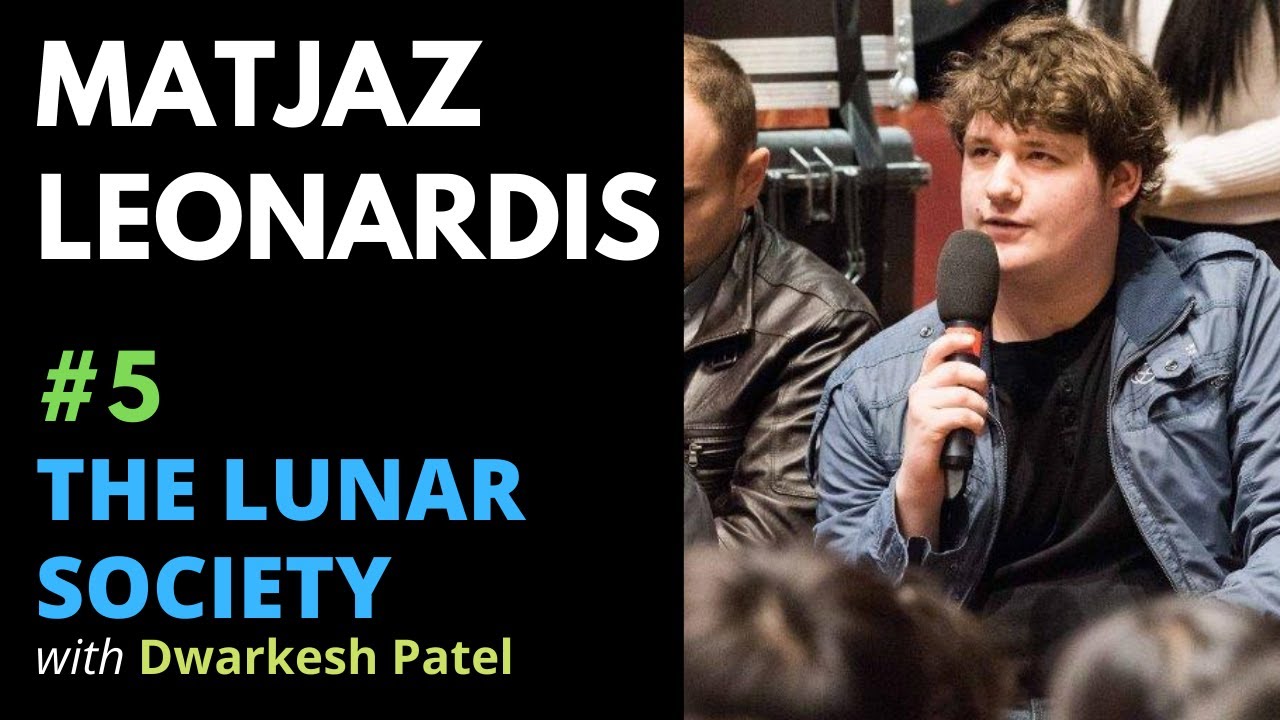
Matjaž Leonardis, a polymath who has co-authored a paper with David Deutsch on the Popper-Miller Theorem, discusses the dangers of identifying too strongly with “science” as a label, the nature of scientific progress, and advice for young people pursuing broad intellectual interests.
The Problem with “Science” as an Identity
The term “scientist” was only coined in the early 19th century; before that, people studied the natural world as “natural philosophers” without thinking of themselves as engaged in a special, unified activity.
Leonardis argues that identifying too strongly with the label “science” or “scientist” can be counterproductive: it leads people to worry about whether what they are doing “counts” as science, and it encourages the belief that there is a specific method one ought to follow rather than simply pursuing a question wherever it leads.
He does not dispute that there is a valuable activity worth institutional support (universities, research institutions), but he thinks it is better understood as many people working on many specific problems rather than as a single unified enterprise called “science.”
He draws an analogy to entrepreneurship: nobody asks whether someone is “really” entrepreneuring — they are just building things. Similarly, people in research are just thinking about specific problems.
Methods and the Enlightenment
On whether there is a privileged family of methods (falsifiability, etc.) that distinguishes science from myth-making, Leonardis is skeptical. He notes that Popper himself, who taught “scientific method” at LSE, said he believed the subject did not exist. His student Feyerabend wrote a book titled Against Method.
Regarding the Enlightenment’s success, Leonardis is agnostic about whether it was caused by a change in method. He points out that Hume and other skeptics showed that inductive reasoning from experience to general theories (like Newton’s) cannot be logically justified, and that the causal role of “reason” versus economic progress or other factors is genuinely unclear.
The Popper-Miller Theorem
Leonardis and Deutsch wrote a paper on the Popper-Miller Theorem, a result from a 1983 letter in Nature by Karl Popper and David Miller.
The theorem addresses the idea that evidence confers probabilistic support on general theories — a common-sense notion that underlies attempts to build inductive logic and Bayesian reasoning.
Popper and Miller showed that when a theory is split into a deductive part (what the theory entails given the evidence) and an inductive part (what goes beyond the evidence), the evidence always decreases the probability of the inductive part. Therefore, the increase in a theory’s overall probability cannot be interpreted as evidence providing inductive support.
The result challenges Bayesian approaches to knowledge and has implications for projects like building AGI using Bayesian reasoning.
Leonardis connects this to Popper’s broader idea that probability and logical content are two sides of the same coin: saying a theory is more probable is equivalent to saying it says less. People actually seek informative, explanatory theories — which are necessarily less probable — rather than contentless but likely ones.
He cites the conjunction fallacy (the “Linda problem” from Kahneman’s Thinking, Fast and Slow) as evidence that people naturally think in terms of explanatory believability rather than formal probability: people judge “Linda is a banker and a feminist” as more likely than “Linda is a banker,” because the former explains the evidence while the latter does not.
Why Explanatory Theories Matter
Popper’s argument for preferring explanatory theories is partly psychological: humans seem to have a deep need for regularity, and will invent it if it is absent.
Explanatory theories also enable progress: by making universal claims, they can be falsified, leading to better theories. Mere accumulation of experience does not produce the same kind of knowledge growth, because general theories tell you to try things you would never have tried otherwise, revealing truths not present in experience alone.
Leonardis largely agrees with Popper but notes uncertainty about whether the “need for regularity” truly exists and, if so, why.
Advice for Young Polymaths
People are naturally interested in everything; the problem arises when they become self-conscious about learning and adopt counterproductive frameworks (e.g., “I must study fundamentals first, then intermediate, then advanced”).
These structured levels are largely fiction. Every concept in a textbook was originally created by someone trying to solve a specific problem. Reading history helps recover this original context.
Leonardis’s advice: pursue whatever interests you, do not be afraid you cannot understand it, and paradoxically do not try to deliberately change yourself — just follow where the story leads.
Polymathy is not something you learn to be; it is something you unlearn the barriers to being.
Connecting to People and Problems
The most important thing is to connect with groups of people who are actively working on problems, because that is where you find something to contribute and get support.
There is no such thing as a universal “unsolved problem list” — problems are only problems relative to specific people with specific goals, and those people may not know in advance what they need.
The chicken-and-egg problem (you can’t contribute without knowing the field, but you can’t learn the field without contributing) is real but solvable through experimentation. The world is generally sympathetic to young people trying to engage, and there is tremendous goodwill available — the main barrier is often just awareness that this is the right approach.