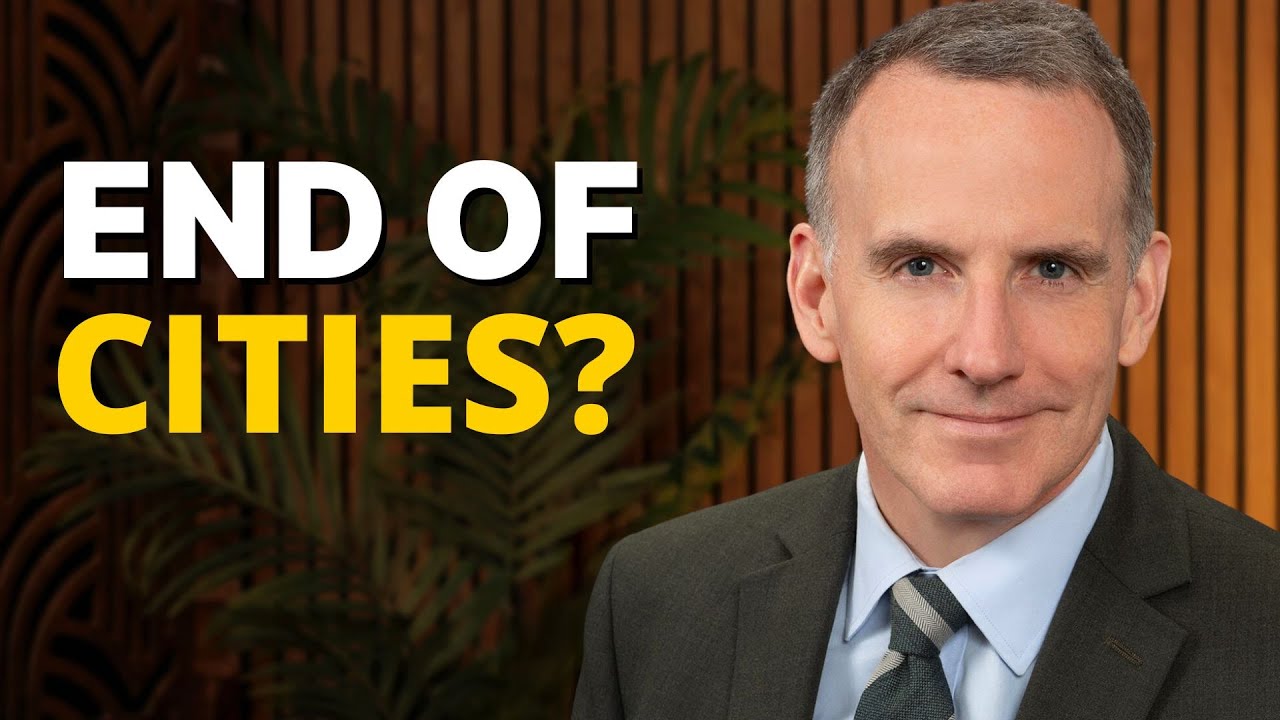
- Edward Glaeser, Harvard economist and leading urban scholar, discusses cities, terrorism, housing, remote work, and more on the Lunar Society podcast. The conversation spans urban resilience, the economics of place, and how technology and policy shape city life.
Mars, Terrorism, and the Role of Capitals
- Cities on Mars will likely be car-oriented due to Tesla dominance and shaped by high transport costs to Earth; Glaeser recommends a flexible grid plan like New York’s 1811 layout to allow organic evolution.
- Post-9/11, cities have proven both vulnerable and resilient: they are symbolic targets but also defensible spaces with long histories of collective protection.
- Capital cities today are less synonymous with national identity (e.g., Washington vs. Rome) because English-speaking democracies deliberately placed capitals in remote locations to avoid concentrating power and wealth—unlike Paris or Beijing, which grew dominant through centuries of centralized extraction.
Urban Decline and Labor Market Stagnation
- Housing prices show short-term momentum but mean-revert over five years; population decline, however, is highly persistent due to sticky housing stock—even after economic shocks, people stay because homes remain.
- Americans move less than they used to, especially low-income workers, due to:
- Rising housing costs in high-opportunity areas (e.g., coastal California), making relocation unaffordable.
- The informal safety net (e.g., living with parents) being place-dependent—people can’t take that support elsewhere.
- A third of non-employed prime-age men (25–54) live in their parents’ homes; joblessness among this group is widespread and linked to deep social misery.
Urban Education and Georgism
- Urban K–12 schools underperform not because cities are inherently bad for education, but because public schooling operates as a local monopoly lacking competition—unlike higher education, which thrives on rivalry.
- Suburban schools benefit from competitive dynamics and empowered parents; urban districts often face outsized teacher union influence and fragmented parent advocacy.
- Glaeser supports land value taxation (Georgism) as efficient—it doesn’t penalize building—but rejects it as a societal panacea; it’s not progressive enough to fund modern government needs.
Robert Moses, Local Democracy, and Housing Opposition
- Robert Moses was authoritarian but effective; Glaeser argues for balancing community input with empowered builders to deliver infrastructure affordably.
- Local democracy often blocks new housing because neighbors internalize costs (noise, traffic) while excluding benefits to outsiders who’d move in.
- Glaeser favors limiting local regulatory power—not to reduce democracy, but to protect individual property rights, akin to constitutional limits on majority rule.
- Paradoxically, highly educated areas that once welcomed development now resist it, leading to future price spikes—so investors should buy (not short) such areas.
Opioids, Automation, and UBI
- The opioid crisis stems primarily from supply-side failures: repeated introduction of “safe” opioids (heroin, morphine, OxyContin) that were never actually safe.
- Demand-side factors like joblessness amplify addiction; Glaeser emphasizes that jobs provide purpose and social connection beyond income.
- He opposes large-scale Universal Basic Income (UBI) in rich countries, fearing it would worsen joblessness and misery—though he supports modest cash transfers in poor nations where work opportunities abound.
Remote Work, Face-to-Face Contact, and Tax Competition
- Short-term, remote work substitutes for in-person interaction; long-term, it complements it by expanding networks and increasing demand for face time (e.g., business travel rose alongside IT advances).
- Historical tech (books, telephones) didn’t reduce urbanization—they intensified intellectual exchange and city growth.
- Remote work enables tax arbitrage: firms can relocate to low-tax states (e.g., Austin) while maintaining virtual ties, pressuring high-tax cities like New York or San Francisco.
- Progressive taxation (e.g., Massachusetts’ millionaire’s tax) risks accelerating out-migration unless balanced with quality-of-life advantages.
Silicon Valley’s Rise and Future
- Silicon Valley originated with Stanford-linked innovations: Federal Telegraph Company → Fred Terman → Stanford Industrial Park → Fairchild Semiconductor → spin-offs creating a dense entrepreneurial ecosystem.
- Today, it risks becoming a complacent “one-industry town” like 1950s Detroit, dominated by large firms rather than scrappy startups.
- Ideal startup locations combine education and pro-business governance—Sun Belt cities like Austin, Charlotte, and Atlanta excel here.
Housing, Immigration, and Urban Form
- Houston’s lack of zoning enables affordability but yields homogeneous, less historically rich development—making it less “interesting” to tourists despite its size.
- Glaeser supports open borders morally and believes the U.S. could accommodate 1 billion people over a decade with major housing and infrastructure reform.
- European cities change slowly due to strict zoning, historic preservation, and low population growth—even rebuilding Warsaw post-WWII to mirror its prewar form.
Slums, Climate Change, and Unanswered Questions
- Slums like Dharavi function safely when communities are stable, have “eyes on the street,” and lack guns or drug trade violence—echoing Jane Jacobs’ urban theory.
- The biggest unsolved urban challenge: protecting low-lying developing-world cities (e.g., Manila, Mumbai) from climate-related flooding, where resources for adaptation are scarce.
- Video games like Sim City offer fun but limited realism in modeling urban economics.