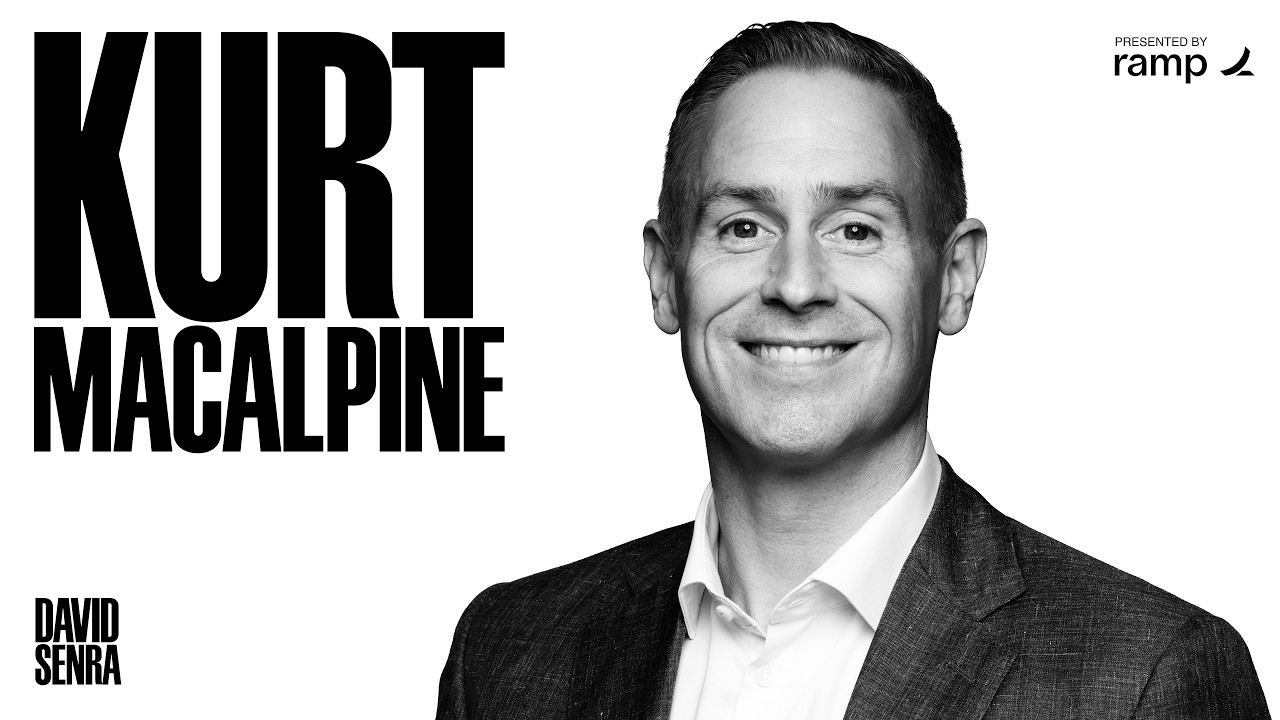
Kurt MacAlpine, at 39, became CEO of CI Financial, a Canadian public asset manager earning several hundred million in EBITDA from mutual funds, and re-engineered it into Corient, the world’s largest multifamily office managing $525B across 15 jurisdictions by building a professional-services partnership model for ultra-high-net-worth clients.
Origin and strategic pivot
MacAlpine joined CI Financial in 2019 after a career in management consulting and asset-management operations, pitching the board on launching a U.S.-based ultra-high-net-worth wealth business to diversify away from a slowing Canadian mutual-fund franchise.
He saw three tailwinds: unprecedented wealth creation and concentration, rising complexity and intergenerational transfer, and increasing globalization of client needs.
He identified a barbell industry structure — large banks with scale but bureaucratic conflicts, and small firms with client intimacy but limited access and purchasing power — leaving white space for a scaled, conflict-free entrant.
He diagnosed the prevailing advisor-centric model as fundamentally flawed: advisors compete for clients, hoard revenue, and treat specialist support (tax, trust, planning) as a cost center, isolating clients from the firm’s full capabilities.
Partnership model and alignment architecture
MacAlpine transplanted the professional-services partnership structure (used by law, consulting, and accounting firms) into wealth management, making Corient the first true partnership in the industry.
Core alignment mechanisms: one compensation plan with no exceptions; a single firm-wide P&L with no chargebacks; fee-only fiduciary standard across the entire business; one brand and one integrated service offering.
These choices eliminate structural impediments to collaboration — advisors face no personal penalty for bringing in specialists, and specialists are embedded on client teams rather than siloed in cost centers.
The model attracts younger, growth-oriented partners (median partner age mid-40s vs. industry median early 60s) who want to continue building for decades, creating a self-selection filter for cultural and strategic alignment.
Comprehensive service platform
Corient built a full-stack platform: wealth advisory (relationship quarterbacks), global financial planning, wealth transfer, 175-person investment team (70/30 traditional/alternatives), owned trust companies (South Dakota and global), 100+ in-house accountants embedded on teams, family-office services (bill pay, CFO, reporting, concierge lending), complex real-estate management, aviation (fractional aircraft ownership for clients), and art management.
Services like aviation are not profit centers; they are funded from the balance sheet to deepen client relationships and increase retention across generations.
Scale creates negotiating power with managers and lenders, access to capacity-constrained funds, and the ability to offer services no sub-$50B firm could afford to build.
Acquisition strategy as partnership recruitment
Corient has completed roughly 50 acquisitions, targeting strategic, cultural, and financial alignment rather than AUM scale — deals range from $500M to $50B.
Acquired firms become equity partners; day-one integration includes brand, technology, offices, compensation, benefits, and collaboration tools.
Integration is mutual: Corient gains specialized expertise (e.g., tech-entrepreneur focus, regional relationships), and acquired firms instantly access the full platform without bearing the incremental build-out risk.
MacAlpine uses inclusive processes (e.g., firm-wide focus groups and live vote to choose the name “Corient”) to accelerate buy-in and make integration a shared project rather than an imposition.
Public-market transformation and going private
CI Financial’s stock swung from best-performing financial stock in 2021 to second-worst in 2022 as MacAlpine deployed free cash flow and 3–3.5x leverage (fixed-rate, 30-year, no-covenant debt) to fund Corient’s build-out while earnings from the legacy mutual-fund business declined.
He maintained conviction because internal metrics (assets, partners, jurisdictions, service breadth) compounded rapidly despite share-price dislocation.
CI bought back shares aggressively at ~$12–13, viewing them as criminally undervalued; the buyback generated significant shareholder returns.
In 2024, Mubadala Capital approached with a take-private proposal, recognizing the 9-year timeline to complete the buyback and the capital trade-offs. The deal closed August 2025 with no added debt, an equity infusion, no cost synergies, and no strategic change — only a long-term partner aligned with Corient’s generational ambition.
Global expansion and the “global vs. multi-jurisdictional” distinction
MacAlpine argues no true global ultra-high-net-worth wealth manager exists outside Corient; competitors operate as multi-jurisdictional banks with regional P&Ls, commission-based advisors, and siloed compensation that penalize cross-border collaboration.
Corient’s single global P&L, compensation plan, and partnership structure allow seamless service regardless of where a client’s assets or family members sit.
On the day of going private (September 2025), Corient announced the acquisition of the largest and second-largest ultra-high-net-worth wealth managers in Europe — transactions MacAlpine says would have been impossible as a public company due to market scrutiny and short-termism.
Brand, marketing, and the forever-business mindset
Corient invests heavily in advertising (live business TV, sports, digital micro-targeting) and client experiences to compress the discovery cycle for a 6-year-old brand.
MacAlpine views marketing through a generational lens: temporary owners optimize for 18–36-month exits; a forever business builds brand equity across generations.
He partners deeply with a small number of high-signal podcasts (e.g., this show, All-In) rather than spreading spend thinly, mirroring the concentration principle he applies to client service.
Miami headquarters as a blank-slate decision
With no historical tether, MacAlpine chose Miami in late 2020 for its proactive civic leadership (Mayor Francis Suarez), welcoming ecosystem, talent inflows, and quality of life — a decision that has exceeded expectations and positioned Corient ahead of the subsequent migration wave.