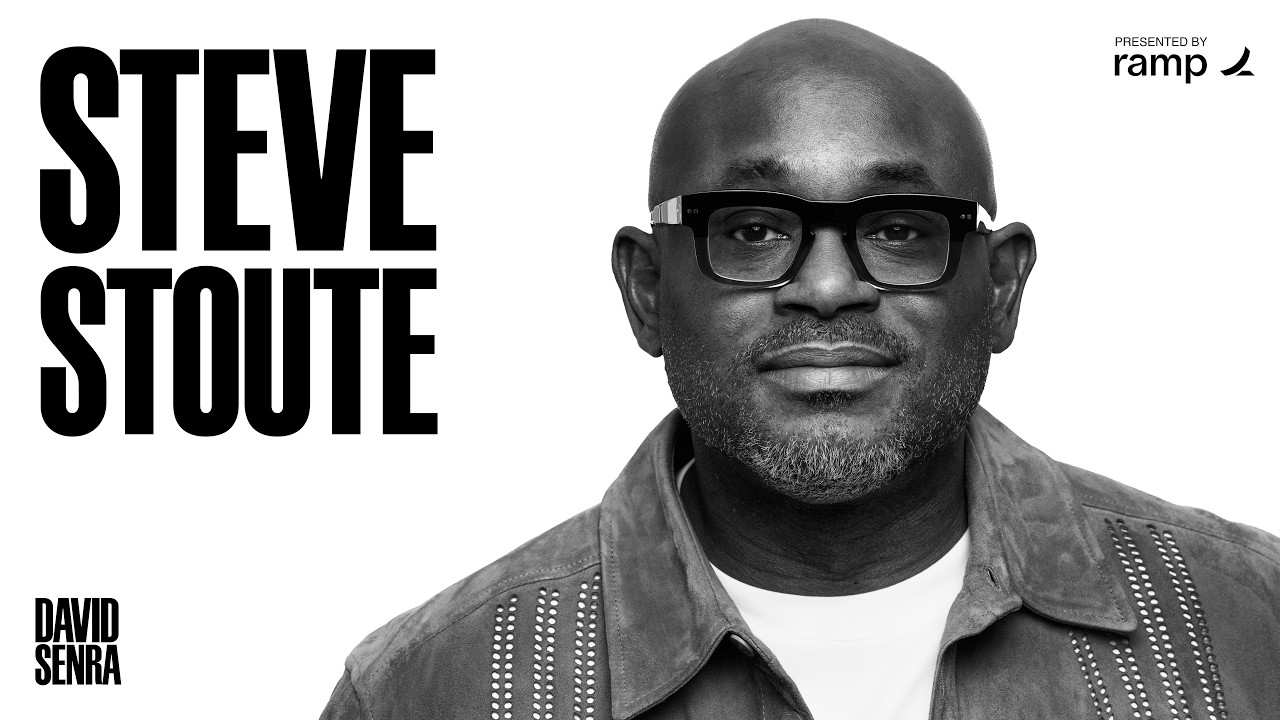
Steve Stoute is a music executive turned marketing visionary who has spent decades at the intersection of hip-hop, advertising, and brand strategy. He managed Nas, signed Kobe Bryant to a record deal, brokered Jay-Z’s first non-athlete sneaker deal with Reebok, and pitched LeBron James before he went to Nike. He left a lucrative music career at 29 to learn advertising from the ground up, eventually founding Translation, a marketing agency built on the idea that shared cultural values matter more than demographic targeting. He later founded United Masters, an independent music distribution platform that lets artists retain ownership of their work. The conversation traces his career arc and explores a central theme: the shift from industries that exploit creators to one where creators demand ownership, direct fan relationships, and control over their own data and economics.
-
Leaving the music business for advertising
- In 1999, Stoute left a $2M+ per year career at Sony to enter advertising, a field he knew nothing about
- His reasoning: the music industry was rewarding mediocrity because the CD business model let labels sell one good song for $16.99, and he saw it as unsustainable
- He also saw that advertising was archaic, targeting consumers by race (black, white, Hispanic) rather than by shared values and cultural interests
- The music business had already proven to him that culture transcends demographics: DMX sold records in Iowa without radio play, and Eminem was bought in Harlem
- He was 29, had no family depending on him, and had already made enough money to take the risk
- He took a job at the Arnell Group for $150K plus 20% equity, explicitly betting on the education, not the financial upside
-
The Men in Black moment that changed everything
- While at Sony, Stoute produced the Men in Black soundtrack and music video starring Will Smith
- The Ray-Ban sunglasses Will wore in the video became a massive cultural phenomenon and sold millions of units
- Sony and Stoute got nothing from the glasses sales; Ray-Ban had simply gifted them to Will
- This was the proof of concept: cultural influence could directly drive product sales, and the music industry was leaving massive value on the table
- Stoute became obsessed with product placement and the idea that music videos were essentially commercials for culture, which could be monetized for brands
-
The Reebok years and the birth of lifestyle sneakers
- At the Arnell Group, Stoute worked on Reebok’s NBA marketing and throwback jersey campaigns
- He created “The Sound and Rhythm of Sport,” a Reebok commercial directed by Hype Williams (a music video director) featuring Allen Iverson and Jadakiss
- The concept: Iverson dribbling a basketball that sounds exactly like a hip-hop beat, with Jadakiss rapping over it
- This was revolutionary at the time because no one thought a music video director could shoot a TV commercial
- Stoute’s view: a music video is just a TV commercial for a song; the format is the same, only the distribution channel differs
- He then brokered the Jay-Z x Reebok S. Carter sneaker, the first-ever non-athlete shoe deal
- Jay-Z, 50 Cent, and Pharrell all got sneaker deals under Stoute’s strategy
- The insight: people wear sneakers as fashion, not performance; Nike was ignoring the lifestyle market
- Stoute compared it to having Martha Stewart and Oprah endorse a product aimed at women
-
The LeBron James pitch
- Stoute and Reebok founder Paul Fireman flew to meet LeBron when he was still in high school
- Stoute advised Fireman to offer a $10 million signing bonus in cash/check on the spot, a tactic borrowed from music industry advances
- Fireman’s wife wrote a personal check for $10 million when the company couldn’t produce it fast enough
- LeBron, then 18, walked away from the $10 million to take meetings with Adidas and Nike, eventually signing with Nike for $100 million
- Stoute saw this as a watershed moment: a young person from poverty believed his talent was worth more than a guaranteed $10 million check
-
The Steve Jobs and iTunes story
- Around 2001, Stoute was working with Jimmy Iovine to connect McDonald’s with the upcoming iTunes launch
- Stoute’s idea: a “Music Meal” (Big Mac, fries, and a downloadable song), which McDonald’s rejected
- In the meeting at Apple, Steve Jobs, sensing the deal was falling apart, told McDonald’s executives: “Don’t you guys know you make food that kills kids?”
- The meeting collapsed; Stoute was caught in the middle trying to salvage it
- Separately, Stoute, Iovine, and others knew about the iPod launch through Iovine’s relationship with Jobs and wanted to buy Apple stock at $9-10 per share, but were terrified of insider trading liability in the post-Enron/Sarbanes-Oxley climate
-
Why the music industry gives away value
- Stoute’s core critique: the music business has always monetized only the recording while ignoring all adjacent value it creates
- Artists drive sneaker sales, fashion trends, and product demand but rarely get equity or royalties from those sales
- Andre Agassi wore Oakley sunglasses on the cover of Sports Illustrated and drove massive sales; he got a Dodge Viper, not equity
- The CD era removed the single (the cheap entry point) and forced fans to buy full albums at $16.99 for one good song, which degraded creativity
- Labels would hire top producers to make only the first single, then fill the rest of the album with inferior material
- Stoute’s core critique: the music business has always monetized only the recording while ignoring all adjacent value it creates
-
The CRM problem: why record companies don’t own their customers
- Stoute’s thesis: if artists knew who their fans were, they wouldn’t need record companies at all
- Record companies negotiated equity in Spotify but never negotiated access to fan data (user IDs, listening habits, contact information)
- If Taylor Swift knew which fans listened to her album 700 times, she could sell them tickets, merch, and experiences directly
- Labels avoided this because direct artist-fan relationships would make labels obsolete
- Platforms like Spotify, YouTube, and Apple would never share user-level data with artists, and later GDPR/privacy laws made it harder
- Stoute tried to build CRM tools for artists through United Masters but hit a wall: the data simply wasn’t available
-
United Masters and the independent music revolution
- Founded in 2017, United Masters is an independent music distribution platform where artists retain ownership of their masters
- The premise: in the digital era, artists find audiences before they find record labels, so why should they give up their rights?
- Early investors included Larry Page; supporters include Ben Horowitz and Tim Cook (who believes in giving creators ownership of their tools and work)
- An unnamed artist on United Masters made $20+ million in a year and owns everything
- The name “United Masters” is a direct reference to artists owning their masters
-
The history of exploitation in the music industry
- Prince changed his name to an unpronounceable symbol and wrote “SLAVE” on his face to protest Warner owning his name, image, and likeness
- Stoute compares record deals to seed investors owning a startup’s IP in perpetuity
- Artists die broke because the person who discovered them owns everything, even though the artist has the rare and valuable gift
- Jay-Z’s independence came from being rejected by labels; Master P, Cash Money, and Wu-Tang all found ways to own their work or structure deals that let individual members sign elsewhere
- Wu-Tang’s breakthrough: the group was signed to one label, but individual members could sign solo deals elsewhere, which was unprecedented
-
Fame and talent are now at odds
- Stoute argues that fame and talent used to work together (fame amplified talent), but now they’re in conflict
- Fame no longer needs talent; talented people often abandon their craft to chase fame through other means
- This dynamic affects politics, corporations, film, and podcasting
- The counterexamples are rare: people like Russ, who is both talented and famous, and who owns everything he creates
-
Independent artists are the new small businesses
- Stoute sees independent artists, podcasters, streamers, Substack writers, and influencers as the new SMBs (small and medium businesses)
- These solo entrepreneurs need the same infrastructure (insurance, fintech, CRM) that traditional SMBs need, but incumbent industries haven’t caught up
- Examples of the new model:
- Russ turned down $200 million for his catalog and raps about it in his songs
- Chance the Rapper, Bad Bunny, and Usher are all independent and enormously successful
- Joe Budden left Spotify for Patreon to get paid directly by fans
- The major labels are now following the independents: UMG bought Downtown Records, Sony’s fastest-growing division is The Orchard (independent distribution), and UMG signed a deal with 11 Labs to sell directly to fans
-
Ryan Coogler’s Sinners deal as a turning point
- Ryan Coogler negotiated with Warner Bros. so that the rights to Sinners revert back to him after a certain period
- The film made $400 million at the box office and received 16 Oscar nominations
- This is unprecedented in film, where studios typically own everything in perpetuity
- Stoute sees this as the beginning of a wave where creators demand ownership as a condition of working with studios
-
Signing Kobe Bryant to a record deal
- Stoute signed Kobe when he was a rookie, motivated by Kobe’s competitive rivalry with Shaquille O’Neal, who had a successful rap career
- Kobe initially signed as part of a group, then dissolved the group to go solo within three months
- Kobe lived at Stouse’s house in New Jersey for a month recording, and Stouse observed his obsessive work ethic: shooting 1,000 shots, studying film of Michael Jordan, then hiring 10 New York City point guards to run full-speed defensive drills against him at Chelsea Piers
- The rap career didn’t take off, but Kobe met his future wife Vanessa on the set of the music video
-
Jay-Z: the barefoot standoff and Still D.R.E.
- Stoute’s first encounter with Jay-Z: Jay and his crew showed up at Sony’s office to pressure Stoute over an artist deal that had stalled for six months
- Stoute was alone and barefoot; when they arrived, he defused the tension by saying he didn’t want to argue about anything unless “big houses” were involved
- They became friends, discovered they were second cousins, and started playing Madden together
- Their first business collaboration: Stoute got Jay-Z to write “Still D.R.E.” for Dr. Dre’s The Chronic 2001
- Jimmy Iovine felt the album needed one more track and asked Stouse to help
- Stouse flew to New York with Dr. Dre’s beats, played them for Jay-Z and Timberland, and they all independently picked the same beat
- Jay wrote the entire song, including Snoop Dogg’s hooks, and nailed West Coast lingo and cultural references despite being from Brooklyn
- Stoute sees Jay-Z as having the strongest work ethic in hip-hop
-
Finding Nas in Queensbridge
- Stoute first heard Nas’s “It Ain’t Hard to Tell” sitting in his car in his parents’ driveway and was so moved he decided he had to find this person
- He went to the Queensbridge Projects with no plan, no connection, and no clear way in
- He randomly asked someone for directions, and the person nearly pulled a gun on him, thinking he was a rival
- By chance, the person who intervened was Nas’s brother, Jungle
- Nas chose Stoute as his manager at 25, even though Stoute had never managed anyone before; they’ve been close for over 30 years
-
The philosophy of building at the convergence of culture, technology, and storytelling
- Stoute merged Translation into United Masters because he believes the future lies at the intersection of culture, technology, and storytelling
- These worlds must collaborate: culture people can’t dismiss technologists, and technologists can’t ignore culture
- The emotion that binds them is empathy; the driving force is curiosity
- Bono told Stoute: “You can get anything done in this world if you’re willing to not take credit”
- Stoute’s career has been defined by ignoring boundaries: between music and advertising, between artists and brands, between industries