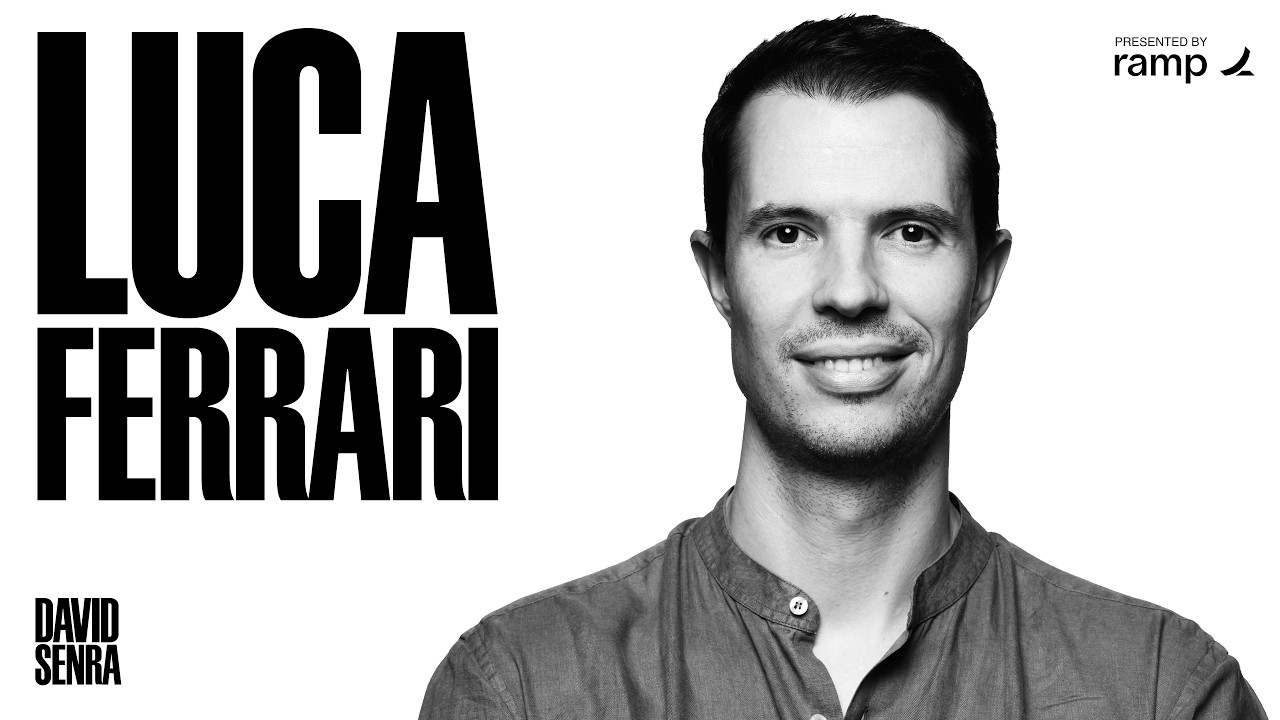
Luca Ferrari, co-founder and CEO of Bending Spoons, explains how he built a $3B+ revenue technology conglomerate by obsessively focusing on talent density, operational excellence, and a proprietary operating system — all developed independently in Milan, far from Silicon Valley norms.
The founding philosophy: aim for the best company ever, not a good one
Ferrari wants to build “the best company there ever was” — an aspirational, nearly impossible goal that he believes yields exponentially greater rewards (fulfillment, learning, financial) than merely doing well.
He treats life as a portfolio of extreme commitments: go all-in on one or two pursuits, eliminate or minimize everything else.
This mindset attracts better people, creates more energy, and makes the work more fun — even if the goal is never fully reached.
The “founder” label is deliberately minimized; what matters is contribution and trajectory, not title or tenure.
Origins: isolation as an advantage
Bending Spoons started in Copenhagen, then moved to Milan — not startup hubs — forcing the team to think from first principles rather than copy prevailing mantras.
Their first company, Evertale (AI diaries, 2010–2013), failed commercially but taught two critical lessons: talent variation is massive (10x+ between best and median), and experience is overrated — the top performer was one of the least experienced.
These insights became the foundation of Bending Spoons’ hiring and operating philosophy.
Talent over experience: why young graduates often outperform veterans
Most tech work doesn’t require deep notional knowledge; it requires a good brain, intense drive, and adaptability — traits that don’t decay like experience does.
Customer expectations and tooling evolve rapidly; 10-year-old experience is often obsolete or even harmful if it normalized low standards or political behavior.
Talent (intelligence + hunger) never goes stale; experience can be given quickly by surrounding people with high standards and great peers.
Bending Spoons hires mostly early-career people, then “saturates their capacity” — giving them far more work than feels comfortable to force prioritization, accelerate growth, and reveal true potential.
Turning hiring into a science
With limited track records on young candidates, Bending Spoons built a predictive hiring system using 100+ signals (academic records, project contributions, behavioral cues in email/logistics interactions, custom tests).
Signals are validated against multi-year performance data across the portfolio; the system works like a quant hedge fund — many weak predictors combine into a strong edge.
Example: how candidates treat support staff (scheduling, logistics) predicts collaboration better than interviews, because interviewees perform; support interactions are unguarded.
Hiring and firing are centralized for all 50+ portfolio companies — not delegated to team leads — because team leads have misaligned incentives (speed over quality, preference for experienced hires who need less coaching).
Centralized talent team has massive sample size, cross-role visibility, and full-time focus on hiring excellence; they move candidates across roles and companies fluidly.
No bonuses, no KPIs: trust and intrinsic motivation
No variable pay, no OKRs tied to compensation. Managers are simply trusted to build the best teams they can.
Ferrari believes specific incentives distort behavior toward box-checking; intrinsic motivation (ownership, peer admiration, mission) drives better long-term outcomes.
This mirrors early-stage startup dynamics where people work hard because they care, not because of a metric.
Everyone has the same job: help the company succeed
Job descriptions are “blobs of work,” not rigid seats. If a role is empty, others absorb the high-priority work; low-priority work simply doesn’t get done.
Almost all work is optional; winning means doing only ROI-positive tasks in strict priority order.
Most companies do too many things (including ROI-negative ones) due to lack of focus, talent, or perverse incentives (e.g., public-market pressure to grow subscribers over profit).
Culture: extreme ownership and relentless simplification
Extreme ownership (term borrowed from Jocko Willink, redefined): caring intensely about being the best at your craft and helping the team win — priority #1 or #2 in life (after family). Screened via past evidence: grinding on a failed startup for years, massive open-source contributions, extreme academic effort despite constraints.
Relentless simplification: complexity grows non-linearly (interdependencies); humans naturally add, rarely remove. Burden of proof is on anyone proposing more complexity; everyone must actively hunt for existing complexity to delete.
No job titles: eliminated entirely after realizing titles served only ego and external signaling. People pick their own LinkedIn titles; internally, algorithmic rules assign functional labels (e.g., “product management lead” regardless of span). Zero complaints in 13+ years.
No levels, no seniority bands: flat structure; compensation tied to impact, not ladder rung.
Proprietary operating system: the hidden engine
13 years of R&D built 50+ integrated internal tools: payments, A/B testing, LTV prediction, AI model orchestration, credential management, data pipelines, recruiting prediction, etc.
New acquisitions are “installed” on this OS; improvements by any team propagate instantly to all businesses.
This creates compounding leverage: more businesses → more innovation surface area → better OS → better businesses.
Transforming a $400M revenue business (Vmail) took ~50 core people — same as the $90M Evernote transformation — because the OS and playbook have matured.
Acquisition strategy: not private equity
Three fundamental differences from PE: (1) buy to hold forever, never sold a material business; (2) deep operational transformation (rebuild product, infra, org, monetization); (3) full integration onto shared platform and talent pool.
Evernote case: bought for ~$200M at ~$90M revenue, break-even. Cut team from ~350 to ~20 (now), rebuilt codebase, re-architected cloud, rethought pricing, reorganized. Now “very, very profitable” (group operating margin ~54–55%).
Key advantages vs. standalone: talent arbitrage (800K applications/year), risk tolerance (portfolio view), shared OS, freedom from public-market vanity metrics.
AI as a force multiplier
Aggressive AI adoption since 2018 (LTV prediction); major breakthroughs last 2 years in engineering, design, data analysis.
Diagram: in-house design-to-code agent. Pulls live screens, follows design system, checks codebase for functional consistency, generates production-ready code, auto-creates A/B test segment. Turns hours into minutes; enables non-designers to ship design changes.
Al Spooner (Alter Ego Spooner): Slack-resident agent with same tool access as the user. Example: GM tags it to check support tool (Moros) for bug prevalence, search codebase for root cause, propose fix, ping lead engineer — done in minutes vs. weeks.
Data analysis: CEO queries own agent for MAU cuts by platform/geo; gets graphs in minutes vs. days via analysts.
Result: small teams (20 people) run $100M+ businesses with high velocity and quality.
Capital allocation and negotiation
Strategy: 99% of effort on operational excellence; acquisitions become easy because businesses are worth more under Bending Spoons → can bid higher and still win.
Negotiation: put a fair, high, firm offer on the table immediately; no lowballing, no games. “We encourage you to shop it” — confidence that no one else can match the value creation.
Rarely raise offer (>5–10%) unless new data emerges; never lost a deal to a higher bidder in 5+ years.
Long-term: may eventually shift to buybacks (à la Henry Singleton) when acquisition returns diminish.
Logic over numbers
Numbers are dangerous approximations; logic and rationality are always optimal.
Example: compensation experiment showed modest uplift from higher posted salaries, but Ferrari still raised pay because reputation compounds over years — invisible to short tests.
Steve Jobs didn’t run Apple by spreadsheets; neither does Bending Spoons. Data informs, logic decides.
Public markets and timing
Always expected to go public (capital needs, advantages outweigh costs), but delayed the decision as long as possible — procrastination without laziness yields more information, sometimes makes the decision obsolete.
Filed confidentially mid-2025; pulled trigger spring 2026 after preparation complete.