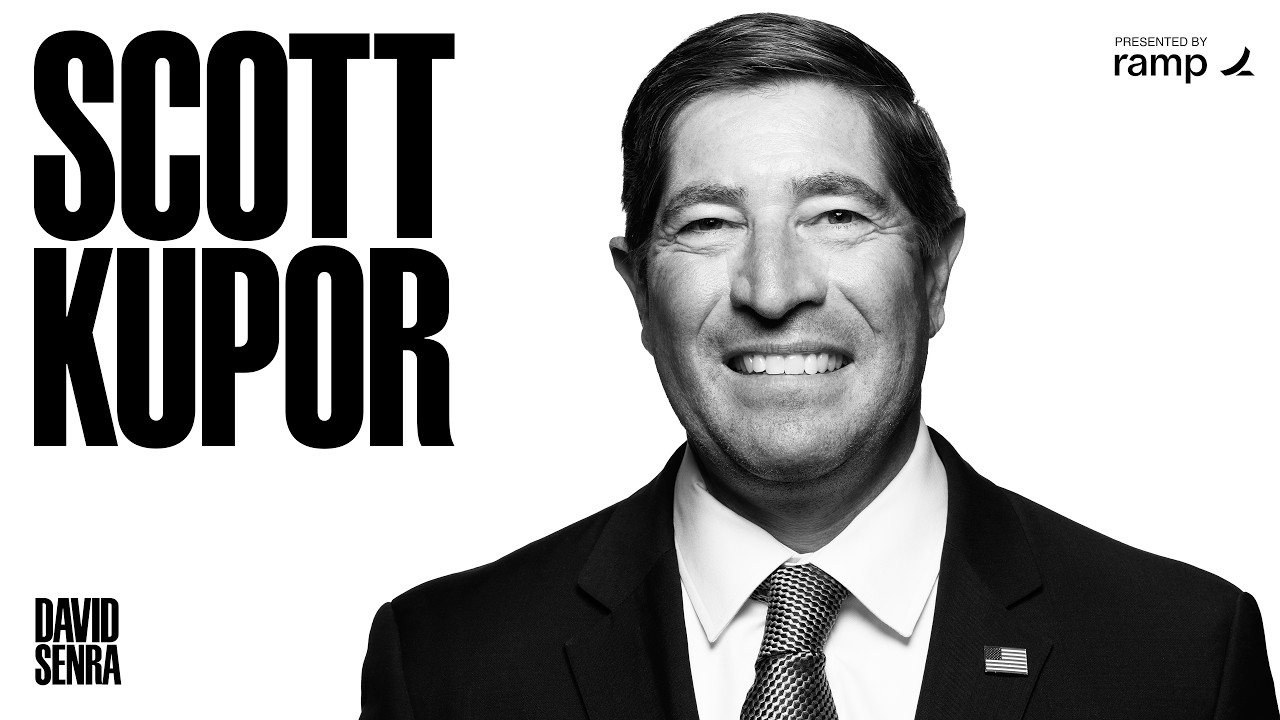
Scott Kupor was the first employee at Andreessen Horowitz (a16z), joining in late 2008 during the global financial crisis, and spent 16.5 years building the firm’s operations before leaving to run the U.S. Office of Personnel Management (OPM), the HR and talent agency for 2 million federal civilian employees.
Founding a16z in the teeth of the 2008 financial crisis
Marc Andreessen and Ben Horowitz had been angel investing with their own money and decided to institutionalize it by raising a fund; Kupor, then at HP after selling his company, hesitated but ultimately joined as “first employee” (not co-founder) to build the firm’s non-investing infrastructure.
The timing was extreme: Lehman Brothers collapsed weeks after Kupor committed, and most VCs were in “RIP Good Times” survival mode; a16z instead launched openly for business, attracting massive deal flow while competitors hunkered down.
Early operations were improvised: Kupor’s first task was sending capital calls from his personal Gmail, prompting an LP to suspect fraud; he quickly set up the a16z domain and began hiring finance, legal, and the “platform” teams that would become the firm’s signature.
Andreessen and Horowitz took zero salary initially, directing management fees to hire non-investing professionals (talent, business development, marketing, government relations) so GPs could focus purely on investing.
The CAA “phalanx” model applied to venture capital
Michael Ovitz, co-founder of Creative Artists Agency (CAA) and former Loudcloud/Opsware board member, was the direct inspiration: CAA disaggregated the traditional one-to-one agent-actor relationship into a “phalanx” of domain specialists (radio, international, books, etc.) surrounding the client.
Andreessen and Horowitz mapped this to VC: instead of every GP needing to be a John Doerr-style uber-connector, they would hire functional domain experts as GPs and surround them with dedicated platform teams (talent, BD, policy, marketing, etc.) that serve portfolio companies full-time.
The “reverse pitch” became a recruiting tool: after an entrepreneur pitched, a16z brought in the platform team to show the full firm’s resources, not just the board partner.
This was considered heretical on Sand Hill Road (marketing was “verboten” because capital was historically scarce and VCs held all the power), but a16z had no track record to sell, so they created a new category: “capital plus services.”
Early wins that compounded into structural advantage
Within months of closing Fund I, a16z joined Silver Lake and Michael Dell in a leveraged buyout of Skype from eBay — a radical deviation from their stated early-stage strategy that drew heavy criticism; 18 months later they sold to Microsoft for 4x, returning half the fund to LPs almost instantly.
Nicira (Martin Casado’s networking startup) sold to Cisco early in Fund I, providing another quick win.
These exits generated momentum: Fund II raised far ahead of schedule, and the stacked fee stream funded the platform build-out that competitors couldn’t replicate without similar returns.
Being “open for business” in 2009 while incumbents managed distressed portfolios gave a16z a massive first-mover advantage in deal access and brand.
From centralized to decentralized: scaling the firm past 500 people
For the first ~10 years, a16z ran a centralized model: all platform functions and investors reported to Kupor; Andreessen and Horowitz had no direct reports.
Around 2019 they realized this couldn’t scale with the explosion of domains (crypto, bio, American dynamism, gaming, etc.); they decentralized into vertical investing teams (e.g., Chris Dixon running crypto, David Ulevitch running American dynamism) with platform staff embedded in each vertical.
Centralized functions retained: legal, finance, compliance, investor relations — things LPs and regulators need to see as a single firm.
Kupor initially felt his domain shrink, but Andreessen and Horowitz reframed it as the business’s needs changing, not his performance; this opened the door for him to start investing in a later-stage/healthcare-focused fund (launched 2019 with David George from General Atlantic).
Why leave a16z for government: the OPM role and the talent crisis
Kupor had done policy work since high school (healthcare research at Stanford with Alan Garber, now Harvard president, and Jay Bhattacharya, now NIH director) and always intended to return; the timing aligned: kids grown, financial freedom, Andreessen/Horowitz supportive.
OPM is the federal government’s HR/talent agency for 2 million civilian employees; Kupor’s thesis: organizations are simply “a collection of people aligned around objectives” — the same principles apply whether private, public, or nonprofit.
The federal workforce has a severe demographic inversion: only 7% under age 30 (vs. 23% in the overall U.S. workforce) and 44% over 50 (vs. 33% overall); half the workforce will retire in 5–10 years with almost no pipeline to replace them.
Kupor’s pitch to young talent: don’t come for “lifetime employment” (nobody under 30 wants that); come for a 2–3 year tour on the hardest problems (space at NASA, energy at DOE, AI/cyber everywhere), then leverage that into private-sector roles — modeled on Israel’s IDF Unit 8200 pipeline.
The incentive structure is “completely screwed up”: three core failures
Zero tolerance for risk / no upside accounting: Culture is compliance-driven (“keep you out of the news, avoid GAO reports, avoid Inspector General findings”); innovation requires “permissioned risk” — calibrated to the stakes (low for SSA check processing, high for defense) — but the system rewards only risk avoidance.
Performance management is broken: 99.7% of employees rated “meets expectations” or above; 90% of senior executives (7,000 people) rated “outstanding” or “extraordinary” — mathematically impossible, destroys differentiation, makes bonuses meaningless, and drives high performers out.
Tenure-gated promotions (“time-in-grade”): Mandatory 12-month waits before promotion eligibility regardless of performance; a stellar software engineer who proves themselves in 6 months sits in purgatory — Kupor is eliminating this via merit-based leveling and assessment-based hiring.
Concrete reforms underway at OPM
TechForce: Hiring 1,000 software engineers, AI experts, data scientists at GS-14 (high individual-contributor grade) via third-party coding assessments — not self-rated questionnaires — for two-year terms; 40 private-sector partners (Alphabet, Meta, Databricks, etc.) provide training and a job fair at the end.
Merit-based hiring: Removing degree requirements where skills can be tested directly (citing “Big Balls”/Ed, a 19-year-old Northwestern dropout who would have been blocked by degree/5-year-experience rules but is a top developer).
Performance differentiation: New rule — no more than 40% of workforce can receive top ratings; 60%+ of bonus pool must go to that 40%.
HRIT consolidation: Merging 120 separate HR/payroll systems into one, cutting annual spend from $2B to $40M (95% savings) and creating a canonical employee record for the first time.
The retirement mine: a symbol of systemic rot and the fix
Until 2025, retirement processing was entirely paper-based: forms mailed to HR, then to payroll, then to an underground limestone mine in Boyers, PA, where 800 staff manually read, calculated, and adjudicated — taking 3–12+ months; a missing signature added a month via snail mail.
400 million existing paper records sit in that mine; callers trigger “runners” to physically pull files from cabinets (some from the 1950s).
Elon Musk (via DOGE) and Joe Gebbia (Airbnb co-founder, now running National Design Studio) identified and began automating this before Kupor arrived; he continued it: last paper accepted June 30, 2025; full digitization of 400M pages underway with room-sized scanners; target processing time: 15 days for clean electronic applications (90%+ reduction).
The mine persisted for decades because no one would risk congressional hearings for a modernization failure — the core incentive problem: “better to have shitty service than risk rocking the boat.”
The through-line: incentives determine talent, talent determines outcomes
Kupor’s entire agenda connects: fix incentives → attract high-agency talent → enable modernization → deliver better services; without the first, the rest collapses.
He emphasizes he has no next job to protect, so he can take the “permissioned risks” the system punishes; he told the President: “If I screw up, fire me — but I’m going to do what’s right.”
Recruitment: earlycareers.gov, college tour on 40 campuses, social media outreach (X: @SCooper, @USOPM); DMs welcomed.