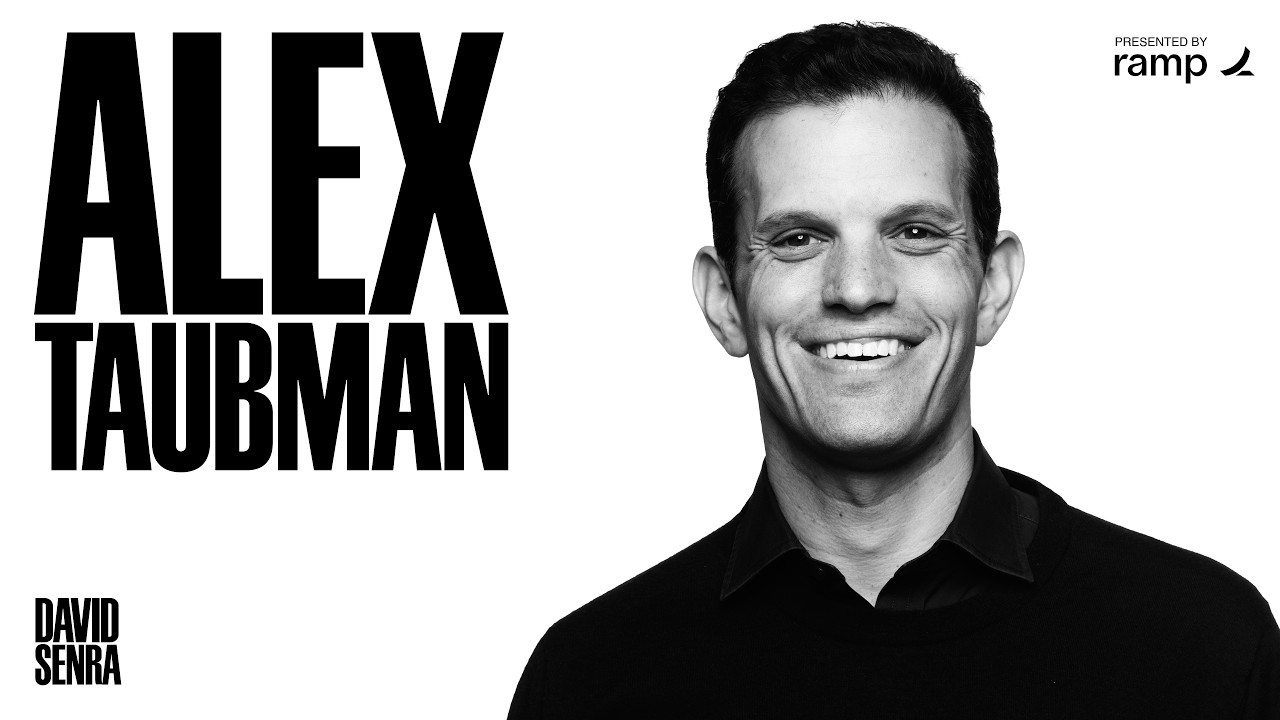
Alexander Taubman co-founded Long Lake three years ago with a mission to deploy frontier AI into the real economy by acquiring and operating founder-owned service businesses; the firm has since bought nearly 40 companies across five verticals, built a horizontal AI platform called Nexus, and recently agreed to take American Express Global Business Travel private for $6.3 billion, its largest deal yet.
The $6.3 billion Amex GBT acquisition
Long Lake announced the purchase of American Express Global Business Travel (Amex GBT), a 111-year-old company started in 1915 to help American Express customers flee Europe during World War I.
Amex GBT manages travel for nearly half the Fortune 500, a large share of the Global 2000, and numerous governments and militaries; average top-customer relationships span 15 years with high-90s logo retention and 100%-plus dollar retention.
The deal fits Long Lake’s thesis: a mission-critical, high-trust service business with messy legacy systems and data where AI can dramatically improve the traveler experience and agent productivity.
Taubman sees the acquisition as a vehicle to pursue Long Lake’s broader mission — deploying AI into the multi-trillion-dollar global travel sector growing faster than GDP.
Bringing AI to the real economy: the diffusion problem
Long Lake was formed because the intelligence frontier was advancing rapidly (models now solving Fields-medal-level math), yet adoption in the real economy lagged due to legacy systems, fragmented data, workflow complexity, and change-management friction.
The firm’s strategy: partner with American entrepreneurs in important verticals, buy established profitable businesses (20–25%+ EBITDA margins), and embed AI to remove toilsome work — data entry, manual email triage, process-oriented tasks — freeing humans for higher-value customer-facing work.
Taubman argues this creates a financing flywheel: real-economy ROI generates cash flow that can be reinvested into scaling frontier models, solving the trillion-dollar capital-intensity problem of AI infrastructure.
Why greater productivity means more jobs, not fewer
Contrary to the “gut-and-replace” PE stereotype, Long Lake’s portfolio companies are adding headcount; in HOA management (their first and longest-held vertical), 50% productivity gains let each manager handle 50% more clients with better service, improving retention and accelerating growth.
Analogy: if a salesperson with AI hits 3× quota, you hire more such salespeople, not fewer; the same logic applies across service roles.
The positive-sum view: mega productivity gains historically raise wages, lower consumer prices, and expand GDP; Long Lake aims to demonstrate this at scale across the $20 trillion U.S. services economy.
Five verticals and counting
Homeowner association (HOA) management: tens of millions of homes under management; now a market-leading, fast-growing platform.
HR services and specialty tax.
Infrastructure services: architecture, engineering, and adjacent businesses (e.g., a Minnesota firm that has designed 50% of the state’s K–12 schools for 70 years).
Travel: entered via the Amex GBT acquisition.
Long Lake operates in roughly $3 trillion of the $20 trillion U.S. services TAM (~15%) and aims to keep adding verticals over decades.
Nexus: the horizontal AI platform
Nexus sits between frontier models (model-agnostic, intelligent routing, agentic orchestration) and each business’s proprietary data, workflows, and software systems.
~70–80% of the infrastructure is shared across verticals; the remaining 20–30% requires deep, vertical-specific integration — the hard technical challenge that demands world-class applied AI talent.
Example capability built first for HOA management: email drafting. Managers receive complex owner/board emails (e.g., “find a snow-removal vendor”); Nexus pulls vendor history, pricing, reviews, and schedules, drafts a 99%-accurate reply in the manager’s voice, cutting response time from ~45 minutes to 5–10 minutes.
Because ~55% of travel-agent inbound queries are also email, the same capability transfers immediately to Amex GBT; each vertical makes Nexus better for the others.
Engineers embedded where the work happens
~70% of Long Lake’s engineering team sits in the field across 15–20 states, shadowing team members, observing pain points, and iterating on the last 20% of vertical-specific integration.
Inspired by Kelly Johnson’s Skunk Works (engineers in the factory) and Danaher’s “common sense rigorously applied”: proximity turns abstract AI into practical workflow automation.
Why own the businesses instead of selling software
Selling software misaligns incentives: the vendor doesn’t own the outcome. Long Lake wants to change how industries actually operate — faster growth, better customer experience, better employee experience, higher wages, and shareholder returns.
Vertical integration (owning platform + deployment targets) creates alignment; Nexus is deployed only into Long Lake companies.
Investors have asked to license Nexus, but the firm has declined to stay focused on outcomes, not software revenue.
Team members as customers: viral adoption, not mandates
Long Lake treats its ~30,000 global team members as the “customers” of Nexus; tools must be so magical they spread virally, not by mandate.
Adoption cohorts that once took 6 months now activate in days as models and deployment playbooks improve.
Team-member quotes: “I don’t feel like I’m working anymore” — mental friction from rote tasks removed; they focus on growth and customer interaction, love the job more, earn more, and become a talent magnet that competitors can’t easily poach.
A prepared mind and a tight acquisition filter
Long Lake maintains a “top 15–20 industries” watchlist, force-ranked continuously; sourcing engine sees 4,000–5,000 deals/year but closes 1–2 new industries annually.
Big funnel, tight filter: they “know it when they see it” — high retention, mission-critical service, embedded relationships, scalable AI surface area.
Amex GBT was on the whiteboard for a year; the team had built a travel thesis before the deal appeared.
High bar for talent, acquisitions, and technology
Three world-class capabilities required: M&A/acquisition discipline, frontier applied AI engineering, and change-management/operations.
~55 people at Long Lake HQ (90% AI engineers and deployment/ops, 10% M&A/finance); hiring ~3% of applicants, 75% from network referrals.
Co-founders: Zach (met at Goldman, tech/recruiting leader), Rasmus Visman (Oxford CS PhD, top thesis prize, CTO), plus founding engineers who could each raise top-tier VC rounds or join leading labs.
Roots: grandfather’s threshold-resistance lesson
Taubman’s grandfather invented the modern shopping center; his book Threshold Resistance codified the idea that every fraction of friction at a store entrance (steps, dark hallways) measurably reduces foot traffic and revenue.
Applied to AI: minimize “threshold resistance” to adoption — make Nexus so effortless and magical that usage becomes automatic.
Capital allocation apprenticeship: Goldman SSG and Oaktree
Goldman Special Situations Group (early 20s): invested across capital structure, industries, public/private; managed hundreds of millions in invested capital by year one under mentor Patrick McCain.
Oaktree (nearly 10 years): partnered with McCain again, worked directly with Howard Marks and Bruce Karsh; built OakTree’s first equity business and several credit products.
Favorite B-school case: Danaher — long-term compounding via structural advantage, better cost of capital, continuous improvement, and talent density.
Tobin Capital: the family office proving ground
Nights-and-weekends vehicle over 10 years at Oaktree; ~50 investments in founder-owned businesses using permanent, flexible family capital.
Learned that small/mid-size businesses can be exceptional (e.g., the Minnesota school-architecture firm); returns ~70% IRR.
Provided growth capital, M&A expertise, and consolidation playbooks to founders who had never acquired before.
Long Lake’s formation: the thesis clicked when ChatGPT launched
Taubman, Zach, and early engineers spent ~9 months conversing before incorporating; palpable excitement from engineers confirmed they could recruit a world-class team.
Early recruiting was hard (convincing parents to let kids drop out); now inbound interest is strong as the track record compounds.
Investors who expand ambition, not just capital
First outside capital: Hemant Taneja (General Catalyst) — believed before the founders fully did.
Rick (unnamed, but described as extraordinary investor/partner) and Elad Gil among others.
Taubman: “The greatest gift a partner can give is making you more ambitious.” Partners push for bigger deals (e.g., “why not do them all?”) and longer horizons.
Loyalty over valuation: existing partners are close friends; Long Lake optimizes for 20-year working relationships, not bidding wars.
$4B+ revenue, profitable, no need to raise again
Including Amex GBT, projected revenue >$4B next year; 100% dollar retention, stable, profitable base.
Strategy: buy established 20–25%+ EBITDA margin businesses; internal cash flow funds reinvestment for decades.
Deep investor demand exists, but capital is a means to think bigger and move faster, not an end.
Public markets as the maximally ambitious path
Long Lake doesn’t have to go public, but Taubman believes a public listing ultimately provides the deepest, lowest-cost capital pool.
Precedent: Henry Singleton (Teledyne), John Malone — long-term executors earn a currency that trades at a premium, enabling ever-larger acquisitions.
Goal: scale impact to larger industries and businesses over time.
Lessons from Henry Singleton and John Malone
Singleton: “Stay flexible” — steer the boat a little every day; no detailed strategic plans because nobody predicts outside forces. Long Lake’s open industry mindset (travel wasn’t on the original list) embodies this.
Malone: first-principles thinker, “ask why five times,” creative structuring/financing. Long Lake applies root-cause analysis to every investment.
Post-AGI capital allocation: first-principles thinking on what makes a business enduring is now the most important skill; dispersion between winners and losers will be extreme.
Never sold a business; not for sale
Zero exits to date; plan to compound for decades. Selling after building the partnership, deploying Nexus, and creating the best team/tech in a vertical would forfeit the compounding.
Long Lake itself has received no serious acquisition interest because “everybody knows we’re not a seller.”
Taubman: “This is what I want to be doing forever” — 50+ year horizon, mission-driven like Torsten (Helsing), Scott Wu (Cognition), Karim/Geoff (Ramp), Zach Dell.
Trillion-dollar potential through compounding
If Long Lake keeps executing — tripling business value every ~5 years, retaining top talent, delivering customer excellence across service lines — a trillion-dollar enterprise is mathematically plausible over 20 years.
The TAM is effectively the entire economy; the hard part is sustaining execution, avoiding mistakes, and keeping the flywheel spinning for decades.