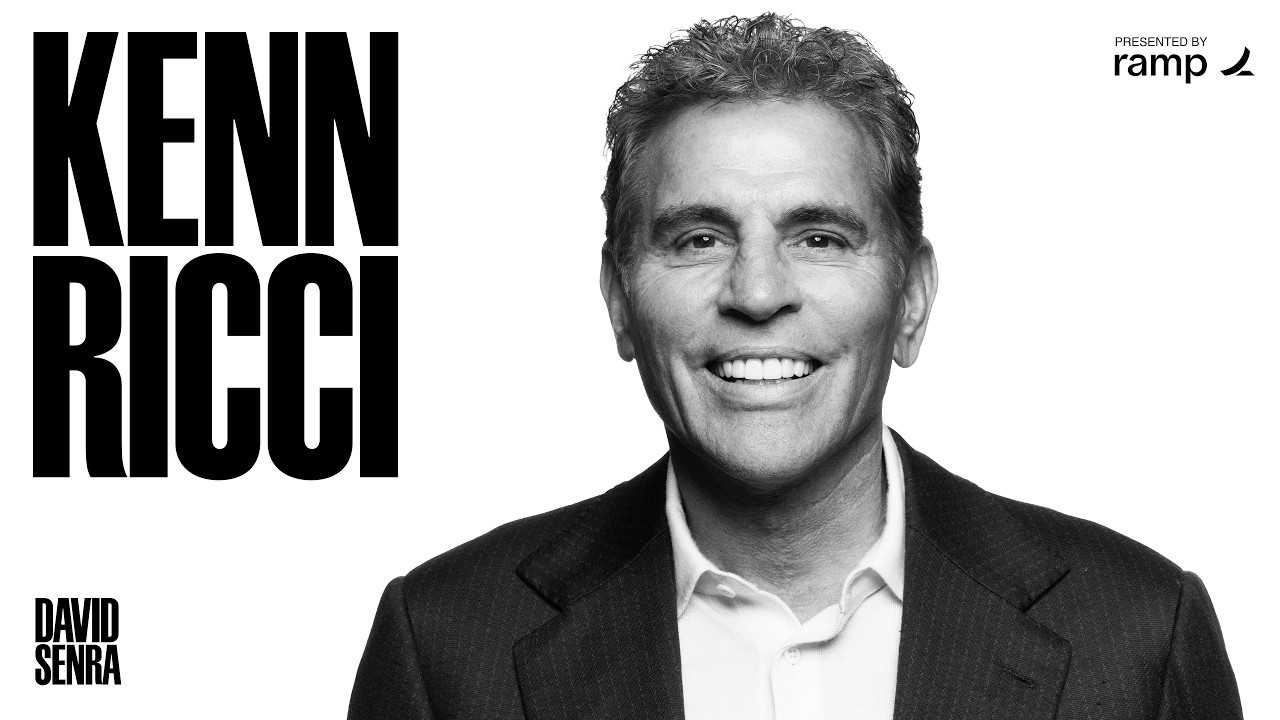
Kenn Ricci built Flexjet into a $4 billion private jet fractional ownership giant starting from a $27,500 charter company, driven by a passion for flying rather than a desire for wealth, and guided by a philosophy of giving wealth to his children during his lifetime to foster trust and mentor them through financial decisions.
Wealth transfer philosophy: give it now, not later
Ricci believes the conventional trust structure — staggered distributions at ages 25, 35, 45 — reflects a control mindset from wealth creators who are “lions” unwilling to relinquish relevance, and an industry of trustees and lawyers that profits from perpetuating control.
He rejects the fear that knowledge of wealth makes children lazy: “If that was the one thing that flips the switch, you couldn’t parent through that.”
He and his wife started a family limited partnership in 1990 (before their first child in 1995), gifting shares at birth so appreciation accrues to the kids; the general partner (Ricci) retains distribution flexibility.
Annual family meetings began with giving (each child chose causes), then personality assessments to understand differences, then full financial transparency: balance sheets, transfer mechanics, bank relationships.
The three children (now 37, 31, 25) and parents share estates and spending openly; the siblings have agreed to exclude spouses from these meetings and to share investment opportunities (60/20/20 split) to prevent jealousy.
Ricci wants to be alive to guide decisions: “Isn’t it better to be here alive when they ask you, ‘What should I do, Dad?’”
Early life and the path to aviation
Middle-class upbringing in Cleveland; father was a WWII OSS veteran and undercover Treasury agent (alias Richard Dill) investigating organized crime; Ricci once lived in a Holiday Inn for two months during a sting.
He wanted to attend Notre Dame but overheard his parents say they couldn’t afford it; he joined Air Force ROTC to fund tuition, choosing aviation because “flying looks like a lot of fun.”
He learned to fly Cessna 152s/172s during college, then T-37s/T-38s after graduation; served as a cargo pilot, then briefly at Northwest Orient before a furlough sent him to law school.
His father discouraged aviation as unstable (“airport jockeys”); Ricci worked as a fill-in pilot for J&J Aviation, which turned out to be a tax-credit fraud scheme selling phantom Citation jets.
Corporate Wings: the accidental start ($27,500, 1985)
At 26, dispatcher Rick Michaels urged Ricci to buy the failing J&J Aviation; Ricci called his father, who noted the company had $27,000 in the bank — so Ricci used the company’s own money to buy it, borrowing the remaining $500 from his dad.
Renamed it Corporate Wings; kept flying celebrity charters (Elton John, Springsteen, Streisand, Branson) through a Chapman Freeborn connection, using tour income to fund business growth.
Structured deals where owners put up capital for large jets (Gulfstreams) and Ricci leased them 3 months/year to cover costs; built a managed fleet into the low 20s.
Recognized infrastructure steps: 3 planes run by him alone, 15 planes need 17 people, 30 planes need 35 people.
Flight Options: copying NetJets with used aircraft (1998)
Richard Santulli invented fractional ownership at NetJets (1991) by taking 20 unsold Hawker “white tails” on consignment, selling quarter-shares (200 hrs/yr) — hence NetJets tail numbers ending in QS.
NetJets’ floating dispatch (no repositioning fees) stole charter customers; Ricci countered by buying used versions of the same aircraft at half price, offering the same 50% buy-in.
Banks rejected his model (no collateral on quarter-shares); after 12–15 months he had only $7M in conditional commitments.
Warren Buffett bought NetJets for $750M in June 1998, instantly legitimizing the sector; that summer Ricci raised ~$300M in debt from Bombardier Capital, Boeing Capital, Fleet Bank.
Launched Flight Options October 13, 1998 with ~25 aircraft (3 core fleets of ~8 each); sold $100M in first 3 months, $400M in first year — buyers sent $800K checks before paperwork.
Merger, loss, and the wilderness years (2000–2004)
Dot-com crash (third recession Ricci endured) strained cash flow; he brought in equity partners and merged 50/50 with Raytheon’s money-losing Traveler division (fractional + FBOs).
Warburg Pincus valued the combined entity at $360M; Ricci raised $180M to buy Raytheon’s half, but Raytheon exercised a shareholders’ letter and bought him out instead (2002) — “worst day of my life,” lost the business he loved at age 42.
Moved to Phoenix to escape constant questions; declined Warburg’s “executive in residence” role (would require their approval on deals) and started Directional Capital, investing in aviation ventures he understood.
Bought Mercury Air Centers (18 FBOs) with Allied Capital for $80M (2003), doubled size, sold to Macquarie (now Atlantic Aviation) for $615M in 2007 — Ricci owned 20%.
Buying back Flight Options and acquiring Flexjet (2008–2014)
Raytheon, having lost $600M, offered Flight Options back in December 2008 (financial crisis); Ricci paid $135M ($27M personal note, $15M cash, assuming liabilities).
Needed new fleet; targeted Bombardier Challenger 300s but Flexjet (Bombardier-owned) had exclusivity; a sales VP pushed Pierre Beaudoin to sell Flexjet instead of just the planes.
Bought Flexjet for $180M in 2014 with a $1B aircraft order (20 Challengers, 15 Globals, some Learjets); didn’t know how to fund the $600M Globals commitment.
NetJets’ existing Global contract blocked Bombardier from selling Globals to Ricci — eliminating the $600M obligation and freeing him to negotiate Gulfstream exclusivity (2017).
Now largest Gulfstream operator globally (85 aircraft, more than the US government); retired the Flight Options brand (unionized, poor reputation, worn interiors) in favor of Flexjet.
Integrating two cultures and scaling (2014–2018)
Four-year integration: ~600 pilots total, two distinct cultures (Flexjet anti-union, Flight Options unionized), different aircraft quality (Challengers vs. worn Hawkers).
Uniform crossover days, dual-colored pilots, systems harmonization; only time in aviation history a union voted for self-representation (decertification).
Business quadrupled since 2018; remained private after a failed SPAC attempt (cost ~$30M to unwind) — Ricci values private ownership for purpose beyond wealth: “There has to be a purpose we have beyond wealth accumulation.”
Purpose, service, and customer service as empowerment
Influenced by Fr. Ted Hesburgh (Notre Dame president): “God thought enough of you to give you that gift [business acumen]. Run with it for others.” Three rules: be true to your God, be as good as your parents, champion underdogs.
1992: gave away all assets to prove wealth didn’t control him; later realized “money comes naturally as a result of service” (Henry Ford).
Customer service philosophy: frontline schedulers ($80K/yr) have full authority to comp a $300K trip — no supervisor approval. “That person has all the authority… I empower everyone… First of all, it says trust.”
Six personal maxims: be passionate about what you do, compassionate about how you do it; memories worth whatever they cost; friendship is a one-way street (what you give); don’t miss the best five days of your life (wake up expecting wonder); no downside to doing good for someone you dislike.