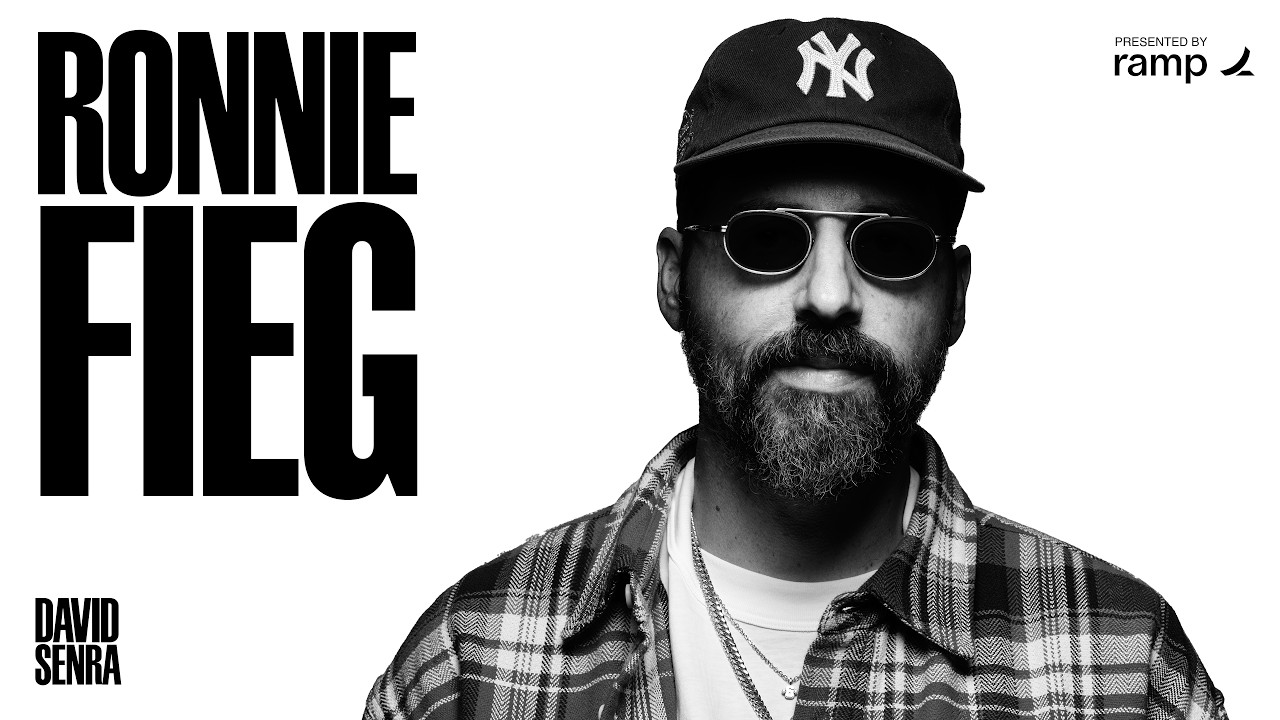
Ronnie Fieg built Kith from a childhood obsession with sneakers into a global lifestyle empire spanning apparel, footwear, hospitality, and membership clubs — all while remaining privately held, self-funded, and creatively controlled by him and his partner Sam.
Passion started before the business, not because of it
At 13, Fieg worked a stockroom at his cousin David Z’s shoe stores not to learn business but to earn money to buy the clothes he couldn’t afford — Polo, Tommy Hilfiger, Nautica — after switching from private school to a public school in Jamaica, Queens where style was social currency.
He was devastated when classmates exposed his knockoff Tommy Hilfiger shirt as a repurposed Wendy’s uniform; that humiliation sharpened his eye for authenticity and quality.
By 13 he was collecting sneakers (first double-up: Flight 95 Jason Kidd); by 23 he was buying $30M+ annually for David Z and had become the store’s buyer, assistant buyer, then manager — learning every layer of product, merchandising, and customer interaction.
The culture on 8th Street (block parties, Fat Beats, Sam Goody, hiking-boot obsession) taught him that product could be a community anchor, not just inventory.
First collaboration came from a childhood memory, not a market gap
In 2006, Asics (then Onitsuka Tiger) opened their archive to Fieg because they knew he was a collector; he picked the Gel-Lyte 3 — the exact model his mom bought him at age 8 when he cried over not getting Reebok Pumps.
Minimum run: 252 pairs per colorway; he did three. The other 250 went to Patta in Amsterdam. The shoe sold slowly at first — 50 pairs at an event — until a Wall Street Journal editor bought a pair, wrote it up, and put it on the cover of the “Pursuits” section.
Next day: line down the block. Same day: Adidas North America CEO saw the line, walked in, asked what was happening, took Fieg to lunch, and offered him a project — the Shelto “Black Tie,” inspired by the Gold Bar lounge his then-girlfriend helped design.
All while still holding a full-time buying/management job at David Z; the collaborations were “talent only,” no equity, no ownership.
“Get rid of the crap” — the Steve Jobs lesson that shaped Kith’s filter
Fieg cites Jobs telling Nike’s CEO: “You make some of the best products in the world. You also make a lot of crap. Just get rid of the crap. Focus on the good stuff.”
Fieg realized he was spending 85% of his day on product he didn’t care about (mass-market boots, tourist-driven Broadway stores) and 15% on the special projects he loved.
He wanted to build a business where 100% of the product had passion behind it — not a portfolio where the “good stuff” subsidized the rest.
This mirrors his view that great founders (Patrick Collison, etc.) operate in a sea of mediocrity because most companies work backward from money; the few who don’t create disproportionate value.
Kith opened as the anti-arrogant sneaker shop
In 2011, Kith launched as an 800-sq-ft space inside Atrium — only footwear, curated to be “the best footwear wall in the world” (Tier Zero / Quick Strike Nike, Yeezy, Virgil’s Nike collabs, etc.).
Fieg hated the gatekeeping, cold vibe of existing boutiques; he named it “Kith” (friends, from “kith and kin”) so people felt welcome even if they bought nothing.
Community formed organically; customers asked for apparel with the store’s name. First Kith apparel: a cut-and-sew pant from the Garment District, then a varsity jacket — not a graphic tee.
An Italian bad-faith actor trademarked “Kith” for apparel in Italy; Fieg had to buy it back at great cost — a painful lesson that he was a brand whether he admitted it or not.
No wholesale, no licensing — total control of the narrative
Fieg refuses wholesale and licensing because he cannot control merchandising, staff, or environment in third-party doors; a messy airport shop dilutes the brand subconsciously.
He views Kith as 50% storyteller, 50% retailer; the story must be consistent from ideation to exit.
Digital/physical split is deliberately kept near 50/50: online revenue grows, but he opens physical stores to match it — not to maximize short-term revenue but to give customers the tactile experience he believes they’re owed.
Store locations follow his travel: NYC, Miami, LA, Tokyo, Paris, London, Seoul, now San Francisco and DC — each opened where he sees community demand.
Hospitality as brand extension, not revenue diversification
Kith Treats began as a $20 deli experiment: Fieg paid a counterman to blend cereal into soft-serve; every person who tasted it smiled. He built a cereal bar in the Brooklyn flagship so existing customers had a <$10 happy moment — not to acquire new ones.
Kith Ivy (Tribeca, 16K sq ft): padel courts, spa, gym, private dining, shop, Awan Juice Bar. Born from Fieg’s own padel obsession and frustration that players dressed in vintage tees and basketball shorts. He designed the apparel (sold online so non-members participate) and the space to elevate the sport’s identity before Rolex or luxury brands could co-opt it.
Ronnie’s (London fine dining) and Ronnie’s Pronto (West Hollywood gourmet sandwich shop) — now expanding to NYC via a truck serving the “Ronnie’s Meal” (Wagyu burger or pastrami sandwich, fries, frozen drink, and a miniature Salmon Toe Gel-Lyte 3 toy).
These are loss-leaders initially, but Fieg plants “larger seeds” in categories he loves, growing them organically; he doesn’t force scale.
Fit model CEO — quality control as creative efficiency
Fieg was the brand’s fit model for years (four hours/week), fitting every one of 5,000+ annual styles across men’s, women’s, kids, accessories, footwear.
During fittings, 20-person teams (materials, merchandising, design, VP product) make live decisions: fabric suitability, pattern alterations, evolution ideas.
Most brands skip re-fitting when swapping fabrics; Fieg refuses — a shirt that fit last season but drapes differently in a new fabric is a broken promise.
He wears head-to-toe Kith (socks, underwear included); his closet resets every season with the new line. If he won’t wear it, it doesn’t ship.
Pricing: “Give people more than they pay for”
No formulaic competitive pricing. Each season benchmarks against prior seasons: can we improve the product at the same price, or raise price slightly and deliver disproportionate value?
Rejects luxury’s “price as signal” psychology — charging more without reinvesting is a bubble. Luxury should mean “how much people love what they’re buying,” not price floor or exclusivity via scarcity.
Consistency on this over 15 years built trust; core demographic (28–44) grew up with the brand and feels ownership of the journey.
World-building requires analog roots and no ceilings
Fieg’s taste formed pre-algorithm: riding the F train from Queens, seeing distinct cultures board at each stop, forced to form opinions in stores with 500 boots instead of Instagram feeds with 10.
He actively resists digital saturation — wants to travel with phone off, values boredom as the source of imagination and differentiation.
Partner Sam is the “ceiling remover” — the one person who validates unlimited ambition (hospitality, new categories, global physical footprint) without asking “what’s the TAM?”
Fieg archives everything: 1,800 shoes laid chronologically on his office floor became the “Walk the Index” exhibition and book (released + unreleased pairs, panels with Nike/Adidas/New Balance/Asics leadership).
He remembers life milestones through product — wedding, first child, store openings — because the work is the life.
The through-line: build for yourself first, the world follows
Every product, space, menu item, campaign starts as something Fieg personally wants — “I’m building product for myself.”
That self-indulgence is the quality filter: if the creator wouldn’t use it, the customer shouldn’t have to.
The business grows by serving the existing cult deeper (ice cream for current customers, not foot traffic bait), letting word-of-mouth expand the circle — the same dynamic that sold 10,000 gray Timberlands in the ’90s with zero internet.
“I’m a world builder. I built myself a world that I live in.”