-
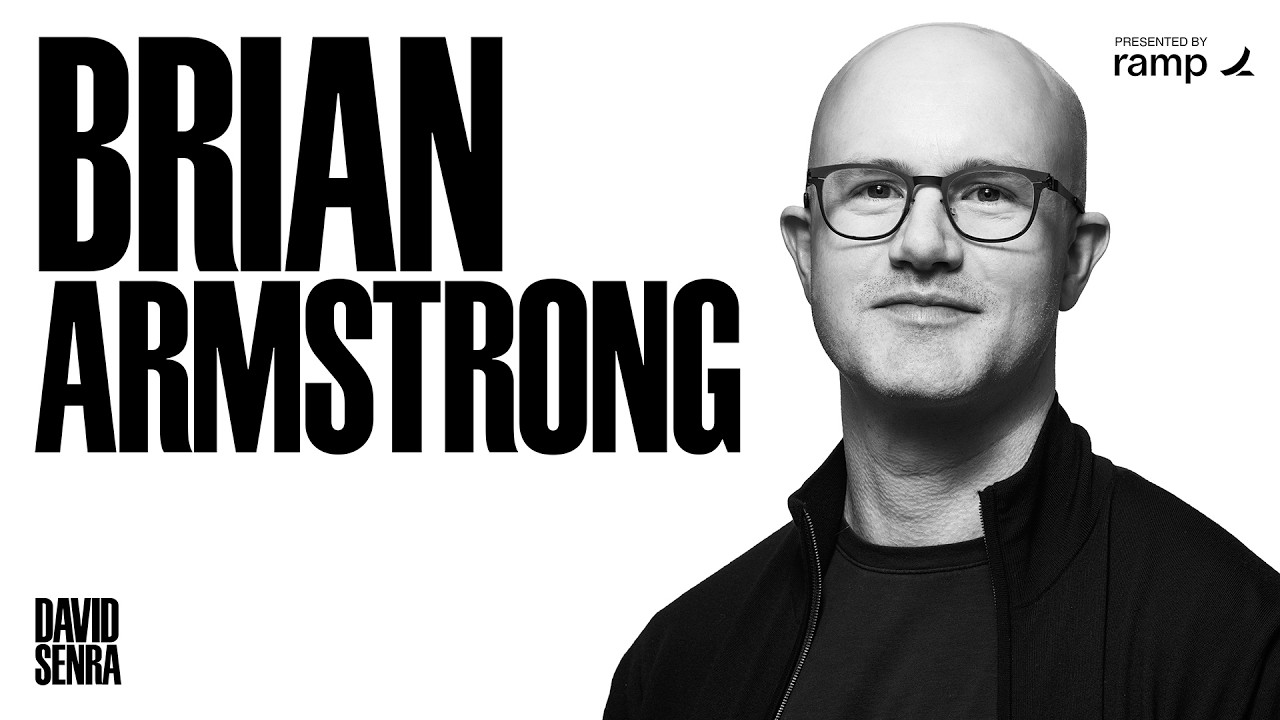
This episode features Coinbase CEO Brian Armstrong discussing how he builds political power for crypto, fights regulatory “lawfare,” and leads Coinbase with a long‑term, mission‑first mindset that prioritises economic freedom through crypto.
- Key themes: market‑structure legislation (the CLARITY Act), suing the SEC, founder‑level decision‑making, company culture, product evolution, hiring philosophy, personal traits (autism, introversion), and future‑looking bets (AI, longevity, special‑economic‑zones).
-
Political advocacy & market‑structure clarity
- Armstrong visits Washington ≈ once per quarter to push the CLARITY Act, which would clearly label crypto assets as either commodities (CFTC) or securities (SEC).
- Ambiguity lets regulators like former SEC chair Gary Gensler and Senator Elizabeth Warren weaponise enforcement to “kill” the industry.
- Other jurisdictions (UK, Singapore) have a single financial regulator, avoiding this turf war.
-
SEC law‑fare and the Coinbase lawsuit
- When Coinbase went public (2020‑21) the SEC refused to give clear guidance on which tokens were securities vs. commodities.
- The SEC issued enforcement actions demanding delistings; Coinbase sued, arguing the SEC violated the Administrative Procedures Act by not engaging with the industry to draft rules.
- Both sides sued each other; after a multi‑year battle Coinbase won, paying no fines and keeping its product unchanged. Legal costs were $50‑100 M, while the stock lost $10‑20 B in market value.
-
Founder’s long‑term perspective
- Armstrong sees short‑term pain as acceptable if it secures a future where crypto can expand economic freedom.
- He draws parallels to SpaceX’s NASA lawsuit and Palantir’s regulatory fights—strategic litigation can be necessary.
- The ability to fund a legal fight came only after Coinbase’s IPO; earlier startups would have folded.
-
Mission‑first culture & internal politics
- In 2021, a remote employee walk‑out over a Black‑Lives‑Matter question forced Armstrong to clarify that Coinbase would stay apolitical unless issues intersected with its core mission of economic freedom.
- He offered a severance package to anyone unwilling to align; ~5 % left.
- The episode highlights his willingness to “iron‑in‑the‑veins” leadership—if a minority disagrees, the company moves forward.
-
Founder traits & personal background
- Armstrong describes himself as on the autism spectrum, which gives him hyper‑focus for long stretches on technical work.
- Early ventures (college tutoring platform, real‑estate rentals) taught him that only deep‑passion projects survive decades.
- A year in hyper‑inflationary Argentina and reading the 2008 Bitcoin whitepaper sparked his conviction that decentralized money could protect wealth.
-
From nights at Airbnb to building Coinbase
- While at Airbnb, Armstrong experienced the fragmented global payout system (high fees, cash‑pickup services).
- Those pain points, combined with Bitcoin’s promise, motivated him to prototype a crypto wallet on weekends, eventually evolving into Coinbase.
- He bootstrapped the first product, iterated on user feedback, and later secured a bank partnership (SVB) after paying $30 k for a legal opinion to sidestep a costly money‑transmitter license.
-
Co‑founder search & Y Combinator
- Initially tried to find a co‑founder for 18 months; eventually partnered with Fred Ehrsam, whose finance background complemented Armstrong’s engineering skill set.
- Entered YC as a solo founder after a brief, mismatched partnership with Ben Reeves.
-
Product evolution & market positioning
- Early Coinbase was a Bitcoin wallet; adding a simple “Buy” button (ACH bank transfers) created product‑market fit.
- The company later built both centralized (easy‑on‑ramp, custodial) and self‑custodial wallets, mirroring email’s open protocol vs. a single provider.
- Today Coinbase is an “Everything Exchange” offering crypto, stocks, commodities, loans, and a Coinbase Card—an ambition similar to Amazon’s “everything store.”
-
Hiring philosophy
- Early hires were “crypto zealots” sourced via meetups, LinkedIn cold‑messages, and referrals.
- Later, the team prioritized “high‑agency” outliers (e.g., Olaf Carlson‑Wee, a former lumberjack with a Bitcoin thesis) over résumé credentials.
- The “hire for spikes” model mirrors approaches at Ramp and Spotify: recruit the world’s best at a narrow skill, give them autonomy.
-
Decision‑making, risk tolerance, and internal venture bets
- Armstrong acts as a “pace car,” removing bottlenecks and granting air‑cover for high‑risk, high‑reward ideas (20 % success chance, 20× upside).
- Internally, any employee can pitch a project; only one senior leader’s “yes” is needed to fund it from that leader’s budget—an inverted VC model.
- Example: he initially voted “no” on USDC, yet a teammate funded it and it later generated $800 M+ revenue.
-
Marketing, media, and shareholder communication
- Coinbase’s marketing is internet‑native (short‑form videos, meme‑style content) rather than traditional TV ads.
- Armstrong treats earnings calls as marketing moments, producing video decks to make them engaging.
- After negative press (e.g., NYT “hit piece” on the “Mission‑First” blog), he shifted to direct communication channels, believing traditional media now serves political agendas more than factual reporting.
-
AI integration at Coinbase
- Over 50 % of code and ~60 % of support tickets are now handled by AI agents.
- The company builds custom models for compliance automation, finance FP&A, and internal decision‑support, ingesting data from Docs, Slack, GitHub, etc.
- Unique to crypto: AI agents receive stable‑coin wallets to make machine‑to‑machine payments for tasks (AWS provisioning, domain purchases), bypassing human‑only corporate cards.
-
Side ventures and broader impact goals
- NewLimit (co‑founded with Blake Byers, Jacob Kimmel, Greg Johnson) targets longevity via epigenetic reprogramming; Armstrong has invested $100 M personally, with the first drug entering clinical trials.
- Other interests include ResearchHub (accelerating scientific publishing), and advocating for special‑economic‑zones in the U.S. to lower regulatory barriers for nuclear, biotech, drone, and crypto innovation.
- He envisions continuing to start companies that address “big, hard problems” (AI, fusion, space, longevity).
-
CEO routine, stress management, and future outlook
- Armstrong maintains a strict personal regimen: sleep, heavy lifting, zone‑2 cardio, brief meditation, and a screen‑free wind‑down hour.
- He acknowledges founder burnout (weight changes, hair loss, substance use) and mitigates it by delegating, adjusting direct‑report spans, and preserving personal routines.
- Despite AI’s disruptive potential, he plans to stay as Coinbase’s CEO for the long haul, viewing AI as a tool rather than a replacement for his role.
Brian Armstrong: Iron in His Veins
David Senra • • 1h49 → 4 min • #13