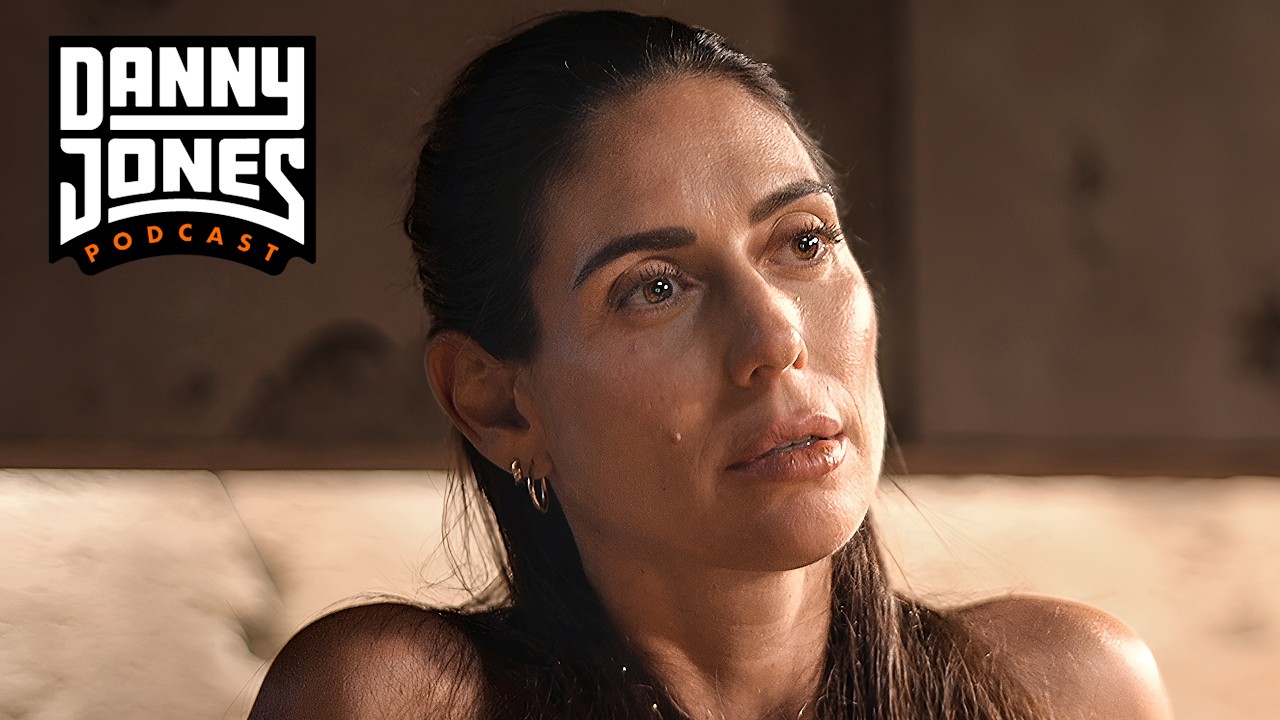
Valentine Thomas, a professional spearfisher and freediver originally from Quebec, shares her journey from London to Florida to Texas, discussing ocean ecology, shark behavior, seafood sustainability, human biology, social media dynamics, and life changes with pregnancy and parenthood.
Valentine’s path to spearfishing
Born in Quebec, moved to London for seven years where friends introduced her to spearfishing in the Channel Islands, then relocated to St. Petersburg, Florida, and now lives in Texas.
First major trip was to Ascension Island, a remote military island in the mid-Atlantic shared by the US and UK, accessed only by military plane; the island hosts an abandoned NASA tracking station used for Apollo missions, now overgrown and eerie.
On that first trip she was dropped in 200 feet of water 50 miles offshore with minimal experience, targeting giant tuna and wahoo — an “Iron Man” start that hooked her despite intense fear.
Shark encounters and shifting dynamics
Sharks have become far more aggressive and numerous in Florida over the last five years; bull sharks appear within minutes of entering the water and follow boats between spots, often stealing catch (cobia) off spears.
Valentine was charged by a 5–6 ft tiger shark in 15 ft of water off Hudson while holding a hogfish on her gun; the shark circled, rolled its eyes back, and charged repeatedly until a buddy arrived and it lost confidence.
She carries a powerhead (shotgun shell on a spear tip) as a last-resort deterrent, comparing it to carrying a gun in grizzly country; she has never shot a shark.
Shark behavior in viral videos (e.g., Ocean Ramsey swimming with tiger sharks) is artificially induced by feeding; wild sharks do not “hang out” with humans unless food is present.
Four realistic wild shark scenarios: immediate ambush, bluff charge then leave, frenzy around catch then depart, or brief investigation then leave — no peaceful coexistence.
Drone programs in Australia (NSW $34M initiative) now monitor beaches dawn-to-dusk, revealing great whites routinely circling surfers without attacking; most encounters end with the shark turning away.
Ocean sustainability and fishing industry structure
US fisheries are the world’s best-managed; buying US-caught (not just US-processed) seafood is the most reliable sustainability signal.
Florida’s Gulf reef fish (grouper, snapper) operate under an Individual Fishing Quota (IFQ) system since the 1990s: federal government allocated quota shares based on historical catch, creating a tradable asset that boat owners lease or sell to Wall Street, disconnecting quota holders from actual fishing crews.
Deckhands often struggle with addiction (“sea-hab” — detoxing at sea during 10-day trips) while quota owners profit without fishing; fish houses are closing, next generation avoids the work.
Global illegal fishing is rampant: ~20% of seafood worldwide caught illegally; supertrawlers drag 70+ km nets, dump gear to destroy evidence; Paul Watson chased one such vessel 100 days.
China misreports catch data at state level, undermining global stock assessments; krill fisheries in Antarctica harvest ~650K–1.2M tons/year for salmon feed, pet food, omega-3 supplements, and livestock, competing with whales, penguins, and fish.
Salmon farming varies wildly: US operations (Maine) are heavily regulated, use mechanical “salmon car washes” for sea lice, avoid chemicals; open-net pens elsewhere use neurotoxic pesticides (cypermethrin, deltamethrin) and hydrogen peroxide baths.
Farmed salmon feed now includes chicken waste, seed oils, and synthetic astaxanthin (nature-identical pigment from krill that colors wild salmon, shrimp, flamingos pink); wild Alaska salmon remains the only US commercial wild salmon fishery.
Seafood fraud and supply chain transparency
Massive mislabeling: pollock (tasteless whitefish) dyed and flavored sold as “crab” in California rolls and McDonald’s Filet-O-Fish; Patagonian toothfish rebranded “Chilean sea bass” (not a bass, not from Chile); spider crab → “Alaskan king crab”; sablefish also sold as “black cod.”
Blockchain traceability projects aim to record every step (catch, temperature, handling) immutably, reducing illegal fishing and improving food safety — especially valuable for pregnant consumers.
95% of Earth’s animal biomass is humans + farmed animals; only 5% wild — industrial protein production is a necessity for 8 billion people, but sustainability burden falls unfairly on low-income consumers.
Human biology, attraction, and dating
“Sweaty T-shirt study”: women rate men’s scent attractiveness; preference correlates with MHC (immune system) complementarity — women prefer men whose immune genes fill their own gaps, producing more robust offspring.
Birth control pill disrupts this primal mate selection; Valentine took it 18 years, made poor dating choices, found clarity after stopping; anecdotal reports of women losing attraction to long-term partners after discontinuing hormonal contraception.
Bladder infections after sex with a new partner can signal pH/immune incompatibility — body rejecting the mate.
Modern dating apps strip away scent, voice, presence; infinite options create paralysis; algorithms replace evolved courtship mechanisms.
Social media algorithms and content suppression
Platforms (YouTube, Instagram) algorithmically suppress hunting/fishing content — creators like BlacktipH and friends Lauren/Kelly saw views plummet overnight without notification or policy violation; “shadowban” denies reach while denying it exists.
Australia now legislates “My Feed My Way”: users over 16 can opt out of algorithmic feeds, see only followed accounts; non-compliance fines ~$79M USD (trivial for Meta).
Algorithms optimize engagement via dopamine loops; Valentine lost 20 minutes to Instagram that morning; she keeps phone in bathroom overnight to avoid EMFs and doom-scrolling.
EMF exposure and health precautions
EMF meter revealed baby monitors (non-WiFi) emit extreme levels — millions of units — right next to pillow; power strips under bed also high.
EMFs open blood-brain barrier (rat studies), allowing toxins into brain; Valentine moved monitors across room, uses phone app instead; Wi-Fi on timers (off 11pm–5am).
Grandmothers lived to 100 and 104 with opposite lifestyles (French: wine, market food, sharp mind; Montreal: processed food, body lasted, mind declined first) — genetics and resilience matter more than perfection.
Pregnancy and freediving
No scientific studies on freediving safety during pregnancy; Valentine dove to 50 ft comfortably during first pregnancy, but at 40 ft in second pregnancy felt pressure earlier and stopped — self-imposed limit when water pressure felt on amniotic fluid.
First doctor supported her (15 years experience, body adapted); second said absolutely not; she continues shallow diving but respects new limits.
Bajau “sea nomads” in Indonesia have 3x larger spleens from generations of freediving; they dive deep while 9 months pregnant — evolutionary adaptation, not applicable to newcomers.
Hunting vs. fishing psychology
Killing mammals (deer, elk) triggers deep emotional response — big eyes, white sclera, similarity to humans; fish feel “soulless” by comparison, though large tuna showing eye whites can evoke compassion.
Valentine cried first time hunting; grandmother’s generation normalized killing rabbits for food — desensitization through necessity.
Wild game (deer, elk) cannot be sold commercially in US — no USDA inspection; keeps hunting non-commercial, but Trump recently proposed letting small farms process own meat, bypassing big four processors.
Life changes with parenthood
First summer solo with toddler (no nanny) was hardest transition after decade of total autonomy; no downtime from wake to sleep.
Now uses nanny part-time while home — “perfect balance”: grocery runs, gym, work possible; husband also involved.
Scaling back social media: 15 years showcasing life, now with kids chooses privacy; answers DMs but no longer builds career on comments/engagement.
Daughter (2) will join hunting trips; ocean freediving waits until she can swim with fins/snorkel comfortably (~age 3+).