-
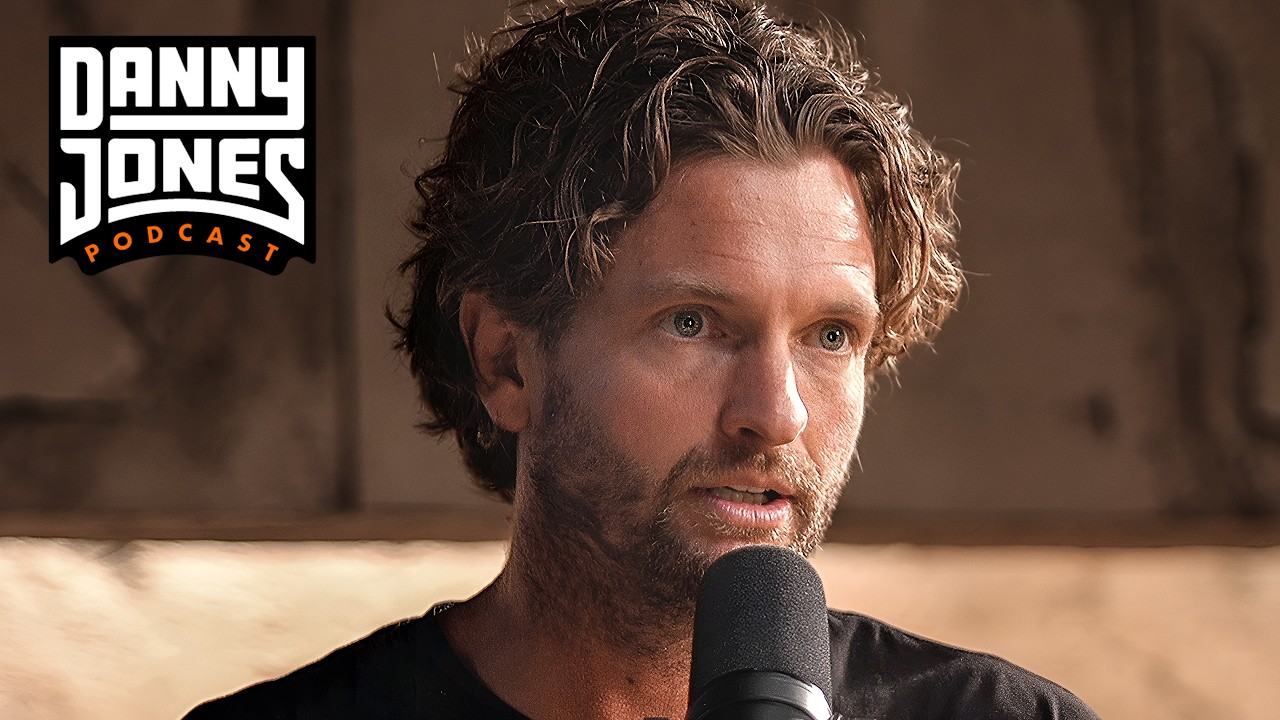
Nathan Apffel is a filmmaker and director of The Religion Business, a documentary series investigating financial corruption, lack of accountability, and sexual abuse inside American churches. Raised in megachurches, Apffel became disillusioned after his youth pastor was arrested for child sexual abuse and after encountering a radically different faith model in Brazil, where a couple ran a self-sustaining orphanage without soliciting money. He now argues that American Christianity has been corrupted by capitalism and that the institutional church mirrors the very system the Reformation was meant to challenge.
-
Apffel frames the Bible as a coherent historical narrative and urges Christians to read it cover to cover, ideally starting from the end (Revelation) to strip away institutional bias. He distinguishes between “faith in faith” (trusting an institution because it feels safe) and faith in the God behind it. He believes most Christians have never read the Bible themselves and therefore unknowingly follow man-made traditions rather than scriptural teaching.
-
He describes a “pendulum theory of Christ”: at one end are conservative Christians who treat the Bible as the infallible, literal word of God; at the end are historians who agree a historical Jesus was crucified but reject the resurrection. Apffel argues that wherever someone falls on that spectrum, the core ethical teachings of Christ—loving your neighbor, serving the poor, putting others above yourself—remain true and accessible.
-
Apffel sees the modern American church as a product of “crony capitalism” layered onto a faith that is fundamentally anti-capitalist. He argues that the prosperity gospel, megachurch empires, subscription-style tithing, and the monetization of faith all contradict biblical teaching. He points to the TV show The Righteous Gemstones as an accurate satire of how consumer Christianity actually operates.
-
The episode examines how U.S. civil-religion dynamics have shifted toward using Christianity as a political tool. Apffel draws a parallel to Constantine adopting Christianity to unify Rome, and argues that current American conservatives are using a version of Christianity to advance a nationalist agenda. He highlights Trump’s failure to place his hand on the Bible at his inauguration, Franklin Graham’s use of scripture to justify war in Iran, and Paula White’s pattern of taking over churches and draining their resources.
-
Apffel claims there is a deliberate strategy to rebuild the Third Temple in Jerusalem as part of an end-times agenda driven by banking interests rather than genuine religious conviction. He argues that Israel is being used as a pawn in a larger global project to merge religion, monarchy, and financial power—what he calls a modern Babylon. He notes that evangelicals, Jews, and Muslims all attach different prophetic significance to the Third Temple, but that the real motivation behind the push is geopolitical and financial, not spiritual.
-
The nonprofit and religious-exemption system created in 1913 has been radically corrupted by technology and the profit motive. Originally, about 12,000 organizations received tax-exempt status to serve their local communities. Today there are 1.9 million nonprofits, including roughly 400,000 churches. Apffel argues that as communication technology expanded reach from local to global, churches began chasing money rather than serving communities, and that the lack of IRS reporting requirements for churches (unlike other nonprofits, which must file Form 990) creates a lawless environment where abuse thrives.
-
Churches operate in what Apffel calls the “darkest legal sandbox” of any sector: no mandatory financial disclosure, no mandatory background checks for employees or volunteers, and no mandatory reporting of child abuse in most states. He argues that this lack of accountability is not accidental but structural, and that where financial secrecy exists, sexual abuse follows. He describes how churches use NDAs and donor money to silence abuse victims, and how the statute of limitations often prevents survivors from seeking justice.
-
Apffel has personally confronted pastors and been arrested for trespassing while trying to ask questions about church finances. He recounts being detained in Texas after asking Pastor Ed Young Jr. about his $240,000 annual housing allowance and the church’s real estate holdings. He describes a pattern in which large churches use housing allowances, parsonages, and real-estry schemes to extract wealth from congregants with no oversight.
-
He argues that the Reformation democratized access to the Bible but failed to reform the institutional structure of the church, leaving Americans with “400,000 mini-Vaticans.” Each operates like the old Catholic hierarchy: concentrated power at the top, no financial transparency, and no congregational voting rights. He points to Second Baptist Church in Houston, where a billion-dollar congregation’s 90,000 members had their voting rights removed by a small group of family members and a lawyer.
-
The LDS Church is presented as an extreme example of what happens when religious institutions operate like corporations. Apffel notes the church is worth roughly $350 billion, made $25 billion in market profits last year (untaxed), gave only 2% to humanitarian aid, and is building a planned city in Florida. He also teases a Season 2 episode alleging ritualistic child abuse, including blood oaths, inside LDS temples.
-
Apffel advocates for a “refiner’s fire” approach: the institutional church should be stripped down by exposing its finances, salaries, and assets to full transparency, and whatever survives that process is what is truly of God. He believes that if even a few prominent pastors led the way in voluntarily disclosing financial data, the market would force other churches to follow—or lose their congregants. He insists he is not anti-Christian but anti-corruption, and that his work is an act of faith, not a rejection of it.
-
The episode closes with a discussion of near-death experiences, the difficulty of verifying ancient testimony, and the possibility that alien disclosure would not destroy religion but force it to adapt. Apffel shares his own NDE after a traumatic brain injury at age 16, in which he saw a female angelic being hovering above him during a life-flight to San Diego. He argues that faith, unlike rigid belief, can absorb new information without collapsing, and that the core of Christianity—living for others—remains valuable even if every institutional claim turned out to be false.