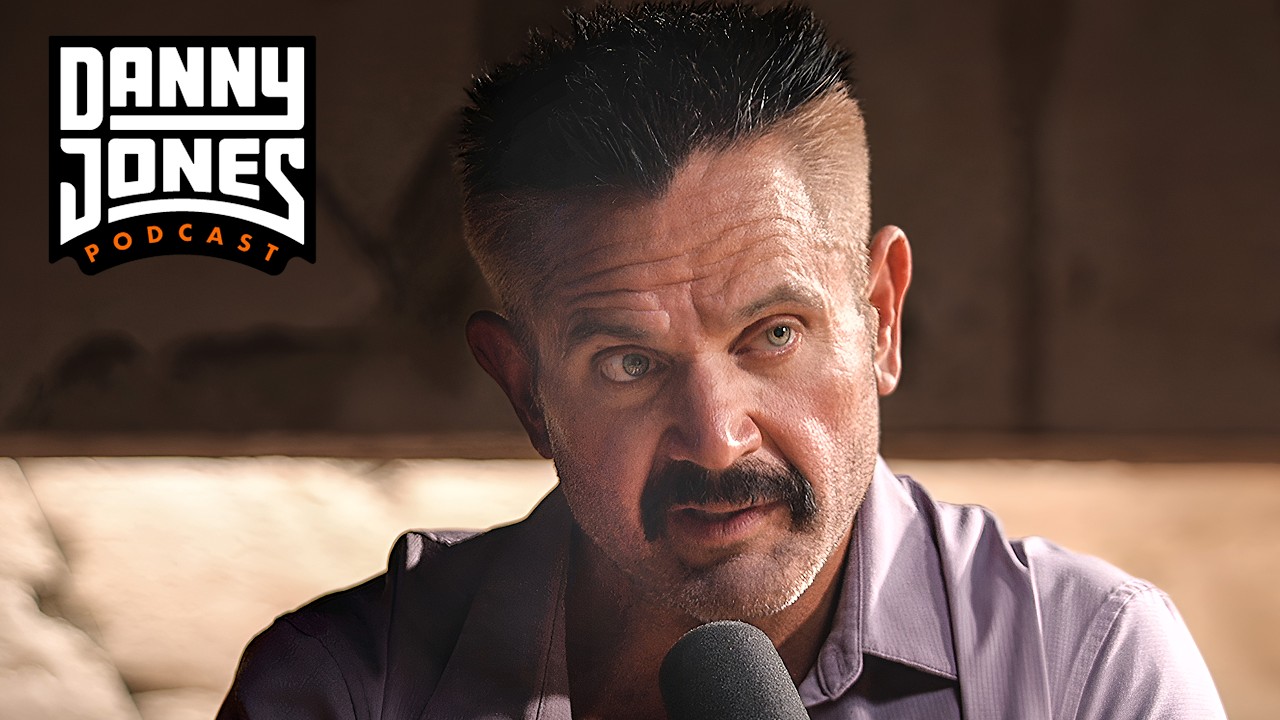
Mark Bell, a world-renowned powerlifter and host of the Mark Bell’s Power Project podcast, joins Danny Jones for a wide-ranging conversation covering movement, exercise philosophy, the obesity crisis, GLP-1 drugs, peptides, performance-enhancing drugs, and mental health. The discussion moves fluidly between practical training advice, deep dives into nutrition science, and candid reflections on drug use, addiction, and longevity.
Daily movement and exercise philosophy
Mark emphasizes that human beings are designed to move 5–7 miles per day and that most people should aim to expend 500–1,000 calories beyond their basal metabolic rate through intentional movement.
He acknowledges he spent years getting as large as 330 lbs for powerlifting, which left his body extremely stiff, and is now actively working on mobility and running to undo that damage.
Even simple acts like going outside and spending 20–30 minutes in sunlight each morning can be transformative, especially for people with sedentary jobs.
On sprinting specifically:
Sprints tap into the central nervous system in ways most workouts don’t, producing a kind of full-body neurological fatigue that’s distinct from typical muscular exhaustion.
True maximal sprinting is so taxing that even elite athletes like Usain Bolt only hit their absolute fastest times in competition—practicing it too frequently would break the body down.
Mark recommends starting simple: lying on the ground and exploding up to sprint, or incorporating short bursts with children, which kids naturally find fun.
He notes that sprints are among the hardest things to ask of an older person—far more revealing of functional decline than being able to bench press a light weight or squat to a chair.
On the importance of movement before sedentary tasks:
Mark always works out intensely before recording podcasts because it wakes him up, puts him “in the zone,” and counterbalances the stillness of sitting and talking for hours.
He references the phrase “jog your memory” as literally true—physical movement helps the brain fire properly.
The problem with modern schooling
Mark is deeply critical of the current school system, arguing that it locks children indoors under fluorescent lights for 6+ hours a day starting at age 5, which is fundamentally at odds with how children are meant to develop.
He believes school starts too early, lasts too long, and goes on for too many years, functioning more as daycare than genuine education.
He’s particularly concerned about children who grow up without any physical culture or nutrition education at home, noting that by age 11, a child who is 30–40 lbs overweight faces reduced opportunities in sports, social fitting-in, and overall health.
On alternatives to traditional schooling:
Mark’s son attended Acton Academy in California, a school modeled somewhat on a monastery school, where there are no traditional teachers in the room—kids direct their own learning through discussion, debate, and projects.
Students vote on topics ranging from politics to science, and the school includes children aged 6–18 in a mixed-age environment.
Mark forced his son to attend initially, but after three visits, his son chose to stay because the environment was free of mask and vaccine mandates and felt more engaging than computer-based homework.
He acknowledges homeschooling co-ops are growing in Florida, where kids might spend one day sailing and another at a museum, getting real-world experience.
He references Matt D’Avella’s philosophy: “Who better to teach your children than yourself?”—arguing most parents already know what’s taught in early grades and can relearn alongside their kids.
Kratom, 7-OH, and the supplement industry
Mark and Danny discuss kratom and its potent alkaloid 7-hydroxy-mitragynine (7-OH), which has become a controversial and increasingly regulated substance.
Kratom itself is ground-up whole leaf of the mitragyna plant—natural and unadulterated—while 7-OH is an isolated alkaloid believed to be closer in effect to heroin and significantly more potent.
Products like White Rabbit contain small amounts of both kratom (~25–30 mg) and trace amounts of 7-OH, designed to give a mild mood lift without overwhelming effects.
Isolated 7-OH in liquid “shot” form is far more powerful: Mark tried a tiny sip and experienced violent shaking, cold sweats, and trembling that lasted about 30 minutes until he worked it out through exercise.
On the Florida 7-OH ban and its consequences:
Mark’s brother reports that after Florida banned 7-OH, opioid overdoses increased because people turned to more dangerous substitutes.
Suboxone prescriptions did not rise, and while Narcan saves people in the final minutes of a fentanyl overdose, it doesn’t help people step down from drug dependence.
Mark’s brother argues that 7-OH is actually easier to manage than Suboxone for people with chronic pain, and that both 7-OH and ibogaine treatment should be available.
On the broader supplement industry:
Mark admits the kratom and supplement business is “a little shady” because it’s unregulated, unlike FDA-approved pharmaceuticals.
He notes that even caffeine—which everyone uses to justify other substances—has real negative impacts on sleep and the HPA axis, and that people should be thoughtful about how many substances they’re dependent on.
Data shows 233 kratom-associated deaths from 2015–2025, though many involve people choking on powdered kratom or using adulterated products.
GLP-1 drugs and the obesity crisis
GLP-1 receptor agonists (like Ozempic) are transforming weight loss but come with significant tradeoffs that most people don’t understand.
The drugs work primarily by reducing appetite and “food noise”—the constant mental tug that drives people to eat—by acting on the brain’s reward circuits and reducing dopamine-driven wanting.
They also reduce desire for alcohol, nicotine, and sometimes sex, leading some researchers to suggest they may contribute to relationship issues or divorce.
The biological tax of GLP-1s:
People on GLP-1s lose both fat and muscle. Losing even 6 lbs of muscle matters because muscle tissue helps regulate glucose and supports metabolic rate.
When people stop the drug, they’re highly susceptible to catastrophic rebound weight gain because they’ve lost the muscle that would have helped them maintain a higher metabolic rate.
Mark compares this to bodybuilders who “recomp”—ideally spending periods gaining weight strategically to build muscle before cutting, rather than just withering down.
On the root cause of obesity:
Mark argues the primary culprit is dietary fat, not carbohydrates as commonly believed.
Fat yields 9 calories per gram versus 4 for carbs and protein, making it far easier to overconsume calories through fat.
Even “healthy” ground beef (93/7 lean) contains 32 grams of fat per pound; 80/20 ground beef has 64 grams, flipping the ratio so fat calories exceed protein calories.
Restaurant food is loaded with cheap oils, and most people never cook at home—they use DoorDash or eat out, where everything is cooked in oil.
He recommends people aim for under 100 grams of fat per day, compared to the average American intake of 160–180 grams.
He pushes back on the idea that pasta and bread are the problem: pasta itself has no fat, and people feel terrible after eating it because of the fatty sauces and meats paired with it.
The same is true of ice cream—it’s the combination of carbs and fat that causes the “hit by a truck” feeling.
He notes that de novo lipogenesis (the body converting carbs to fat) does happen but typically requires a caloric surplus that fat-heavy diets make much easier to reach.
New peptide developments:
Retrutide is a triple agonist (targeting insulin resistance, appetite, and glucagon for fat loss) that may be more effective than current GLP-1s.
The “James Bond peptide” (WVE-007) is particularly exciting: in trials, patients receiving just one or two injections over 85 days saw a 9.4% reduction in visceral fat, a 4.5% reduction in total body fat, and a 3.2% increase in muscle mass—a combination no current drug achieves.
It targets mRNA to reduce a protein associated with obesity and may mimic VEGF (vascular endothelial growth factor), potentially offering heart-protective benefits.
It could eventually require only once- or twice-yearly dosing.
Performance-enhancing drugs and testosterone
Mark has been on testosterone for approximately 25 years and is candid about being addicted to it.
He started at age 25 weighing 215 lbs and used steroids to reach 330 lbs, gaining both size and strength in the process.
He took a break of about a year around the time his daughter was born (roughly 10 years into use) but didn’t get blood work to see if his natural testosterone recovered.
He acknowledges that all drugs and diets only work while you’re doing them—once you stop, you lose results and may end up worse than baseline.
He’s not ready to come off because he fears losing the mental positivity, energy, and training capacity he currently has.
On whether testosterone is a “steroid”:
Mark notes the argument that testosterone is natural—your body produces it—unlike opioids, nicotine, or caffeine, which are foreign substances.
But he also points out that melatonin and vitamin D are natural too, and people still debate whether supplementing them disrupts the body’s own production.
He references Marcus Aurelius, who reportedly drank snake venom mixed with opium daily to build immunity—illustrating that humans have been tinkering with their biology since antiquity.
On bodybuilder mortality:
Bodybuilders rarely die from cancer but commonly suffer heart attacks, likely due to the cardiovascular strain of carrying extreme muscle mass combined with drug use.
Arnold Schwarzenegger is 78 and has had heart issues; Sylvester Stallone is 80. Both used heavily in their youth but at lower doses and with fewer compounds than modern bodybuilders.
Mark notes that many bodybuilders also use recreational drugs, painkillers, and stimulants on top of steroids, making it hard to isolate causes of death.
On trenbolone and behavioral changes:
Trenbolone is anecdotally associated with increased libido, aggression (“roid rage”), insomnia, anxiety, and confusion.
The myth that trenbolone “makes you gay” (summarized as “more tren, more men”) is an urban legend in bodybuilding communities, though the drug does cause uncontrollable sexual urges that could theoretically be directed anywhere.
Mark tried trenbolone himself and did not experience any change in sexual orientation, though he noted significant sleep disruption and sweating.
Mental health, equanimity, and communication
Mark has worked deliberately on developing equanimity—a balanced mind in the face of chaos—after watching friends in the social media world become unhappy and even borderline suicidal.
He uses social media as a training ground, practicing pausing before reacting to triggering content rather than letting it dictate his emotional state.
He references stoicism as a starting point but has gone further, learning to examine his own beliefs constantly and hold them loosely rather than making them his identity.
On the importance of not overreacting:
When his YouTube channel was taken down for linking to a peptide company, Mark stayed calm, strategized, and got the channel back within a week through a fan who worked at YouTube.
He aims to never let his children see him lose control—his son has seen him angry, but his daughter never has, and he hopes his one-year-old will grow up never seeing him overreact.
On communication and technology:
Mark argues that texting is a very low form of communication that strips away tone, punctuation, and intent, making misunderstandings common.
He recommends escalating to voice texts, phone calls, FaceTime, or in-person meetings for anything important or potentially contentious.
He references the “sweaty T-shirt study” in evolutionary biology, where women ranked men’s sweaty shirts by attractiveness and the results correlated with complementary immune system genetics—suggesting that modern dating apps strip away crucial biological cues like smell.
He notes that birth control pills may alter women’s ability to detect these cues, and that perfumes mask natural pheromones.
Training tools and recovery
Mark’s favorite training tools include:
The Torque M3 tank (a sled), which has replaced all his leg workouts—he pushes it outdoors and finds it brutally effective.
Rice buckets for finger and grip extensor training, which have helped him recover from hand and finger injuries and improved his jiu-jitsu.
Tibia raises (leaning against a wall on heels and rocking forward and back), which he discovered through Semma’s Untapped program and which revealed muscles he didn’t know he had.
Pogo hops, jump rope, and foot strengthening work to improve ankle and foot health, which he considers foundational for athletic performance.
On sleep optimization:
Mark uses mouth tape, an eye mask, a nose strip, and sometimes a pillow under his chin to keep his mouth closed and breathing nasal throughout the night.
He notes that sleep apnea is extremely common among steroid users (possibly due to neck size) and the general population, and that CPAP machines are a crutch—he wishes there were better solutions.
He mentions Reggie White, the NFL player, as someone believed to have died from sleep apnea.
On hyperbaric chambers:
Mark used to do hyperbaric oxygen therapy weekly, spending an hour in an inflatable chamber with supplemental oxygen through a nasal cannula.
He found it produced intense calm and energy but stopped after learning about the fire/explosion risk of bringing electronics into a super-oxygenated environment.
Broader reflections
Mark believes performance-enhancing drugs should be more widely available through doctors, with full informed consent about risks, rather than forcing people into unregulated markets.
He argues that the same companies already prescribe testosterone and peptides off-label—so why not allow trenbolone or other compounds under medical supervision?
On assisted suicide:
Mark and Danny discuss a commercial for assisted suicide that Mark finds disturbing, seeing it as a sign of civilizational decline that corporations are advertising death.
Mark says he’d rather choose a quick, controlled death than endure a slow hospital decline in old age.
On the state of the world:
Mark believes we’re at a strange inflection point where people are exposed to every global crisis simultaneously, making it impossible to process or respond rationally.
He references the “Fourth Turning” framework—strong men create good times, good times create weak men, weak men create hard times—and suggests we may be entering the difficult phase.
He notes that it’s become nearly impossible to determine what’s real anymore, and that even when people are exposed to the same facts, they disagree on whether those facts are true.