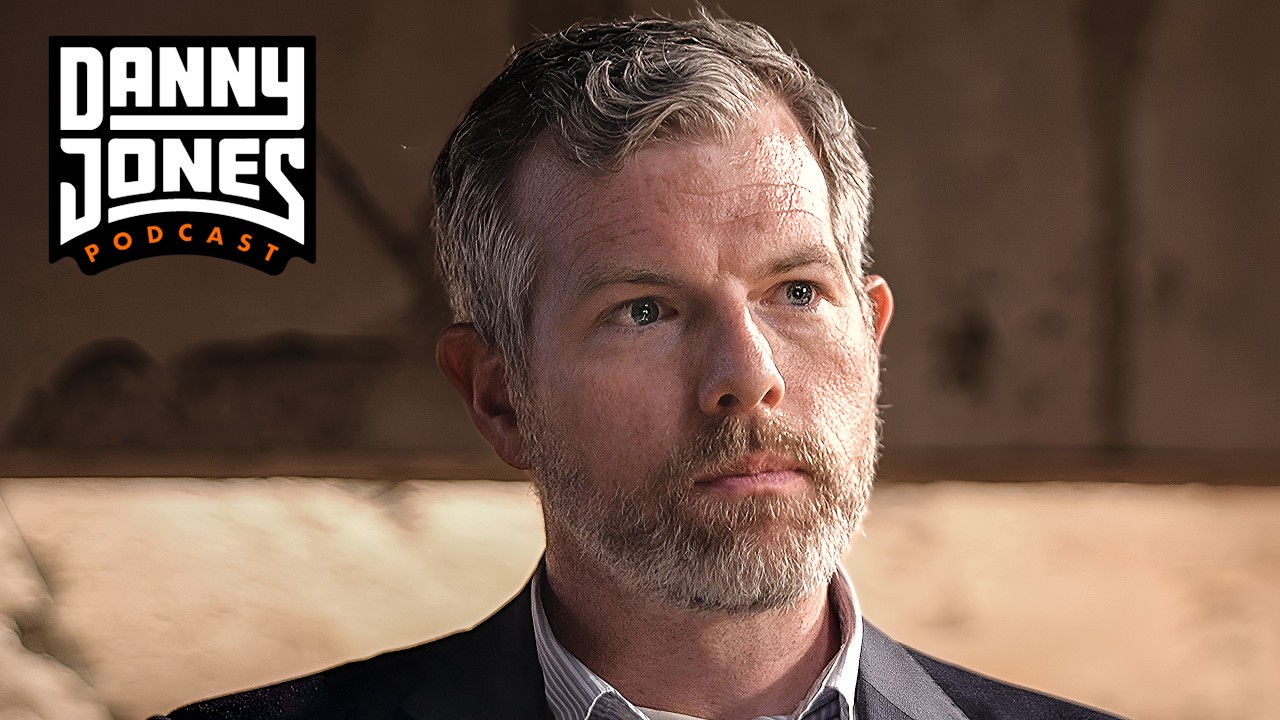
Jack Murphy, a former Army Ranger and Special Forces operator turned investigative journalist, returns to the podcast after three years to discuss a wide range of national security topics, including Havana Syndrome, CIA operations, the Iran conflict, China’s geopolitical strategy, and his upcoming novel inspired by real-life human hunting operations.
Havana Syndrome and Directed Energy Weapons
Havana Syndrome is a real phenomenon involving pulsed microwave attacks on U.S. intelligence officers, first reported in Cuba in 2016 during the Obama administration’s normalization of relations with Havana.
The first known victim, referred to as “Adam” (a pseudonym required by the CIA), was a CIA officer in Havana who experienced sudden intense pain described as “sticking a number two pencil in your ear,” along with bleeding from the ears and nose.
The attacks were conducted by Cuban intelligence (DGI) working with Russians, using microwave weapons that pulse hundreds or thousands of times per second, creating cumulative effects inside the human cranium leading to vestibular issues, vertigo, headaches, and symptoms similar to traumatic brain injuries.
The weapon is designed not to kill but to render intelligence officers mentally incompetent, effectively removing them from the board as chess pieces, creating a psychological deterrent that threatens to shut down CIA human intelligence operations globally.
The U.S. government has systematically denied and covered up Havana Syndrome, gaslighting survivors and failing to respond meaningfully.
The CIA pressured victims to participate in an NIH study by holding their healthcare over their heads, which was subsequently shut down due to ethical concerns.
Victims were sent to specialists like Dr. Hoffer in Miami and the University of Pennsylvania, where Dr. Verma conducted fMRI studies, but were eventually cut off from treatment.
Vestibular rehabilitation helps victims learn to compensate for their injuries, though the effects don’t fully go away.
A 60 Minutes investigation confirmed that undercover Homeland Security agents purchased a miniaturized microwave weapon from a Russian criminal network, which was tested on rats and sheep in a U.S. military lab for over a year, producing injuries consistent with those seen in humans.
Security camera videos captured Americans being hit, including FBI agents and their families in Istanbul who were struck while dining at a restaurant, and two people collapsing in a stairwell at the U.S. Embassy in Vienna.
Turkish intelligence (MIT) inadvertently recorded the Istanbul attack, and the NSA reportedly hacked MIT to obtain the video.
The U.S. has a similar weapon called the “behavior adjustment device,” which comes in a Pelican case with a control unit, battery, and dish, designed to beam microwaves over 100 feet to flush terrorists out of safe houses or force them onto communications.
Unlike the Russian weapon, it was not designed to silently incapacitate individuals inside buildings.
Cuban intelligence employs teams of psychologists to study each CIA officer and determine what will break them, using techniques ranging from unflushed toilets to cutting off a dog’s tail and leaving it bandaged on the floor, or placing scorpions inside clothing.
When victims returned to the U.S. for treatment, they came under intense harassing surveillance, including break-ins where gun cases were taken but guns left, medications thrown in dishwashers, and clothes turned inside out—tactics designed to make victims sound like they have paranoid schizophrenia.
CIA Operations and Non-Official Cover (NOC) Programs
Murphy and his colleague Shawn Naylor publish investigative journalism on Substack at The High Side, focusing on special operations and intelligence community stories.
Their reporting on Havana Syndrome involved visiting the first victim at his remote location and working the story for over a year.
They also published an article with Zach Dorfman about the JSOC NOC program, examining both successes and failures.
Non-official cover (NOC) operatives are placed under commercial cover (working for companies in construction, mining, logistics, etc.) rather than official government cover.
NOCs face extreme risk: if caught in countries like Russia or Iran, they are disavowed by the U.S. government and face death or imprisonment, unlike officially covered operatives who are deported as persona non grata.
The lifestyle is isolating and high-stress, requiring operatives who have spent their careers working in teams to operate alone, which leads some to seek human connection through alcohol and women, sometimes compromising operations.
One NOC running a logistics company in Africa got drunk and revealed too much to a woman, resulting in a conex container with $3 million worth of clandestine communications equipment being abandoned.
Military NOCs face additional challenges compared to CIA NOCs because special operators tend to have distinctive physiques, tattoos, military posture, and cultural mannerisms that make blending in difficult.
The military typically uses NOCs for one or two missions before their identities are burned, whereas the CIA may use them for longer periods.
Ubiquitous technical surveillance (UTS)—including biometrics, DNA sniffers, AI-connected surveillance cameras, and data breaches like the OPM hack that gave Chinese intelligence access to U.S. security clearance applications—is making NOC operations increasingly difficult.
The intelligence community is considering shifting toward recruiting foreigners who can operate under their own identities rather than creating elaborate fake backstops.
Iran Conflict and Related Operations
The Iran conflict lacks a coherent strategic plan linked to an end state, with the U.S. repeatedly bombing without achieving decisive results.
Previous operations that faced no retaliation—the Soleimani assassination, the Baghdadi raid, the Maduro raid, and Operation Midnight Hammer—may have taught the administration the wrong lesson about the consequences of military action.
Iran possesses approximately 300 kg of highly enriched uranium stored in underground facilities that were bombed, with entrances now caved in, but the material remains unsecured and will need to be addressed at some point.
Iran’s strategy appears to be maintaining the capacity to create a nuclear weapon without actually building one, allowing it to plausibly threaten weaponization.
Two major U.S. intelligence assessments concluded Iran was not close to creating a nuclear weapon.
During the rescue of a weapons system officer (WSO) shot down in Iran, the CIA conducted a deception operation using a “man-in-the-middle” attack, jamming Iranian radio communications and having Farsi speakers impersonate commanders to divert forces toward the coast.
The rescue involved approximately 150 aircraft and helicopters, with Air Force special tactics creating a protective perimeter around the downed airman.
The WSO had substantial injuries and was delayed in transmitting his authentication code, but once identified, the full rescue machinery launched.
The other crew member was rescued within hours by search and rescue teams who went in by helicopter with limited support.
The “Ghost Murmur” story about the rescue originated from CIA Director Ratcliffe’s office as a way to claim credit for the operation, angering the actual special operations personnel involved.
Ratcliffe’s behavior exemplifies “source capture,” where journalists become dependent on government sources and reluctant to publish stories that might cut off their access.
Venezuela and Diego Garcia
During the Maduro raid, Delta Force eliminated dozens of Cuban DGI paramilitary personnel guarding the Venezuelan leader.
Unverified conspiracy theories suggest Maduro may have been a CIA asset from a previous administration, with the raid potentially connected to plans about election software and Trump’s third term, though Murphy does not endorse this theory.
Diego Garcia, a British atoll in the Indian Ocean with U.S. military bunkers, serves as a major resupply point and special operations platform.
Iran launched a ballistic missile at Diego Garcia that landed harmlessly in the ocean, after which alcohol sales were suspended on the island.
The island has been described as the “Area 51 of the ocean” with various spooky programs potentially based there.
Drones and Emerging Threats
Large agricultural drones capable of carrying 40 gallons of liquid and aerosolizing it in under 10 minutes were stolen from a New Jersey warehouse in a sophisticated “transit heist.”
The thief used a fake driver’s license, fake DOT number, stolen or fake license plates, and hacked the company’s computer system to make the pickup appear legitimate.
The drones, worth approximately $50,000-$60,000 each, could potentially be used to spray chemical or biological agents over civilian populations.
After Murphy published an article about the theft, the drones were recovered in another New Jersey warehouse, possibly because the publicity spooked the thieves.
The FBI is investigating potential insider threats as well as possible Iranian involvement.
In Ukraine, JSOC personnel are reportedly engaged in “hide-and-seek with robots,” using decoys to lure Russian drones while Ukrainian forces target Russian drone operators, essentially creating drone ambushes.
DARPA and Animal Programs
The Navy’s Marine Mammal Program uses dolphins for underwater mine detection and obstacle identification, with potential applications in the Strait of Hormuz.
Dolphins are surprisingly intelligent and have distinct personalities; one named “Half-Dead Fred” went AWOL for three months during mating season.
The program was deployed during the Gulf War in 1990, during which some dolphins died due to ocean conditions.
Attempts to use dolphins for offensive operations (placing mines on enemy submarines) were abandoned because dolphins cannot distinguish between Russian and American submarine hulls.
DARPA has explored various unconventional technologies, including “upward falling payloads” that use inflated airbags to bring objects from the ocean floor to the surface for retrieval.
Neuroscientists have reportedly experimented with brain-computer interfaces that could allow a surgeon in Washington to perform operations on someone in a remote location by hijacking their neural signals.
Media, Journalism, and Government Transparency
The relationship between journalists and government agencies like the CIA involves “source capture,” where reporters become dependent on official sources and reluctant to publish stories that might cut off their access.
Editors at major publications have mortgages and careers to protect, making them risk-averse on national security stories.
Murphy’s own experience with a story about CIA sabotage operations in Russia was killed when the publication’s editors made an off-the-record agreement with the CIA deputy director without his consent.
The current media landscape has both positive and negative aspects: more voices can compete and break stories that major publications won’t touch, but the sheer volume of information makes it difficult for citizens to filter credible reporting from noise.
Murphy argues journalism remains a net positive for society, even with its flaws, and that its absence would leave the public in much greater danger.
The Epstein files represent only about 2% of the total related data, with 3.5 million pages released in heavily redacted form that protects the powerful rather than victims.
The government’s release of files without analysis or context, while simultaneously promoting UFO disclosures, functions as a distraction from more damaging revelations.
Questions remain about Epstein’s connections to Israeli intelligence, his trips to Russia even after the Ukraine war began, and the circumstances of his death, including discrepancies about his prostate between his medical records and autopsy.
Claims about CIA raids on DNI offices to seize JFK and MKUltra documents are likely politically motivated leaks rather than genuine events, and Murphy believes no new revelatory documents about the JFK assassination exist.
China’s Geopolitical Strategy
China is playing a longer-term strategic game than the United States, content to watch America’s internal chaos unfold without direct confrontation.
Chinese strategy has been described as “managing a declining empire,” recognizing that empires in decline tend to lash out violently and blame others for their problems.
China uses a combination of hard and soft power, including “salami slicing” tactics to incrementally change norms in Southeast Asia by taking over islands from the Philippines and building artificial islands.
The Belt and Road Initiative represents a major soft power component of Chinese strategy.
Taiwan represents a problem for China because it demonstrates that Chinese people can successfully embrace democracy and capitalism, contradicting the Communist Party’s narrative.
The KMT (Chinese Nationalist Party) in Taiwan is leaning toward unification with the mainland, which China would prefer to achieve through political means rather than invasion.
The U.S. has limited leverage: China manufactures 90% of U.S. pharmaceutical products, owns a huge amount of U.S. debt, and controls critical semiconductor production.
Trump’s visit to China with numerous CEOs suggests a focus on trade and economic engagement rather than strategic competition, continuing a pattern of seeking reconciliation with both Russia and China.
Religious and Political Currents
There is a concerning trend of Christian fundamentalism being intertwined with military and political operations, with superiors telling service members that conflicts are “religious wars” and that Trump was anointed by Christ.
More than 50 military whistleblowers from different branches reported similar experiences with superiors promoting religious war narratives.
Figures like Peter Thiel and others in Silicon Valley are promoting “secular Christian fundamentalism,” believing in a technological singularity that functions as a version of the rapture, while also seeking life extension.
The evangelical lobby has formed an unusual alliance with Jewish interests based on shared religious beliefs about Israel’s biblical borders, with figures like Mike Huckabee suggesting Israel should control territory from the Nile to the Euphrates.
The red heifer ritual and discussions about destroying the Al-Aqsa Mosque to rebuild the Temple reflect accelerationist religious beliefs that are influencing political discourse.
Thomas Massie faces a well-funded challenge in Kentucky from Miriam Adelson’s $20 million donation, explicitly because of his opposition to foreign aid to Israel and his push to release the Epstein files.
Murphy’s Novel: The Most Dangerous Man
Murphy’s military thriller, “The Most Dangerous Man,” coming out June 9th, is inspired by the classic short story “The Most Dangerous Game” about humans hunting humans for sport.
The novel features tech billionaires who have an Army Ranger kidnapped in West Africa and hunt him for sport.
Real-life inspiration came from multiple sources: a Ranger buddy’s story about African safari guides hunting poachers for wealthy clients, a European royal family reportedly hunting poachers from helicopters, and documented cases during the Bosnian War where wealthy individuals from Russia, the U.S., and Italy paid to shoot civilians from the outskirts of Sarajevo.
The Sarajevo Safari documentary and related reporting describe sniper tourists paying tariffs for shooting people, with higher fees for children and “the prettiest girl,” and these cases are currently working through the Italian court system.
The novel includes characters inspired by real-life villains, including tech bro hunters and a European royal family.