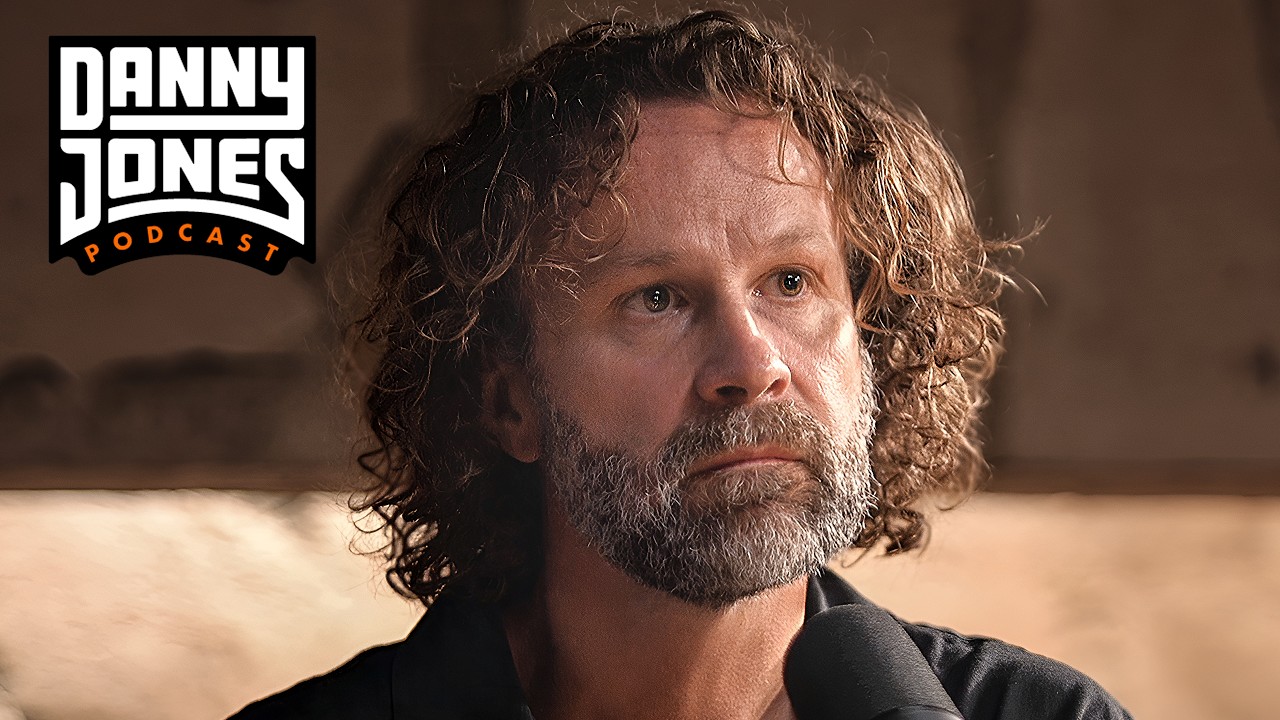
Louis de Cordier, an artist-turned-explorer, organized the 2008 Mataha Expedition — a large-scale geophysical survey at Hawara, Egypt — that detected massive underground structures matching ancient descriptions of the legendary Egyptian Labyrinth; the findings were initially celebrated by Egyptian authorities and UNESCO, then suppressed, leading to de Cordier’s blacklisting from Egypt for 17 years; recent satellite scans and a new government excavation have revived the project, while de Cordier now develops a high-tech field research station and AI-driven data archive to finally explore the site properly.
The Mataha Expedition and its suppression
In 2008, de Cordier coordinated the Mataha Expedition, a collaboration between Ghent University and Egypt’s National Research Institute of Astronomy and Geophysics (NRIAG), deploying seven geophysical technologies (GPR, electrical resistivity, geomagnetics, etc.) across two 100×180 m plots at Hawara — the largest archaeological geophysical survey in Egypt at the time.
The survey confirmed a massive limestone foundation plate (304×244 m, ~10 football fields) at 5 m depth, matching Herodotus’ description of the Labyrinth’s roof, and detected hundreds of rooms and grid structures beneath it — validating ancient accounts of a two-story complex with 3,000+ chambers.
Results were published in a scientific journal and presented at a NRIAG workshop attended by 48 Supreme Council of Antiquities officials and UNESCO representatives, who supported World Heritage status; a follow-up conference in Ghent drew 500–600 people and international press.
Days later, NRIAG — part of Egypt’s military complex — demanded the paper be retracted from the journal; de Cordier was placed on a blacklist and barred from Egypt, reportedly because the findings linked the Labyrinth to “lost civilizations” and a “Hall of Records,” crossing from archaeology into national security territory.
The suppression intensified after Belgium’s king showed a magazine cover about the discovery to Suzanne Mubarak (wife of then-president Hosni Mubarak), a friend of Zahi Hawass, triggering a diplomatic firestorm.
Ancient descriptions and the Labyrinth’s scale
Classical authors (Herodotus, Strabo, Diodorus Siculus, Pliny) consistently describe the Labyrinth as surpassing the pyramids in magnitude: Herodotus wrote that all Greek temples combined would not equal it; Diodorus noted Daedalus visited Egypt’s Labyrinth before building Crete’s; Theodorus claimed Egypt’s Labyrinth still stood in full magnitude 2,000 years ago while Crete’s was destroyed.
The site at Hawara includes the mudbrick pyramid of Amenemhat III (12th Dynasty, ~1850 BCE); ancient texts describe the Labyrinth as connected to the pyramid via underground passages, with the pyramid serving as the entrance.
In 1820, engineer Linant de Bellefonds (who later built the Suez Canal) dug a canal directly through the site — unusually routed uphill toward the pyramid — flooding the area and raising groundwater; Flinders Petrie’s 1888 excavation hit corrosive salt water at chest depth and could not penetrate deeper; academia since Petrie has declared the Labyrinth “quarried away” and non-existent.
Satellite scans reveal deeper, massive structures
2014–2015 satellite scans by a former Royal Air Force specialist (using multi-spectral SAR, lidar, and classified processing from Menwith Hill/NSA systems) penetrated past the 18 m groundwater/bedrock interface, revealing four distinct layers at ~30, 60, 80, and 100 m depth.
The scans show a central cubic atrium ~40×40 m (shopping-mall scale), a 100×40 m chamber, an omega-shaped moat, and numerous 30–40 m deep Persian-era tomb shafts; the deepest spaces appear carved directly into bedrock.
A freestanding metallic object ~40 m (120 ft) across sits in the central atrium — detected as a distinct black anomaly; the scanner speculated it could be electrum (gold-silver alloy) or orichalcum (Plato’s “Atlantean metal,” possibly a copper-gold alloy); 39 orichalcum ingots were found off Sicily in 2015.
De Cordier and team signed NDAs for over a decade; the data was withheld to avoid Egyptian interference until public pressure could force action.
Current Egyptian excavation and de Cordier’s response
In March 2025, the Egyptian government (Fayum Inspectorate) began excavating at Hawara without consulting de Cordier’s Hawara Master Preservation Plan — which prioritized drainage, a research station, and non-invasive borehole/robot exploration before open digging.
Excavation is currently shallow (~2 m), exposing megalithic walls and pillar fragments; officials state they will go “as deep as possible,” but the critical layers start at 5 m (foundation plate) and 20 m (bedrock/carved chambers).
De Cordier has re-engaged Egyptian ministries, Supreme Council insiders, and international academics (including geologist Fekri Hassan) to push for a modern, non-destructive approach: an autonomous “moon base” field station with power, air filtration, and narrow boreholes deploying nano-drones and laser void scanners to map deep chambers before human entry.
Theories on the Labyrinth’s purpose, age, and connections
De Cordier believes the Labyrinth is a “time capsule” / civilizational backup — a “hard drive” of inscribed knowledge (vs. Alexandria’s “software”) designed to survive cataclysms; the bedrock-carved lower levels suggest intentional longevity, possibly tens of thousands of years old.
The metallic object in the atrium may be a functional element: Albert Slosman’s translation of the Book of the Dead describes a “Circle of Gold” — a 360° mathematical tool using precession (25,920 years, 72 years/degree) to calculate cyclical cataclysms; de Cordier speculates the object could be a physical analog computer or “Stargate”-like device.
Pyramids: de Cordier rejects the tomb theory; favors Christopher Dunn’s “Giza Power Plant” (chemical manufacturing for agriculture/metallurgy) but sees the pyramids as blueprints encoding knowledge (earth-moon proportions, precession, latitude) rather than active factories; the Labyrinth may be the actual operational facility.
Gobekli Tepe: new 2025 excavations clearing olive groves adjacent to the main complex are already finding structures — suggesting a vast residential/support area; reinforces the pattern of massive, sophisticated, pre-3000 BCE sites challenging the academic paradigm.
Biblioteca del Sol: a civilizational ark in Spain
De Cordier built the Biblioteca del Sol (Library of the Sun) at 2,000 m altitude in Spain’s Sierra Nevada over 15–20 years: an underground, fiber-reinforced concrete bunker (no metal to avoid corrosion/EMP) housing 10,000+ curated books and agricultural seeds — a “cultural ark” for post-cataclysm reboot.
Motivated by solar storm risks: the 1859 Carrington Event (X200) would fry today’s grid; the 774 CE Miyake Event was 10× stronger (X2000); a similar event today would destroy all electronics; de Cordier sees the Labyrinth as an ancient version of the same concept.
Cosmic rays, climate cycles, and the Younger Dryas
De Cordier cites Henrik Svensmark’s work (validated by CERN’s CLOUD experiment): cosmic rays nucleate clouds, cooling Earth; solar activity (solar wind) deflects cosmic rays — when the Sun is active, fewer clouds, warming; when quiet (Grand Solar Minima every ~200 years), more cosmic rays, cooling, crop failures, volcanic upticks.
Current Grand Solar Minimum (Eddy Minimum) began ~2020; correlates with historical minima (Dalton 1790s, Maunder 1645–1715 Little Ice Age, Spörer, Wolf) — each linked to societal upheaval (French Revolution followed Dalton by 2 years).
Younger Dryas (~12,900 BP) was likely a solar nova event: Robert Schoch’s research points to massive solar outburst, not just impact; the Sun “goes black” (giant sunspot), then erupts with coronal mass ejections that strip atmosphere, flash-freeze megafauna, trigger supervolcanoes (Campi Flegrei 42k BP ended Neanderthals), and release primary water from Earth’s crust (8–10× ocean volume) causing global floods.
Primary water theory: water generated geochemically deep in crust, not just atmospheric cycle; explains refilling oil wells (abiotic oil at 27 km depth) and ancient aquifers; solar outbursts agitate this water, forcing it to surface.
Earth Expansion Theory
If Earth’s radius shrinks, all continental shelves fit together on a smaller sphere — no Panthalassa ocean needed; explains dinosaur gigantism (lower gravity) and pterosaur flight; expansion events may correlate with solar outbursts adding mass/energy via E=mc² (electromagnetic energy → matter).
Solar wind feeds Earth’s electromagnetic generator (Van Allen belts); the entire heliosphere connects to galactic center; cosmic dust influx during ice ages modulates solar output until a “nova” clears it.
Beekeeping, pollination, and civilizational collapse
De Cordier keeps bees in Spain; modern agriculture’s insecticides/neonics poison hives via stored pollen; 5G/electrosmog disorients bees (canary in the coal mine); Rudolf Steiner: “When bees go, humanity follows” — no pollination = no food.
Ancient Egyptians revered bees (hieroglyphs, beekeeping, metaphysical hive-mind symbolism); Freemasons/secret societies use the bee as a model for non-hierarchical, self-organizing unity (queen is just an egg-layer fed royal jelly; workers coordinate via dance).
Historical note: medieval beekeepers used metal drums (smokers) to “revitalize hives” — a cover for shamanic drumming that avoided Church persecution.
Next steps and ongoing projects
Labyrinth of Egypt: Build the autonomous field station at Hawara; drill boreholes to deep chambers; deploy nano-drones/laser scanners; find a “Neil Armstrong” archaeologist for first human entry.
Giza: Collaborating on ScanPyramids/Big Void exploration (Zahi Hawass promised entry by June 2025 — not yet done).
Cusco, Peru: Involved in Chinkana tunnel system excavation between Sacsayhuamán and Cusco city.
Hawara Data Initiative: Assembling a digital archive of all Hawara/Labyrinth data; training LLMs to cross-reference archaeology, astronomy, mathematics, linguistics, and ancient texts (80% of Book of the Dead currently “magical spells” — AI may decode functional content).
Foundations: Mataha Foundation + Archaeological Rescue Foundation (US 501c3) for funding and logistics.
Public outreach: Substack “Labyrinth of Egypt”; documentary Time Capsule on Biblioteca del Sol.