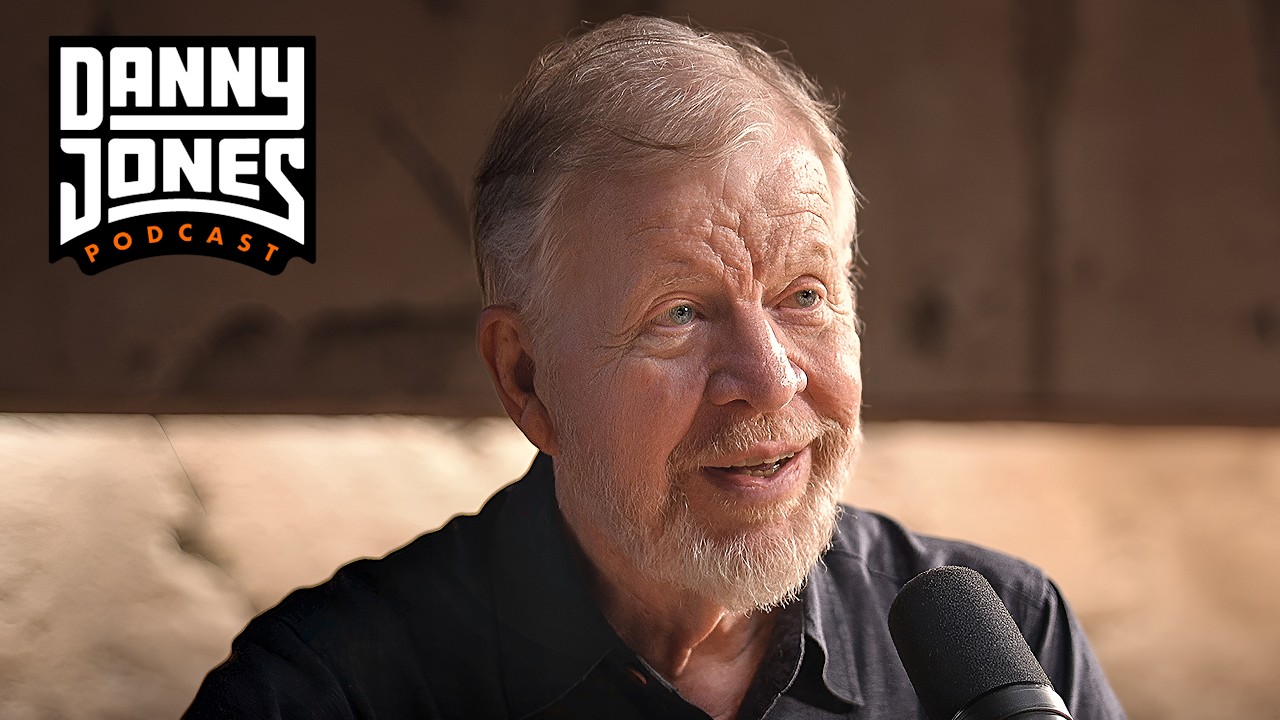
Daniel Everett, a linguist and former Christian missionary, recounts how decades of fieldwork with the Pirahã people of the Amazon led him to abandon his faith, challenge Noam Chomsky’s theory of universal grammar, and argue that language and cognition are shaped by culture rather than innate biological structures.
Everett’s journey from missionary to atheist linguist
Everett became a Christian at 17 through Brazilian missionaries, married their daughter, and trained with the Summer Institute of Linguistics (SIL) to become a Bible translator, which required learning linguistics.
He studied Greek at Moody Bible Institute but not Hebrew; his linguistics training began at 25, and he was assigned to the Pirahã in 1977 after two previous missionary teams failed to crack their grammar.
SIL’s jungle training in Chiapas, Mexico, included a two-week solo survival hike with only a machete, matches, a canteen, and a poncho, which prepared him for Amazon fieldwork.
Over years of living with the Pirahã (six months per year while teaching graduate linguistics), Everett’s scientific training clashed with his faith: he began treating belief in God as a hypothesis requiring empirical testability.
The Pirahã’s radical empiricism — they reject claims not grounded in direct experience — mirrored his growing scientific mindset and pressed him on the lack of evidence for Jesus.
By 1988 he no longer believed but stayed silent until 2002, when emails framing the Iraq War as God’s work prompted him to go public, costing him his marriage (his wife remained a missionary) and straining family ties; two daughters are still missionaries, his son is not.
The Pirahã: a culture built on immediacy, equality, and empirical verification
The Pirahã (≈300 people across 350 miles of river) have no creation myths, no gods, no spirits (only jungle entities they treat as unexplained observations), no numbers, no color terms, no recursion in grammar, and no concept of an afterlife — death is simply “you’re food.”
Kinship terms collapse gender: one word for parent, sibling, grandparent; only son/daughter distinguish sex. Everyone is “sibling”; no one tells anyone what to do; autonomy is paramount.
They change names after major life transitions (trauma, puberty, profound experiences), effectively shedding prior identities — a cultural mechanism for releasing guilt without religion.
They work 15–20 hours a week (hunting, fishing), spend the rest talking, laughing, singing (musical speech using tonal language), and engaging in promiscuity during dry-season full-moon gatherings — the closest thing to ritual.
Alcohol, when available, is consumed by all ages until gone; they know it would destroy them if constant. Sugar introduced by outsiders caused cavities and obesity where none existed before.
They have no interest in outside technology (iPhones, TV, writing) because it serves no practical need; they are self-sufficient and happy on their trajectory.
When dams lowered the river and fish vanished, they stole livestock from a farm on their reservation; pursued by armed men, they ambushed and killed the pursuers with bows — defensive, not aggressive.
Language as cultural tool, not innate module: the recursion debate
Everett’s 1989 Pirahã grammar (400 pages) showed the language lacks embedding/recursion — no subordinate clauses, no “John said he went to town” structures — contradicting Chomsky’s claim that recursion is the universal, innate core of human language.
At MIT (1984–85), Chomsky was initially fascinated but turned hostile when Everett argued Pirahã falsified universal grammar; Chomsky called him a liar and charlatan without visiting the field.
Everett argues language emerges from general cognitive abilities: large brains, symbolic invention, and powerful inference (abduction, induction, deduction) — not a domain-specific “language organ.”
He draws on Roger Bacon (13th c.) and Charles Sanders Peirce (19th c.) who viewed “universal grammar” as logical constraints on communication, not a biological blueprint.
fMRI work with Evelina Fedorenko shows a distributed language network lighting up for any language; polyglots expend less neural effort learning new languages, but the network’s existence doesn’t prove innateness — shoe-tying also localizes in the brain.
Writing and literacy restructure cognition: Pirahã remember every plant, animal, star without writing; Everett’s own memory declined as he outsourced recall to notebooks. Technology (calculators, phones, TikTok) trades deep processing for speed, eroding literacy and long-form thought.
Fieldwork, ethics, and the crisis of Amazonian knowledge
Real understanding requires fluency and years of participant observation; anthropologists who don’t speak the language mistake Brazilian river legends for Pirahã cosmology.
Everett advocates multidisciplinary teams (linguist, ethnobotanist, anthropologist, psychologist, biologist) — costly but necessary before languages and ecological knowledge vanish.
He witnessed three malaria strains simultaneously; fieldwork carries real physical risk, deterring many academics. Chomsky refused to visit, saying “I don’t do that.”
Uncontacted tribes likely avoid outsiders due to historical disease trauma; their languages often relate to contacted groups, but data is scarce — only ~3,500 of 8,000 world languages are documented.
Missionary linguistics has a colonial dynamic: the outsider arrives as teacher, but the community are the true experts. Everett insists the linguist must be the student.
Human origins: Homo erectus had language
Everett argues language began with Homo erectus (~2 Mya), not Homo sapiens (~200 kya), citing: 500,000-year-old joined wood (Larry Barham’s find) requiring coordinated planning, ocean crossings to Flores, and cranial capacity (950 cc) within modern human female range.
Erectus persisted 2 million years — longer than any human species. Neanderthals had larger brains (1,450 cc) but didn’t originate in Africa.
Symbolic invention (arbitrary, conventional signs) is the cognitive breakthrough; other animals use indexes (smell) and icons (images) but rarely create productive symbols.
First sapiens were born into a linguistic world; brain size hasn’t evolved significantly since — culture and external knowledge storage (writing, tech) drove change.
Science, tribalism, and the psychology of belief
Science is a social enterprise vulnerable to hero-worship, tribalism, and ego; Chomsky’s stature made his theory hard to challenge despite indirect evidence.
Everett’s deconversion followed the scientific principle of parsimony (Occam’s razor): no fact in his life required the God hypothesis; authority-based belief is dangerous, method-based belief is self-correcting.
He respects sincere believers (e.g., his ex-wife, jungle priests living in poverty) but rejects prosperity gospel and wealth-seeking clergy as antithetical to Jesus’ teachings.
Fear of death drives much religious psychology; Pirahã don’t fear death — they mourn but return immediately to hunting because survival demands it.
Drugs (LSD, ayahuasca) can produce “transcendent” experiences indistinguishable from dreams; Pirahã treat dreams as valid experiences. Biblical visions (e.g., Revelation) may reflect altered states.
Technology’s next frontier (Neuralink, brain-computer interfaces) may alter brain evolution for the first time in 200,000 years; telepathic communication would still require symbolic structure — essentially language in a new medium.