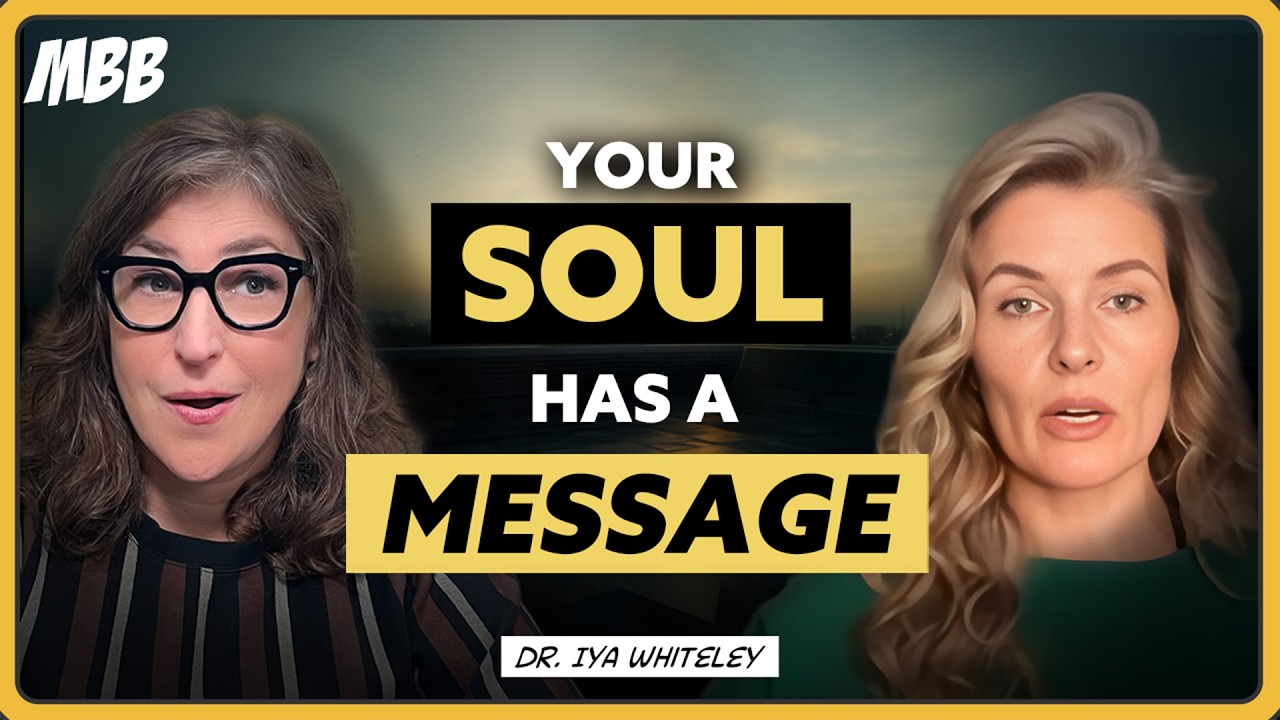
Dr. Ia Whitley spent 25 years working with astronauts, pilots, and people in extreme environments, studying how humans perform at the edge of capability. Her work reveals that we have far more perceptual and intuitive capacity than we typically use, and that fear, stress, and cultural conditioning suppress these abilities. She argues that by cultivating openness, presence, and a state of love and acceptance, we can access expanded forms of perception, including what many would call telepathy, synchronicity, and extrasensory awareness.
How Extreme Environments Reveal Hidden Human Capabilities
Astronauts and pilots routinely operate in situations where survival depends on equipment and training, yet many report intuitive knowing that goes beyond what instruments or logic can explain.
Dr. Whitley found that when she learned to fly, pilots finally opened up to her because she could understand their perceptual world from the inside.
Pilots would sometimes know numerical data about their aircraft that was not displayed in the cockpit, and could not explain how they knew it.
Astronauts train for every conceivable scenario so thoroughly that when something unexpected happens, they are not frozen by surprise, allowing intuitive responses to emerge.
People who self-select for extreme environments, like deep-sea divers who also do aerobatic flying, seem driven by a desire to explore the boundaries of human experience across multiple dimensions.
Many astronauts are multi-talented, combining engineering or medical expertise with arts, music, or philosophy, suggesting that cognitive flexibility and openness are part of what enables expanded perception.
Intuition, Fear, and the Narrowing of Perception
Fear and worry create tunnel vision, shutting down the broader perceptual field that Dr. Whitley calls our “spider sense” or extrasensory capacity.
In martial arts like aikido, practitioners learn to stay open and relaxed, allowing them to sense movement behind them or anticipate an opponent’s action without visual cues.
The same principle applies in surgery, firefighting, and aviation: when experts are calm and not worried, they pick up subtle cues they cannot articulate.
Dr. Whitley studied firefighters who could sense when a building was about to collapse seconds before it happened. Using head-mounted camera footage and non-judgmental debriefing, she discovered they were removing their heat protection from their ears to listen to changes in wind and temperature, a technique they did not even realize they were using.
The key mechanism is that when we drop worry and agenda, the mind’s perceptual capacity opens, whether that manifests as better logic, intuition, or creative problem-solving.
Synesthesia and the 150+ Types of Cross-Modal Perception
Synesthesia is crossmodal sensory perception, such as hearing sounds as colors or feeling sensations in the body when seeing something.
There are over 150 documented types of synesthetic pairings, and people who have one type often have others.
A composer friend of Dr. Whitley’s sees music as shapes and colors, and it is impossible to say whether the music or the visual experience comes first.
Synesthesia serves as a model for understanding how perception is far richer than the five senses we are taught in school.
We actually sense temperature, humidity, kinesthetic movement, and internal body states, but we discount these as “real” senses.
People who report clairvoyance, clairaudience, or other “clair” abilities may simply be picking up on crossmodal cues that most people filter out.
Telepathy, Thought as a Field, and the Power of Thinking
Dr. Whitley argues that telepathy and intuitive knowing are real phenomena that most people experience but are culturally conditioned to dismiss.
Common examples include thinking of someone just before they call, pets knowing when their owners are coming home, or sensing when someone is staring at you, even through a camera.
She personally grew up with the awareness that thoughts have power, influenced by Eastern martial arts traditions that teach directed chi can affect others.
The cultural fear of being “read” mentally is actually a healthy wake-up call, encouraging people to pay attention to what they think.
If thoughts can affect our environment and other people, then negative thinking can spiral into suffering, while positive intention can promote health and openness, consistent with the work of Bruce Lipton and Joe Dispenza.
The Heart Math Institute has measured how far the heart’s electromagnetic field extends and shown that people’s fields interact and influence each other, providing a physiological basis for how mood and state affect those around us.
Synchronicity, Coincidence, and the Field of Consciousness
Dr. Whitley distinguishes between coincidence, which she sees as discounting meaningful patterns, and synchronicity, which reflects a real alignment between our internal state and what unfolds in the field around us.
When we are open and not rigidly attached to a specific path, we become perceptive to clues and shortcuts that appear as meaningful coincidences.
She relates this to aikido and hapkido, where having an intention but remaining flexible allows the field to unfold and opportunities to appear.
If thought exists in a field rather than being localized only in our individual minds, this has profound implications for science, suggesting a layer of reality that current methods cannot yet measure but that experiential research consistently points toward.
Family Constellation Therapy and the Field of Love
Family constellation therapy, developed by Bert Hellinger, involves placing people in a room to represent family members of someone seeking resolution, without giving them any information about the people they represent.
The representatives, who know nothing about the family, report intense emotions and physical sensations that accurately reflect the dynamics of the family system.
Dr. Whitley experienced this firsthand and found it both frightening and profound, as representatives accessed information they could not have known through normal means.
The mechanism appears to be related to creating a field of unconditional acceptance and love, which allows buried emotions and patterns to surface and release.
A woman struggling with chronic procrastination discovered through a constellation that she was carrying her father’s unresolved anger, and by acknowledging and accepting his pain with love, she was able to let it go.
Dr. Whitley connects this to Eastern philosophical traditions and the accounts of saints and mystics who describe a divine presence or field of love that heals and transforms simply through being in a state of acceptance.
Ram Dass (Richard Alpert) described how his guru knew intimate details about his mother’s death that no one could have told him, and in the impossibility of explaining it, something “broke open” in him, leading to a profound spiritual experience rooted in unconditional love.
Communicating with Unborn Souls and the Website Childbirth Visions
Dr. Whitley created a website, childbirthvisions.com, inspired by a similar project collecting “last words” from the dying, where people can submit stories of communicating with their babies before birth.
Some parents report dreams, thoughts, or a felt sense of a specific spirit wanting to come to them before conception or during pregnancy.
She frames this as consciousness existing in a field where souls awaiting birth can be communicated with, not through words but through direct awareness, the same way we might communicate with any consciousness.
This connects to near-death experience accounts, such as those of Buddha Betty, who described seeing souls choosing their bodies and life circumstances before birth, suggesting a realm where time works differently and consciousness exists independently of physical form.
Astronauts, Anomalous Experiences, and the Importance of Reporting
Astronauts have historically been reluctant to report unusual experiences for fear of being considered unfit to fly, including visual phenomena like flashes and streaks caused by cosmic radiation hitting the retina.
Only after astronauts compared notes did they realize the flashes were common and could be explained, but the initial silence around them shows how safety-critical professions suppress anomalous reports.
Dr. Whitley worked with groups like AIAA’s UAP outreach subgroup and pilots like Jake Barber, who reported feeling an overwhelming sense of love and elation when approaching an unidentified object during a transport mission, to whom he attributed a feminine, maternal quality.
She emphasizes the importance of letting people fully embody and share their experiences without filtering out elements that might seem unscientific, because those elements, especially feelings of love, may be essential data for understanding these phenomena.
She argues that experiences with UAP, faith, and consciousness often do not make sense as single moments but build across a lifetime, suggesting that the story of a person’s encounters is written over time rather than in isolated incidents.
Where to Find Dr. Whitley’s Work
Dr. Whitley offers courses including “Born Knowing: How Children Awaken the Sacred in Everyday Parenthood,” “Parenthood as a Spiritual Retreat,” “Cosmic Baby Academy,” and the “Earth Design Series” for newborn development, along with individual and group breathwork sessions.
People can find her on Instagram and Linktree under Dr. Ia Whitley (one word) and on Substack, where she is developing additional content.