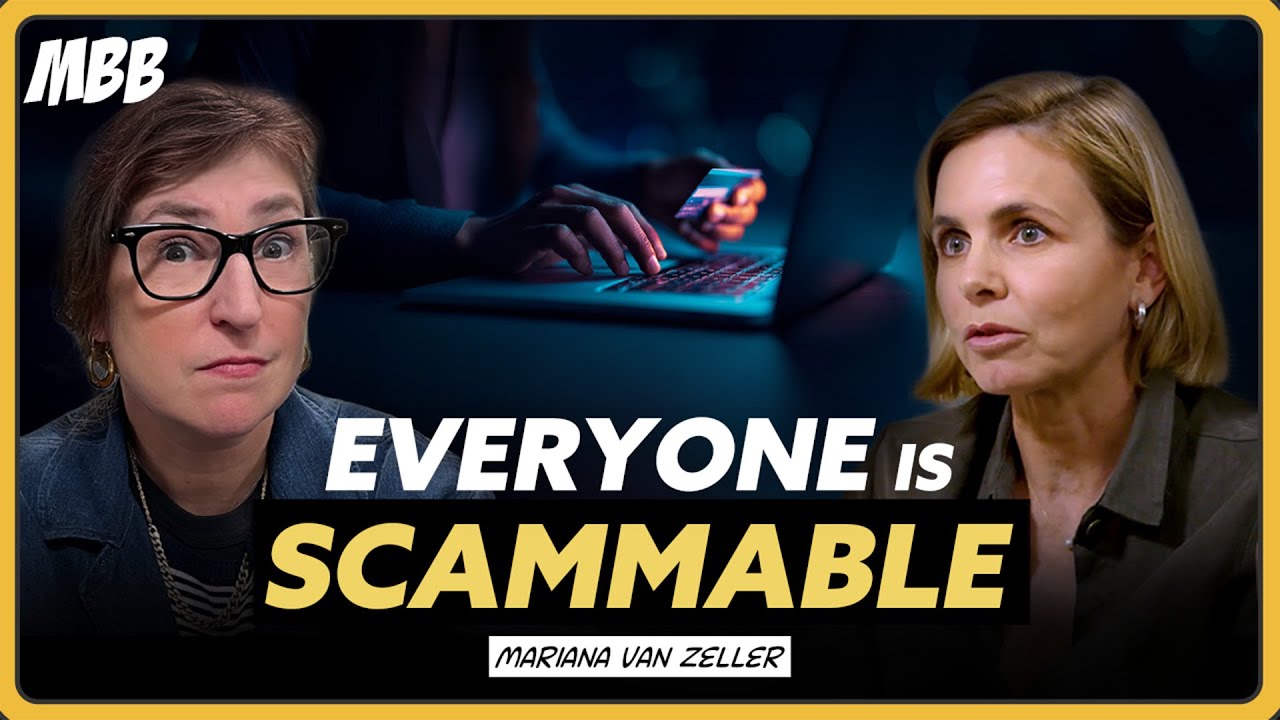
- Mariana van Zeller is an Emmy and Peabody Award-winning investigative journalist who has spent 20 years gaining unprecedented access to the world’s most dangerous black and gray markets — cartel operations, trafficking networks, cybercrime rings, and underground economies that together make up roughly a third of the global economy. She hosts the podcast The Hidden Third and created the National Geographic series Trafficked, the most Emmy-nominated unscripted series in Emmy history. Her work is defined by a radical approach: treating even the most vilified people with empathy and respect, not to condone their actions, but to understand the root causes of crime and find the humanity inside systems most people never see.
Inside Black & Gray Markets
-
Black markets encompass everything illegal — drug trafficking, illegal weapons, scams, assassinations, sex trafficking — while gray markets occupy legally ambiguous territory, such as unregulated pharmaceutical trade or tax-evasion schemes.
- Together they represent roughly a third of the global economy, a staggering scale that most people are unaware of.
- There are no safety regulations, no consumer protections, and no oversight in these markets, making them dangerous for everyone involved — both the people who operate in them and the consumers who resort to them.
-
Broken systems are the root cause, not individual moral failure.
- Van Zeller argues that no one is born wanting to be a criminal; lack of opportunity, poverty, and systemic inequality are what drive people into these lives.
- She points to the drug epidemic that has killed a million Americans in 20 years, undocumented immigration, and the fake pharmaceutical crisis as consequences of systems failing people.
- An estimated 20 million Americans cannot afford life-saving medications and turn to black-market pharmaceuticals, often sourced from unregulated labs in India or across the border in Mexico — many of which contain dangerous chemicals or lack active ingredients entirely, leading to deaths.
-
Fake pharmaceuticals illustrate the human cost of unregulated markets.
- Americans ordering medications online from overseas labs or crossing into Mexico for cheaper drugs often receive products mixed with dangerous substances.
- Van Zeller does not blame consumers for turning to these markets — she blames the systems that make legitimate healthcare unaffordable.
What It’s Like to Interview an Assassin
-
Van Zeller’s approach to gaining access to dangerous people is built on empathy, respect, and genuine curiosity — not confrontation.
- She does not approach subjects first; it can sometimes take years to get someone to agree to an interview.
- Once in the room, she leads with empathy, which she says often elicits humanity in return.
-
Her longest and most affecting interview was with an assassin in South Africa, a man who had been killing people since childhood.
- His parents were killed when he was eight or nine; he ended up on the streets, entered the drug trade, and eventually became an assassin who used drugs to enable himself to kill.
- He moralized his work as targeting only “bad men” and refused to harm women or children.
- When van Zeller asked him whether he realized that what he was doing to other children’s families was exactly what had been done to him, he stopped and said he had never thought of that.
- He told her she was the first person ever interested in his life, and that he had been wanting to find a way out.
- Van Zeller does not credit herself with changing his life, but believes such conversations are essential to understanding and ultimately preventing the root causes of crime.
-
Why do criminals agree to talk to her?
- Ego: Many have never told their stories and are proud of their skills, even if their families don’t know what they do. She interviewed a master counterfeit bill maker in Peru who was proud of being “the best of the best.”
- Impunity: In places like Sinaloa, corruption is so pervasive that subjects see no downside to speaking.
- The need to be understood: These are the most shunned and stereotyped people in society, and many genuinely appreciate someone who is curious about their lives without immediate judgment.
Mexico, Cartels, and the Iron River
-
Decades of the war on drugs, starting with Nixon, have failed to stop the drug trade despite billions of dollars spent and millions of deaths.
- The strategy of targeting cartel leaders (El Chapo, El Mencho) backfires: removing a leader creates infighting, and the person who rises to the top is typically the most violent, because violence is how power is demonstrated in the underworld.
- Each new generation of cartels is more violent than the last. The Jalisco New Generation Cartel (CJNG) under El Mencho used ISIS-style tactics — beheadings, hanging bodies from bridges — to control trade routes to the United States.
-
The “Iron River”: 70–80% of guns found at crime scenes in Mexico originate in the United States.
- There is only one legal gun shop in all of Mexico, located in Mexico City, accessible only to authorized buyers.
- The vast majority of weapons fueling cartel violence flow from the U.S. southbound, a reality that receives far less attention than the flow of drugs heading north.
Escaping a Military Coup in Niger
- Van Zeller and her crew were trapped for nine days during a military coup in Niger while reporting on illegal gold trafficking that funds ISIS and Al-Qaeda.
- They had spent four years convincing National Geographic to approve the trip, and were given a military escort of 40–50 U.S.-trained soldiers to protect them at illegal mining sites.
- On their way back, they learned the coup had occurred — the airport was closed, borders sealed, airspace shut down, and their military escort had left to fight.
- They were surrounded by the very extremist groups they had come to report on, with no way out and no evacuation plan in place.
- During the nine days, they continued reporting — interviewing a gold and human trafficker and a former Al-Qaeda member — both to stay sane and because they hoped to survive and tell the story.
- Other nationalities (French, British, Portuguese, Spanish) were being evacuated from the capital, but van Zeller’s team couldn’t reach it.
- Kader, their local fixer from Mali, fought for them at the airport, yelling at soldiers and putting his own life at risk to get them on a plane.
- After nine days, van Zeller’s husband and team in the U.S. found Portuguese pilots willing to fly into Niger, land for only 20 minutes at night, and extract them.
- As van Zeller was the last person running onto the plane, Kader yelled her name and told her to “say happy birthday to your son” — she had mentioned her son’s birthday to him earlier as part of their human connection.
- She left carrying enormous guilt for the people they had met and for the country’s uncertain future under military rule.
How Romance Scammers Operate
-
Romance scams have grown from a relatively minor issue in 2019 (when van Zeller first pitched the story and executives dismissed it) to a crisis in which $12 billion was stolen from Americans in 2024 alone.
- Scammers operate on dating sites and social media, using profiles of attractive, adventurous, wealthy men — often claiming to be in the military or working on oil rigs.
- They love bomb victims: messaging day and night, finding common ground (shared grief, depression, divorce), and building emotional intimacy over weeks, months, or even years before asking for money.
- They send manipulated photos of themselves with the victim, and even photos of the victim’s printed pictures displayed in the scammer’s home, creating the illusion of a shared life.
- Many victims fall deeply in love without ever speaking on the phone or video calling.
- Even after discovering the scam, many victims cannot let go — they prefer the fantasy to the loneliness of their real lives.
-
The industry is structured and hierarchical, ranging from lone operators to sophisticated criminal enterprises.
- At the bottom: freelancers in internet cafes in West Africa (van Zeller interviewed scammers in Ghana).
- In the middle: organized “dens” with specialized roles — one person finds victims, another builds the romantic connection (the “hook”), and a third delivers the final financial ask (the “closer”).
- At the top: large criminal enterprises, many operating out of Asia, running “pig butchering” operations that combine romance scams with crypto investment fraud.
-
Victims are exploited far beyond the initial financial loss.
- Once drained of money, victims are often recruited to launder money for the scammer — receiving checks and wire transfers from other victims and converting them to cryptocurrency.
- Van Zeller interviewed a woman who laundered thousands of dollars per week for three years, believing the scammer’s story that he had business partners in the U.S. and frozen bank accounts.
- Victims can also be turned into drug mules.
-
Children in these communities now aspire to become scammers, because scammers are the ones driving luxury cars and supporting their families — the only visible path out of poverty.
”Pig Butchering” Crypto Scams
-
Pig butchering is a hybrid of romance scams and cryptocurrency investment fraud, primarily operated out of Southeast Asian compounds in Myanmar, Cambodia, and similar locations.
- These are factory-like operations employing tens of thousands of scammers, many of whom are forced labor — lured from around the world with promises of tech and finance jobs, then having their passports confiscated and being beaten or tortured if they refuse to scam.
- The scam begins with a romantic or friendly online relationship. The scammer eventually shares how they got rich through crypto investing and encourages the victim to try it.
- Victims are directed to websites that look completely legitimate — sometimes they are real platforms that the scammers have hacked into. A $100 deposit appears to grow rapidly, convincing the victim they are making money.
- When the victim tries to withdraw, they are told they must pay fees, taxes, or insurance to “unlock” their funds — and the cycle continues.
- The majority of pig butchering victims are not elderly — they are educated, tech-savvy men and women in their 30s and 40s who would not normally be considered vulnerable.
-
Scammers use sophisticated psychological tactics to maintain trust.
- They send victims money early on to establish credibility.
- They send gifts — flowers, jewelry — to romance scam victims.
- The excuses for why money cannot be withdrawn are elaborate and designed to be either unverifiable or so time-consuming to investigate that the victim talks themselves into believing.
-
AI is rapidly escalating the threat.
- Van Zeller interviewed a woman who believed she was in a relationship with Jon Bon Jovi for over a year, receiving AI-generated videos and messages from someone who looked and sounded exactly like him.
- In pig butchering operations, female models were previously used on video calls, with real-time face-swapping technology overlaying the victim’s desired persona — but the technology was imperfect and required the model to move very carefully to avoid glitching.
- That limitation is gone. AI can now generate entirely fictitious people who look, sound, and behave exactly like the person the victim believes they are talking to — no human model required.
-
Van Zeller herself was the victim of a romance scam while in the middle of reporting on the subject for National Geographic, demonstrating that everyone is scammable regardless of their expertise.
How Smart People Fall Victim
-
A bank CEO in Kansas — a trusted, lifelong banker — was drawn into a crypto scam by someone he met online who portrayed themselves as a wealthy investor with extraordinary crypto returns.
- The scammer used a scarcity mindset, making the banker feel specially selected.
- The CEO began investing his own money, then embezzled from his bank’s customers to keep feeding the scam, ultimately stealing tens of millions of dollars (reported as 24–48 million) before the bank collapsed.
- The psychology is the same at every level: once you have invested even a dollar, admitting you have been scammed means accepting that your judgment, your money, and potentially your freedom are gone — so it is psychologically easier to keep believing.
-
Everybody is scammable. It is not about intelligence or education. It is about the things that matter most to people — love, security, money, belonging — and the loneliness epidemic makes people especially vulnerable to the promise of connection.
Organ Trafficking & the Body Parts Black Market
-
Organ trafficking is a booming industry driven by desperate demand: approximately 17 Americans die every day waiting for organ transplants that never come.
- Americans travel to countries like Mexico and Colombia to purchase organs on the black market, often sourced from impoverished people who are paid a fraction of what the recipient pays.
- Van Zeller interviewed a man called “El Deshuesador” (the Deboner), who claimed to work for the Cartel del Golfo in Mexico and described snatching migrants traveling through the Darien Gap — people whose disappearances would go unnoticed — killing them and harvesting their organs. This account could not be independently corroborated, but van Zeller was transparent about that in her reporting.
-
The body parts trade (distinct from organ trafficking) is a bizarre and thriving black market.
- The “oddities market” operates on platforms like Facebook, where people buy and sell human skulls, bones, tattooed skin (used to make wallets), and other remains.
- Van Zeller interviewed a funeral director who showed her a pen containing a piece of human brain he had purchased online.
- Skulls sell for $1,000–$5,000 or more on the black market.
- In Mexico City, van Zeller filmed people digging up old graves in cemeteries to sell skulls and jaws to medical practitioners and collectors.
-
Surrogacy black markets exploit vulnerable women in countries like Kenya, Ukraine, and formerly India.
- Surrogacy in the U.S. can cost $200,000–$250,000, so people travel to countries where it is cheaper but poorly regulated.
- Women in these countries are promised $5,000–$10,000 to carry a child, but some wake up in the hospital after delivery without the baby and without the payment, abandoned by the operators.
- Some operations function as factories where women are kept in homes and forced to carry children.
-
Van Zeller believes the organ wait list system in the U.S. is “completely broken,” but acknowledges that commodifying human body parts creates its own ethical horrors.
Exotic Pets and Tiger Trafficking
- Van Zeller did an episode on tiger trafficking, which extends beyond the pet trade popularized by Tiger King.
- Tigers are trafficked for luxury goods, traditional medicine (tiger bone is believed in parts of China to have health properties), and exotic cuisine.
- Shark fin soup is a luxury status symbol served at important banquets in China. Shark fins are banned in the U.S., but van Zeller found a restaurant in New York that still served it.
”Honeypot” Sex Espionage
- Van Zeller interviewed a woman who claims to be a Russian “honey pot” — a sex spy recruited by the government to use her sexuality to infiltrate criminal organizations and extract information.
- According to her account, she was trained by Russian intelligence in detailed techniques for using sexual encounters to obtain information and access.
- Van Zeller explored the veracity of her story on her podcast, presenting both the woman’s account and the holes she found in it, allowing listeners to decide.
- Sex espionage is real and widespread: governments regularly recruit escorts and sex workers to infiltrate targets’ homes and extract secrets.
- It remains unclear whether this particular woman was formally trained by intelligence services or was an independent operator who later framed her work as state-sponsored.
The Anna Delvey Interview
- Van Zeller interviewed Anna Delvey (Anna Sorokin), the “fake heiress” who scammed New York’s elite by posing as a German billionaire’s daughter, staying in hotels for free, forging documents to obtain loans, and convincing friends to fund lavish trips on their credit cards.
- Delvey served time in prison and remains under monitoring with an ankle bracelet due to an immigration case.
- The interview was one of the most difficult van Zeller has ever done. Delvey refused to discuss her crimes, portrayed her former friends as “losers,” and answered most questions with “I don’t know” or “I don’t want to talk about that.”
- When van Zeller asked why she had come on the podcast if she didn’t want to talk, Delvey said, “I don’t know either, because you’re not paying me.”
- Van Zeller found the interaction uncomfortable and confrontational — the opposite of her usual interviews, where even assassins and traffickers open up about their lives and express remorse.
- Delvey later appeared on another podcast and spoke more freely, seemingly to demonstrate that van Zeller’s interviewing style was the problem.
- Van Zeller sees a deep pathology in Delvey’s inability to acknowledge wrongdoing or express empathy for those she harmed, and notes that psychologists who listened to the episode have commented on possible sociopathic traits.
Finding Good in Evil
-
Despite spending two decades in the darkest corners of the world, van Zeller maintains a profoundly positive view of human beings (though not of systems or governments).
- She believes there is good and bad in everyone, and that it is harder — but more important — to find the good.
- She has found more hope and equality in the black market than in many legal markets, because human connections persist even in the worst circumstances.
- Her work is driven by the belief that understanding root causes — through genuine conversation, even with people we don’t agree with — is the only way to prevent crime and violence.
-
She lives in a time of epic inequality: 10% of the world lives on less than a dollar a day. Many of the choices people make in black markets are the result of having no other choices.
- Her message is not to vilify the people in these systems, but to ask what those of us with privilege and opportunity are doing with what we have been given.
-
The work is also deeply humbling — both for van Zeller and for the audience. Most people do not want to confront these realities, but understanding them reveals not only the mechanics of crime but also our own vulnerabilities, and the shared humanity that connects everyone, regardless of which side of the law they fall on.