-
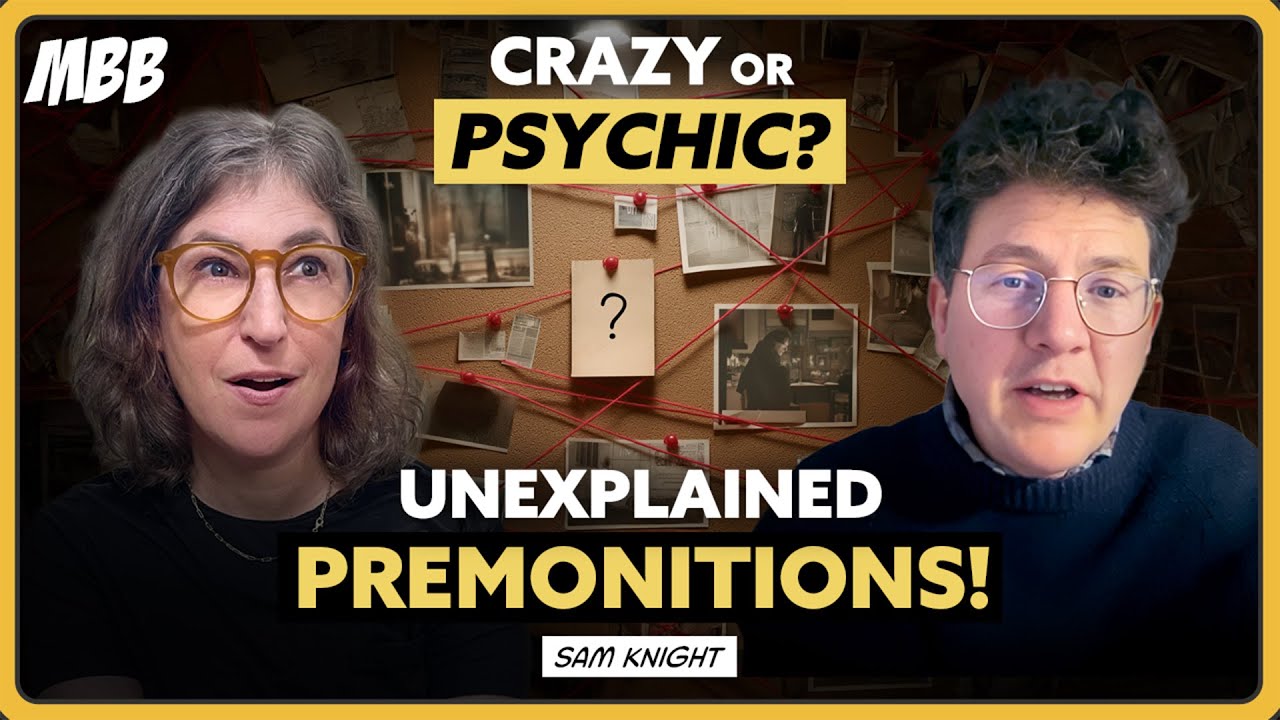
The Premonitions Bureau was a real, short-lived British experiment (1966–1967) that tried to collect the dreams and forebodings of the general public at mass scale, look for patterns in them, and see whether disasters could be predicted — and possibly prevented — before they happened. It was led by Dr. John Barker, a psychiatrist at a large mental hospital on the England–Wales border, and the story is told in journalist Sam Knight’s book The Premonitions Bureau: A True Account of Death Foretold. The episode explores what the bureau found, what it might mean about the human mind and time, and the deeply unsettling personal consequences for Barker himself.
-
The Aberfan disaster (October 1966) was the catalyst. A massive pile of coal waste above the Welsh village of Aberfan, saturated by weeks of rain, slid down a mountainside and buried a school, killing 116 children and about 28 adults. Barker went to the village the next day and began collecting testimonies — especially from children who had refused to go to school that morning, told their parents about dreams of “something black” coming over the school, or drawn pictures eerily resembling the disaster before it happened. He placed a call in the London Evening Standard asking the public whether anyone had premonitions of Aberfan; hundreds of responses came in, many with striking specificity (a woman who smelled “earthy and decaying” an hour before the slide; a man who saw the word “Aberfan” in white letters against a black background two nights prior). The concreteness of these reports led directly to the formation of the Premonitions Bureau.
-
The bureau operated on a simple but radical premise: take seriously what is usually dismissed as madness. Barker was deputy superintendent of a roughly 1,000-bed mental hospital during a period of enormous change in psychiatry — the first antipsychotic drugs had only recently become available, asylums were being unlocked, and patients who hadn’t spoken in decades were suddenly engaging with the world. In that atmosphere of possibility, Barker reasoned that the “ravings” of patients hospitalized for paranoid schizophrenia or nervous breakdown might contain genuine precognitive information. The bureau invited the public to mail in dreams, visions, and feelings about future events, then tracked whether any matched real-world outcomes over 18 months.
-
Several individual seers emerged with startlingly accurate predictions.
- Alan Hencher, a switchboard operator at the post office, began having premonitions after a car crash and head injury in his mid-20s. He called Barker on March 21, 1967, describing a plane crash over mountains with “123, possibly 124” people aboard. Thirty days later, a passenger aircraft attempting to land in Cyprus in bad weather crashed, killing 124 people. Hencher also experienced severe headaches before a major train crash he had no way of knowing about. His premonitions were accompanied by intense physical pain and psychological distress — he described the torment of knowing something terrible was coming but having no one who would believe him.
- Miss Middleton, a music and dance teacher in North London, had experienced premonitions since childhood (she once “knew” her piano teacher was unwell; he later committed suicide). She described premonitions as simply “knowing the answer in a spelling test” — seeing words, numbers, or images before they materialized. She had a suffocating feeling on the morning of the Aberfan disaster and became one of Barker’s most consistent correspondents. She also called the bureau three times the day before Robert Kennedy’s assassination to warn that “an assassination is coming.”
- The Charing Cross train crash prediction was the one Knight found most inexplicable: someone sat down at their kitchen table on a Wednesday morning, wrote on a piece of paper that a train crash would occur at Charing Cross, put it in the mail, and the crash happened that Sunday night. Hencher, meanwhile, was in agony in the post office sick bay at exactly 9:15 when the train came off the tracks.
-
Barker was also deeply interested in whether you can literally be scared to death — the nocebo effect. His entry into premonitions research began with a 1963 case in the British Medical Journal: a physically healthy 43-year-old woman in Labrador, Canada, died of an adrenal hemorrhage after a routine gynecological surgery. She had told a nurse that a fortune teller had predicted she would die at 43; she died a week after her 43rd birthday. Barker followed the work of Harvard’s Walter Cannon on the physiological effects of fear and curses, collecting similar cases and eventually publishing a book called Scared to Death. The question haunted him personally: if someone tells you you’re going you going to die, does that make it more likely to happen?
-
The predictions about Barker’s own death became an eerie throughline. Hencher called him one night in 1967 and said, “I have a prediction — it’s you.” He described Barker surrounded by darkness, asked whether he had gas heating (he didn’t) and what color his car was (dark green). Barker wrote a private memo: “Hencher has been right about Aberfan. He’s been right about the plane crash. Is he right about me?” Later, after the Charing Cross crash received wide publicity and Barker appeared on television, Hencher wrote again: “There’s a kind of blackness around you on the TV.” Barker then asked Miss Middleton whether he was going to die; she began having dark dreams of her mother (a family symbol of death) and of Barker getting into a car with her mother and driving away. These escalating warnings coincided with a devastating fire at Barker’s own hospital in 1968, in a locked female ward, that killed 24 people — despite patients having warned nurses for days that a fire was coming.
-
The episode situates the premonitions bureau within a broader history of prophecy and precognition in British culture. Knight traces a lineage from the “second sight” traditions of the western Isles of Scotland (where premonitions were routine and communal in the 16th–17th centuries) through the spiritualist movement of the late 19th and early 20s centuries, the supernatural beliefs that flourished during the Blitz, and the 1960s countercultural openness to non-materialist ideas. Playwright J.B. Priestley, influenced by quantum physics, wrote that modern humans live in “the most impoverished version of time” — shredding at both the subatomic and planetary levels while insisting time works only in the narrow middle.
-
The neuroscience and physics perspectives offered in the episode suggest possible (though speculative) frameworks. William James argued that while the conscious mind is bound to a specific present, the unconscious may have a different relationship to time. Theoretical physicists describe reality as a field of probability — an undulating particle-wave field — and the brain may be capable of computing across different probability states. Near-death experiencers frequently report seeing things outside normal temporal sequence. The episode raises the possibility that what we call “premonitions” might reflect a sensitivity to information that exists in a shared field of consciousness — what some traditions call the Akashic record — rather than a supernatural gift possessed by a select few.
-
A key tension in the episode is the problem of false positives and the burden of knowledge. Premonitions are overwhelmingly wrong; the bureau’s challenge was distinguishing signal from noise. But even accurate premonitions create an impossible dilemma: if you warn people and nothing happens, you’re discredited; if you stay silent and something happens, you carry the guilt of not having spoken. Hencher described this as a torment to the nervous system. The episode also notes that premonitions tend to cluster around distress and tragedy — the idea being that disturbance or suffering “vibrates at a different frequency” and draws attention in ways that mundane positive events do not.
-
Knight’s own perspective shifted through the research. He came to see premonitions not as exotic or foreign but as deeply embedded in ordinary British family life — the “Eastern European grandmother” or family member who just knew something was wrong, thousands of miles away, and was right. He describes receiving emails from people burdened by precognitive experiences, not seeking validation but seeking relief — a place to put knowledge they can’t use and can’t discard. He draws an analogy to the confessional: a culturally sanctioned space where inexplicable experiences can be spoken aloud and released.
-
The episode closes by noting how much more is now known about precognition than when Knight first wrote the book. Advances in neuroscience, the study of different timelines and probability states, and the growing body of documented cases (including from non-verbal communities and telepathy research) all suggest that the questions Barker raised in 1966 remain urgent and unresolved. The fundamental puzzle endures: if the human mind can sometimes access information outside the present moment, what does that mean about the nature of time, consciousness, and our responsibility to act on what we know?
Proof of Seeing The Future?! Shocking Premonitions & Dreams of DISASTERS That Came True | Sam Knight
Bialik's Breakdown • • 1h19 → 6 min • #13