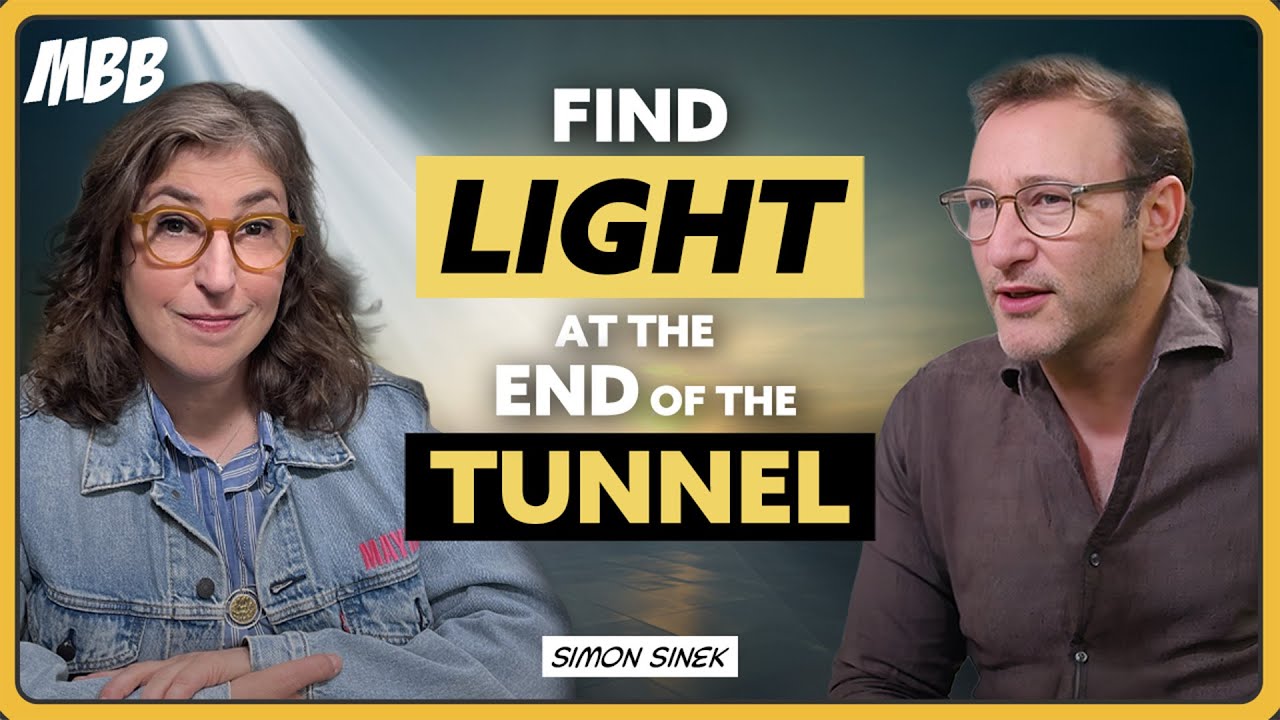
Simon Sinek is a bestselling author (Start with Why, Leaders Eat Last, The Infinite Game), speaker, and optimist whose work helps people find purpose, strengthen human connections, and navigate modern challenges. He argues that most of our problems—in work, relationships, and society—stem from applying a finite mindset (playing to win, seeking short-term results) to infinite games (career, relationships, health, business), which have no finish line and are played to keep going as long as possible.
The Infinite Game vs. Finite Games
Finite games have known players, fixed rules, and an agreed-upon objective with a clear winner and loser—like a job audition or a football match. They have a beginning, middle, and end.
Infinite games have known and unknown players, changeable rules, and the objective is to stay in the game as long as possible—like career, relationships, health, and business.
When you play an infinite game with a finite mindset (e.g., trying to “win” at career or parenting), the predictable outcomes are decline of trust, cooperation, and innovation.
Parenting has become a finite game in this generation—parents compete over whose child reads fastest or whose milk lets down quickest—when it should be infinite: the goal is to raise a human being over a lifetime, not to win at any single milestone.
A classic example: a young person refuses a gap year because they fear “falling behind” their peers. In reality, the maturity and wisdom gained would serve them far better long-term. The anxiety comes from treating life as a race with a finish line.
Optimism Is Not Blind Positivity
Sinek defines optimism as the undying belief that there is light at the end of the tunnel, even when you don’t know how long the tunnel is. It is not rose-colored glasses or denial of difficulty.
He draws on Viktor Frankl’s observation from Auschwitz: people in the same horrific circumstances had wildly different will to live based on their internal mindset.
Happy people live longer. Stress—not diet or lack of exercise—is the primary killer, driving inflammation and disease. Sinek’s biological age tested 22 years younger than his chronological age, which he attributes to strong friendships, adequate sleep, and general happiness rather than obsessive health optimization.
Stress stacking is a real danger: combining intense workouts, saunas, cold plunges, intermittent fasting, and wearable-device anxiety every day creates more physiological stress than it relieves. Sinek removed his wearables because the daily monitoring was harming his wellbeing.
Longevity-obsessed people often score poorly on inflammation markers because they pile on stressors and then add the cortisol of worrying about the data.
Why Finding Purpose Matters More Now
78% of people don’t like their jobs. Only a small fraction feel inspired or fulfilled at work. Most relationships—and most corporate cultures—are “meh.”
Historically, people found belonging and sense of purpose outside work: through church, bowling leagues, community organizations. These have largely disappeared over the past 40–50 years.
People are now demanding that work provide community, purpose, and even political alignment—a significant shift from the old model where you just went to work to make a living.
The old social contract (company loyalty in exchange for employee loyalty, symbolized by the gold watch at retirement) has been replaced by routine mass layoffs, even when companies are profitable. This began in the 1980s and is now normalized.
Sinek is optimistic because demand for his work exists at all—people want something different from the old Jack Welch / Milton Friedman model of treating people as line items. The Business Roundtable now talks about purpose. Every company has a purpose statement. Whether they believe it is another question, but the social pressure to have one signals movement in the right direction.
AI, Technology, and the Human Element
New technologies always cause panic. People said the same things about the internet, the light bulb, and robotics. Some fears are valid; some are overblown. The truth is always in the balance.
AI is the new “reskill” moment for knowledge workers. Blue-collar workers were told the same thing in the 70s and 80s when robotics arrived. Now it’s white-collar workers’ turn. The jobs will shift, not disappear—when the IRS digitized taxes, they saved zero dollars because they had to build massive IT departments to replace the accountants.
Sinek’s deeper concern: we are obsessed with results and metrics, and we’ve forgotten the value of process. He wrote multiple books not because the books made him smarter, but because the excruciating process of organizing his thoughts did. If AI writes your book, you have a product but you haven’t grown.
The same applies to relationships: you can ask ChatGPT to write an apology, and it may be a good apology, but if you didn’t do the internal work, you haven’t built the relationship skill. You’ve solved a finite problem (make the anger go away) without doing the infinite work (learning how to be a better partner).
Human skills will always matter. AI can solve finite problems, but the infinite game of being human—building trust, navigating conflict, fostering connection—requires doing the work yourself.
On social media and AI relationships: the analogy should not be drugs (where you abstain) but eating disorders (where you learn a healthy relationship). You cannot abstain from technology; you must learn to have a healthy relationship with it.
Young people are aware of the problem. They are the ones starting IRL meetup companies, building landlines to reduce phone dependency, and in Australia, many 13–14-year-olds supported the social media ban for their age group. They know they’re lonely and are asking for help.
Human Skills Are Not Innate—They Must Be Learned
It is easy to be a dog or a cat. It is very hard to be human. Most people are bad at listening, confrontation, giving and receiving feedback, and having difficult conversations. These skills must be taught and practiced.
Sinek works to teach human skills in workplaces because they produce better teamwork, higher trust, greater innovation, and higher engagement.
Barry Wehmeyer (American manufacturing, ~15,000 employees, $3B revenue) is his favorite example. They teach human skills to factory workers. The result: not only did teamwork improve, but participants reported better relationships with their spouses and kids—because the skills are universal.
During the 2008 financial crisis, when other companies did mass layoffs, Barry Wehmeyer implemented mandatory furloughs for everyone from CEO to secretary. The CEO said: “Better we should all suffer a little than any of us should suffer a lot.” People who could afford more time off donated their salaries to help those who couldn’t. People still talk about it 15 years later. The company has never offshored a job.
Female Leadership and Empathy
Men and women are different, and treating them as the same is unfair. People respond differently to male and female leaders.
Sinek tells the story of a female Air Force colonel deployed to Iraq who was given a failing command. She tried to succeed through force of will, cried herself to sleep every night for six months, and finally admitted failure. She then changed her goal: instead of trying to succeed, she focused on making everyone’s time there as good as possible until they could go home. This shift—from finite (win/lose) to infinite (take care of the people)—made her wildly successful.
One soldier told her: “When a male officer yells at me, it rolls off my back. When you yell at me, I feel like my mom is yelling at me.” People carry different histories and respond differently.
The golden rule should be updated: treat people how they want to be treated, not how you want to be treated. A good leader learns each person’s needs and adjusts their style, even if it’s uncomfortable.
Mass layoffs have long-term ripple effects beyond the people let go. Survivors operate in fear, keep their heads down, take no risks, and do the bare minimum. The organization loses innovation and engagement for years.
Leadership Is a Lifestyle, Not a Title
Leadership is not an event (getting a promotion). It is a lifestyle, like parenting or fitness. You don’t stop being a leader when you leave work, just as you don’t stop being a parent when your kids are at school.
A leadership lifestyle means accepting responsibility to help people rise, learning human skills (listening, confrontation, feedback) on your own time and sometimes with your own resources, and committing to the process even when it’s uncomfortable.
Like exercise: if you work out 20 minutes a day, 100% of people get into shape—no one can tell you exactly when. You trust the process. Leadership works the same way.
The first criterion for being a leader, according to a Marine Sinek spoke with: you have to want to be one. It starts with a choice.
Failure and Identity
Sinek’s last chapter in Start with Why is called “Find Your Why” but he has described himself as having been a failure. He had to crash—watch his marketing company go to zero—before he could separate his identity from his goals and plans.
Most people conflate who they are with what they do or what they’ve achieved. When the plan fails, they feel like a failure. Sinek had to learn that his goals and plans had nothing to do with his worth.
Like the colonel in Iraq, he had to accept that his personal plan wasn’t working before he could embrace an infinite mindset and find his actual calling.
Passion Is an Output, Not an Input
Passion is not something you “have” or “find.” It is an output—it emerges when you do things that light you up. Everyone is passionate about something; the key is identifying what.
It is dangerous to define yourself by what you do: “I’m a dancer” (what if you break your leg?), “I’m an author” (what if you never write again?). These are things you do, not who you are.
Who you are is the common denominator across all the things you do. Sinek is an optimist whether he’s writing, speaking, being a friend, or leading a team. The medium changes; the essence doesn’t.
One person can find fulfillment in wildly different ways—neuroscience and the arts, for example—and both are authentic expressions of the same underlying drive. The question is not “What do I want to do with my life?” but “Who am I, and what opportunities exist for someone like me?”
You can change your mind. All three hosts have had careers that went in wildly different directions from what they originally planned.
Letting Go with Dignity
In both breakups and firings, the other person usually knows it’s ending. If it comes as a shock, someone wasn’t doing their job.
Good leaders let people go with dignity: acknowledge their talents, explain that it’s not the right fit, express genuine desire for their happiness—the same way you’d want a good breakup to go.
Most companies do the opposite: they humiliate people on the way out, listing failures to protect themselves legally. This destroys self-confidence and is deeply unnecessary.
Sinek’s advice: don’t bring facts to an emotional gunfight. Firing someone is an emotional event and must be treated as one.
How to Cultivate Optimism
Stay connected to optimists. Hang out with optimistic people, read optimistic content, watch optimistic videos. If you surround yourself with pessimists, pessimism will conquer.
Pessimism is not inherently bad, but if you’re struggling, pessimism will not help you. Optimism doesn’t mean being blind to problems—it means believing the future can be bright and looking for goodness even in difficulty.
Sinek’s ultimate reason for optimism: we’re tending toward the good. It’s sometimes a bumpy road, sometimes a step back, but the trajectory is positive. Wars end. Peace lasts. Human beings, especially young ones, are aware of the problems they face and are taking steps to address them.