-
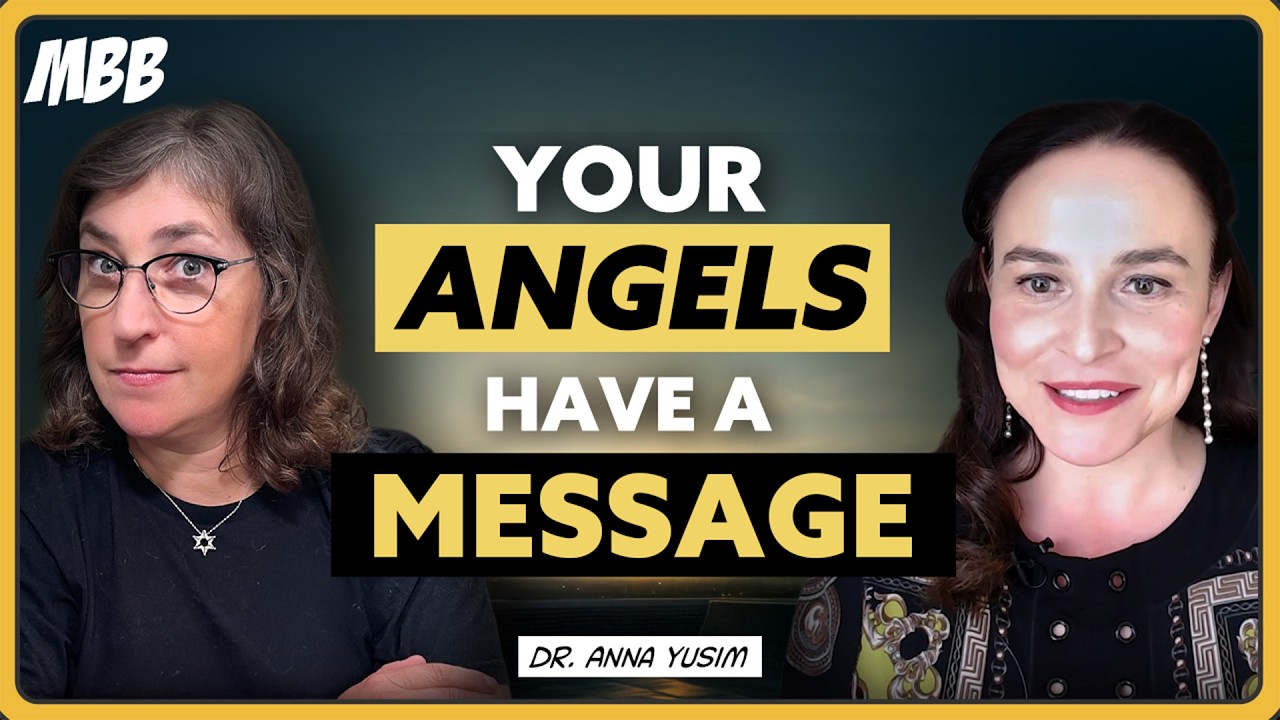
Dr. Anna Yusim is a board-certified psychiatrist trained at Stanford, Yale, and NYU, a clinical assistant professor at Yale Medical School, and co-founder of the Yale Mental Health and Spirituality Program and Center, which bridges the medical school and the divinity school. She is also the author of Fulfilled: How the Science of Spirituality Can Help You Live a Happier, More Meaningful Life and works with clients including Fortune 500 CEOs, Olympic athletes, and A-listers. She has traveled to over 70 countries studying spiritual traditions to find what can be brought into Western psychiatric practice to transform lives.
- The episode explores how spirituality, intuition, and mental health are deeply interconnected, challenging the misconception that science and spirituality are separate domains. Dr. Yusim argues that spiritual beliefs and practices consistently show positive effects on physical and mental health, including reduced suicidality, depression, anxiety, addiction recovery, and even cancer recovery, though the mechanisms are nuanced and not always what people assume.
- A key theme is that intuition is an epiphenomenon of consciousness and the voice of the soul, a connection to the part of us that already knows what is best. Dr. Yusim explains the four “claires” (intuitive pathways): clairvoyance (seeing in the mind’s eye), clairaudience (hearing a voice or information), clairsentience (feeling something in the body), and claircognizance (just knowing without knowing how). She emphasizes that everyone has intuitive capacity, but people differ in their primary modality and degree of development.
- The conversation covers unconscious self-sabotage patterns (what Freud called repetition compulsions and what Dr. Yusim calls “soul corrections”), intergenerational trauma patterns, family constellation therapy, the mechanics of manifestation and frequency raising, the role of psychedelics in spiritual healing, mediumship, spirit guides and guardian angels, the higher self, karmic patterns, and practical guidance on developing intuition and doing inner work.
-
Spirituality vs. religion and their health effects
- Research shows that regular church attendance reduces suicide by up to five times, but the primary factor is a moral prohibition against suicide, not community, healthy living, or connection to the divine (based on Tyler VanderWeele’s research at Harvard’s Center for Human Flourishing). The benefit does not extend uniformly; for the LGBTQ+ community, churchgoing can have the opposite effect due to judgment and exclusion.
- Over the past 25 years, the “spiritual and religious” and “spiritual but not religious” groups have been growing, while the “religious but not spiritual” and “neither” groups are declining. People are moving away from organized, authoritative religion toward personal spiritual connection through yoga, meditation, nature, psychedelics, or other secular means.
- Dr. Yusim defines spirituality broadly: it can be religious or secular, and what matters is connection to one’s inner essence or the divine, however one defines it.
-
Manifestation: two pathways and the science behind “raising your frequency”
- There are two primary ways to manifest: (1) deliberate action and intent (the “masculine” approach of setting goals and working hard) and (2) being and receiving (the “feminine” approach of embodying joy and peace, raising your vibrational frequency, and surrendering to receive from the divine).
- “Raising your frequency” is both a spiritual concept and a metaphor for moving from contraction (fear, anger, jealousy, depression, ego states) to expansion (joy, peace, purpose, gratitude, awe). The things that lower frequency are unprocessed negative emotions and ego manifestations. The things that raise it are purpose-driven action, service, gratitude, and awe.
- At the mechanistic level, spiritual practices like meditation have been shown to regulate hormones, balance the sympathetic and parasympathetic nervous systems, and regulate the vagus nerve. Researchers like Dr. Mark Potenza at Yale and Dr. Lisa Miller at Columbia have identified specific brain regions activated during spiritual experiences such as prayer, gratitude, and alignment with purpose.
- Unconscious core beliefs can block manifestation even when conscious work is done. Unconscious reprogramming through psychoanalysis, hypnosis, psychedelics, or trauma work is often necessary to remove these blockages.
-
Unconscious patterns, self-sabotage, and intergenerational trauma
- Freud’s concept of the unconscious mind explains why people self-sabotage despite conscious desires. Dr. Yusim calls these patterns “soul corrections” or tikkun—challenges that recur in a person’s life despite their best efforts to change them.
- Examples include people who want faithful relationships but keep cheating, or people who want stable partners but keep attracting emotionally unavailable or destructive individuals. These patterns often stem from (1) not having a healthy model from one’s upbringing, (2) unconscious fear of commitment or success, or (3) intergenerational patterns passed down through families.
- Intergenerational patterns can be psychological, physiological (epigenetic), and energetic. Children absorb information from parents and ancestors even when secrets are never consciously revealed. Bert Hellinger’s family constellation therapy and genograms are tools for identifying and resolving these patterns. The goal is to make the unconscious conscious, take responsibility, and stop passing the pattern to the next generation.
- People tend to either internalize blame (self-blame) or externalize it (victim mentality). Healthy growth requires balancing these tendencies—taking responsibility where appropriate while recognizing factors beyond one’s control.
-
Energy dynamics in relationships and families
- In family conflicts, the goal should be rectification and safe dialogue whenever possible. Separation is appropriate when there is danger, abuse, or when someone specifically requests it with valid reasons.
- “Energy vampires” are people who take energy from others, often pairing with caretakers in a symbiotic dynamic. The remedy is learning to set strong spiritual, energetic, and physical boundaries. When boundaries are established, the energy vampire often withdraws because they can no longer receive what they need.
- Dr. Yusim notes that someone cannot be an energy vampire unless you allow them to take your energy—boundaries are the key protective tool.
-
The four claires: intuitive pathways for receiving extrasensory information
- Clairvoyance: seeing images, visions, or symbols in the mind’s eye.
- Clairaudience: hearing a voice or information that is not one’s own internal monologue. Some people routinely hear information at what Dr. Yusim describes as the quantum level. This can be a powerful intuitive capacity or, when uncontrolled and overwhelming, can be diagnosed as schizophrenia or psychosis.
- Clairsentience: feeling something in the body—an emotional or physical knowing.
- Claircognizance: just knowing something without knowing how or why. This is Dr. Yusim’s own primary modality.
- Dr. Al Powers at Yale is studying the difference between healthy voice hearers (psychics/intuitives) and people with schizophrenia. The key difference appears to be the ability to control the input—psychics can turn it on and off and use it in service of themselves and others, while schizophrenics cannot.
- Intuition can come from many sources: the infinite field of knowledge, the Akashic Records, one’s own higher self, spirit guides, or other dimensions. Where you “tune” your attention determines what information you receive.
-
Types of intuition and how to develop them
- Type 1 (instinct/pattern recognition): Fast, automatic knowing based on pattern recognition—what Daniel Kahneman described as the “fast thinking” system. Example: immediately reading a doctor’s facial expression.
- Type 2 (energetic reading): Knowing something about a person or situation without knowing why—such as sensing when someone is staring at you from behind.
- Type 3 (nonlocal intuition): Twin telepathy, a mother knowing something is wrong with her child miles away—information that transcends physical proximity.
- To develop intuition: do your conscious, rational work (pro/con lists, research), then set the intention to receive guidance, ask for help from whatever source resonates (ancestors, God, the divine), and become open to receiving insight through synchronicity, intuitive hits, unexpected advice, dreams, or new perspectives. The logical mind sees only about 200 meters ahead (like headlights at night), while intuition can access information beyond what is immediately visible.
-
Mediumship, psychics, and accessing information from beyond
- Dr. Yusim has had patients who connected with deceased loved ones through mediums, and these experiences were generally positive or very positive, especially for people stuck in grief. However, she cautions that not all mediums are legitimate or talented—vetting through trusted sources is essential.
- Information from mediums and psychics varies in specificity and quality. Some provide deeply healing, specific information; others offer generic, clichéd messages. Dr. Yusim warns against addiction to psychics and mediums, which she identifies as a pitfall of spirituality—it can become an addiction to control and certainty, giving someone else authority over your life decisions.
- Different psychics read from different sources: some read your third eye (reflecting back your own intuition and beliefs—which can feel powerful but may just be an echo chamber), while others read from the crown (accessing information from the divine or spirit guides). This means two different psychics can give two different readings of the same situation.
- Dr. Yusim’s own transformative mediumship experience involved Teresa Caputo, the Long Island Medium, who revealed that Dr. Yusim’s deceased grandfather had intervened when her brother was near death in a car accident, sending him back to life to support her father. This reframed 35 years of family trauma and expanded her understanding of the event in a way that felt immediately true and integrative.
-
Spirit guides, guardian angels, and the higher self
- Dr. Yusim believes most people have some form of angelic or guardian protection, though the degree varies based on purpose and need. Different guides may have different domains (work, love, health) and different perspectives—they are not necessarily synchronized toward a single goal.
- The higher self is the part of us that already knows what is best in any given situation. It is the more evolved, conscious part that has lived through and metabolized what you are currently experiencing. It may be free from unconscious programming and karmic residue, and if one believes in past lives, it is the transcendent soul that persists across lifetimes.
- Dr. Yusim’s personal intuitive practice involves asking questions of her guides, though she does not know the specific source of her intuitive information—whether it comes from guides, God, or herself.
-
Psychedelics as tools for spiritual healing
- Psychedelics (psilocybin, LSD, ayahuasca, ketamine) offer both novel neurobiological mechanisms for treatment-resistant conditions (alcoholism, depression, anxiety, OCD) and a connection to spirit that many people find innately healing.
- Research at Johns Hopkins and NYU shows that the greater the mystical or spiritual experience during a psychedelic journey, the greater the mental health benefit (anti-anxiety, antidepressant effects). This suggests that spiritual connection itself is a key mechanism of healing.
- Dr. Yusim shares case examples: Paul Stamets, a lifelong stutterer, took a high dose of psilocybin and never stuttered again; a man named Brandon completely resolved severe OCD with a high dose of LSD followed by six months of microdosing.
- Psychedelics flood the system with serotonin and oxytocin, creating a neurochemical foundation for ease and openness. They may also potentiate longer-term positive decisions and experiences.
-
Breathwork, fasting, and transcending physical limits
- Brandon, a world-record breath holder (nearly 30 minutes underwater), taught Dr. Yusim and the hosts breath-holding techniques in Antarctica. Dr. Yusim went from two minutes to four and a half minutes after a few days of training.
- The mechanism involves maximizing oxygenation through specific breath work, then entering a state of deep relaxation that is essentially metabolic hibernation—slowing all body systems to reduce oxygen demand. This is similar to what advanced yogis do.
- Fasting (particularly the Jewish 25-hour dry fasts of Yom Kippur and Tisha B’Av) is presented as a spiritual practice that allows the body to rest and detoxify while the focus shifts inward. In Kabbalistic tradition, the physical meals are replaced by five spiritual meals based on prayers throughout the fasting period. Fasting traditions in other cultures (e.g., Russia) have been used for cancer reversal and healing, though dry fasting requires being in nature and is not safely practiced in the US.
-
Kabbalistic framework: proactive vs. reactive growth
- A central Kabbalistic teaching is that we grow in two ways: proactively (making conscious choices to be our best selves, acting with moral courage and integrity, going against our default nature) and reactively (through pain and suffering when we fail to grow proactively). The more proactive growth you do, the less suffering is required.
- This framework removes the polarity of good and evil and reframes challenges as opportunities for growth rather than punishment. It emphasizes human agency and partnership with the divine—we are not passive recipients of God’s will but active participants who must do the footwork.
- Related to prayer: Dr. Yusim advises praying to be open to God’s will rather than for specific outcomes, since we see only a small part of reality and may not know what is truly best for us.
-
Why the law of attraction may not be working
- Dr. Yusim identifies four reasons: (1) you weren’t clear about what you asked for, (2) you didn’t truly believe you could have it, (3) what you asked for may not be in the highest and greatest good of all involved, or (4) you weren’t able to receive it when the universe tried to give it to you.
- The Kabbalistic formula for manifestation has three components: (1) do your maximum work in the physical world, (2) do your maximum work in the spiritual world (prayer, self-improvement, becoming the person who can receive), and (3) have ultimate certainty.
- Dr. Yusim emphasizes accountability: examine what you can control (how you spend your time, what you consume, basic health habits like sleep, nutrition, exercise) and surrender the rest, remaining open to receiving something even greater than what you think you want.
-
Dr. Yusim’s personal spiritual journey
- She was a committed materialist through her undergraduate, medical school, and residency training. Spirituality was the furthest thing from her mind. Her awakening began toward the end of her psychiatry residency when she became interested in the concept of a soul after meeting someone she thought was her soulmate.
- A pivotal moment came when a psychic approached her in an ice cream shop in New York City and revealed deep truths about her life—including the name of a crush—that she had no possible way of knowing. This challenged her materialist worldview that all minds are separate and distinct.
- She then had a dream of a sign saying “Kabbalah Revealed” and, weeks later, saw the exact sign in real life at the New York Kabbalah Center. She enrolled in a class, and Kabbalah provided a new framework for understanding what she was experiencing.
- Over seven years, she gathered 50 patient cases from her private practice, wrote her book Fulfilled, and gradually rebranded herself as a spiritual psychiatrist. She returned to Yale as faculty and co-founded the Mental Health and Spirituality Program, which she hopes will eventually become a degree-granting institute.
- She believes in soulmates as souls with whom we have karmic patterns to work through, but cautions against the romanticized notion that soulmate relationships will be perfect. Karmic patterns are lessons to be learned across lifetimes, and the challenges that recur in our lives are opportunities to clear karma and grow.
-
Universal truths across spiritual traditions
- Based on her study of traditions across 70+ countries, Dr. Yusim identifies three universal truths: (1) the universality of love (self-love, love of others, love of God), (2) the importance of service and giving of oneself in one’s unique way, and (3) purpose—having a sense of why you are here and the work you need to do to actualize your full potential.
- She notes that psilocybin and ketamine research supports the primacy of love: when the ego and defenses are dissolved (the default mode network is quieted), what remains is an openness and connectedness that most people last experienced as infants.
Are You Ignoring Your Soul’s Messages? Yale Psychiatrist On Angels, Intuition & the Higher-Self
Bialik's Breakdown • • 1h54 → 10 min • #24