Matt LaCroix, author and researcher of ancient civilizations, joins American Alchemy to argue that a sophisticated global civilization existed well before the last Ice Age, was catastrophically destroyed around 12,000–14,000 years ago, and that its legacy has been systematically obscured by mainstream archaeology, institutional gatekeeping, and possibly deliberate suppression by agencies like NASA.
He builds on the work of Graham Hancock and Robert Schoch, who used water erosion on the Sphinx to argue it dates to around 10,500 BC, aligning with the constellation Leo at the vernal equinox—suggesting the Sphinx was originally a lion and later recarved by dynastic Egyptians.
LaCroix contends that the Giza Plateau conceals a vast subterranean network beneath the Sphinx and pyramids, detected via ground-penetrating radar in the 1990s but subsequently blocked off by Egyptian authorities using misleading drilling campaigns to discredit the findings.
Four known entrances exist (under the paws, head, and back), but access is denied; he speculates these lead to ancient libraries or record halls, possibly containing non-paper records like stone tablets or even information encoded in quartz-rich granite.
He extends this pattern globally, pointing to sites in eastern Turkey—especially around Lake Van—where megalithic structures with machine-like precision, non-local stone (e.g., basalt from 350 miles away), and shared symbols (T-pillars, pine cones, sun crosses, triadic doorways) suggest a pre-dynastic, possibly global civilization.
These sites show vitrification (melting at >2,000°C), which he attributes not to impacts but to massive coronal mass ejections (CMEs)—plasma events linked to solar activity cycles.
Central to his thesis is the idea of cyclical civilizational collapse driven by a binary companion to our Sun—a “dead star” detected indirectly by Pioneer 10 and 11 in the early 1980s.
NASA reportedly announced “Planet 10” (later Planet 9) in the 1990s, then retracted it after astronomers Thomas Van Flandern and Robert Harrington (who both died of throat cancer shortly after) were discredited by Miles Standish, who claimed mathematical errors.
LaCroix believes this dead star follows a ~25,000-year elliptical orbit (the “Great Year”), with perihelion every ~12,500 years triggering extreme solar outbursts that weaken Earth’s magnetosphere, cause plasma discharges, melt stone, shift the axis, and collapse civilizations—explaining both the Older and Younger Dryas events.
He ties this to Sumerian flood myths (e.g., the Epic of Gilgamesh), arguing they preserve real history: the city of Shuruppak was found buried under 4 feet of flood sediment, matching the narrative of Ziusudra (the original Noah figure), who landed near Mount Ararat after a deluge.
From there, survivors migrated to fertile volcanic regions like Lake Van and Lake Titicaca, establishing new centers of knowledge using symbolic language (not writing) to preserve esoteric teachings about consciousness, balance, and cosmic cycles.
Shared symbols across Turkey, Egypt, Bolivia (Pumapunku, Tiwanaku), Peru, Cambodia (Angor Wat), and even the Vatican (pine cone, sun cross) point to a unified, advanced proto-civilization—what Plato may have called Atlantis.
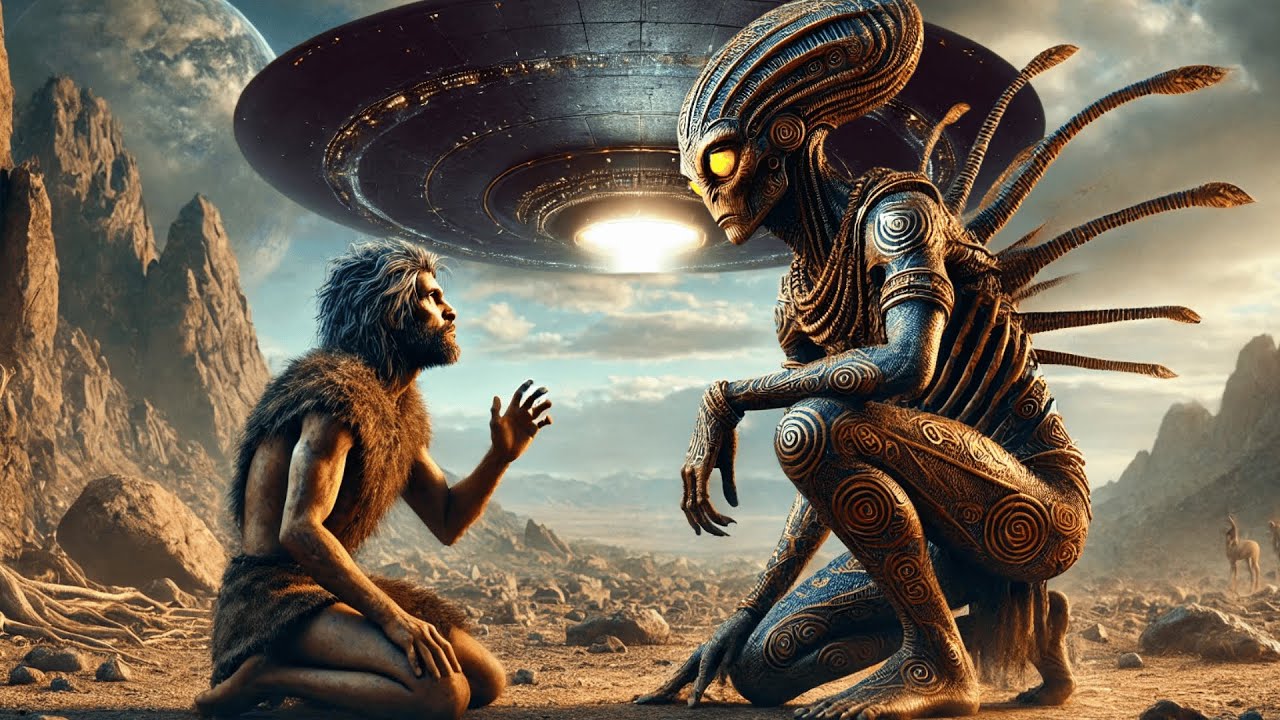
He rejects the “Ancient Aliens” narrative, instead proposing these “gods” were non-physical celestial intelligences or guardians guiding human spiritual evolution.
LaCroix is currently leading a documentary project with experts including Robert Schoch, Robert Edward Grant, and Hans Jorim, aiming to apply new dating techniques to these sites and challenge the orthodox timeline.
He believes we are approaching another perihelion phase, evidenced by increased solar activity and southern auroras, but argues that understanding ancient wisdom—especially the non-technological, consciousness-based path—could help humanity avoid collapse.
Ultimately, he sees human history as a soul’s journey from higher consciousness through material amnesia and back, with free will determining whether we reclaim our divine potential or remain trapped in cycles of destruction.
Key Evidence and Claims
Subterranean Giza: Voids detected under Sphinx and pyramids; entrances sealed by authorities; possible ancient library.
Sphinx Dating: Water erosion indicates pre-10,500 BC origin; originally a lion aligned with Leo.
Eastern Turkey Sites: Kevri Keşiş, Şavştepe, Karahan Tepe feature megalithic precision, non-local stone, T-pillars, and solar alignments offset from current cardinal directions—indicating past axial shift.
Vitrification: Melted basalt surfaces at Turkish sites suggest plasma events, not local fires or impacts.
Binary Star Theory: Pioneer 10/11 detected gravitational anomalies pointing to a dead star; NASA suppressed data after key researchers died.
Cyclical Catastrophes: CMEs every ~12,500 years cause rapid warming then cooling (seen in ice cores), ocean current collapse (e.g., Gulf Stream shutdown), and civilizational reset.
Sumerian Flood Reality: Shuruppak excavated in 1931, found under flood layer; matches Ziusudra/Noah narrative; ocean shells on Eridu ziggurat suggest Persian Gulf inundation, not local river flood.
Global Symbolism: T-pillars, triadic doorways, pine cones, sun crosses appear identically in Turkey, Bolivia, Peru, Egypt, and Vatican—indicating shared origin.
Consciousness-Centric Civilization: Ancients used sacred geometry, resonant materials (quartz, granite), and astronomical alignment to create “ascension temples” for accessing higher states—contrasting with our fossil-fuel-dependent, materialist path.
Implications and Outlook
Mainstream archaeology relies on an “Ivory Tower” model where early interpretations (e.g., Urartians built Turkish sites) become dogma, ignoring contradictory evidence like mudbrick atop advanced stonework.
New dating methods (e.g., organic matter in buried stone cracks, sediment cores) could soon prove these sites are far older than accepted.
A paradigm shift is imminent: once evidence mounts, the “foundation of sand” in historical consensus will collapse, enabling open-minded, interdisciplinary research into human origins.
Hidden artifacts (e.g., untranslated cuneiform tablets from Ashurbanipal’s Library, dismantled temple relics) may resurface during this transition, revealing lost knowledge.
Humanity stands at a crossroads: emulate the ancients’ consciousness-based path or continue the extractive, technological route—both may lead to simulation-like realities, but only one leads to true awakening.